
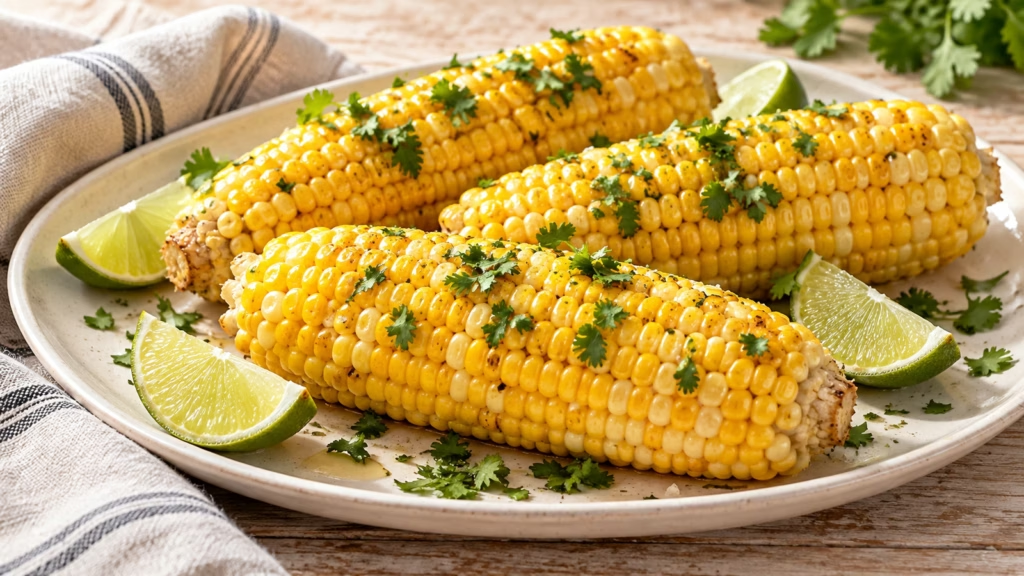
Yes, corn can be good for you. Sweet corn supplies carbohydrate, fiber, and several vitamins and minerals, and it can fit into a varied eating pattern fresh, frozen, or canned. The useful questions are which form you’re eating, how it’s prepared, and what shares the plate. An ear of corn, a bowl of popcorn, and a syrup-sweetened drink do not have the same nutritional role.
Corn can be the sweet, satisfying part of a meal without having to carry the whole meal on its own.
I’d rather make room for those juicy kernels than turn dinner into a debate over whether a vegetable has too much starch. Corn’s starch is worth understanding, especially if you manage blood sugar. It is not a reason to overlook its other nutrients or to treat every food made from corn as interchangeable.
What plain sweet corn actually provides
For a clearly defined example, Health Canada’s 2008 food-composition reference lists the following for 125 mL, about ½ cup, of fresh or frozen sweet corn that has been boiled and drained. That portion weighs 87 grams. These are older generic reference values, not an analysis of your corn or a prescribed serving size.
- Energy: 82 calories.
- Carbohydrate: 19 grams, including 3 grams total sugar.
- Fiber: 2 grams.
- Protein and fat: 3 grams protein and 1 gram fat.
- Selected minerals: 209 milligrams potassium and 26 milligrams magnesium.
Those numbers describe plain corn, not corn mixed with cream, cheese, or a sugary sauce. Variety, portion weight, and preparation change the details; use the package label for the product in your kitchen. The practical takeaway is modest: corn contributes useful nutrients and energy, but it is not a particularly concentrated protein food or a complete meal.
Is corn good for you if it is a starchy vegetable?
“Starchy” describes a type of carbohydrate; it is not a warning label. Corn generally brings more carbohydrate to a meal than non-starchy vegetables such as broccoli or leafy greens. The CDC includes corn among nutrient-containing carbohydrate choices, while emphasizing portions and the overall eating pattern for people with diabetes.
- Think about the whole meal. Corn alongside fish, chicken, tofu, or beans and other vegetables plays a different role from a large portion eaten by itself.
- If you count carbohydrate, count corn. Check the amount you actually eat and its food label or an appropriate nutrition reference. Do not assume that calling it a vegetable makes its carbohydrate negligible.
- Keep individual responses individual. Preparation, portion, other foods, medications, and your own body affect blood glucose. Corn cannot be promised to leave everyone’s blood sugar unchanged.
- Use your existing care plan. If diabetes, kidney disease, or another condition requires specific food limits, ask your clinician or registered dietitian how corn fits those limits rather than adopting a blanket internet ban.
Fiber is one reason whole foods can offer more than carbohydrate alone. Still, a nutrient list does not prove that eating corn will prevent a disease, lower your cholesterol, or cause weight loss. I’d keep the goal simpler: a meal you enjoy, with a mix of foods that suits your needs. Corn can be one part of that mix.
Sweet corn, popcorn, and corn products are different
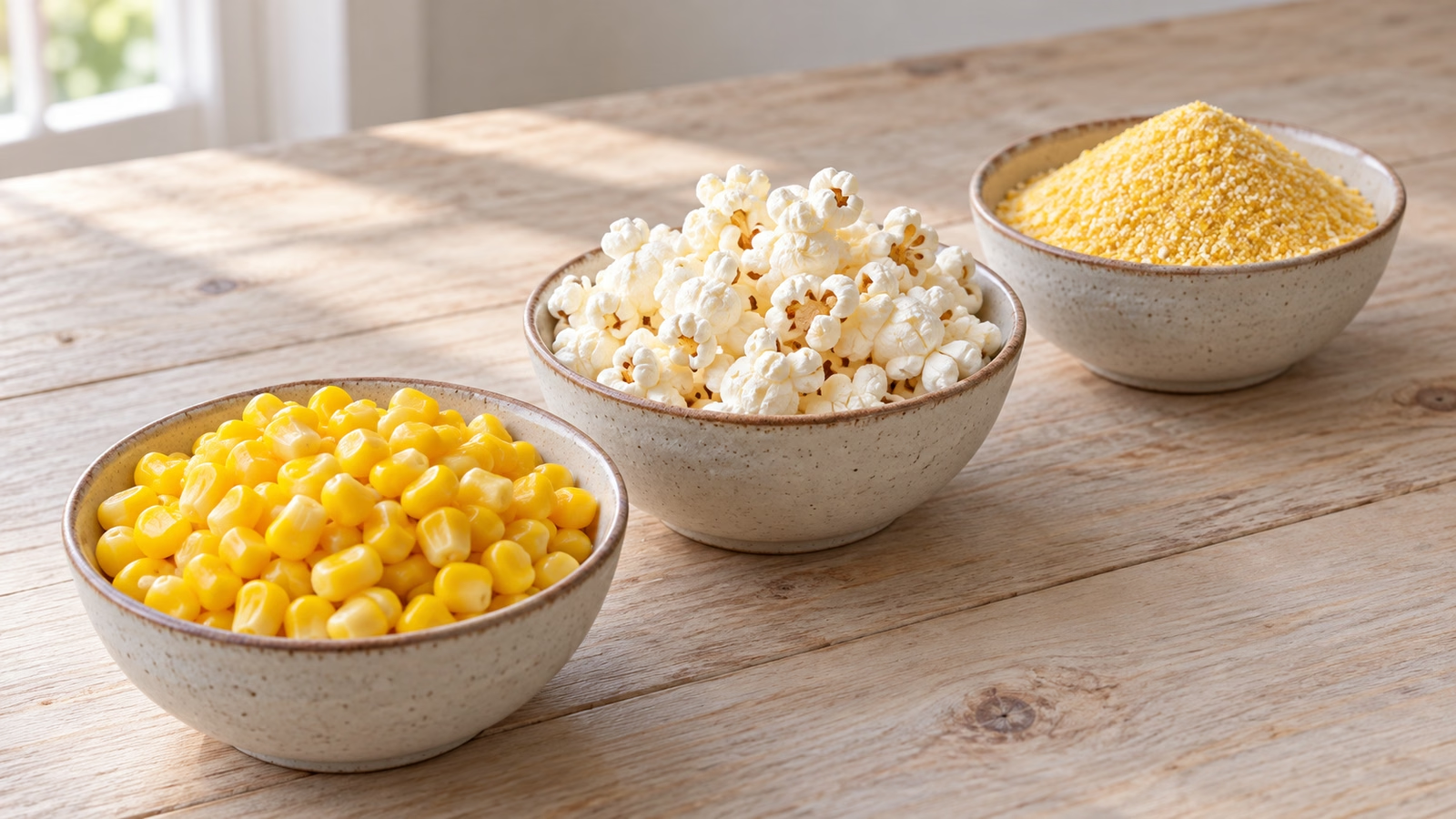
Tender sweet corn is usually treated as a starchy vegetable in meal planning. Mature dried corn is used as a grain, and popcorn is a whole grain. The American Heart Association’s whole-grain guide includes popcorn and corn, but a corn-based product is not automatically whole grain. Read its ingredient list.
- Fresh or frozen kernels: useful for a side, soup, or salad. Plain frozen corn is convenient; follow its cooking instructions rather than assuming it is ready to eat after thawing.
- Canned corn: another practical option. Compare sodium at the same serving size, and choose no-salt-added or lower-sodium versions when useful for your needs.
- Popcorn: a whole-grain snack whose added oil, salt, butter, or sweet coating changes the final food. Start with plain kernels or compare prepared-product labels.
- Cornmeal and corn flour: milling and processing vary. Look for “whole grain” when that is what you want; color alone does not establish it.
- Corn syrup: a sweetener, not a serving of kernels. A food’s added sugars are a separate consideration from the nutrients in sweet corn.
For cooking distinctions, the corn flour, cornmeal, cornstarch, and masa harina guide explains why those packages cannot all be used the same way. Corn itself is naturally gluten-free, but a bread, tortilla, coating, or seasoning blend may contain other ingredients or have cross-contact. If you need strict gluten avoidance, check the finished product’s labeling.
Make the corn part of a meal you want to eat
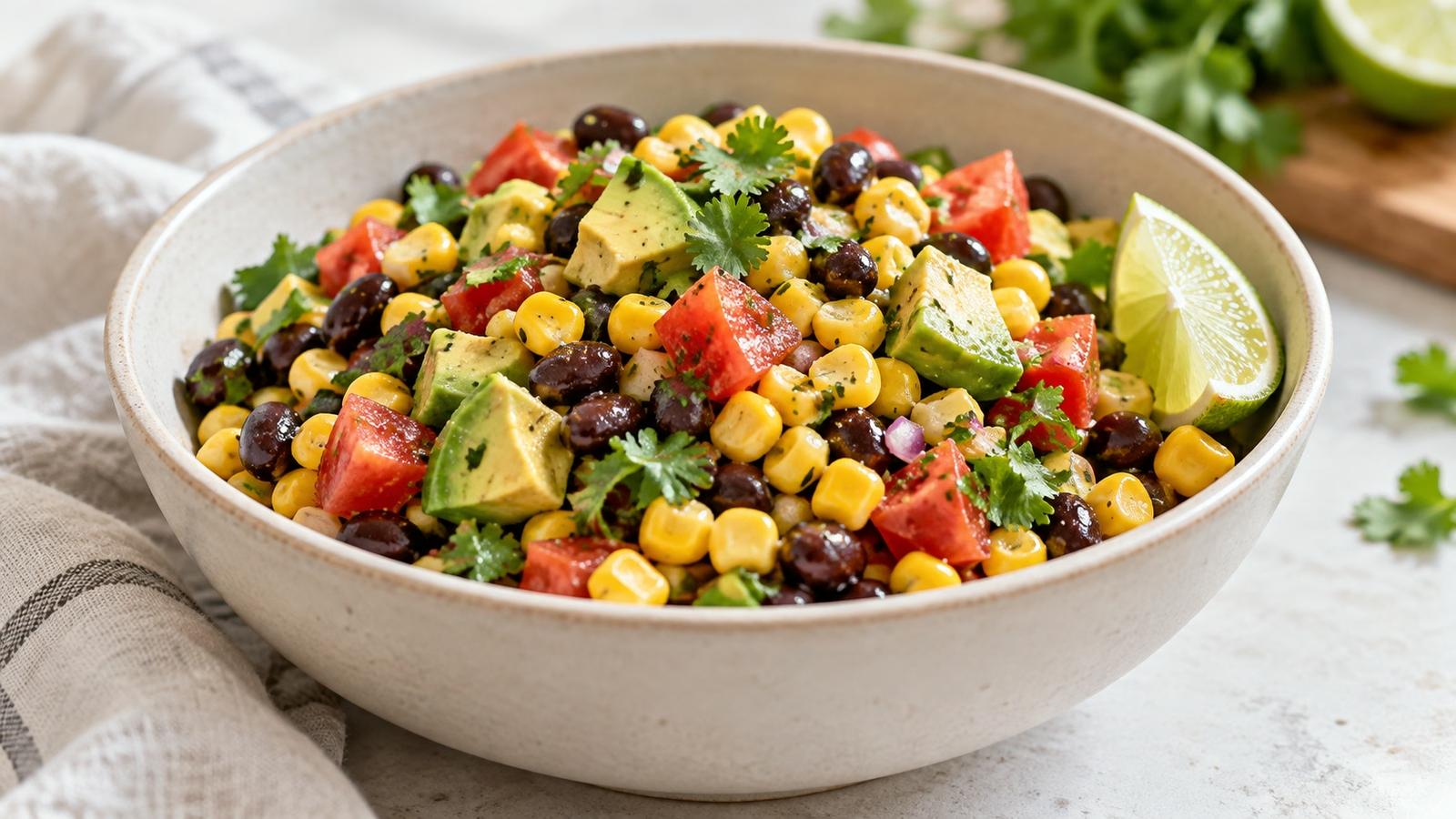
Corn’s sweetness works especially well with something bright or savory. Lime, vinegar, herbs, pepper, and smoky spices give you options beyond automatically reaching for a heavy sauce. Butter and cheese can be enjoyed too; the amount and the rest of the dish determine what you are adding.
- Build a bowl: combine cooked corn with black beans, tomatoes, avocado, and a squeeze of lime. Add leafy vegetables or cabbage for a different texture.
- Use it as a colorful addition: stir kernels into a vegetable soup, fold them into an omelet, or scatter them over a substantial salad.
- Serve the cob simply: try lime and cilantro, or a salt-free chili seasoning. Add a protein food and another vegetable alongside it.
- Shop for the week you have: fresh ears suit a meal you’ll cook soon; canned and frozen options help when produce shopping is less predictable.
If you’ve noticed bits of corn hull after eating it, that does not mean the entire kernel passed through untouched. The tough outer covering resists digestion, while the inside can still be broken down. Large portions may also feel uncomfortable for some people; start with an amount that agrees with you rather than forcing more because a food is nutritious.
For a practical serving idea, the University of Delaware Cooperative Extension video below demonstrates fresh corn salad with onion, basil, and a simple dressing. It is a cooking example, not a claim that one particular salad will change your health.
Sources
- Health Canada: Nutrient Value of Some Common Foods, 2008
- CDC: Choosing Healthy Carbs
- Cleveland Clinic: Corn nutrition and digestion
- American Heart Association: Whole grains and fiber
- FDA: Gluten and Food Labeling
- American Heart Association: Practical cookout choices, 2026
- University of Delaware Cooperative Extension: Fresh corn salad and video

Hi, I’m Laura, the voice behind Tastiva. I’ve always believed that eating well should feel enjoyable, comforting, and realistic—not like another complicated rule to follow. I love creating recipes that fit into everyday life, sharing simple nutrition ideas, and finding small ways to make meals feel a little better without losing the pleasure of good food.