
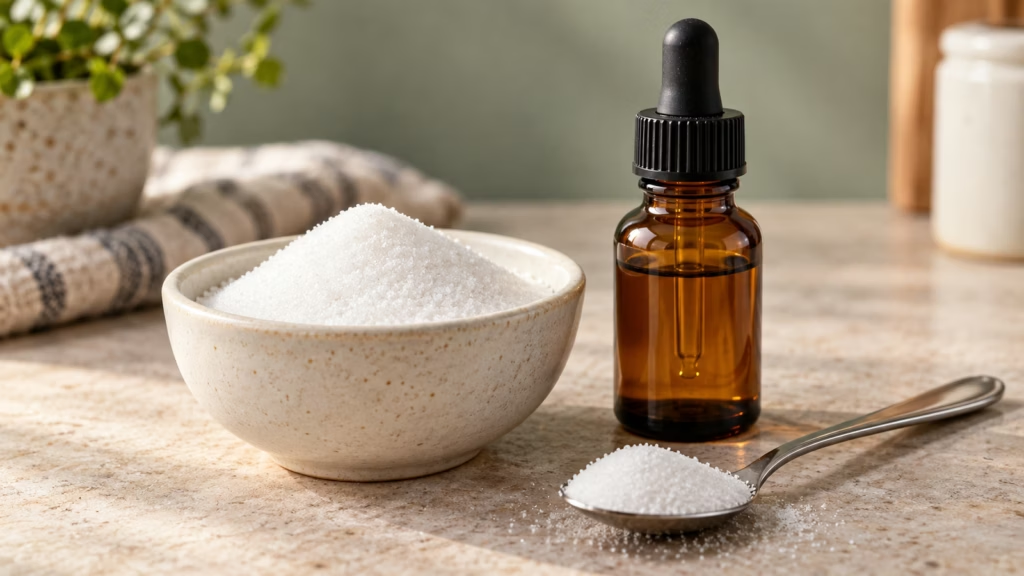
Two packages say monk fruit, yet one calls for a few drops and the other fills a measuring cup. Neither instruction is necessarily wrong. Monk fruit extract is intensely sweet, while many supermarket sweeteners combine it with other ingredients that provide volume. The useful question is what else is in the package, and what you want it to do.
Match the sweetener to the job: a few drops for a drink and a measured baking blend are two different tools.
What monk fruit sweetener actually contains
Monk fruit, also called luo han guo, comes from Siraitia grosvenorii, a plant native to southern China. Its extract gets much of its sweetness from compounds called mogrosides. The FDA describes the extract as 100–250 times sweeter than sugar, depending on its composition. That range describes the extract, not every bag bearing the fruit’s name.
- Concentrated powder: A small quantity can provide substantial sweetness. Use that product’s supplied measure or conversion, not an ordinary spoonful borrowed from a sugar recipe.
- Granulated blend: Monk fruit extract is combined with a bulk ingredient. Erythritol and allulose are two possibilities, and their names should appear in the ingredient list.
- Liquid: The extract comes in a liquid formulation, often with drop-by-drop directions. Check the remaining ingredients if you need an alcohol-free or unflavored product.
I would choose the form before choosing the biggest bag. A concentrated extract may suit a small drink, but it cannot contribute a cup of dry ingredients to cake batter. The front of the packet is an introduction; the directions do the useful explaining.
Read the formula before comparing the price
The differences are visible within a single brand. Lakanto’s current U.S. Classic erythritol blend and Classic allulose blend both give cup-for-cup sugar-replacement directions, but they use different bulk sweeteners. That does not make their behavior identical in every recipe. These are label examples, not a tasting-test ranking.
- Check the exact version: Classic, golden, powdered, and liquid names can describe different formulas, textures, and uses. Do not carry the instructions from an old package over to a new version automatically.
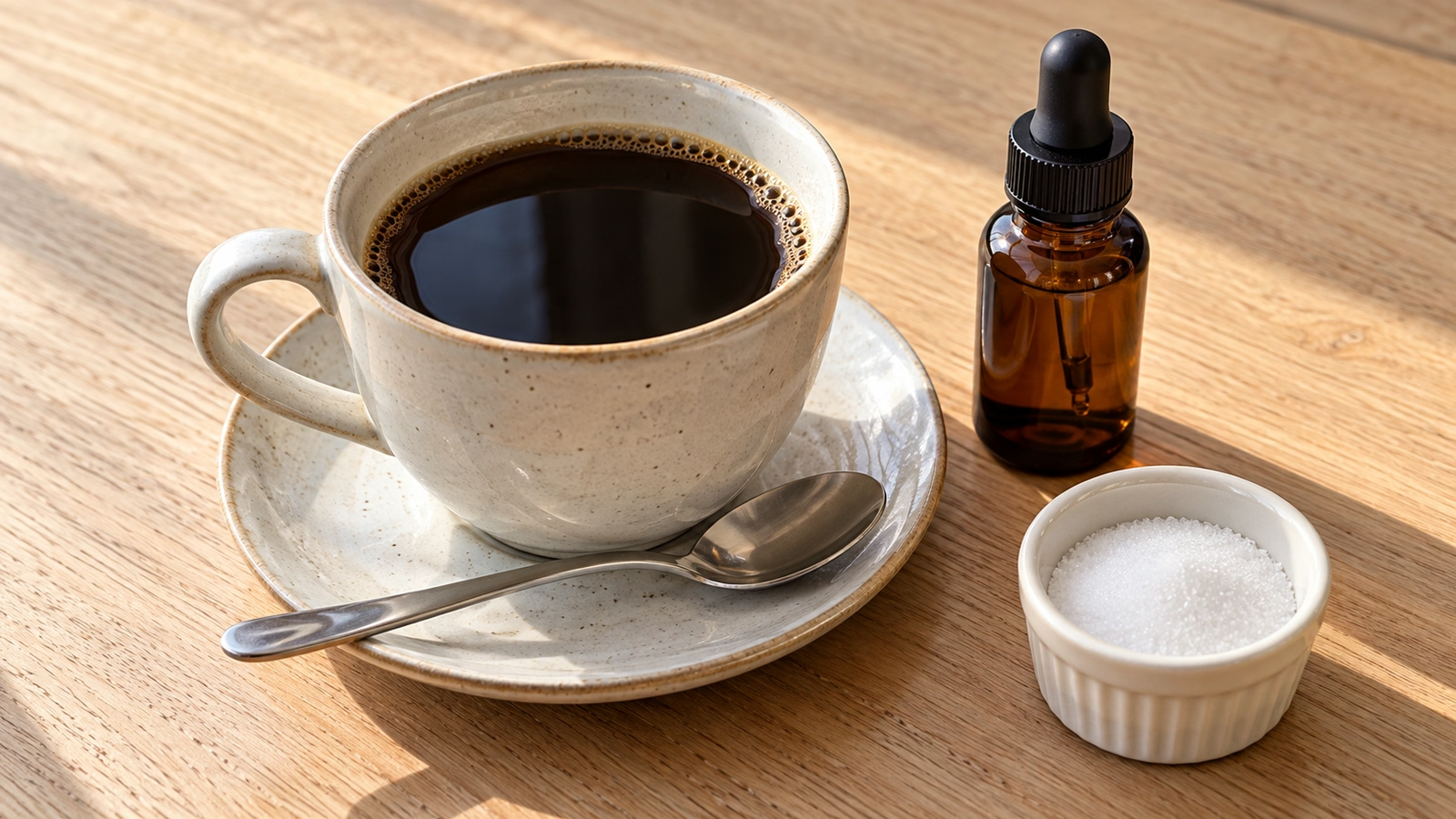
- Look at the full liquid formula: For example, NOW’s Organic Monk Fruit Liquid lists water, monk fruit extract, and 11% organic cane alcohol. “Monk fruit” alone would not tell you that.
- Compare equivalent sweetness: A small bottle and a large bag are not comparable by weight alone. Use each manufacturer’s stated sugar equivalency, then consider how you actually intend to use it.
- Keep the directions: If you decant a sweetener into a jar, label the formula and retain its conversion and storage instructions. Several very different powders can look remarkably alike.
A concrete illustration: NOW’s product-specific chart equates five drops of its Organic Monk Fruit Liquid with the sweetness of one teaspoon of sugar; its one-to-one product uses one teaspoon. Those instructions are not interchangeable, and they are not universal monk fruit conversions.
Use it in drinks before improvising a cake
Coffee, tea, or plain yogurt gives you room to adjust a small serving. Baking asks more of a sweetener: sugar also affects texture, structure, and appearance. King Arthur Baking explains those wider roles, which is why matching sweetness alone does not guarantee the same cake. I would start with a recipe developed for the exact type of substitute rather than volunteer a celebration cake for the experiment.
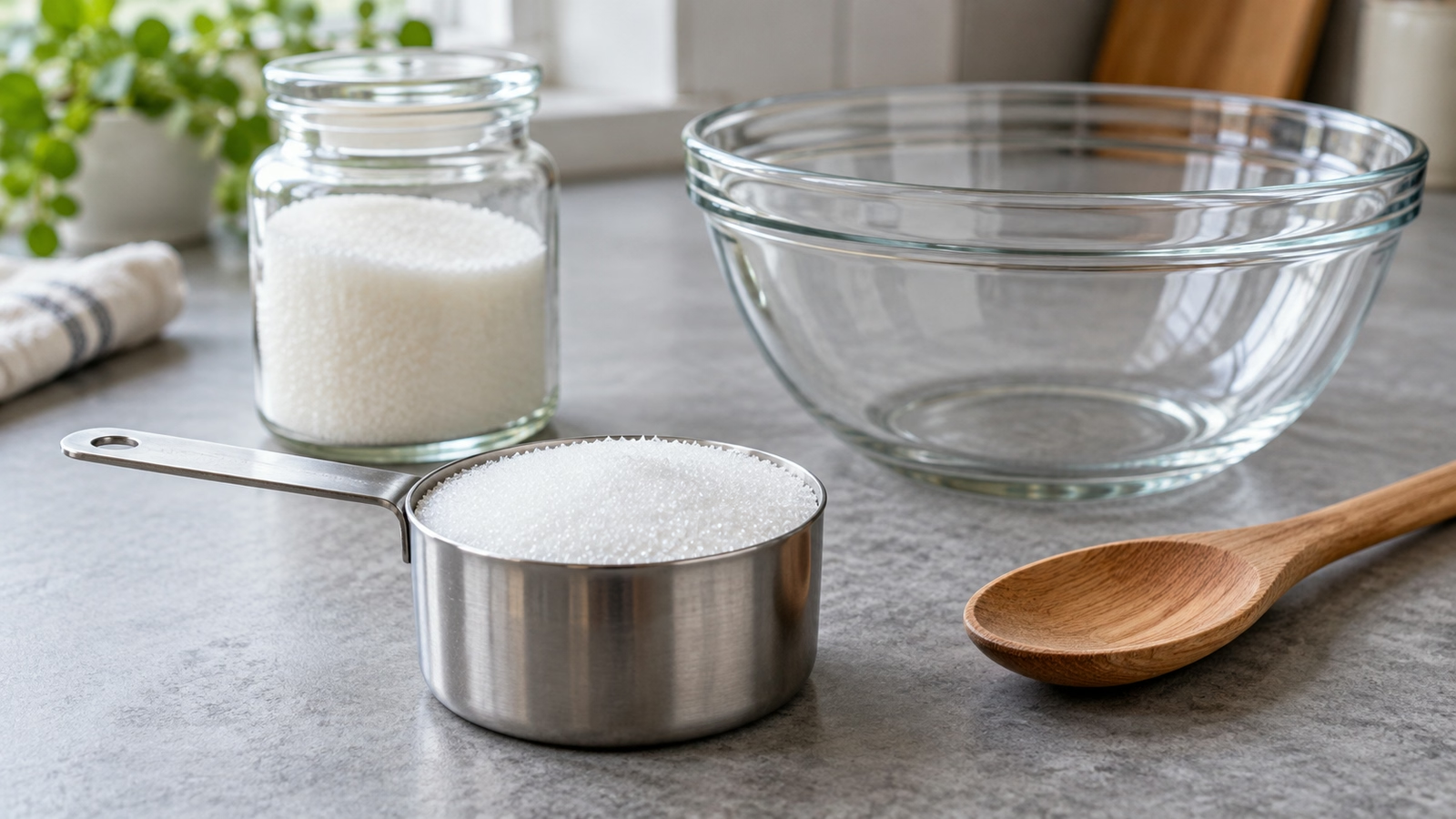
- For a ready-to-eat food or drink, start small. Follow the product’s directions, mix thoroughly, and taste before adding more. Assess the finished drink, including any milk or other ingredients you normally add.
- For baking, match the named form. A powdered blend, granulated blend, and concentrated liquid are not automatic substitutes. Keep the recipe’s other ingredients and method unchanged for your first attempt.
- Check whether the conversion is by volume or weight. A cup-for-cup instruction does not promise gram-for-gram equivalence. Use the measurement basis the manufacturer specifies.
- Follow product-specific baking adjustments. King Arthur’s Baking Sugar Alternative, for example, has its own earlier doneness-check guidance. Do not apply one blend’s oven adjustments to every monk fruit product.
That last distinction matters. King Arthur’s package directions specify a volume-based substitution and checks at 75% of the recipe’s baking time. Read your own package rather than treating “1:1” as a promise that timing, browning, and texture cannot change. A sweetener conversion is a starting instruction, not the entire recipe.
Separate a sweetener choice from a health promise
In the U.S., FDA has reviewed notices for monk fruit extracts and has not questioned the manufacturers’ conclusions that the specified uses are generally recognized as safe, or GRAS. That is different from saying FDA approved every branded blend. The agency’s discussion of a 2023 erythritol paper also says its observational evidence did not establish that consuming erythritol caused the reported cardiovascular effects; FDA continues reviewing the evidence.
- Read the complete food’s label: The sweetener’s name does not describe all the carbohydrate, calories, or ingredients in a dessert. Tastiva’s guide to sugar-free chocolate shows how that distinction plays out in a finished product.
- Do not treat the blend as a treatment: Choosing a sweetener is not evidence that a product prevents disease or guarantees weight loss. Those are different claims from providing sweetness.
- Pay attention to your own response: FDA notes that people can have sensitivities or adverse reactions to food substances. Discuss a concerning reaction with a health professional rather than assuming the fruit-derived name rules one out.
For a look at one manufacturer’s farm-to-product story, the video below comes from Lakanto’s official channel. It is the brand’s own presentation, not independent evidence for health claims or a reason to ignore the formula on your package.
Sources
- FDA: Aspartame and Other Sweeteners in Food
- FDA: How Sweet It Is, All About Sweeteners
- Lakanto: Classic Monkfruit and Erythritol Sweetener
- Lakanto: Classic Monkfruit Sweetener With Allulose
- NOW Foods: Organic Monk Fruit Liquid ingredients
- NOW Foods: Product-specific sweetener equivalency chart
- King Arthur Baking: Sugar’s role in cake batter
- King Arthur Baking: Baking Sugar Alternative package directions

Hi, I’m Laura, the voice behind Tastiva. I’ve always believed that eating well should feel enjoyable, comforting, and realistic—not like another complicated rule to follow. I love creating recipes that fit into everyday life, sharing simple nutrition ideas, and finding small ways to make meals feel a little better without losing the pleasure of good food.