
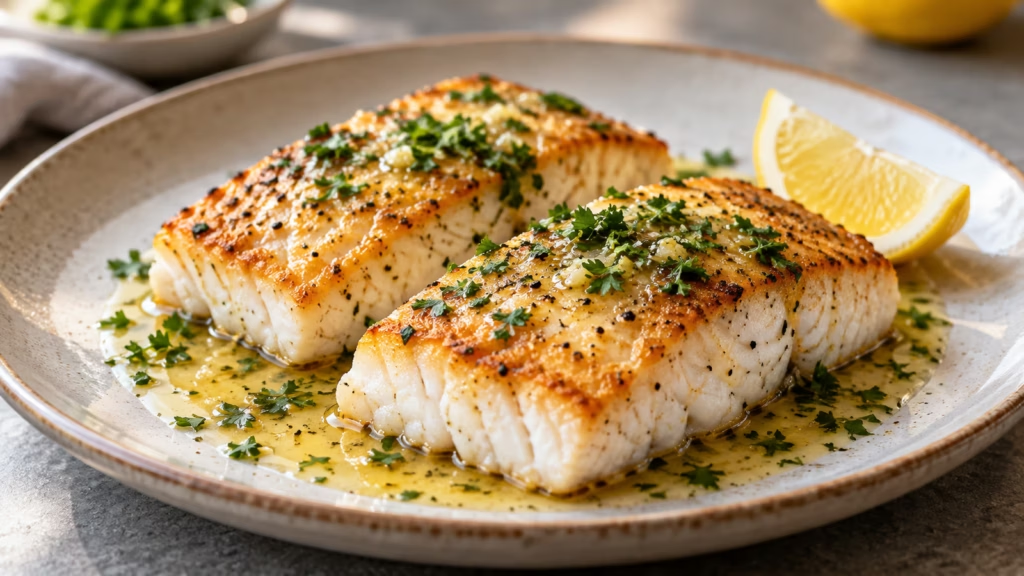
Mahi mahi takes well to a hot skillet, but the last few minutes deserve your attention. A dry surface helps it brown, a thermometer tells you when to stop, and a quick lemon-butter sauce gives the finished fish something bright to lean on. This mahi mahi recipe keeps the ingredient list short and puts the sauce together after the fillets are cooked.
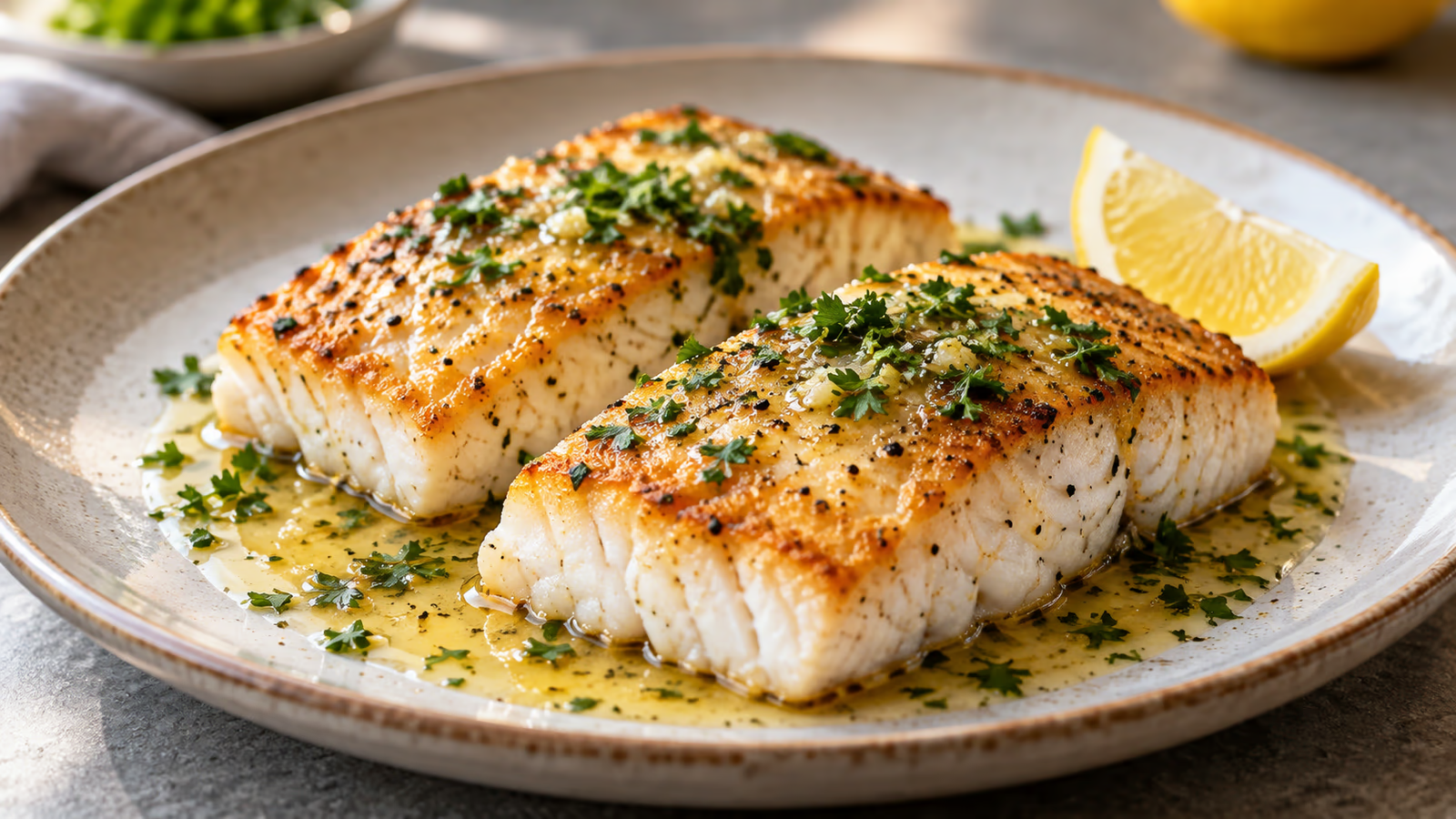
Prepare the lemon and garlic first, so the fish never has to wait while you find the next ingredient.
The card makes four portions, each starting with a six-ounce fillet. Choose pieces of similar thickness when you can. I’d have any rice or vegetables ready before the fish goes into the pan; this is a dinner that benefits from being served as soon as the sauce is spooned over it.
Choose and thaw the fillets with care
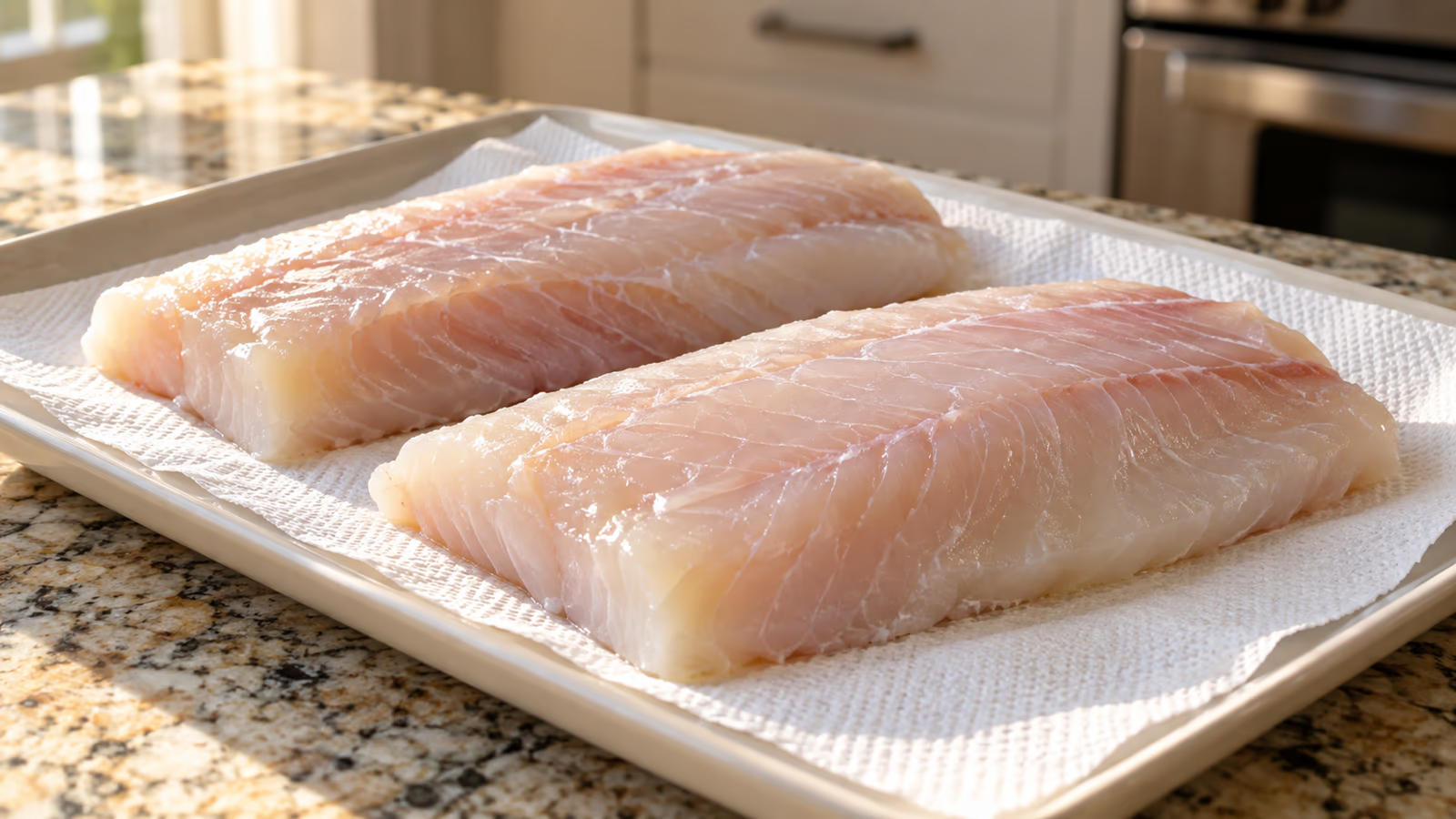
Look for skinless, boneless portions labeled mahi mahi. Our dorado fish guide explains the other names you may see at the counter and why the label matters. For this recipe, you want the same fish in comparable portions, rather than a mixture of thick center pieces and thin tails.
Frozen fillets are a useful option. Thaw them in the refrigerator and follow the package instructions, including removing or opening vacuum packaging before thawing when directed. Put the fish on a rimmed tray to catch drips and keep it away from ready-to-eat food. Do not leave it on the counter to speed things along.
- Pat the thawed fillets dry with paper towels just before seasoning.
- Measure the lemon juice and mince the garlic before heating the skillet.
- Use a clean plate for cooked fish; do not return it to the tray that held it raw.
Make room in the skillet for a good sear
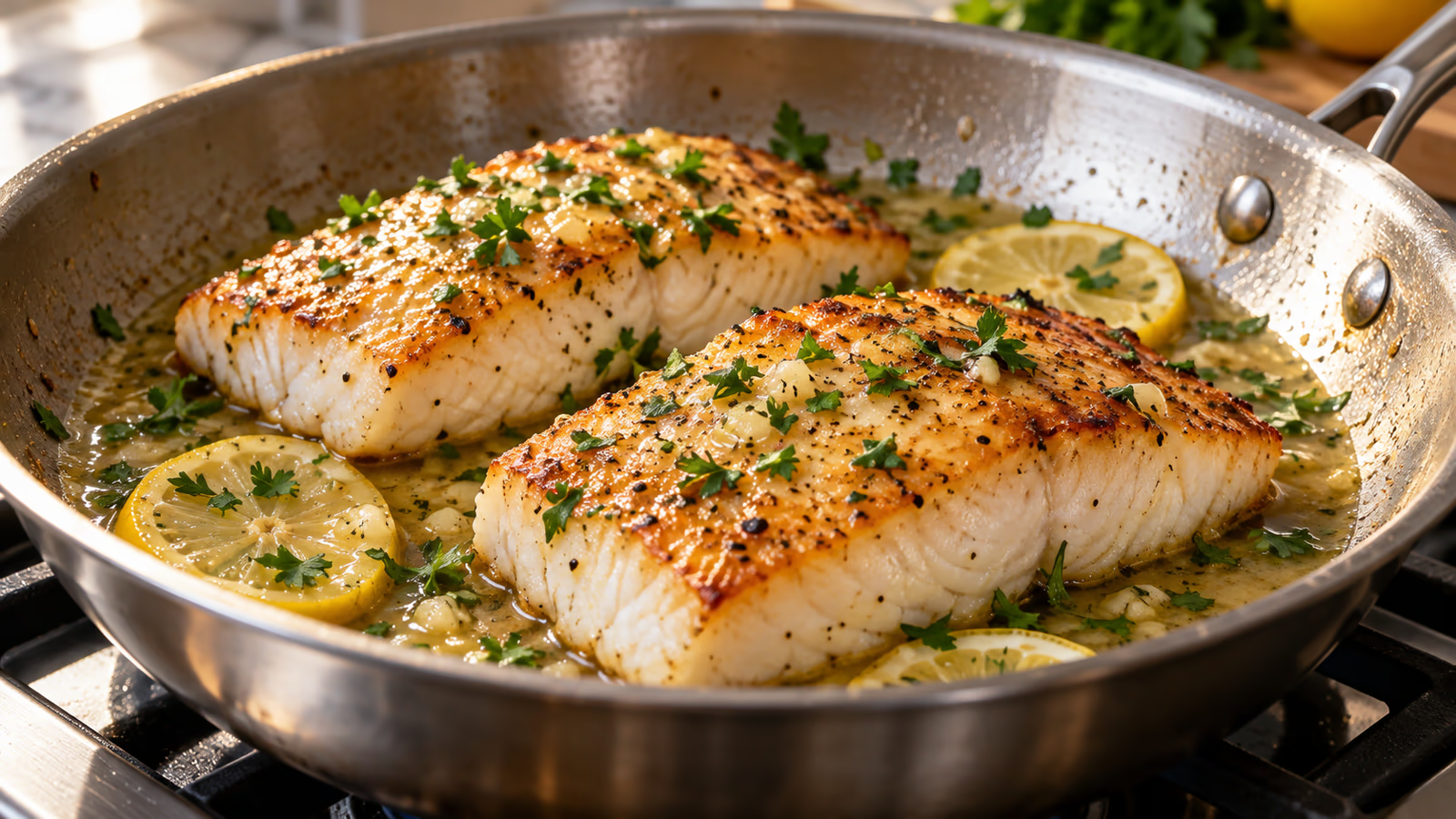
Choose a large, heavy skillet and heat the oil until it shimmers without smoking heavily. Lay the seasoned fish in carefully, moving it away from you to reduce splashes. Leave space around each piece. If four fillets crowd the pan, cook in two batches rather than forcing them together.
Let the first side cook without repeatedly nudging it. When a browned surface has formed, a thin spatula should slide underneath more easily. Turn carefully and reduce the heat if the outside is darkening too quickly. The aim is an evenly cooked piece of fish, not the darkest possible crust.
- If the fish sticks firmly, give the first side a little more time rather than tearing it free.
- If the oil begins smoking aggressively, lower the heat and briefly move the pan off the burner.
- If a thin piece finishes early, transfer it to a clean plate while the thicker pieces finish.
Check the center, then make the sauce
The FDA recommends cooking most seafood to 145°F (63°C). Insert an instant-read thermometer into the thickest part of each fillet, approaching from the side when that gives you a better reading. A browned top does not tell you the center temperature. Once a portion reaches the target, take it out rather than letting it sit in the hot pan.
Turn the heat down before adding the butter and garlic. The skillet is already hot from searing, so garlic can brown faster than expected. Stir it briefly until fragrant, then add the measured lemon juice and a little water. Scrape up the golden cooking residue, leaving any black, burnt patches behind.
The sauce should be loose enough to spoon over the fish. It is a small pan sauce, not a deep pool for simmering the fillets again. Stir in the parsley, taste it, and divide it among the plates. Lemon slices are an optional garnish; the measured juice supplies the acidity in the recipe.
Finish dinner and handle leftovers gently
Serve the fillets with something that can catch a little sauce, such as rice or potatoes, plus vegetables if you like. Keep those additions simple when time is tight. The recipe card estimates the fish and all the measured oil and butter, so it does not silently leave the sauce out of the numbers.
Refrigerate leftovers promptly in shallow containers, within two hours or within one hour above 90°F (32°C). Keep them at 40°F (4°C) or below. A conservative plan is to use this cooked fish within three days. Reheat to 165°F (74°C), using gentle heat and a little water to help keep the surface from drying out.
Reheated fish may be firmer than it was at the first meal, so portioning the recipe to suit the people at the table is worthwhile. If you are cooking for two, halve the measured ingredients and use a smaller skillet. Keep the same safe internal-temperature target; a smaller batch does not change what the thermometer needs to show.
Mahi Mahi Recipe

Ingredients
- 4 6-ounce skinless, boneless mahi mahi fillets 680 g total; thawed and about 1 inch thick
- 2 tablespoons olive oil 27 g
- 1/2 teaspoon fine salt 3 g
- 1/4 teaspoon black pepper 0.5 g
- 2 tablespoons unsalted butter 28 g
- 2 cloves garlic, minced 6 g
- 2 tablespoons fresh lemon juice 30 g
- 2 tablespoons water 30 ml
- 1 tablespoon chopped fresh parsley 4 g
- lemon slices optional garnish, not included in nutrition
Equipment
- 1 large heavy skillet
- 1 thin fish spatula
- 1 Instant-read food thermometer
Instructions
- Thaw frozen fish in the refrigerator according to its package directions, including opening or removing vacuum packaging as directed. Pat dry. Season with the measured salt and pepper. Prepare the garlic, lemon juice and parsley before cooking.
- Heat the oil in a large heavy skillet over medium-high heat until shimmering, not smoking heavily. Add the fish with room between pieces; work in two batches if necessary. Cook about 3–5 minutes on the first side until browned and releasing readily.
- Turn gently and cook about 2–5 minutes more, adjusting heat as needed, until each fillet reaches 145°F (63°C) in its thickest part. Timing varies with thickness. Move cooked portions to a clean plate.
- Reduce heat to low. Add butter and garlic and stir briefly, about 30 seconds, without burning the garlic. Add lemon juice and water, scrape up golden cooking residue, and simmer briefly. Stir in parsley.
- Spoon the sauce over the fish and serve immediately. Add optional lemon slices if desired. Do not keep simmering cooked fillets in the sauce.
Nutrition
Video
Notes
Tried this recipe?
Let us know how it turned out!Sources
- The Forked Spoon: pan-seared mahi mahi with lemon garlic sauce
- FDA: selecting, preparing and serving seafood safely
- USDA: safe reheating
- USDA FoodData Central: ingredient nutrition data
Hi, I’m Laura, the voice behind Tastiva. I’ve always believed that eating well should feel enjoyable, comforting, and realistic—not like another complicated rule to follow. I love creating recipes that fit into everyday life, sharing simple nutrition ideas, and finding small ways to make meals feel a little better without losing the pleasure of good food.