
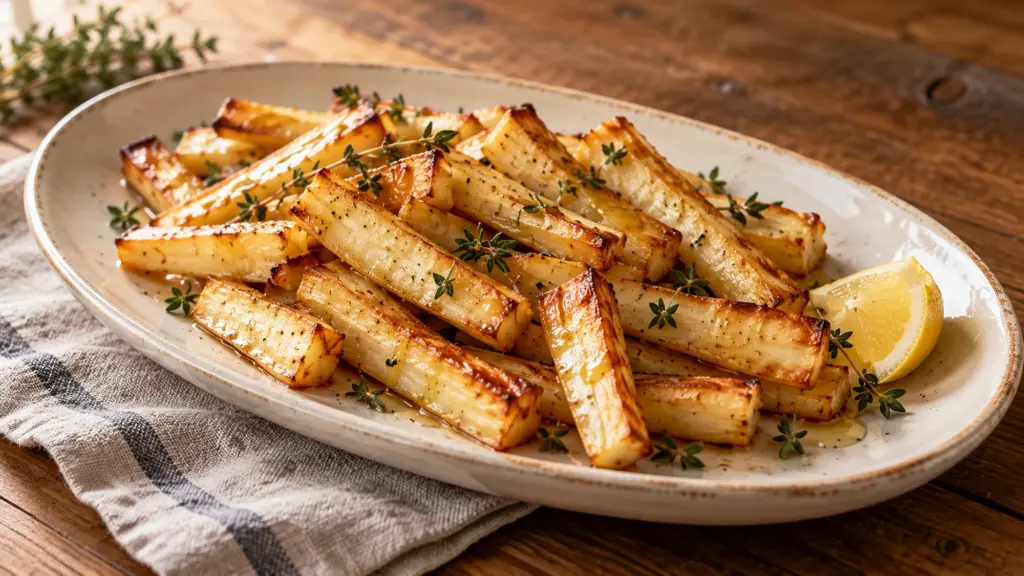
Parsnips deserve more than a supporting role beside carrots. Their pale flesh turns sweet and nutty in a hot oven, and the narrow tips can become wonderfully browned. These maple roasted parsnips use a small amount of syrup, fresh thyme and a final squeeze of lemon. The goal is a savory vegetable side with a glossy finish, not a sticky dessert disguised as dinner.
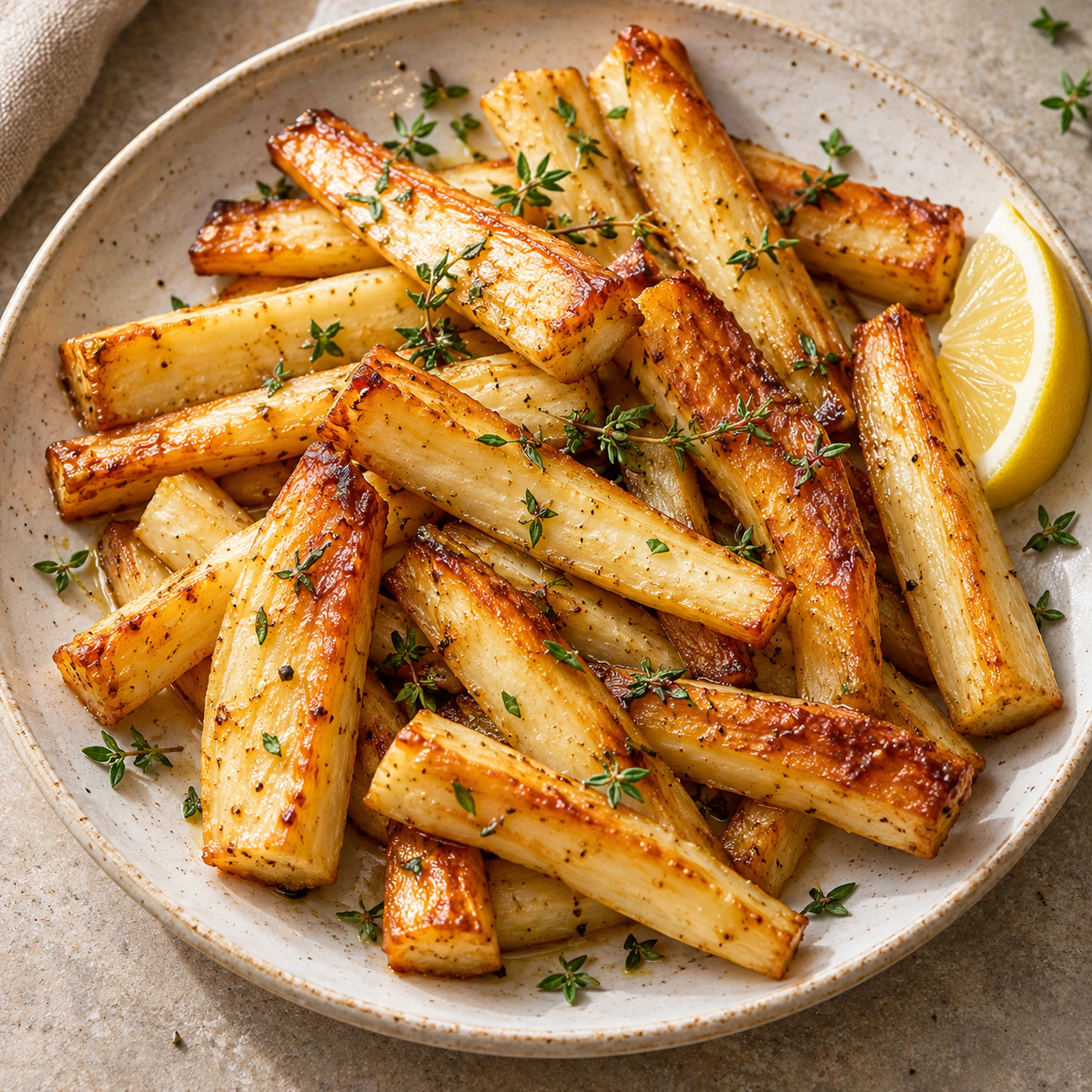
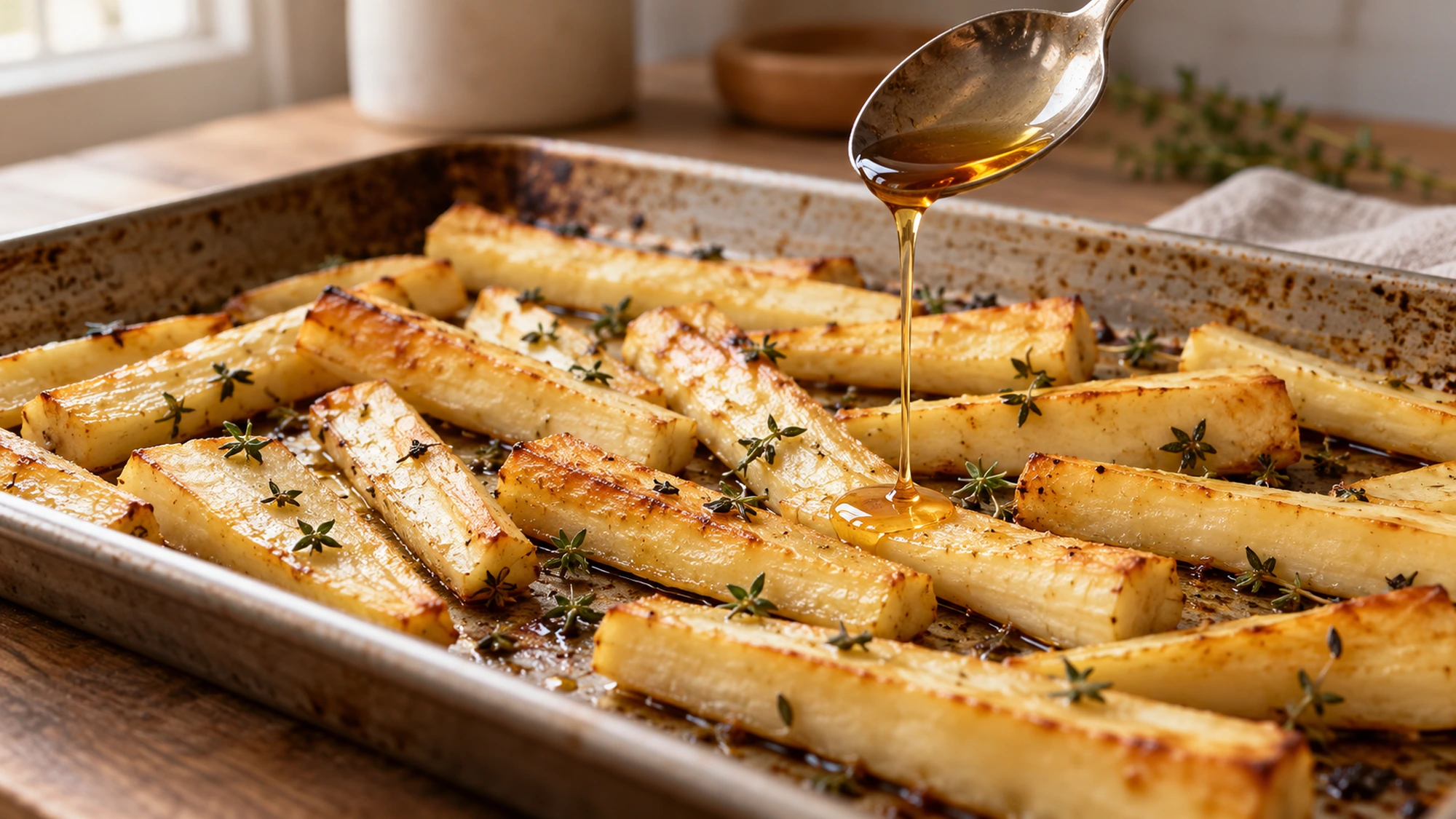
The useful trick is timing: roast the parsnips with oil first, then add the maple syrup after 20 minutes. Cut pieces to a similar thickness, leave breathing room on the tray and judge the finish by tenderness as well as color.
Roasting times vary with the thickness of the pieces and the heat of your oven. The recipe calls for 1½ pounds of peeled, trimmed parsnips. Buying a little extra leaves room for tops, tails and woody centers.
Choose firm roots rather than bendy ones. Split thicker parsnips lengthwise, then cut everything into roughly three-inch batons about half an inch thick. If a large root has a tough central core, cut it away. Very thin tails can stay longer so they do not burn before thicker pieces soften.
Dry the pieces after washing. Surface water and an overcrowded tray work against browning. A roomy metal sheet pan works better here than a deep casserole dish: each piece gets a better chance to meet the hot pan.
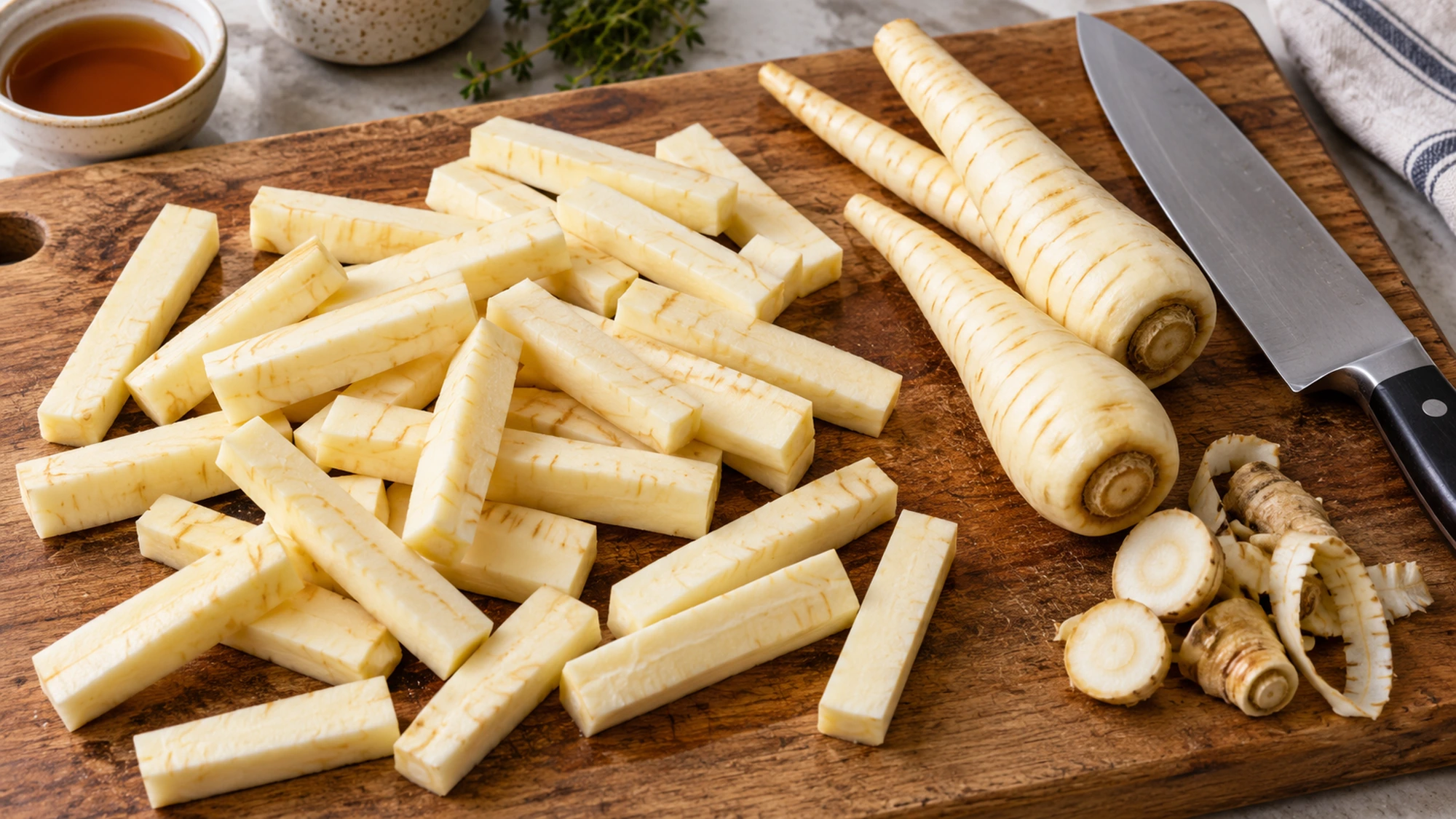
Serving Suggestions for Maple Roasted Parsnips
Serve alongside roast chicken, baked tofu or a lentil salad. Their sweetness benefits from something sharper elsewhere on the plate, such as mustardy greens or lightly dressed cabbage. Lemon goes on after roasting so its brightness stays noticeable.
For a holiday meal, treat these as one vegetable side rather than another sweet component. A modest serving of potatoes, a green vegetable and these parsnips makes a more varied plate than several maple-glazed dishes together.
| What you see | What to do |
|---|---|
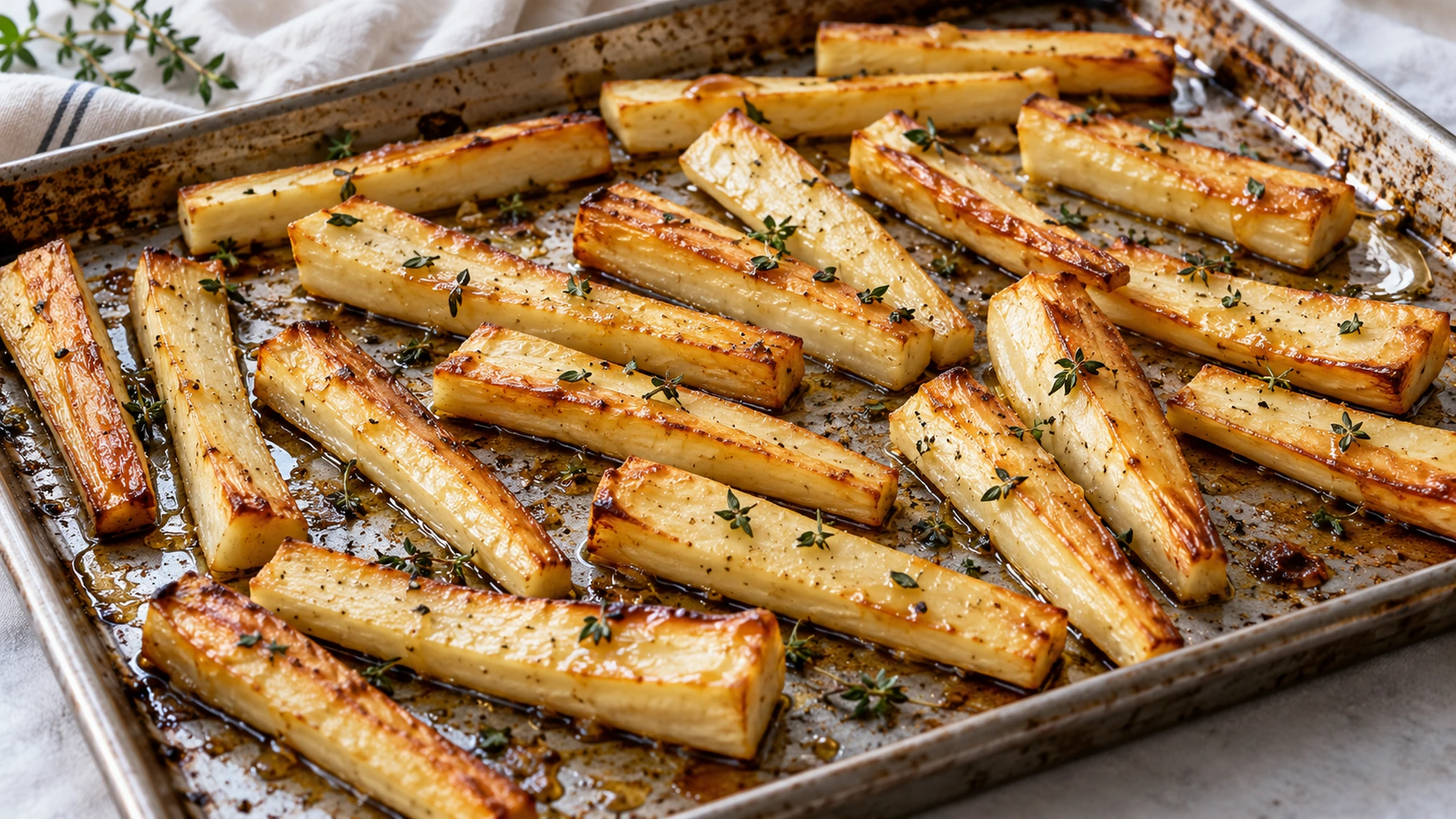
| Pale pieces after 20 minutes | Turn them, spread them out and continue roasting. |
| Dark tips but firm centers | Remove thin pieces; give thicker ones more time. |
| Syrup pooling on the tray | Toss to coat; avoid adding more syrup. |
| Brown edges and tender centers | Finish with lemon and serve promptly. |
Pair the sweet edges with a savory main and something fresh or tangy. A squeeze of lemon is a finishing ingredient, not a substitute for proper browning.
Variations
For a less sweet version, reduce the maple syrup to one tablespoon. Keep the oil and roasting method unchanged. The parsnips already bring sweetness of their own, so more syrup is not automatically an improvement.
Rosemary can replace thyme, but start with half a teaspoon finely chopped because it has a stronger presence. A pinch of chili flakes added with the maple syrup gives gentle heat. Neither variation is included in the nutrition estimate.
Carrots are a possible companion, but cut them to a comparable thickness and expect individual pieces to finish at different times. Do not double the vegetables on the same tray. Use a second tray and rotate the pans for a larger batch.
The related Allrecipes UK demonstration uses honey, garlic, mint and sage. Follow our card for this maple-thyme version.
Change the seasoning before changing the pan load. Space, consistent thickness and a late maple coating matter more than an elaborate spice mixture.
Health Benefits
Parsnips contribute carbohydrate and fiber. This recipe provides an estimated 8.4 grams of fiber per serving, calculated from 680 grams of prepared raw parsnips divided among four people. That is an ingredient-based estimate, not a laboratory analysis of the cooked dish.
The oil and maple syrup also count. One serving is estimated at 208 calories, with 2.1 grams of protein, 36 grams of carbohydrate and 7.3 grams of fat. It works as a vegetable side, but it is not a high-protein main or a low-carbohydrate swap.
Maple syrup is still an added sweetener. Use it for flavor rather than expecting a special health advantage over other sugars. Complete the meal with a protein food and other vegetables you enjoy.
Enjoy the fiber and variety that parsnips bring, while counting the oil and syrup as part of the recipe.
Bottom Line
Good maple roasted parsnips need even cuts, a spacious tray and patience before the glaze goes on. Follow the tenderness cues, finish with lemon and serve while the edges are at their best. This straightforward method keeps the vegetable at the center of the dish.
Maple Roasted Parsnips Recipe

Ingredients
- 680 g parsnips peeled and trimmed; weigh after preparation
- 2 tablespoons olive oil 27 g
- 1 1/2 tablespoons pure maple syrup 30 g
- 1 teaspoon fresh thyme leaves
- 1/2 teaspoon fine salt
- 1/4 teaspoon ground black pepper
- 1 tablespoon fresh lemon juice
Equipment
- 1 large rimmed baking sheet
- 1 Knife and cutting board
- 1 vegetable peeler
- 1 Measuring spoons
- 1 Spatula
Instructions
- Heat the oven to 425°F (220°C). Peel and trim the parsnips. Remove distinctly woody cores, then weigh out 680 g. Cut into roughly 3-inch batons about ½ inch thick.
- Dry thoroughly. Toss with olive oil, salt and pepper. Spread on a large rimmed metal sheet pan in a single layer with space between pieces.
- Roast for 20 minutes. Turn the parsnips, drizzle with maple syrup and sprinkle with thyme. Toss to coat.
- Roast another 10–20 minutes, until thicker pieces are easily pierced and edges are browned. Turn again if needed and remove thin pieces that finish early.
- Toss with lemon juice and serve warm.
Nutrition
Video
Notes
Tried this recipe?
Let us know how it turned out!Hi, I’m Laura, the voice behind Tastiva. I’ve always believed that eating well should feel enjoyable, comforting, and realistic—not like another complicated rule to follow. I love creating recipes that fit into everyday life, sharing simple nutrition ideas, and finding small ways to make meals feel a little better without losing the pleasure of good food.