
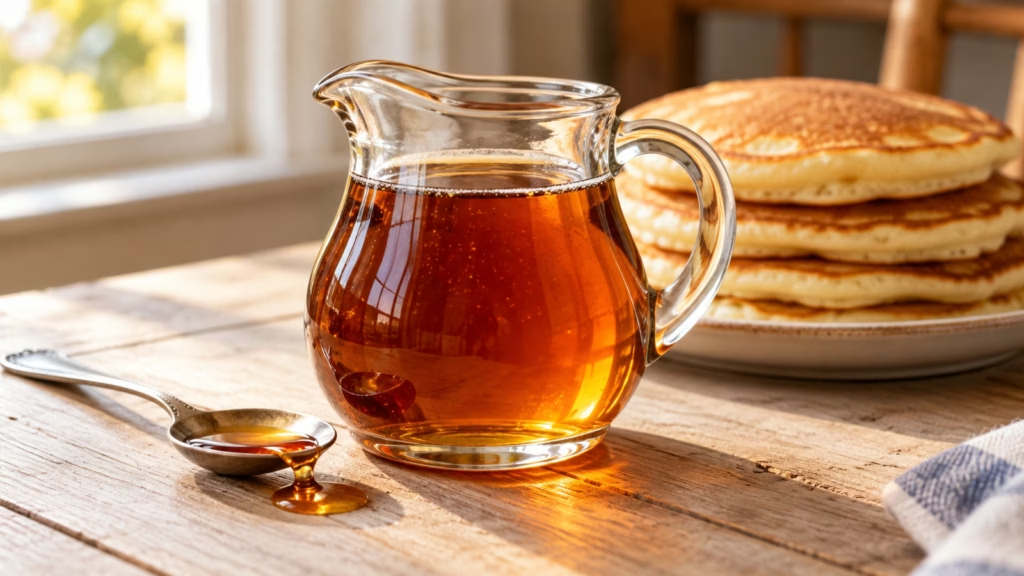
Two bottles of pure maple syrup can sit side by side, both marked Grade A, with one looking golden and the other almost brown. That is useful information, not a contradiction. Maple syrup is concentrated maple sap, and its color-and-taste description helps you choose how strongly you want maple to come through.
Read beyond Grade A. Golden, amber, dark, and very dark point toward different flavor strengths, not a ladder from good to bad.
I’d choose the bottle for what it will join: a quiet bowl of yogurt, a stack of pancakes, or a sauce with mustard and spice. The strongest maple flavor is not automatically the best fit for every spoonful.
Pure maple syrup and pancake syrup are different products
Pure maple syrup comes from maple-tree sap that has been concentrated and cooked down. Maple-flavored pancake syrups may use other sweeteners and flavorings. The front of a bottle can look warmly woodsy in either case, so read the product name and ingredients rather than relying on the artwork.
- For pure maple flavor: Look for pure maple syrup. If an ingredient list is present, maple syrup should be the ingredient rather than a blend led by another syrup.
- For a recipe: Use the product it specifies. A flavored pancake syrup is not a promise of the same flavor or behavior in a maple glaze.
- For label comparisons: Check the same serving amount. A smaller listed portion can make two products look more different than they are.
- For nutrition expectations: Maple syrup is still a concentrated sweetener. Its natural origin does not make it a free-pour food.
The FDA treats sugars from pure maple syrup as added sugars in the diet, even though the bottle may contain only maple syrup. That labeling distinction does not mean the producer secretly added table sugar. It reflects the syrup’s role as a sweetener.
Use the color-and-taste words to choose
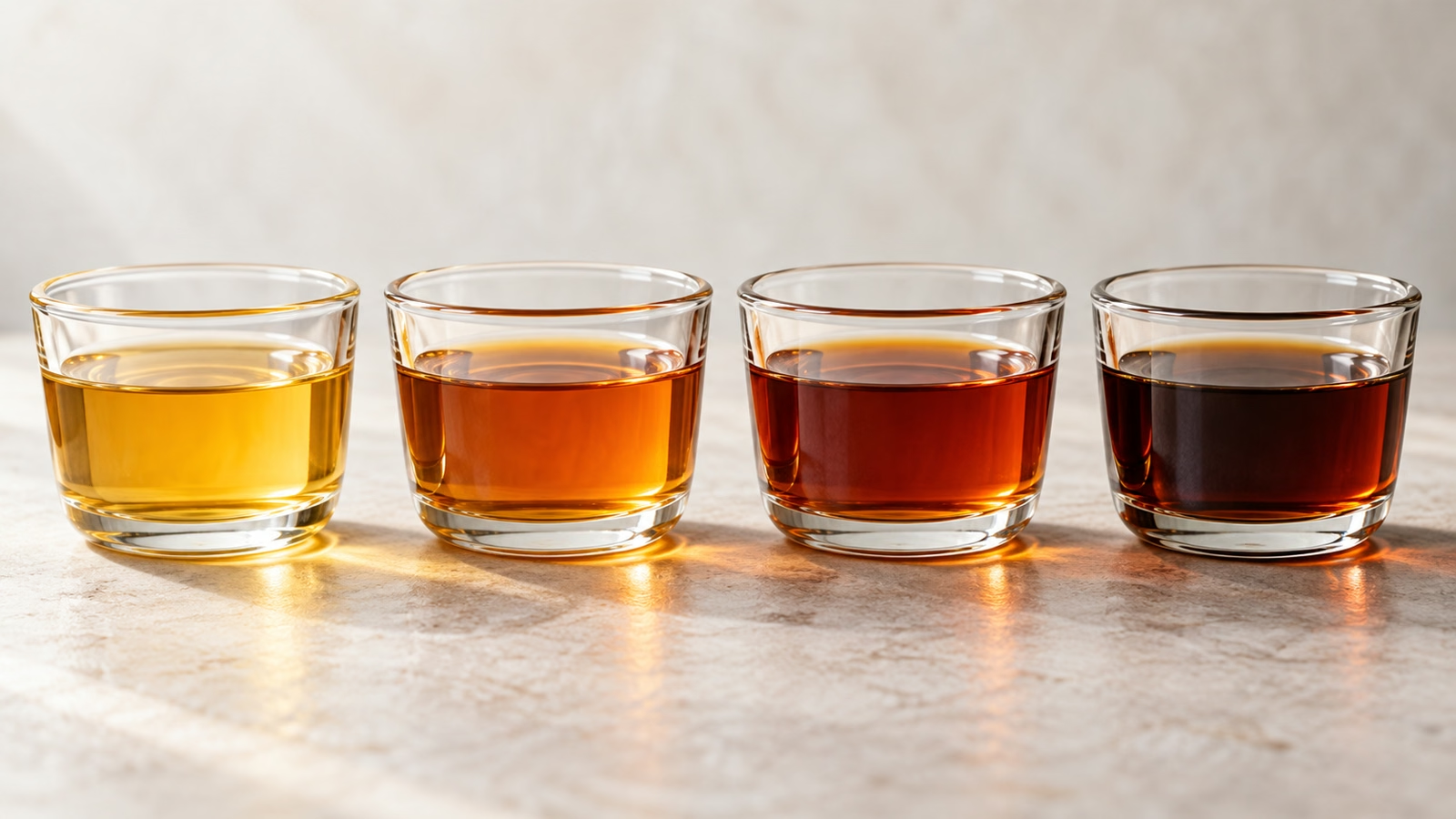
The Vermont Maple Sugar Makers’ Association describes four Grade A color classes. These give you a practical flavor guide; they do not tell you that dark syrup is defective or that golden syrup is inherently superior. Exact flavor still varies from bottle to bottle.
- Golden Color, Delicate Taste: The lightest, gentlest direction. Consider it when maple is a small accent rather than the dominant flavor.
- Amber Color, Rich Taste: A middle-ground choice for an unmistakable maple character without going straight to the strongest style.
- Dark Color, Robust Taste: A more assertive maple flavor that can hold its own with other substantial ingredients.
- Very Dark Color, Strong Taste: The boldest class, useful when a cooking or baking project needs the maple character to remain noticeable.
I’d rather buy one small bottle whose flavor suits the food than a large one chosen only because its label sounds more prestigious.
Give maple a clear job in the dish
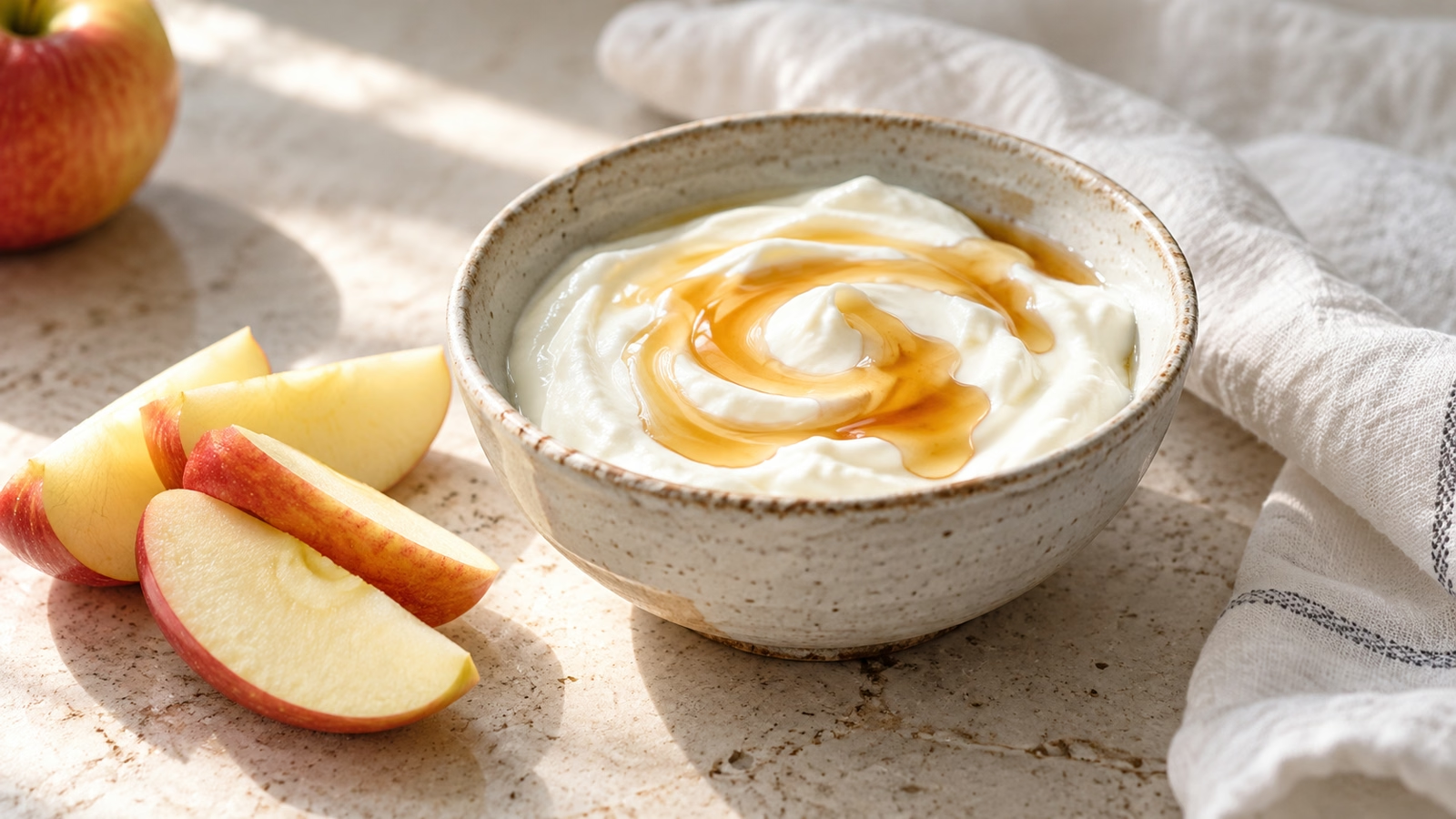
A drizzle at the table is the simplest use because you can stop when the sweetness feels right. Cooking is different: the syrup may also contribute liquid, browning, and texture. Those jobs matter when you replace another ingredient.
- Yogurt or oatmeal: Start with a little, stir or taste, and decide whether you want more sweetness or simply a stronger maple flavor.
- A savory dressing: Maple can soften the sharpness of mustard or vinegar. Add gradually and taste the dressing with the food it will coat.
- A glaze: Tastiva’s maple-glazed salmon bites use maple with soy, Dijon, and aromatics. Follow the recipe’s timing so the glaze does not burn while the fish cooks.
- Baking: Choose a maple-sweetened recipe when possible. Replacing dry sugar with syrup changes the amount of liquid as well as the flavor.
King Arthur Baking’s tests show why a universal spoon-for-spoon swap is too simple: liquid sweeteners affect moisture, browning, and the finished texture. Its guidance includes adjusting other liquid or flour when substituting maple for granulated sugar. For a favorite cake or cookie, follow a tested adaptation rather than treating the syrup as only sweetness.
Move opened maple syrup to the refrigerator
The pantry and the refrigerator have different roles. Follow the label for an unopened bottle; once opened, refrigerate pure maple syrup. The Vermont association also describes freezer storage for larger amounts, with a smaller everyday container kept in the refrigerator.
- Close the container after pouring and keep the opening clean.
- If you buy a large container, divide it into clean, suitable containers only if that makes storage easier, then refrigerate or freeze those portions.
- Warm just the amount you want for serving rather than repeatedly warming the whole stored bottle.
- If mold appears, discard the syrup. Ask Extension advises against the old practice of skimming mold and reheating.
- Follow the producer’s directions for flavored or blended syrups; they may not have the same storage requirements as pure maple syrup.
My preference is to buy an amount that fits the refrigerator and the way it will actually be used. A small bottle used in breakfasts, dressings, and the occasional glaze can be more practical than a bargain-sized container with no storage plan. Choose the flavor you enjoy, then keep it in good condition.
University of Vermont Extension maple specialist Mark Isselhardt explains maple flavor and grading in the Across the Fence video below.
Sources
- Vermont Maple Sugar Makers’ Association: Grades of Maple Syrup.
- Vermont Maple Sugar Makers’ Association: Maple 101 and Storage.
- King Arthur Baking: Baking With Liquid Sweeteners.
- FDA: Added Sugars on the Nutrition Facts Label.
- Ask Extension: Moldy Maple Syrup.
- University of Maine: Maple Grading Resources and UVM Videos.

Hi, I’m Laura, the voice behind Tastiva. I’ve always believed that eating well should feel enjoyable, comforting, and realistic—not like another complicated rule to follow. I love creating recipes that fit into everyday life, sharing simple nutrition ideas, and finding small ways to make meals feel a little better without losing the pleasure of good food.