
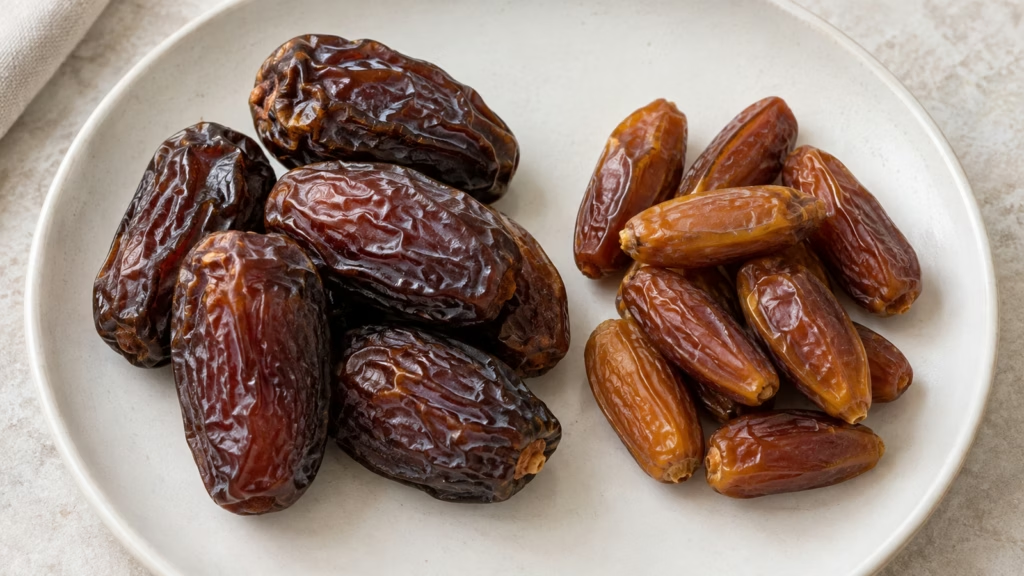
A recipe says ten dates, but the fruits in your bag are half the size of the ones in the picture. With Medjool vs Deglet Noor dates, that difference matters: Medjool dates are generally larger and softer, while Deglet Noor dates tend to be smaller and firmer. For substitutions, start with the pitted weight and the texture the recipe needs.
Choose a date for the job it needs to do, then measure what actually goes into the bowl.
Medjool vs Deglet Noor dates: the practical difference
These are date varieties, not labels for fresh fruit versus dried fruit. Their usual textures give you a useful starting point, but storage and the particular batch can change how soft they feel. A firm Medjool may need more attention than a fresh, pliable Deglet Noor.
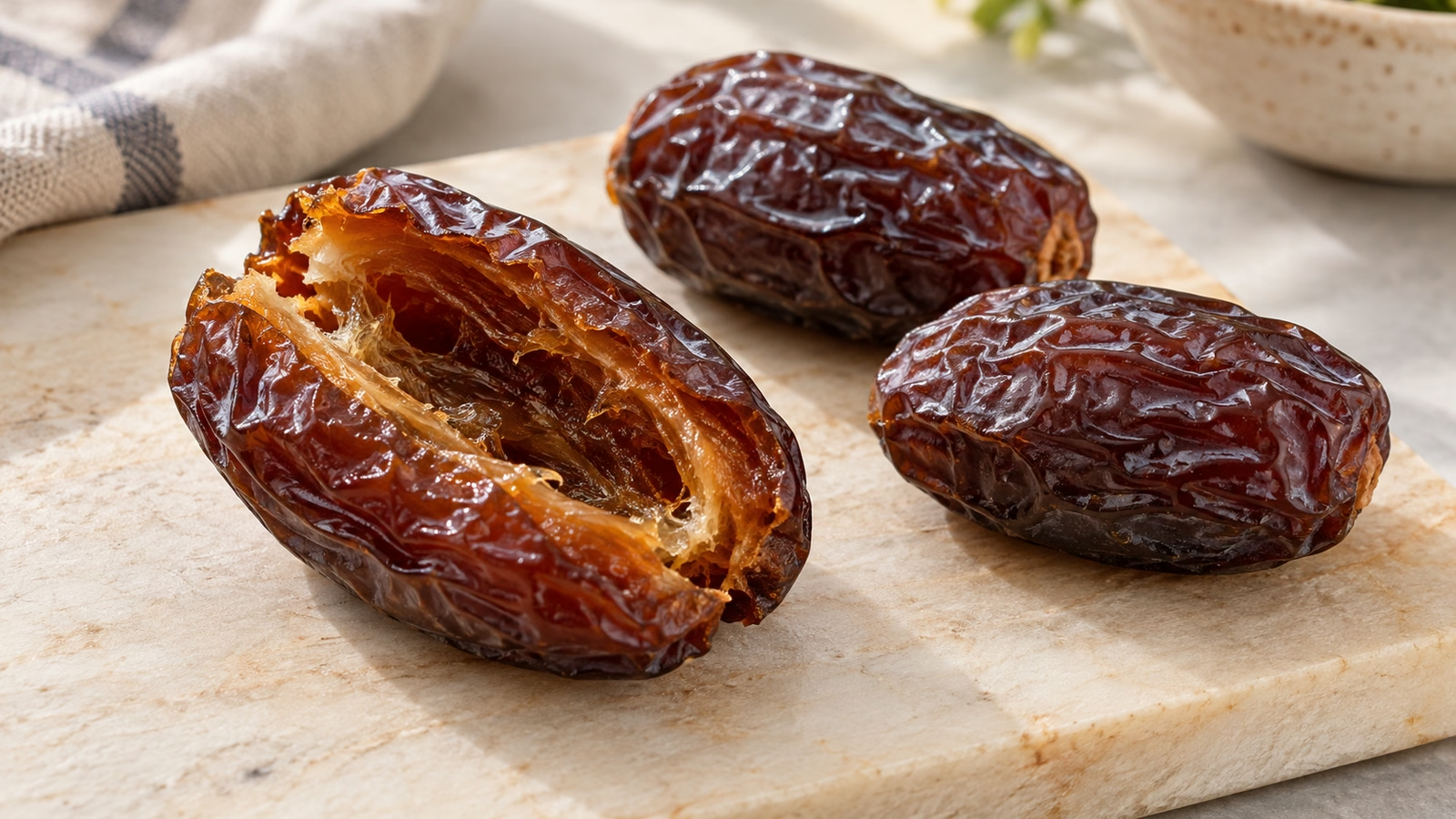
- Medjool: Often plump, chewy, and easy to open for stuffing. Soft fruit can also press into a connected base for a layered dessert.
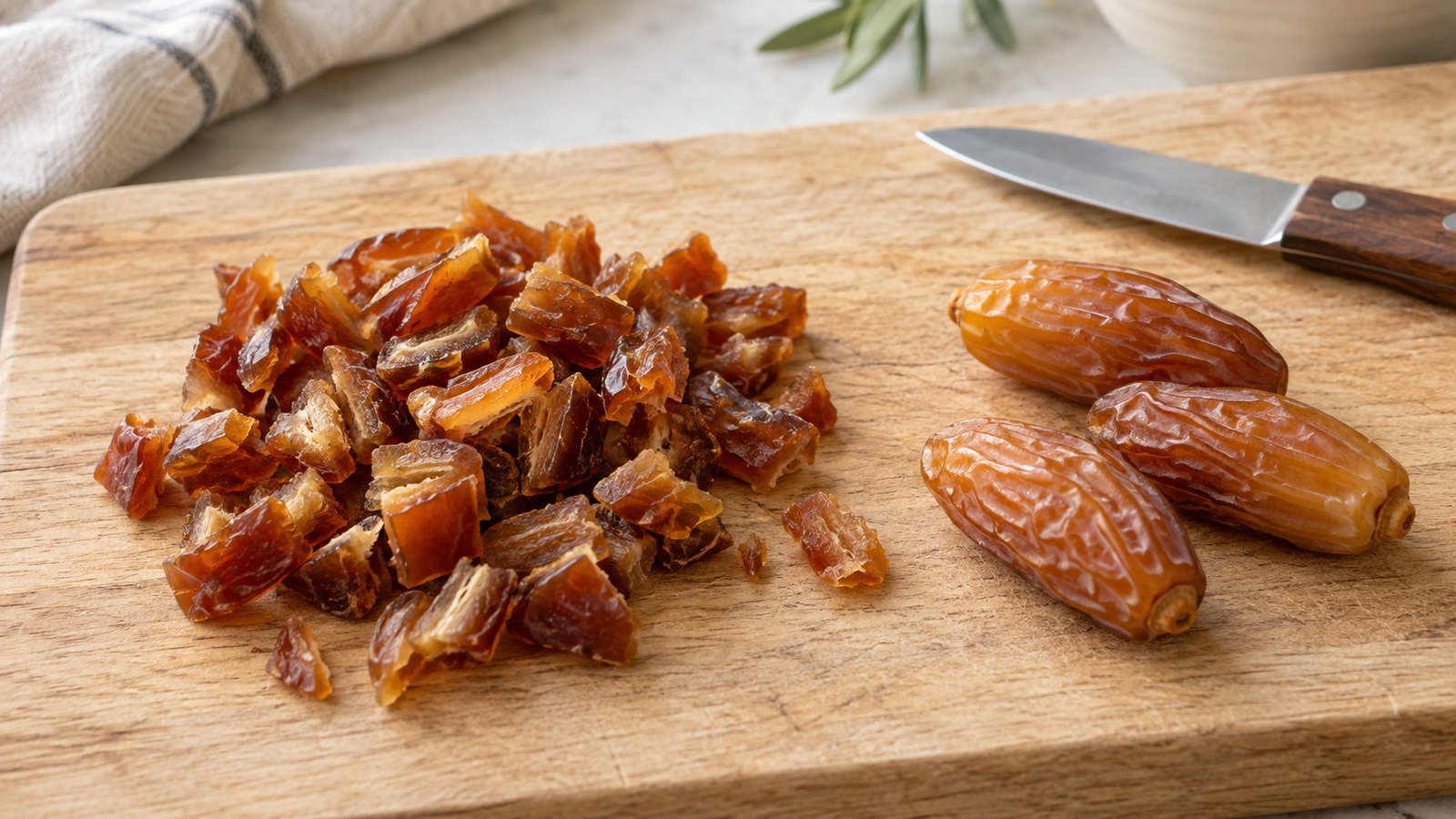
- Deglet Noor: Often firmer, smaller, and convenient to chop into distinct pieces for cereal, salads, or baked goods.
- Flavor: Both are sweet. Medjool is often described as caramel-like, while Deglet Noor is usually milder.
- What matters most: The fruit in your hand. Gently press one before choosing a preparation that depends on softness.
Natural Delights’ grower guidance describes the same broad size and texture distinction. I would use those tendencies to shop, then let the actual fruit decide whether it belongs in a stuffed snack, a chopped mixture, or a blended paste.
Match the variety to the preparation
A recipe that needs separate pieces has different requirements from one that depends on dates sticking together. You can often use either variety in a loose topping, but a pressed bark or a no-bake ball needs a mixture that holds when squeezed. Swapping without checking moisture is where the frustration usually begins.
- Stuffing: Large, soft dates offer more room for a small filling and are easier to open without tearing.
- Chopping: Firmer dates can produce more distinct pieces. Use a sharp knife and cut small batches rather than forcing a sticky pile.
- Blending: Pliable fruit is easier on the appliance. Follow the machine’s instructions and stop to scrape rather than running a struggling motor.
- Baking: Use the stated pitted weight. If dates provide both sweetness and moisture, changing variety may affect the result.
- Pressing into bark: Choose fruit that flattens easily and overlaps into a continuous sheet. Hard pieces do not become a flexible base just because chocolate goes on top.
I prefer to save a very firm batch for chopping rather than trying to force it into every internet dessert. That uses the fruit’s strength and avoids adding water where the recipe was never designed to handle it.
Make a swap by weight, then check moisture
Remove pits before weighing. A cup packed with whole Medjool dates does not behave like a loosely filled cup of chopped Deglet Noor dates, and a count of individual fruits is even less dependable. A kitchen scale takes size out of the comparison.
- Read the recipe’s role: Are dates a garnish, the sweetener, or the binder? A garnish is more forgiving than a structural ingredient.
- Match the pitted weight: Use this as the first adjustment, not a promise that the finished texture will be identical.
- Check the mixture: For a pressed preparation, squeeze a small amount before shaping the whole batch.
- If soaking is called for: Drain as directed. Added water affects storage and texture, so do not treat soaked fruit as interchangeable with dry fruit in every recipe.
Dates also do not replace granulated sugar in every baked recipe by equal weight. Whole fruit brings fiber, water, and texture alongside its sugars. A recipe developed for date paste is a better starting point than a blind swap in a cake that relies on sugar for structure.
Buy a useful amount and keep it well
Date-based products are having a visible moment: Bon Appétit reported a wave of date snacks in September 2026. That makes this comparison timely, but it does not turn dates into a sugar-free food or make one variety automatically healthier than the other.
- At the store: Check whether the package is whole or pitted, note the weight, and choose an amount you will realistically use.
- At home: Follow the package’s storage directions. An airtight container helps prevent drying; refrigeration is commonly recommended for Medjool dates.
- Before eating: Open and inspect the fruit. Even pitted products can occasionally contain pit fragments.
- If something looks wrong: Do not use fruit with mold, pests, or clear spoilage. A general description of sugar crystallization cannot diagnose every unusual spot.
For serving, think in portions that fit the meal rather than giving the larger variety a free pass because it is fruit. Pairing a small amount with yogurt, nuts, or a dessert you enjoy is a practical choice, not a promise about blood sugar. Tastiva’s added versus total sugars guide explains why naturally present sugar still appears on a nutrition label.
For more background on the two varieties, NYU Abu Dhabi’s researchers explain the ancestry of North African date palms, including Medjool and Deglet Noor, in this short video. It adds context about the fruit’s origins; use the texture and weight guidance above for kitchen substitutions.
Sources
- Natural Delights: date varieties, handling, and storage
- Bon Appétit: September 2026 date-product coverage
- USDA FoodData Central: date composition records

Hi, I’m Laura, the voice behind Tastiva. I’ve always believed that eating well should feel enjoyable, comforting, and realistic—not like another complicated rule to follow. I love creating recipes that fit into everyday life, sharing simple nutrition ideas, and finding small ways to make meals feel a little better without losing the pleasure of good food.