
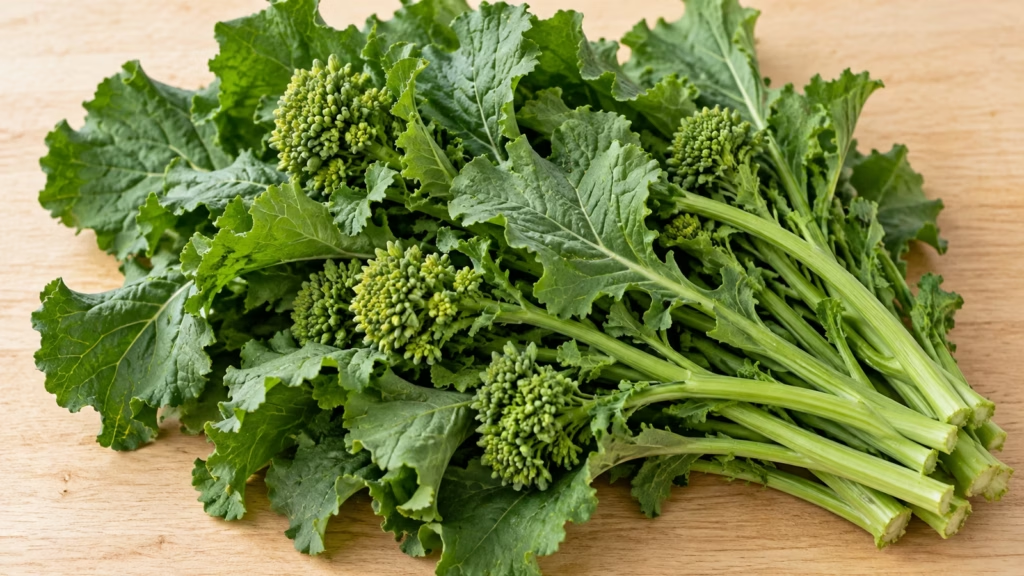
A bunch of broccoli rabe can look like broccoli that arrived with far more leaves than expected. Those leaves are part of the point: broccoli rabe, also called rapini, is a leafy, pleasantly bitter vegetable with edible buds and tender stems. For a gentler first taste, blanch it briefly before finishing it with olive oil and garlic; you do not need to strip it down to the tiny florets.
Treat broccoli rabe as a flavorful leafy green, and let its slight bitterness give the rest of the meal some contrast.
What broccoli rabe is, and what it is not
Despite the familiar name, broccoli rabe is not a small head of ordinary broccoli. Its abundant leaves, slender stalks, and little flower buds come together as one cooking green. Illinois Extension describes its flavor as closer to mustard or turnip greens, with a bitterness that can be softened by blanching.
- Rapini: Another common name for broccoli rabe. Seeing it on the label does not mean you have found a different substitute.
- Broccoli: Usually sold as a substantial compact head with a thick central stalk. It brings a different balance of buds, stems, and leaves.
- Broccolini: A separate vegetable with long stems and smaller broccoli-like tops. Do not choose it expecting the same assertive leafy flavor as rabe.
- The useful kitchen distinction: With rabe, cook the tender leaves and buds along with the usable stalks. Removing every leaf would discard much of the ingredient.
I would decide whether you want a mild vegetable or a bitter green before shopping. Neither needs to win a contest; they do different jobs. If you bought a regular broccoli head instead, Tastiva’s guide to using broccoli stems explains how to handle its thicker stalk.
Choose a sound bunch and trim only what needs trimming
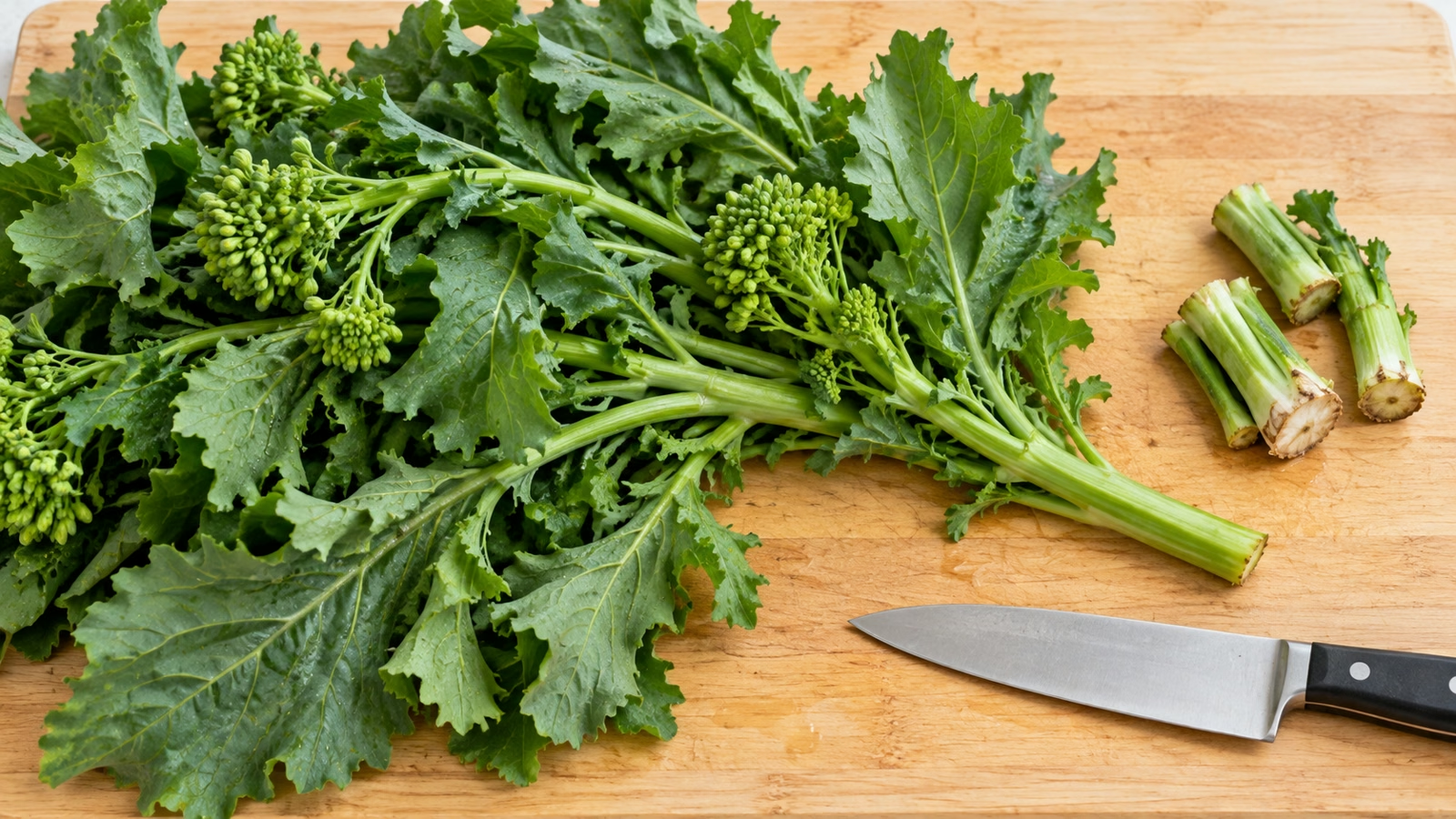
Look for fresh green leaves and firm, usable stems, and avoid a bunch with slime or obvious decay. At home, separate the stalks enough to see what needs attention. A dry cut end may need trimming; that is different from trying to rescue spoiled greens.
- Wash safely. Start with clean hands and rinse the greens thoroughly with running water, paying attention to folds and junctions. FDA advises against soap or detergent on produce.
- Trim the base. Cut away dry or discolored ends. Work from the actual condition of the stalk instead of automatically throwing away a large portion.
- Check thick stems. Grower Andy Boy recommends peeling the outer skin on thicker stems. Use a stable board and controlled cuts, keeping the tender portion.
- Keep the leaves and buds. Remove damaged sections, but retain sound tender leaves. Cut the usable greens to a size that suits the dish and serving utensil.
- Drain before skillet cooking. Excess water clinging to the greens can splash in hot oil and dilute a finishing sauce. Drain well after washing or blanching.
The grower’s preparation guide offers several cooking routes, rather than treating one method as compulsory. I would begin with the stovetop because it makes it easy to check a stem and stop when the texture suits you.
How to cook broccoli rabe with less bitterness
Blanching means briefly cooking in boiling water before another step. For broccoli rabe, it can soften both the stalks and the bitter edge. Illinois Extension suggests a 2-minute blanch followed by a quick cool in ice water, then further cooking; this is a preparation step, not a requirement to serve the greens cold.
- Blanch, drain, then sauté: A friendly first approach. Finish the drained greens in a skillet with olive oil and garlic until the stems are tender, taking care not to scorch the garlic.
- Braise for a softer result: Cooking with a small amount of liquid under a lid gives a different texture. Follow a complete braising recipe so the liquid and cooking time match the quantity.
- Roast for drier edges: Spread prepared greens on a tray and follow a rabe-specific method. Thin leaves can darken before thick stems soften, so inspect both rather than relying only on color.
- Season for balance: Garlic, a little chili, lemon, or vinegar can complement the assertive flavor. Add small amounts and taste instead of burying the greens beneath salt or sauce.
You can also cook rabe without a separate blanch. Lidia Bastianich’s ziti preparation steams it in the skillet with the other components. That is a useful reminder that bitterness is a preference to manage, not a flaw that every cook must remove completely.
Give the cooked greens a place in dinner
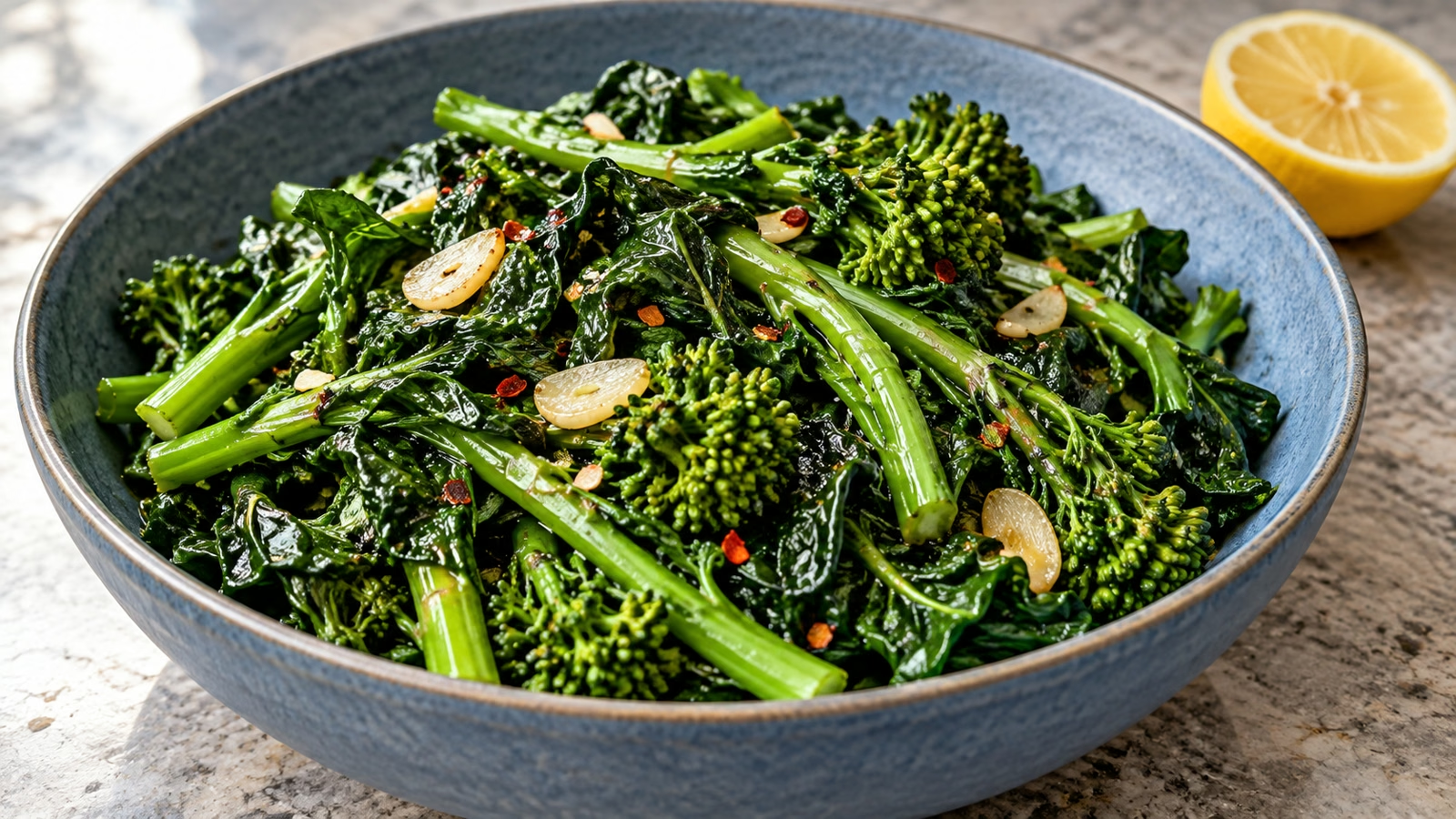
Creamy beans, pasta, and bread offer a gentle backdrop for the greens’ stronger flavor. I would start with a modest amount alongside something familiar if rabe is new to your table. There is no need to make dinner an endurance event for your taste buds.
- With pasta: Use manageable pieces so leaves and stems distribute through the dish rather than collecting in a tangle.
- Over beans or toast: Add cooked rabe to warm white beans, or spoon it onto sturdy toast. Drain extra liquid so the bread keeps some texture.
- In an egg dish: Use cooked, well-drained greens in a frittata or another fully cooked egg preparation.
- As a side: Serve with garlic and lemon beside a main dish. Keep extra lemon at the table so people can adjust their own portion.
- Before cooking: Illinois Extension suggests a loosely closed bag or container in the refrigerator’s crisper for 3–5 days. That is a quality window, not a reason to overlook spoilage.
Keep the refrigerator at 40°F (4°C) or below. Refrigerate cooked leftovers promptly and use within USDA’s 3–4-day guidance. For a practical example of rabe in a complete dish, America’s Test Kitchen demonstrates orecchiette with broccoli rabe and sausage below.
Sources
- Illinois Extension: broccoli rabe preparation and storage
- Andy Boy: broccoli rabe ingredient guide
- Andy Boy: trimming and cooking techniques
- Lidia Bastianich: a skillet-cooked broccoli rabe example
- FDA: safe produce preparation
- USDA FSIS: handling leftovers safely

Hi, I’m Laura, the voice behind Tastiva. I’ve always believed that eating well should feel enjoyable, comforting, and realistic—not like another complicated rule to follow. I love creating recipes that fit into everyday life, sharing simple nutrition ideas, and finding small ways to make meals feel a little better without losing the pleasure of good food.