
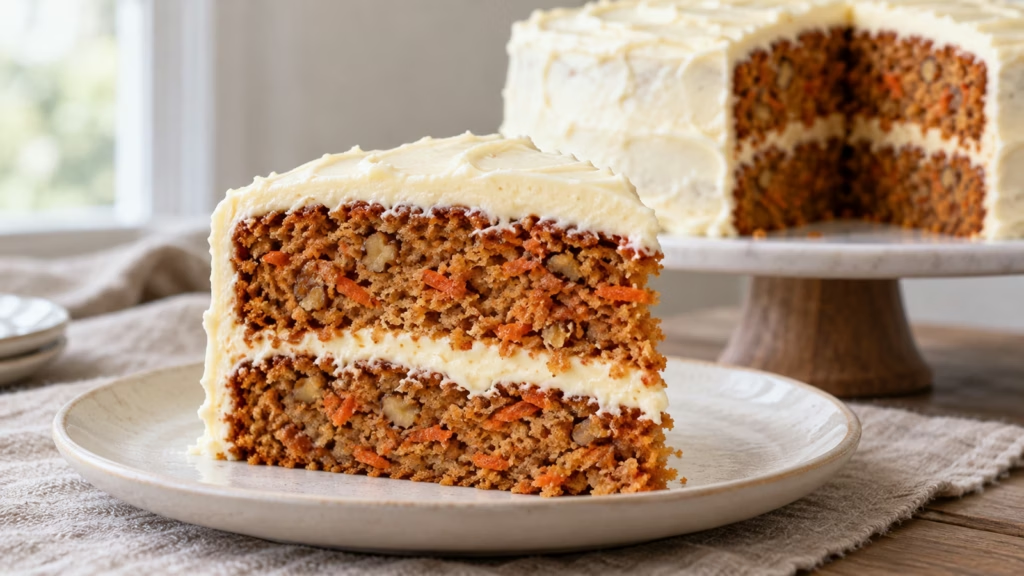
A good carrot cake has more going on than sweetness: soft carrot flecks, warm spice, a little walnut crunch and cream cheese frosting with a tangy edge. This two-layer version keeps those familiar parts in balance. There is no pineapple or raisin mixture to prepare, and the batter comes together with a whisk and spatula before the frosting needs a mixer.
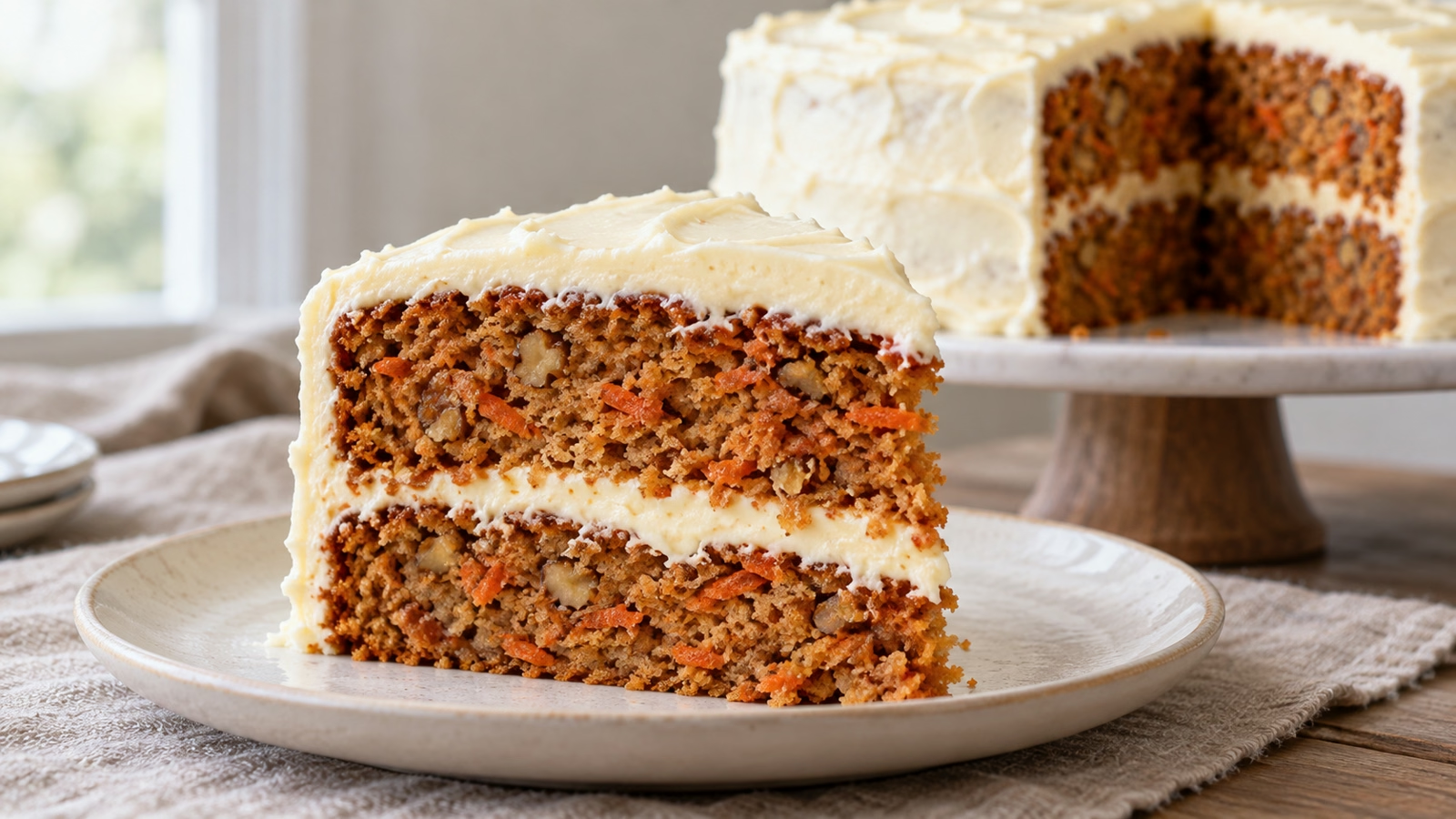
I want the carrot and cinnamon to stay noticeable under the frosting. A soft layer in the middle and a simple coat over the top give each slice enough contrast without turning the cake into a decorating assignment.
Freshly grated carrots make the difference
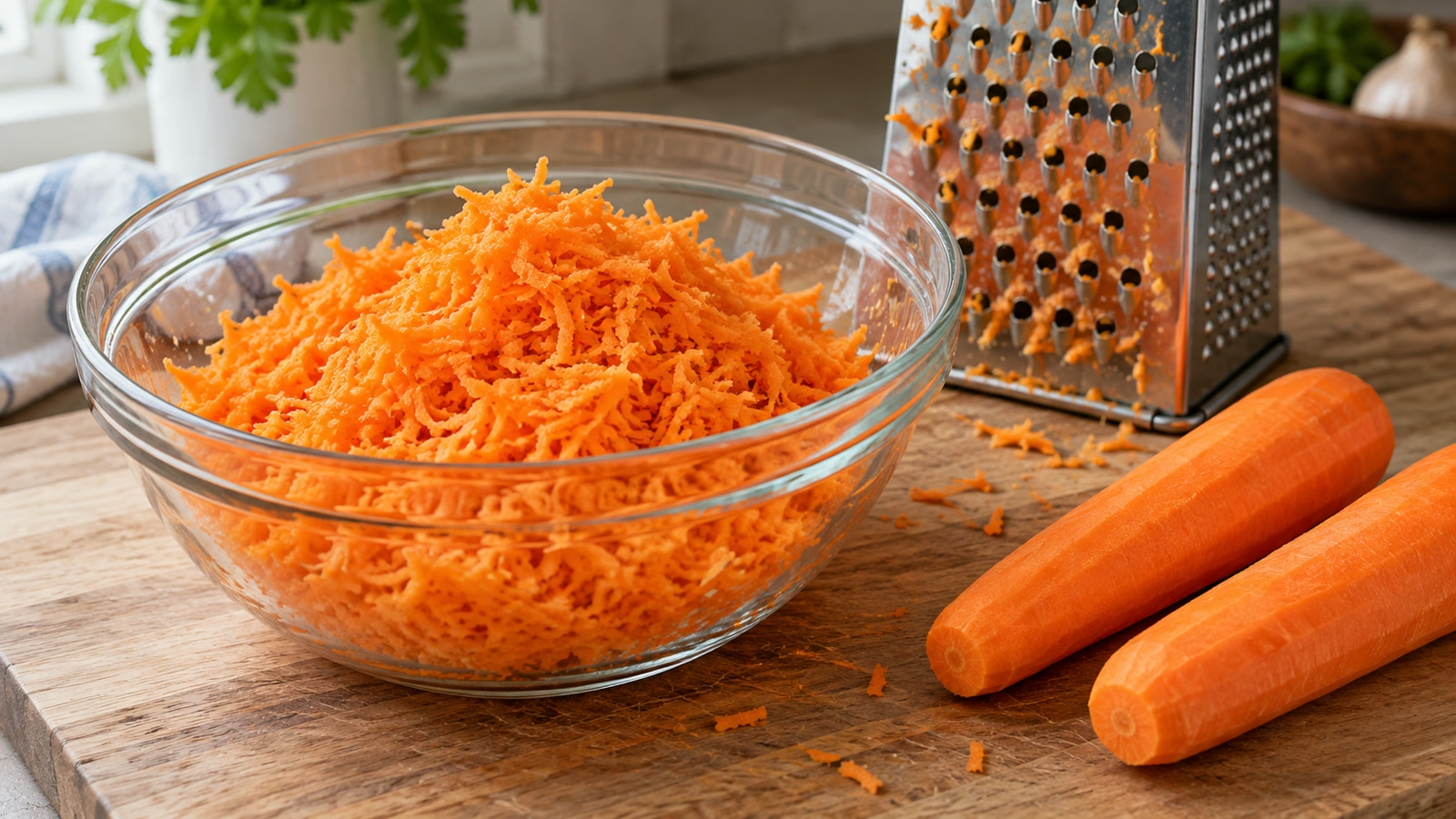
Wash, peel and grate the carrots yourself rather than using thick bagged matchsticks. Fine, short shreds distribute more evenly through the batter and soften as the cake bakes. Weigh 350 g after trimming and peeling so the amount does not depend on whether your carrots happen to be especially large.
Do not squeeze the grated carrots dry. Their moisture belongs in the batter. At the same time, resist adding an extra handful simply because there is a little left on the board; more carrot changes the balance of a cake rather than automatically making it better.
Cinnamon carries most of the spice flavor, with a small amount of ginger behind it. Ordinary ground cinnamon works well. If you prefer a gentler cinnamon note, the Ceylon cinnamon guide explains how its flavor differs from cassia. The walnuts should be chopped small enough to sit comfortably in a forkful, not left in large halves.
Mix a cake batter, not a bowl of grated vegetables
Whisk the flour, leavening, salt and spices together first so the small ingredients are evenly distributed. In a second bowl, whisk the oil, both sugars, eggs and vanilla until smooth. Break up any firm brown-sugar clumps before they disappear into the mixture.
Fold the dry ingredients into the wet just until the flour is incorporated, then fold in the carrots and walnuts. Scrape the bottom of the bowl as you go. The batter will be thicker than a pourable chocolate cake batter, but the carrots should be coated throughout rather than sitting in dry clumps.
Divide the batter between two prepared 8-inch round pans. If you have a scale, weigh the filled pans to keep the layers close in size. Uneven layers are still edible, but one shallow pan can finish baking well before a deeper one, which makes the oven check less straightforward.
Let the layers cool before building the cake
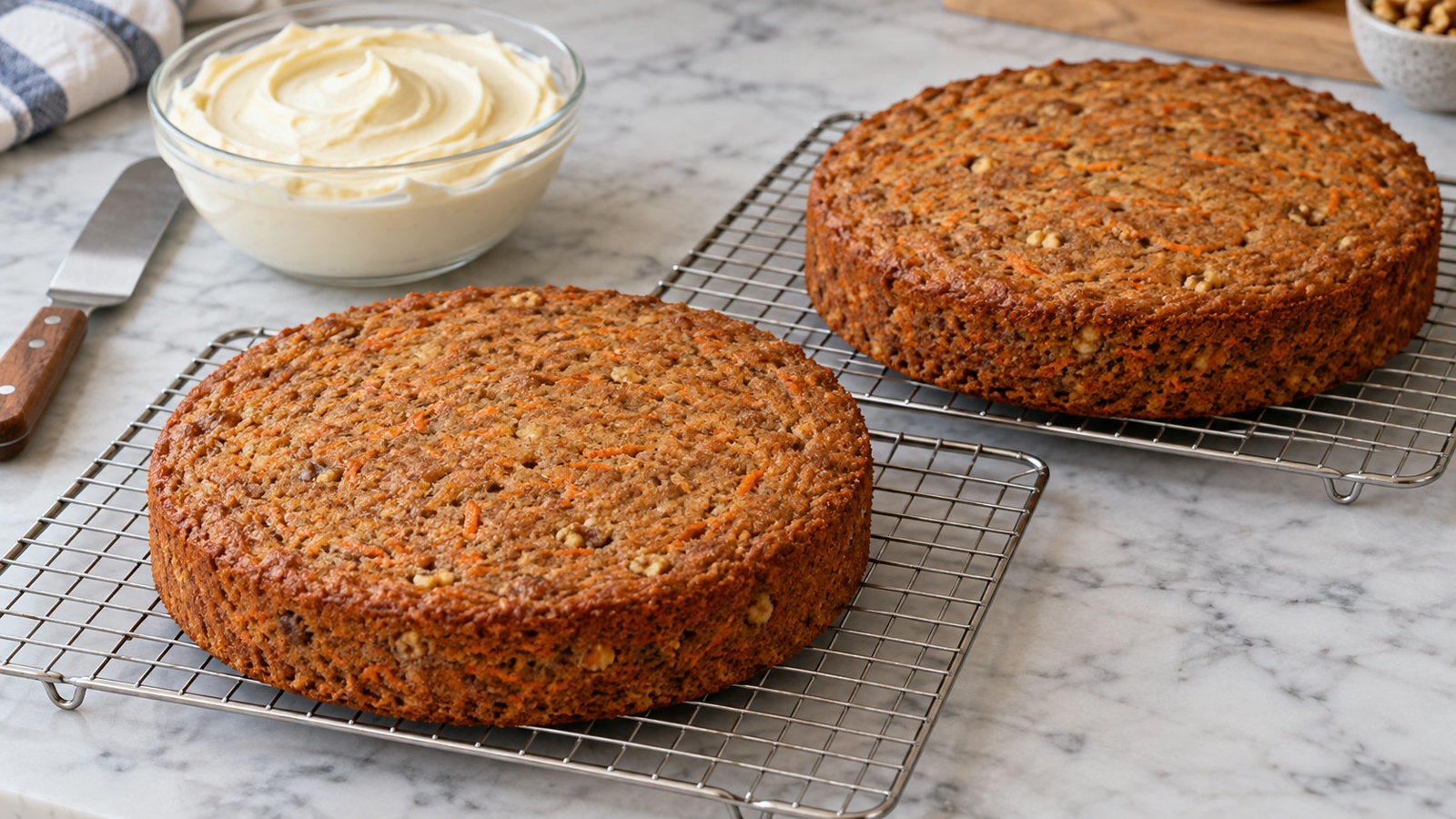
Bake on the center rack at 350°F. Start checking after about 30 minutes: the centers should feel set, and a cake tester should come out without wet batter. A few soft crumbs are fine. Check both pans rather than assuming they have baked at exactly the same rate.
Let the cakes rest in their pans for 15 minutes, then loosen the edges and turn them onto racks. Remove the parchment and allow them to cool completely. Handle each layer with a flat hand or a broad cake lifter so it stays supported; a warm, moist layer is easy to crack if lifted by one edge.
Give the cooling stage room in your schedule. Two hours is a practical allowance, but the real cue is a completely cool center. Frosting a warm layer softens the filling and makes a stacked cake more likely to slide. If the layers are ready before you are, wrap them once cool and refrigerate.
A simple cream cheese finish
Use full-fat brick-style cream cheese and softened unsalted butter. A spreadable tub product can behave differently because its formulation and moisture vary. Previously frozen cream cheese can also become grainy; our cream cheese freezing guide explains why it is a less predictable choice for a smooth frosting.
Beat the butter and cream cheese just until smooth, then mix in powdered sugar, vanilla and salt. Stop when the frosting is creamy and spreadable. If the kitchen is warm and it feels loose, chill it briefly before piling in more sugar. This frosting is for filling and a simple coat, not tall piped decorations.
Place one layer on a plate, spread about a third of the frosting over it, then add the second layer and finish the top and sides. Refrigerate the finished cake, covered, and use within three days. Let individual slices sit briefly before serving so the frosting softens, keeping total time out under two hours, or one hour above 90°F.
Carrot Cake Recipe

Ingredients
- 2 1/2 cups all-purpose flour 300 g, spooned and leveled
- 2 teaspoons baking powder 8 g
- 1/2 teaspoon baking soda 3 g
- 2 teaspoons ground cinnamon 5 g
- 1/2 teaspoon ground ginger 1 g
- 2/3 teaspoon fine salt 4 g
- 3/4 cup canola oil 180 ml / about 165 g
- 3/4 cup packed light brown sugar 150 g
- 125 g granulated sugar about 1/2 cup plus 2 tablespoons
- 3 large eggs 150 g without shells
- 2 teaspoons vanilla extract about 8 g
- 350 g finely grated carrots prepared weight, about 3 cups; do not squeeze dry
- 3/4 cup chopped walnuts 80 g
- 12 oz full-fat brick-style cream cheese 340 g, softened
- 1/2 cup unsalted butter 113 g, softened
- 320 g powdered sugar about 2 3/4 cups, sifted
- 1 teaspoon vanilla extract about 5 g
- 1 g fine salt a scant 1/4 teaspoon
Equipment
- 2 8-inch round cake pans at least 2 inches deep
- 1 box grater
- 2 Mixing bowls
- 1 electric hand mixer
- 2 wire cooling racks
Instructions
- Heat the oven to 350°F (175°C). Line the bases and sides of two 8-inch round pans, at least 2 inches deep, with parchment. Finely grate the carrots and chop the walnuts.
- Whisk the flour, baking powder, baking soda, cinnamon, ginger and salt together in a bowl.
- In a large bowl, whisk oil, both sugars, eggs and vanilla until smooth, breaking up brown-sugar clumps. Fold in the dry ingredients just until combined. Fold in the grated carrots and walnuts, scraping the bottom of the bowl.
- Divide the batter evenly between the pans and smooth the tops. Bake for about 30–38 minutes, checking both pans at 30 minutes. The centers should be set and a cake tester should come out without wet batter; a few moist crumbs are fine.
- Cool in the pans for 15 minutes. Loosen the edges, turn out onto racks and remove parchment. Cool completely, allowing about 2 hours in total or longer if needed. Do not frost warm layers.
- Beat the softened cream cheese and butter with an electric mixer until smooth. Add powdered sugar gradually on low speed, then vanilla and salt. Mix only until creamy and spreadable. If soft from a warm kitchen, refrigerate briefly until it holds a soft ridge.
- Place one cooled layer on a serving plate and spread with about one-third of the frosting. Add the second layer. Spread the remaining frosting over the top and sides in a simple coat. Refrigerate the covered cake and use within 3 days. Let individual slices soften briefly before serving.
Nutrition
Video
Notes
Tried this recipe?
Let us know how it turned out!Sources
- King Arthur Baking: carrot cake structure, doneness and refrigeration
- Preppy Kitchen: freshly grated carrots and cake technique
- USDA: refrigerating cream cheese
- USDA: safe handling of perishable foods
- USDA FoodData Central: ingredient composition
Hi, I’m Laura, the voice behind Tastiva. I’ve always believed that eating well should feel enjoyable, comforting, and realistic—not like another complicated rule to follow. I love creating recipes that fit into everyday life, sharing simple nutrition ideas, and finding small ways to make meals feel a little better without losing the pleasure of good food.