
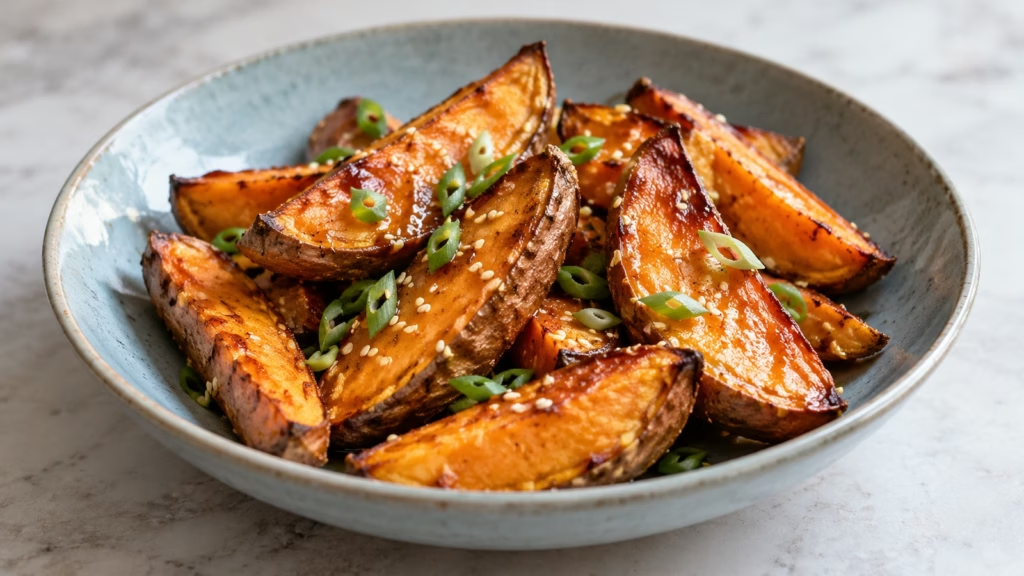
A dark glaze can make sweet-potato wedges look done long before their centers soften. For these miso roasted sweet potatoes, roast the lightly oiled wedges first, then brush on a thin miso-maple mixture near the end. You get browned edges and savory sweetness without asking the glaze to survive the whole bake.
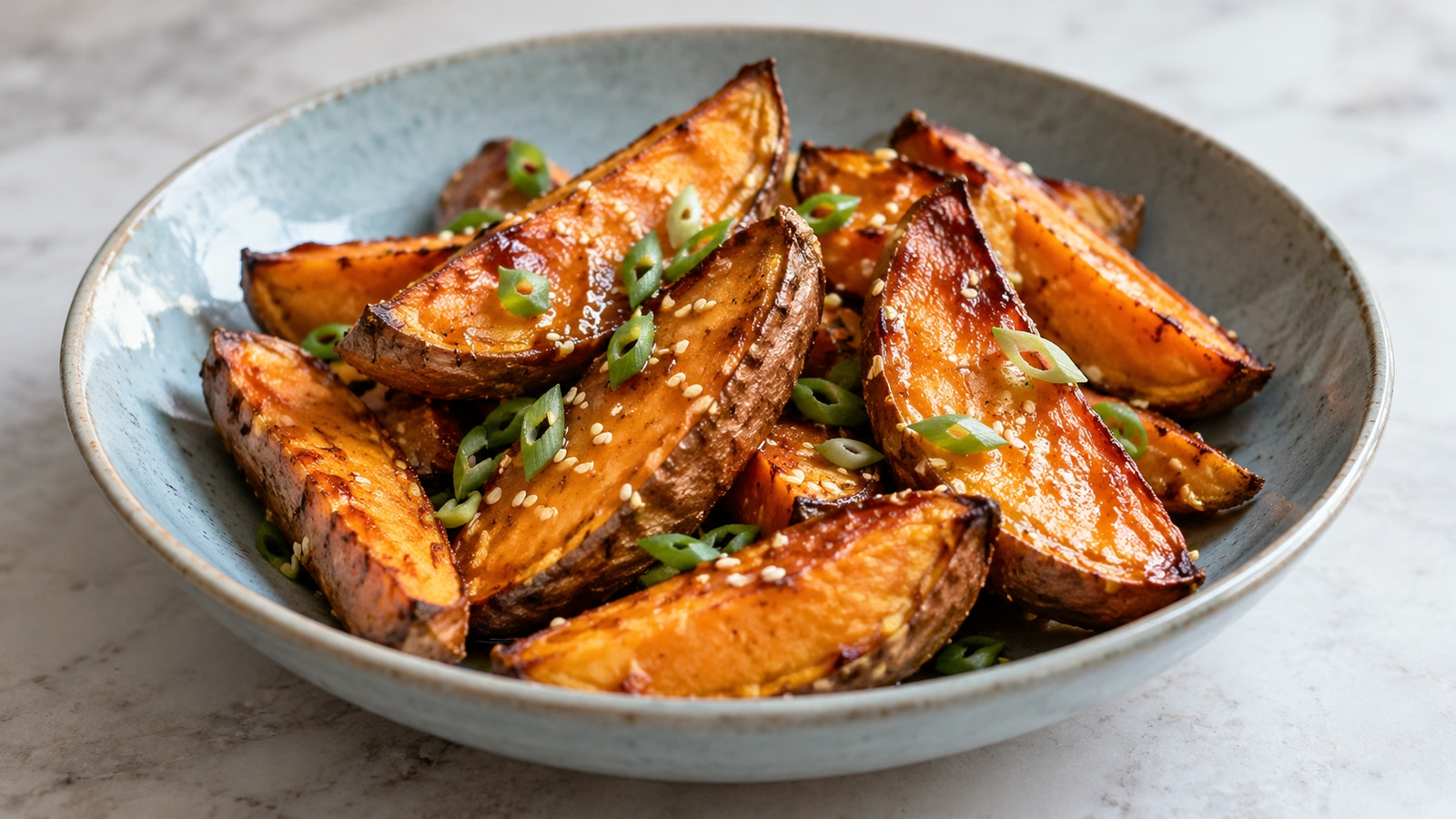
Let the sweet potatoes soften before the miso glaze meets the heat.
Why a late glaze makes a better side
Sweet potatoes need time for their centers to become tender. Miso and maple syrup add concentrated seasoning and sugar, so applying them at the beginning can darken the surface faster than you want. A short final roasting stage gives the glaze enough heat to cling without making it the timer for the whole dish.
- First stage: Oil the wedges and roast them with a cut side against the pan.
- Check the center: A fork should enter with only a little resistance before the glaze goes on.
- Final stage: Brush lightly, return briefly to the oven, and watch the edges instead of walking away.
Miso’s current popularity is documented beyond recipe feeds. Waitrose’s September 2026 report describes growing interest in the ingredient in the UK. This is a seasonal home-cooking use for that established Japanese seasoning, not evidence that this exact side dish is trending everywhere.
Choose wedges with a similar thickness
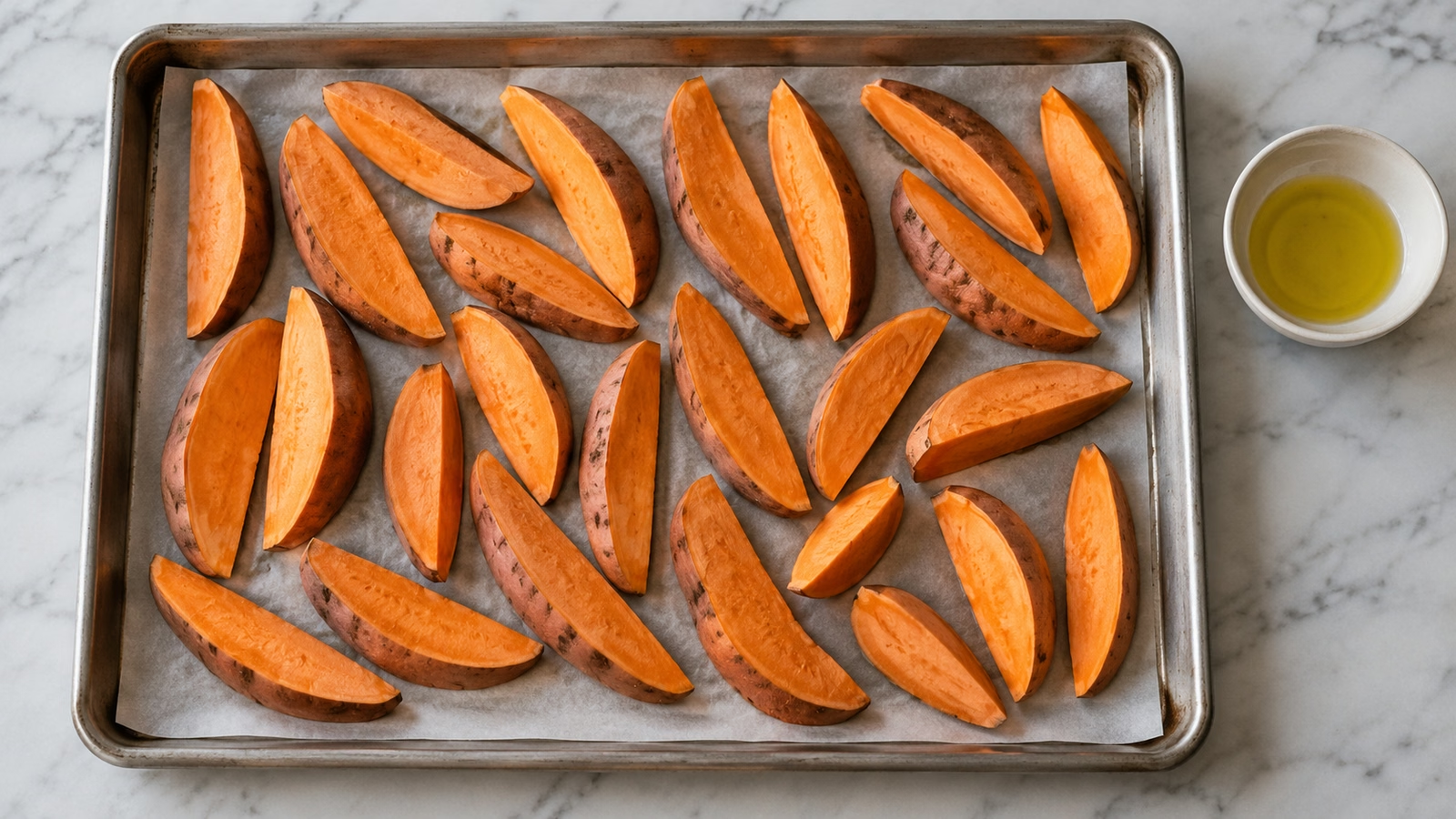
Use orange-fleshed sweet potatoes with firm flesh and no soft, spoiled areas. Long, relatively even potatoes are easier to cut into wedges that cook at the same pace. Keep the thickest part of each wedge around 3/4 inch; a few oversized pieces can hold up the whole tray.
- Skin: Scrub well and leave it on if you enjoy the texture, or peel before cutting. Neither choice changes the need to wash the potatoes.
- White miso: Start with a plain paste rather than a ready-seasoned soup base. The glaze needs the paste’s body.
- Maple syrup: Use the measured amount; more syrup makes the coating sweeter and easier to scorch.
- Rice vinegar: A little acidity balances the sweetness. Choose unseasoned vinegar so extra sugar and salt do not enter unnoticed.
I prefer a restrained glaze that still lets the sweet potato taste like itself. Miso varies in strength, so whisk and taste the mixture before brushing. A very assertive red miso needs a lighter hand and will produce a darker finish.
Read the pan, not just the clock
Spread the wedges in one layer with space between them. If they are piled together, moisture gets trapped and the sides stay soft. Use two pans rather than trying to fit a larger batch onto one; rotate their positions if your oven browns unevenly.
- Pale but tender: Give a broad cut side better contact with the pan before glazing.
- Dark but firm: Lower the oven temperature and allow more time. Cover loosely if necessary; do not add more sugary glaze.
- Glaze too thick: Whisk in a little water so it brushes in a thin layer rather than sitting in blobs.
- Uneven sizes: Remove smaller finished wedges earlier and let the larger ones continue.
The recipe aims for tender centers and browned surfaces, not the shattering crunch of deep-fried potatoes. Calling every roasted wedge crispy sets up the wrong expectation, especially once a moist glaze goes on. Let them sit briefly on the pan, then transfer while still hot.
What to serve with them and what to save
These wedges fit alongside simply cooked tofu, chicken, or a bowl of beans and greens. A tart cucumber salad or lightly dressed cabbage adds contrast. Because the glaze already brings salt and sweetness, I would avoid stacking several heavily sauced sides on the same plate.
- Make ahead: Cut the wedges and mix the glaze separately shortly before cooking. For the best surface texture, roast close to serving.
- Refrigerate: Put leftovers into shallow containers within two hours, or one hour if the room is above 90°F.
- Use: Keep at 40°F or below and eat within three to four days.
- Reheat: Warm gently in the oven until the center reaches 165°F. Watch the glaze; cover loosely if it darkens too quickly.
Cold leftovers can also become a salad component if they have been handled safely, though the texture will be softer. Tastiva’s sweet-potato skin guide offers more help choosing whether to peel. For dietary needs, check the miso label: soy is common, and some varieties contain barley or other gluten ingredients.
Miso Roasted Sweet Potatoes Recipe

Ingredients
- 2 pounds orange sweet potatoes 907 g, scrubbed and cut into wedges about 3/4 inch thick
- 2 tablespoons olive oil 27 g
- 2 tablespoons white miso 36 g
- 1 tablespoon maple syrup 20 g
- 1 tablespoon unseasoned rice vinegar 15 g
- 1 tablespoon water 15 ml, plus more as needed
- 1 teaspoon toasted sesame seeds 3 g
- 1 scallion 15 g, thinly sliced
Equipment
- 1 large rimmed baking sheet
- 1 Cutting board
- 1 Chef’s knife
- 1 small bowl
- 1 pastry brush
Instructions
- Heat the oven to 425°F (220°C). Toss sweet-potato wedges with olive oil and arrange on a large rimmed baking sheet with space between them and a cut side down. Use two pans if crowded.
- Roast for 25–30 minutes, turning after about 15 minutes, until browned in places and almost tender when pierced. Larger wedges may need longer before glazing.
- Whisk the miso, maple syrup, rice vinegar, and water in a small bowl. Add a little more water if needed to make a thin, brushable glaze.
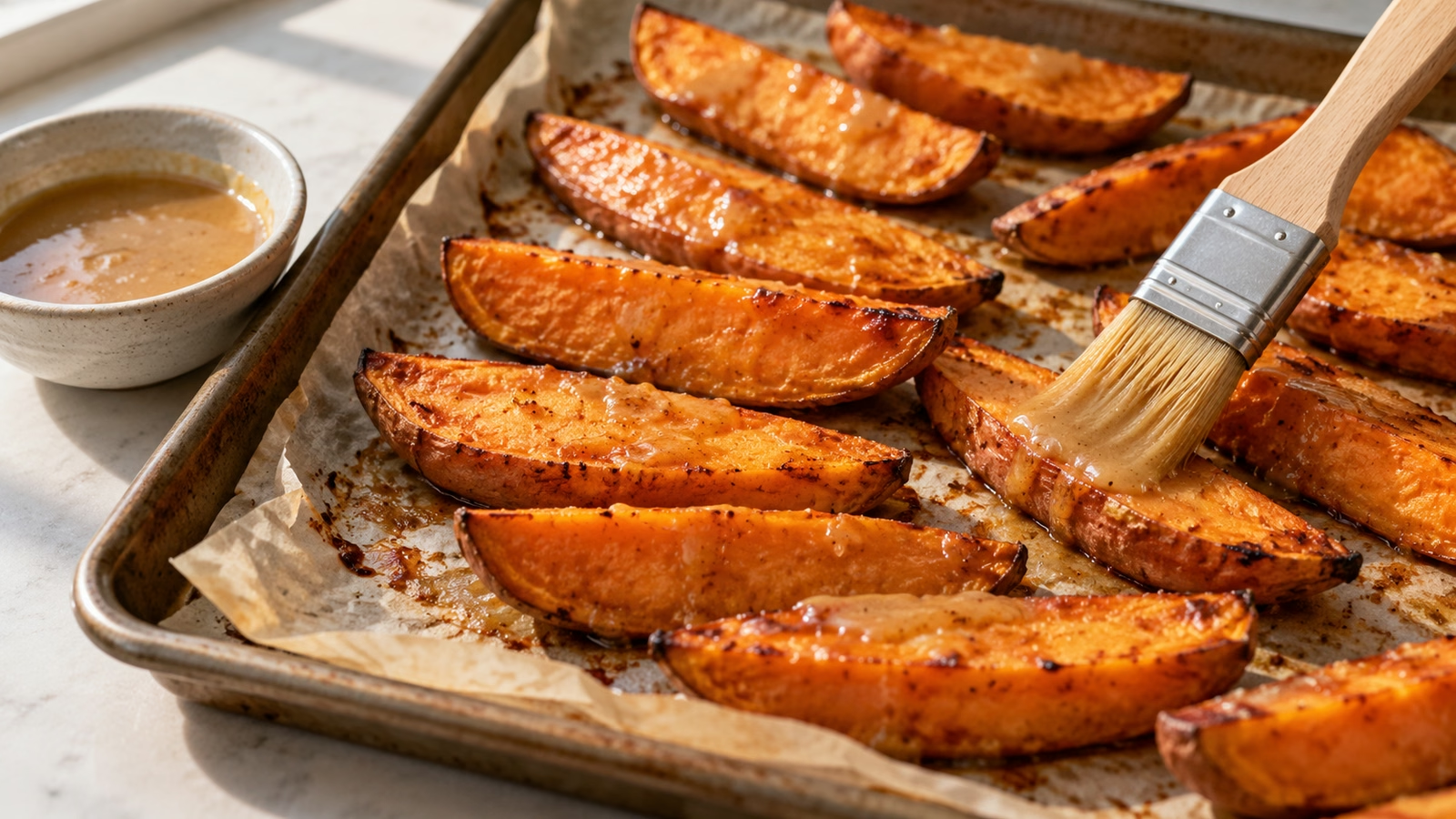
- Brush the wedges lightly with the glaze. Return to the oven for 5–8 minutes, checking frequently, until the glaze clings and the centers are fully tender. Remove individual wedges early if they darken quickly.
- Let stand for 2 minutes, then transfer to a plate and sprinkle with sesame seeds and scallion. Divide into six side servings.
Nutrition
Notes
Tried this recipe?
Let us know how it turned out!Sources
- Waitrose: September 2026 miso demand report
- Hikari Miso: plain white miso ingredients
- USDA: leftovers and safe storage
Hi, I’m Laura, the voice behind Tastiva. I’ve always believed that eating well should feel enjoyable, comforting, and realistic—not like another complicated rule to follow. I love creating recipes that fit into everyday life, sharing simple nutrition ideas, and finding small ways to make meals feel a little better without losing the pleasure of good food.