
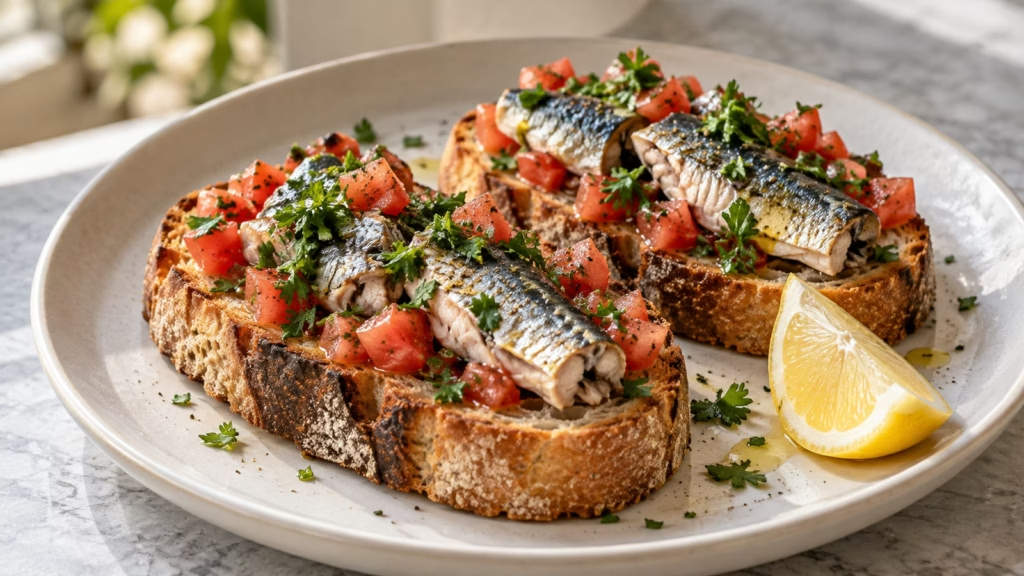
The topping is ready, but the toast has already lost its crunch under a small lake of tomato juice. Sardine tomato toast is better assembled at the last moment: drain the fish, let the chopped tomatoes shed excess liquid, then layer everything onto sturdy, well-toasted bread with lemon and parsley.
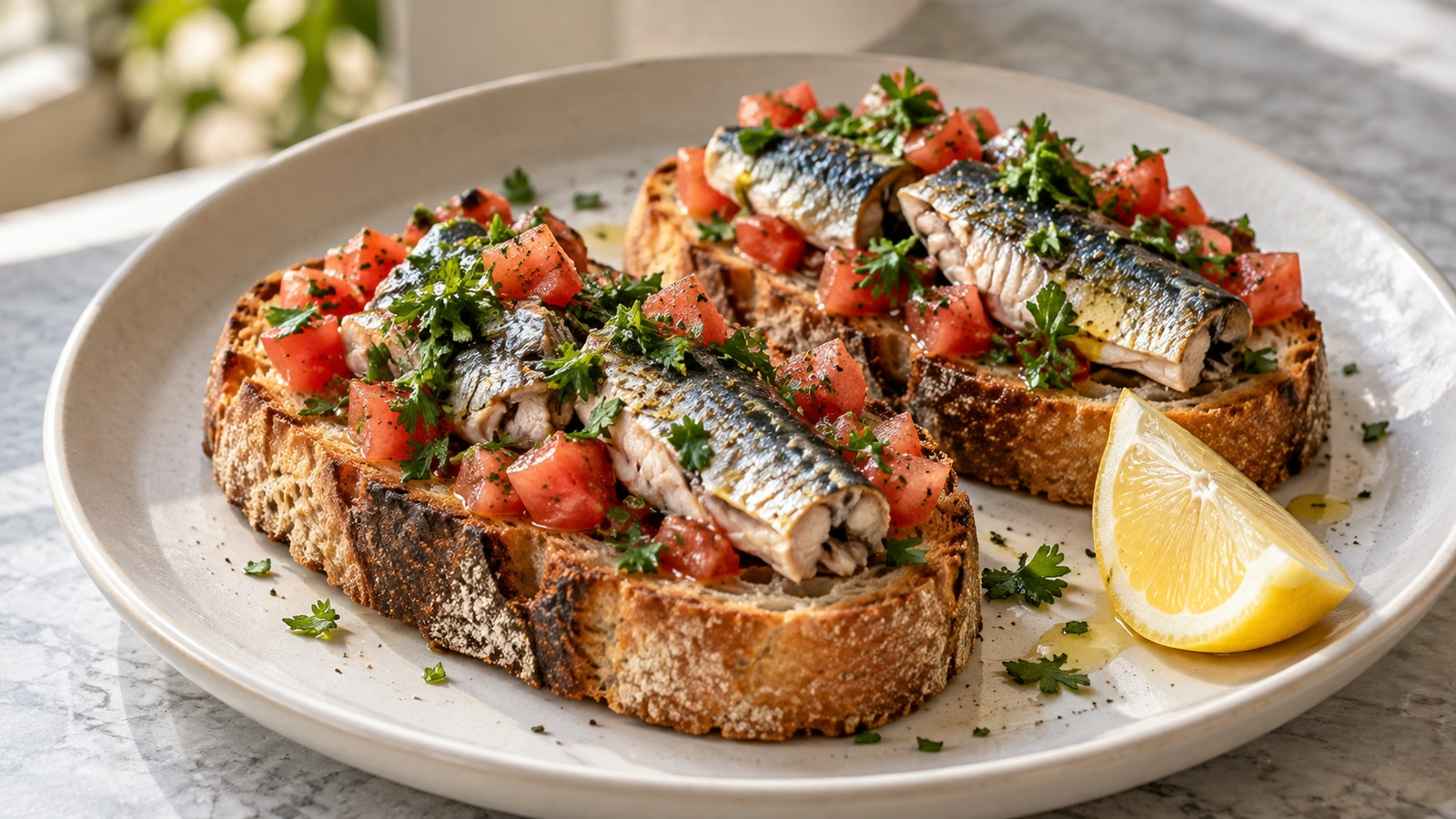
Keep the bread crisp, the topping drained, and the lemon within reach.
Sardine tomato toast starts with a sturdy base
Choose bread thick enough to support the topping without becoming difficult to bite. Sourdough or another firm country-style loaf works well. Toast both sides until the surface feels dry and crisp, not merely warm, then let it sit on a rack for a moment so steam does not soften the underside.
- Toast first: A hot, dry surface stands up better to a moist topping.
- Drain separately: Keep sardine oil and tomato juices from soaking the bread before you are ready.
- Assemble last: This is a plate-and-eat lunch, not a filled sandwich to pack hours ahead.
Tinned fish is drawing renewed attention in 2026; FoodNavigator’s August 25 report discusses the sardine-focused social trend. A sensible response is finding a preparation you enjoy, not turning one ingredient into an eating challenge.
Choose the tin for the bite you want
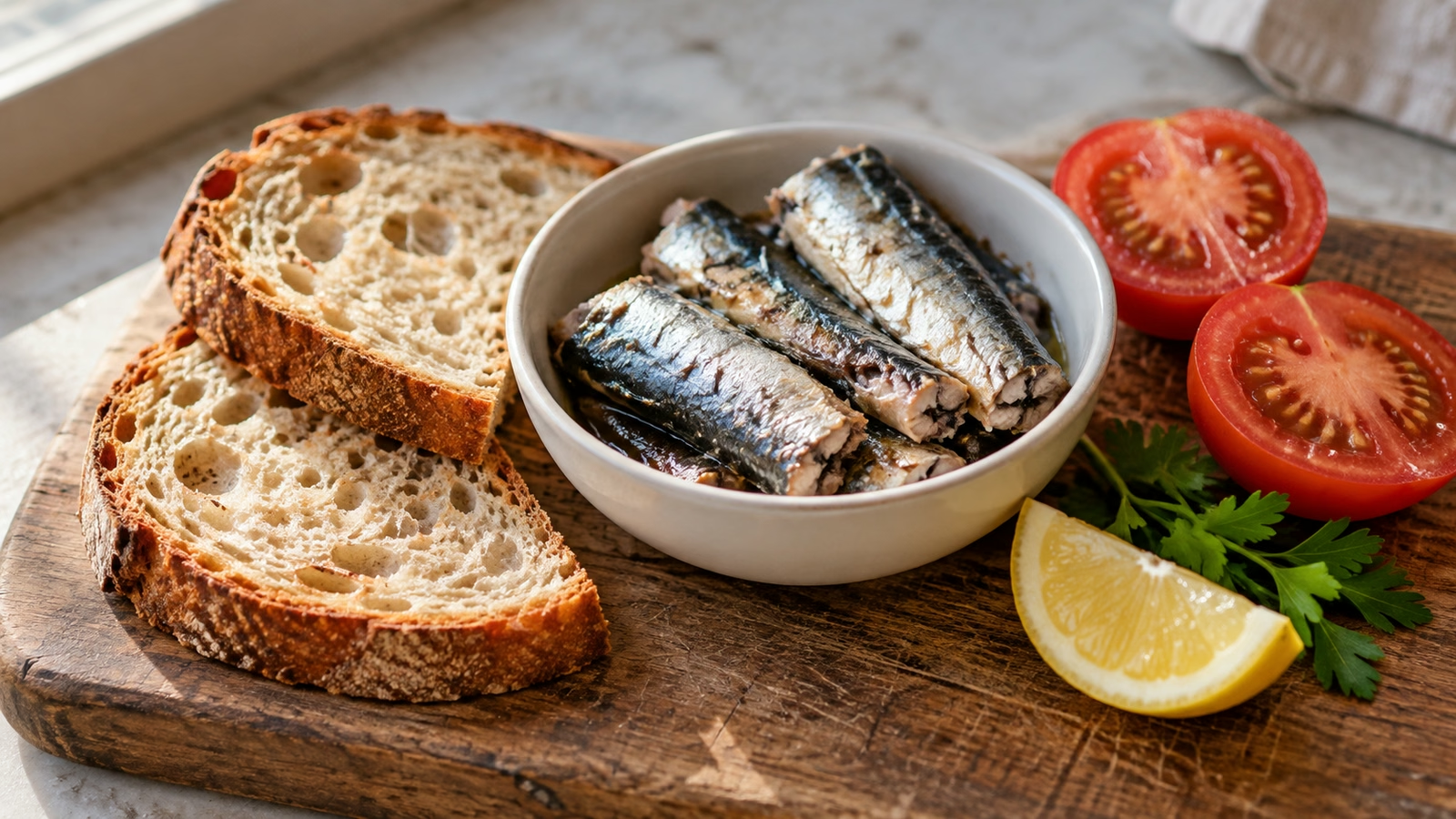
The base recipe uses plain sardines packed in olive oil, drained before weighing. Skin-on, bone-in sardines have a more complete fish texture; the small canned bones are softened during processing. If you prefer boneless fillets, use them, but do not assume the calcium content will match.
- Oil-packed: Convenient when you want a richer topping. Drain the excess; the fish will still carry some oil.
- Water-packed: A workable variation if that is what you have. Add a small measured drizzle of olive oil if the toast tastes dry.
- Flavored tins: Tomato, lemon, or chile sauces can compete with this fresh topping. Use less additional seasoning and expect a different dish.
- Serving size: Tin weights include varying amounts of liquid. Use the drained fish amount in the card, rather than relying on a can count alone.
I would begin with a plain tin before buying a heavily flavored one. That makes it easier to decide whether you want more lemon, less salt, or a different texture. The fish is already cooked, so this recipe does not require a separate cooking step for it.
Balance the tomatoes, lemon, and herbs
Cut the tomatoes into small pieces so they sit on the bread rather than rolling off. Let them drain in a strainer while the bread toasts, then toss with lemon juice and parsley. Taste before adding salt: the sardines may already supply enough.
- Watery tomatoes: Drain a little longer and spoon the solids onto the toast, leaving excess juice in the bowl.
- Very tart tomatoes: Start with less lemon and add it at the table.
- Large sardines: Break them gently into broad pieces. Keeping some structure makes the topping easier to portion.
- Strong fish flavor: More crisp tomato and fresh parsley can provide contrast; drowning it in acid will not make the fish disappear.
A squeeze of lemon should sharpen the combination without overwhelming it. Do not leave the fish sitting in lemon juice as though you were making ceviche. This is cooked canned seafood assembled into a quick meal, with acidity added for flavor.
Turn it into lunch without overcomplicating it
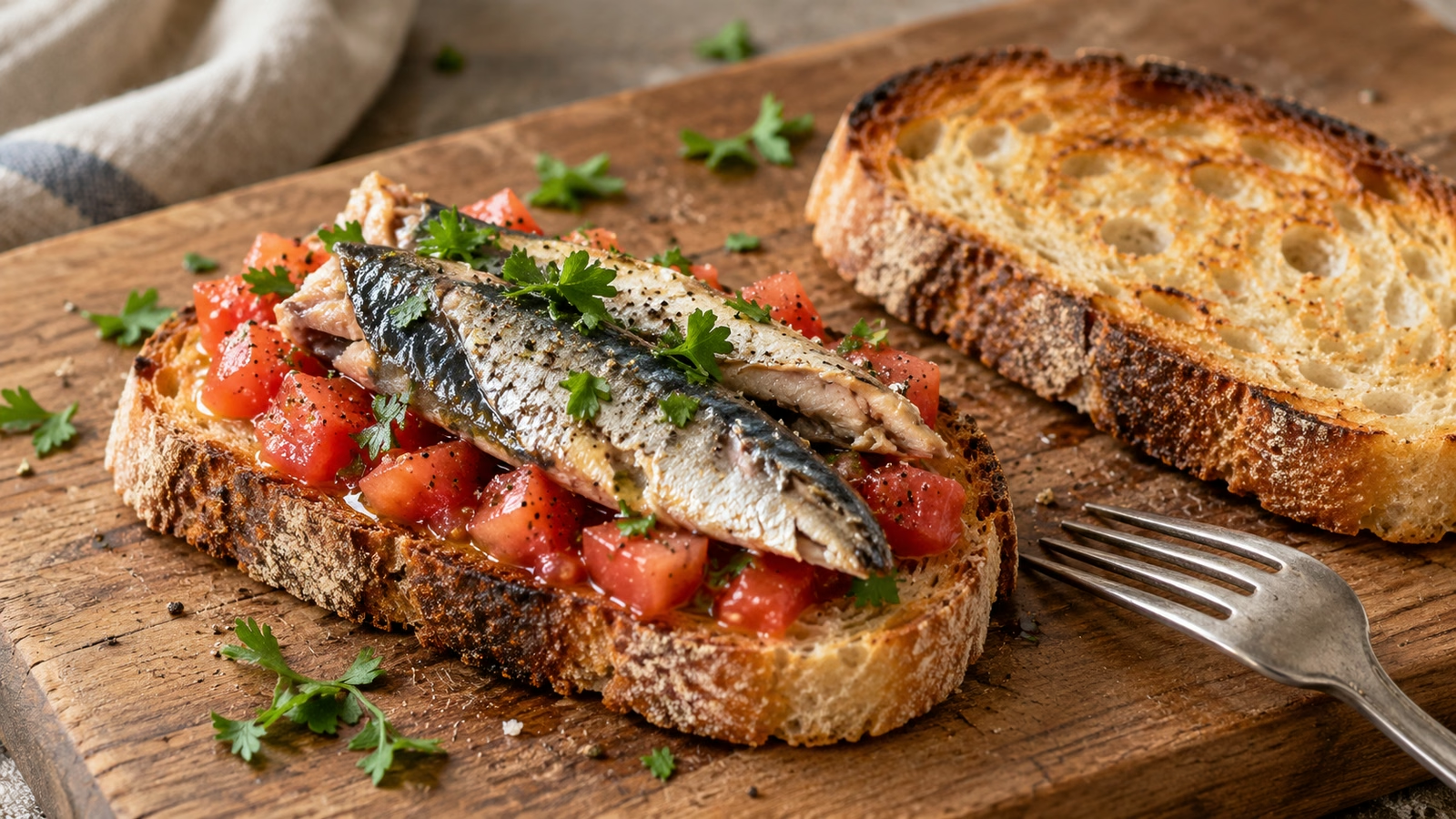
Two generously topped slices make two light servings in this recipe. Add a vegetable side or a more substantial accompaniment according to your appetite. A few cucumber slices, a bean salad, or leftover roasted vegetables can round out the plate without requiring another cooking project.
- For packing: Carry the bread, fish, and tomato mixture separately in appropriate chilled containers, then assemble when eating.
- For leftovers: Refrigerate opened fish and prepared tomatoes promptly in covered containers; follow the tin’s instructions and use within three to four days.
- For safety: Do not leave the assembled toast out for more than two hours, or one hour above 90°F.
- For allergies: This recipe contains fish and wheat. Check all packaged ingredients if you need an alternative.
Sardines appear among the FDA/EPA’s lower-mercury Best Choices, but that does not make unlimited portions or a one-food diet a good plan. Follow individual dietary advice where needed. For bread-shopping context, Tastiva’s whole wheat versus multigrain guide explains why the front-of-package name is only part of the story.
Sardine Tomato Toast Recipe

Ingredients
- 2 thick slices sourdough bread 120 g total
- 180 g oil-packed sardines drained weight, skin-on and bone-in; about 2 small tins, depending on brand
- 1 large tomato 180 g, diced
- 1 tablespoon lemon juice 15 g, plus more to taste
- 1 tablespoon chopped fresh parsley 4 g
- 1/8 teaspoon black pepper 0.25 g
Equipment
- 1 toaster
- 1 Strainer
- 1 small bowl
- 1 Cutting board
- 1 Chef’s knife
- 1 Fork
Instructions
- Drain the sardines. Dice the tomato and place it in a strainer for a few minutes while you toast the bread.
- Toast both bread slices on both sides until crisp and lightly golden. Let them sit briefly on a rack so the underside does not steam.
- Mix the drained tomato with lemon juice, parsley, and black pepper. Taste before adding any salt; none is required in the base formula.
- Arrange half the sardines on each slice, breaking larger fish gently if needed. Spoon the tomato mixture over the fish, leaving excess liquid behind.
- Serve immediately, one topped slice per person. Keep any components for later separately chilled and assemble only when ready to eat.
Nutrition
Notes
Tried this recipe?
Let us know how it turned out!Sources
- FoodNavigator: August 2026 sardine trend coverage
- FDA/EPA: advice about eating fish
- USDA: safe leftover handling
Hi, I’m Laura, the voice behind Tastiva. I’ve always believed that eating well should feel enjoyable, comforting, and realistic—not like another complicated rule to follow. I love creating recipes that fit into everyday life, sharing simple nutrition ideas, and finding small ways to make meals feel a little better without losing the pleasure of good food.