
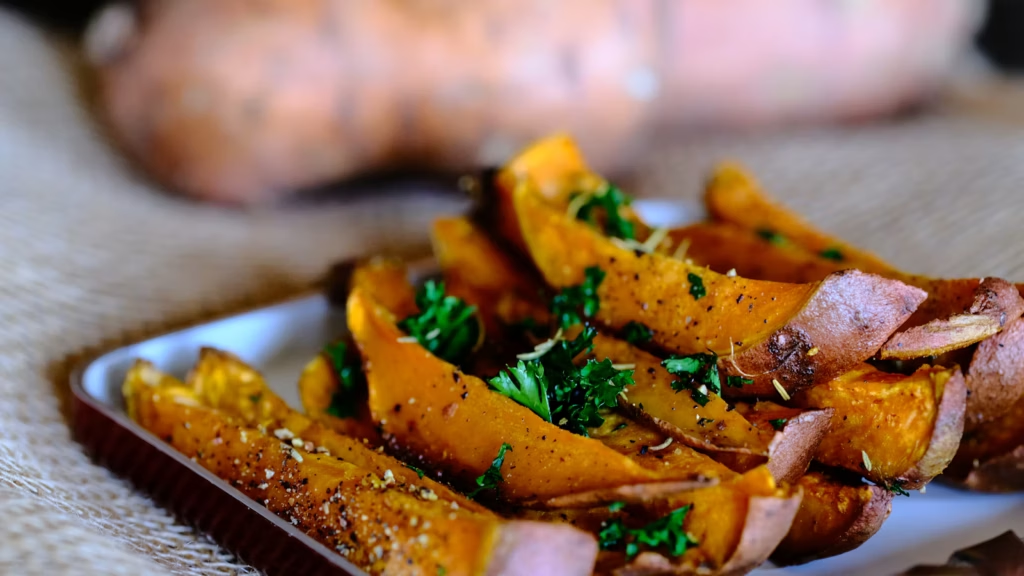
Sweet potato skin is edible, giving a baked potato a textured edge around that soft center. Start with a sound root, wash and scrub it well, and decide whether that extra texture belongs in your dish. Wedges and a rustic baked potato often welcome it; a silky mash gives you a good reason to peel.
Keep the skin when you enjoy the texture; reach for the peeler when dinner calls for a smoother bite.
Sweet potato skin is edible, but condition matters
Both University of Minnesota Extension and Mississippi State University Extension describe leaving sweet potato skin on for cooking. Mississippi State also notes that the skin contributes fiber, vitamins, and minerals. Leaving a pleasant skin intact saves a preparation step and gives you another texture to enjoy.
- Choose firm roots: Look for sweet potatoes with sound skin and no soft spots, deep cracks, or bruises. Similar sizes are easier to cook together.
- Look closely before washing: Soil on a root is a cleaning task. Mold, leaking areas, or signs of decay call for setting that sweet potato aside and discarding it.
- Check the skin’s texture: A very dry or leathery skin may be less enjoyable, even when the sweet potato is otherwise sound. Peeling can suit your preference.
- Think about the serving: Bite-size pieces work differently from a whole potato that you’ll open and eat with a fork. Choose the preparation before making extra work.
The skin can also have a slightly bitter flavor, as Illinois Extension notes. If you prefer the sweeter, smoother flesh on its own, peeling is a reasonable choice. There’s no need to turn that preference into a rule for every sweet potato you cook.
Scrub before cutting, even if you plan to peel
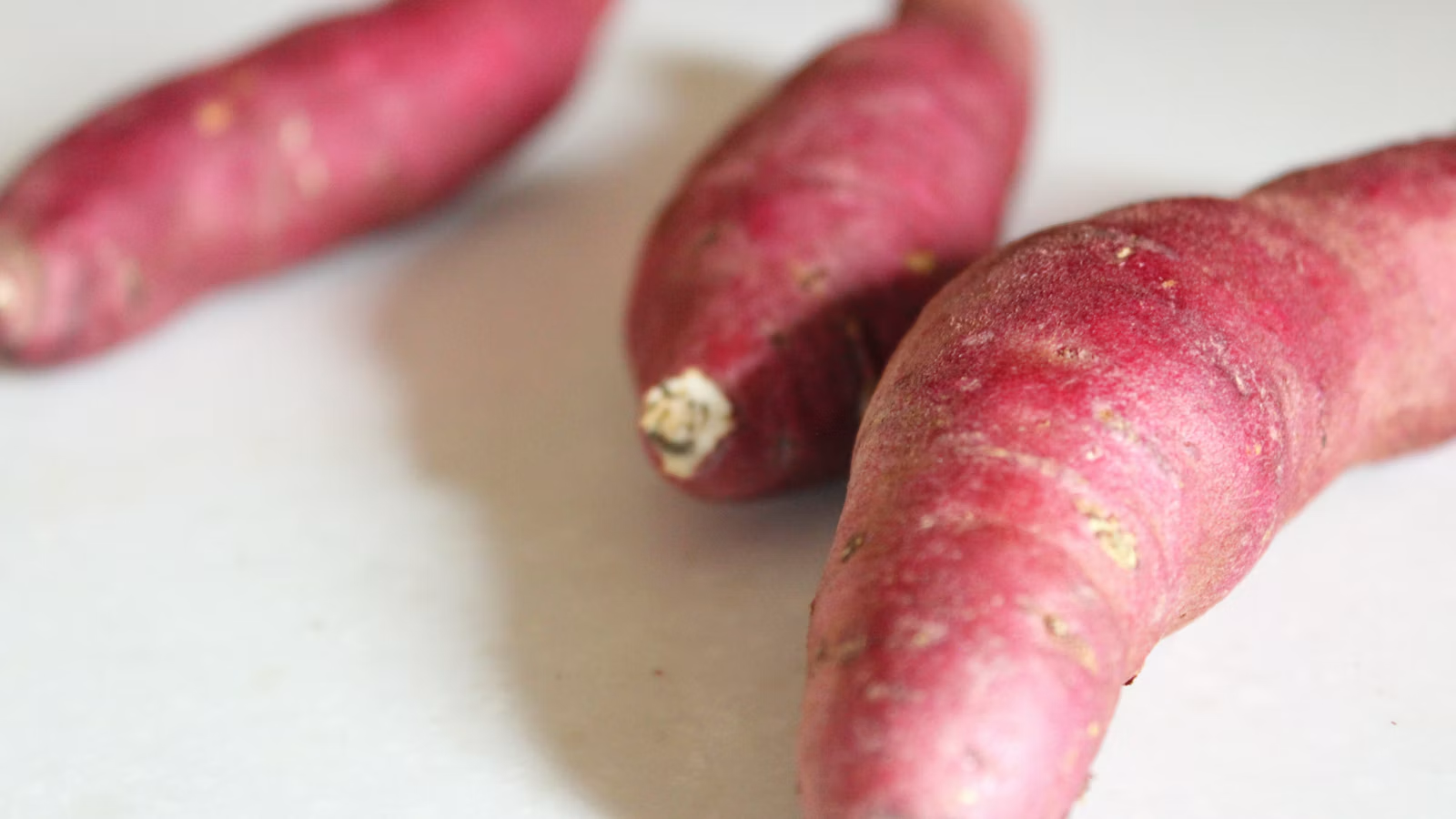
Sweet potatoes grow in soil, and the little grooves in their skin deserve attention. Wash them just before preparation rather than putting a damp batch back into storage. Minnesota Extension recommends cleaning root vegetables even when their skins will be removed, so the knife or peeler doesn’t carry surface dirt into the part you’ll eat.
- Wash your hands, then get a clean produce brush, cutting board, and knife ready. Keep the board away from equipment used for raw meat or poultry.
- Hold the sweet potato under cool running water. Gently scrub the surface, turning it to reach the ends and any shallow grooves.
- Check for remaining grit. Give those areas another careful brush rather than trying to hide them under oil or seasoning.
- Dry with a clean paper towel before cutting or roasting. A dry surface is also easier to handle securely on the board.
- Clean the brush after use. Once the sweet potato is prepared, keep the cleaned pieces away from the original dirty surface.
Plain running water and a clean brush are the tools you need. Minnesota Extension advises against washing produce with soap, detergent, or bleach solutions. Those products belong in surface-cleaning routines, not on the food you’re about to cook.
Leave it on for baked potatoes and rustic roasted pieces
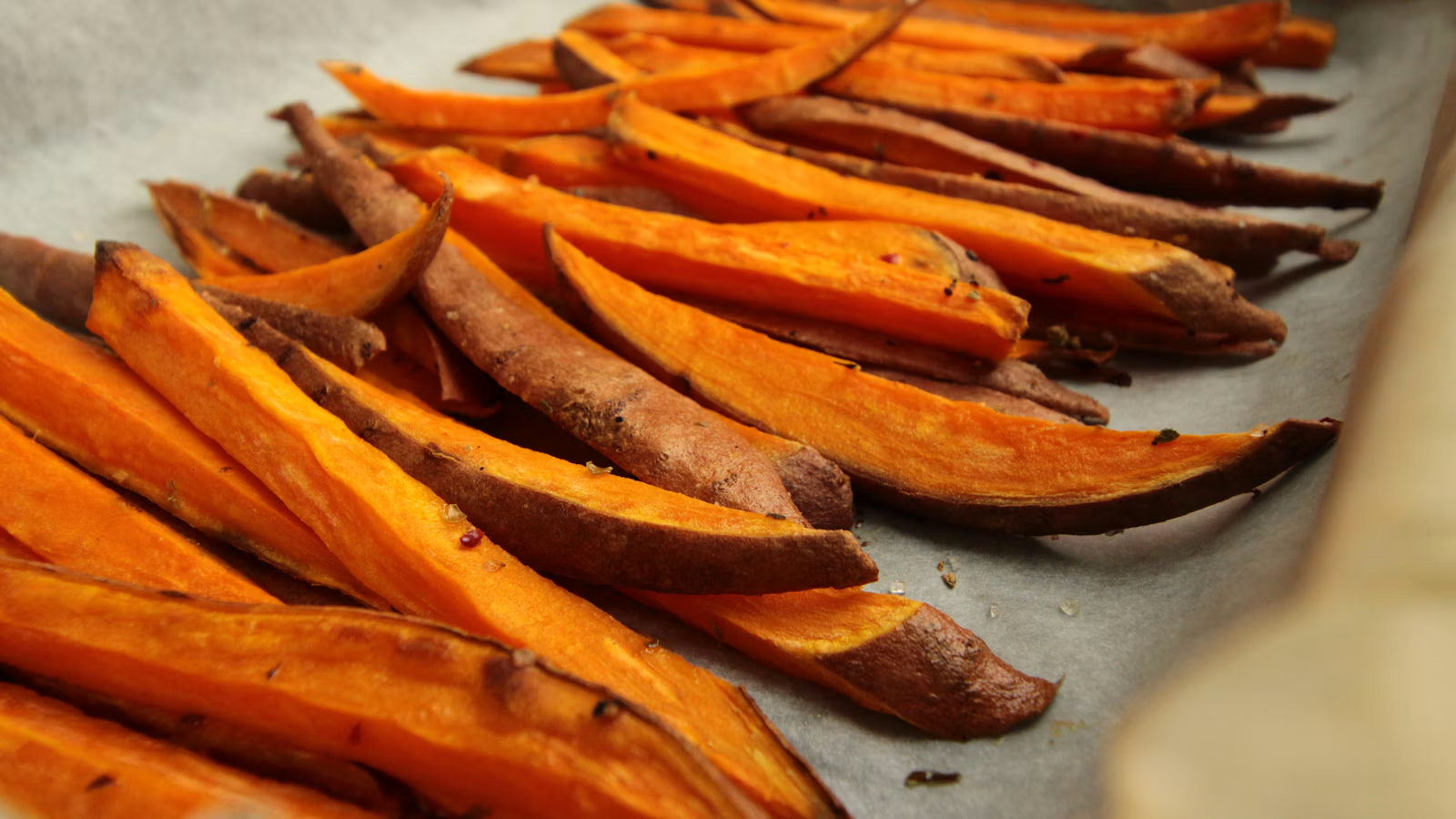
For a whole baked sweet potato, Mississippi State recommends leaving the skin on and pricking it with a fork so steam can escape. When it’s tender, split it carefully and eat as much of the skin as you enjoy with the filling. You can also keep the skin on evenly cut wedges or chunks.
- Whole baked potatoes: Follow your recipe’s cooking method and check that the center is tender. Skin color alone doesn’t tell you whether the inside has finished cooking.
- Roasted wedges: Cut pieces to similar thicknesses and spread them in a single layer. Thick wedges and thin fries need different amounts of cooking time.
- Grain bowls: Add roasted skin-on chunks alongside beans, greens, or grains. Keep pieces manageable so the skin and flesh arrive in the same forkful.
- Simple seasoning: Oil, salt, and a seasoning you like can be enough. Smoky paprika suits a savory plate; a little cinnamon works with the potato’s sweetness.
I’d judge the result by the bite: a tender center with a pleasant edge, rather than trying to make every sweet potato fry as crisp as a white-potato fry. If pieces crowd together or vary widely in size, fix that next time before deciding the skin is the problem.
Peel when smoothness is part of the dish
Skin stays more noticeable when you mash or blend the flesh. For an even purée, I’d peel without hesitation: smoothness is the point of that particular dish. You can peel a washed raw sweet potato before cutting, or scoop cooked flesh away from its skin when your recipe uses a baked potato as the starting point.
- Silky mashed sweet potatoes: Peel before the method calls for cooking and mashing. Tastiva’s mashed sweet potato recipe follows that approach.
- Blended soups: Remove the skin when you want a consistently smooth spoonful. Adding liquid won’t make every piece of skin disappear.
- Pie fillings: Follow the filling recipe’s preparation directions. A smooth filling usually benefits from using the flesh without the skin.
- Rustic mash: If you enjoy bits of skin, leave some on and cut the cooked pieces before mashing. Expect a visibly textured result.
Take care when opening a hot sweet potato: steam can escape quickly, and the flesh holds heat. Let it become comfortable to handle before scooping.
Jeanine Donofrio of Love & Lemons demonstrates the skin-on baking method for the North Carolina Sweetpotato Commission. Scrub the sweet potato first, pierce the skin, and judge doneness by tenderness rather than the clock alone.
Sources
- University of Minnesota Extension: selecting and preparing sweet potatoes
- University of Minnesota Extension: washing produce safely
- Mississippi State University Extension: sweet potato selection and skin-on preparation
- Illinois Extension: edible sweet potato skins and flavor

Hi, I’m Laura, the voice behind Tastiva. I’ve always believed that eating well should feel enjoyable, comforting, and realistic—not like another complicated rule to follow. I love creating recipes that fit into everyday life, sharing simple nutrition ideas, and finding small ways to make meals feel a little better without losing the pleasure of good food.