
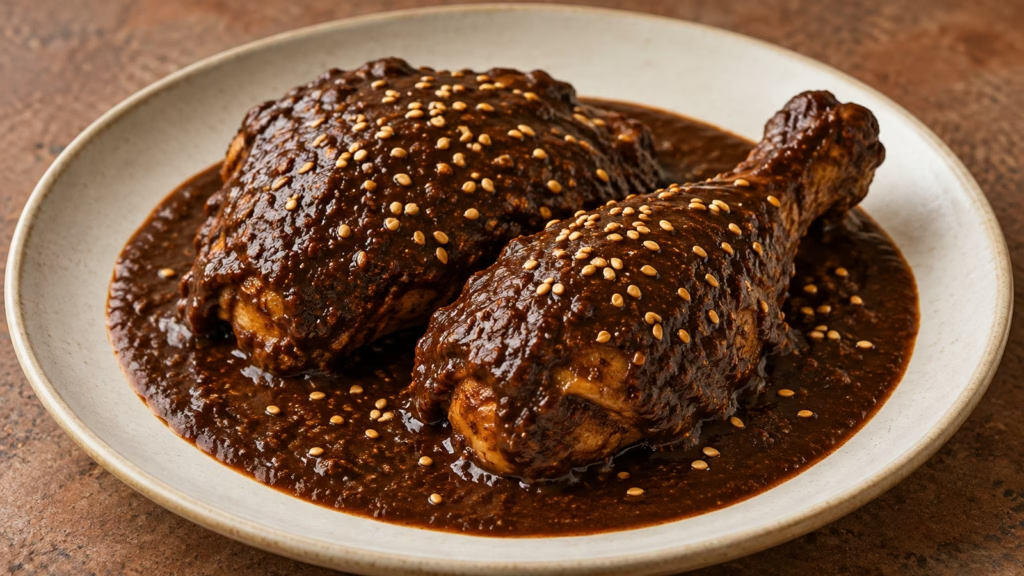
A counter full of chiles, nuts, spices and chocolate can make mole poblano feel like several recipes at once. The practical answer is to cook in small groups, then bring them together. This sauce uses mulato, ancho and pasilla chiles as its foundation, with seeds, fruit and Mexican chocolate adding layers without taking over.
Keep the batches small and the heat controlled. A little patience at the skillet is easier than trying to disguise burned chiles later.
A sauce with more than chocolate to offer
Mole poblano is strongly associated with Puebla, and recipes vary among cooks and households. This version makes twelve portions of sauce to spoon over cooked chicken, turkey or another chosen accompaniment. It is a substantial cooking project, but the work becomes more approachable when the ingredients are measured before the heat goes on.
I would think of the chocolate as one part of the seasoning. Dried chiles, toasted nuts and seeds, tomato, fruit and spices all contribute. Our formula uses sweetened Mexican table chocolate, so extra sugar stays optional until you have tasted the finished sauce.
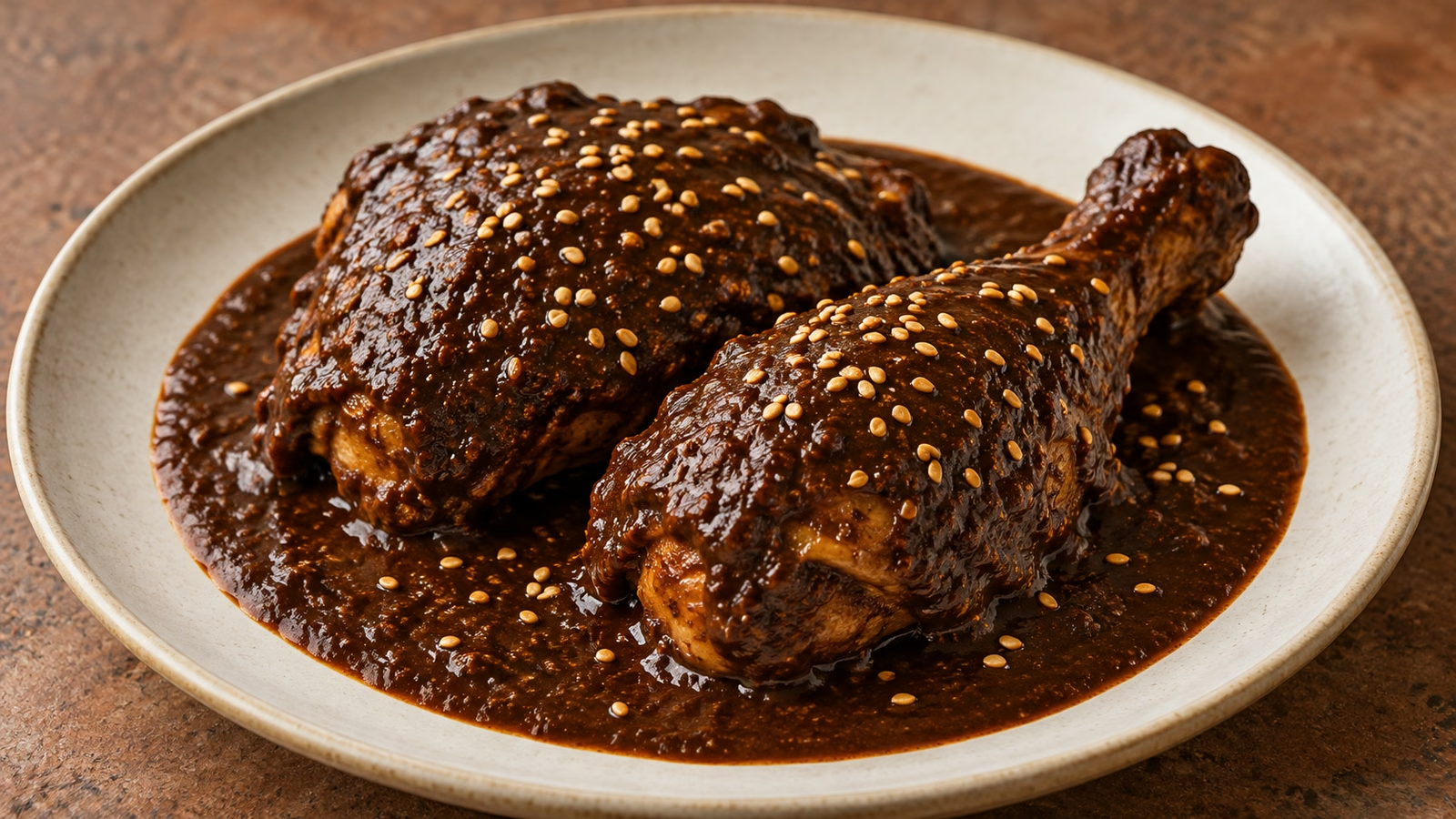
- The recipe card measures the sauce only. Chicken shown in the serving image is an optional accompaniment, not part of its nutrition calculation.
- Nuts, sesame, bread and tortilla help give the sauce body as well as flavor.
- Use a heavy pot with room for stirring. If you choose earthenware, it must be food-safe, lead-free and suitable for the heat source.
Sort the ingredients before the first batch
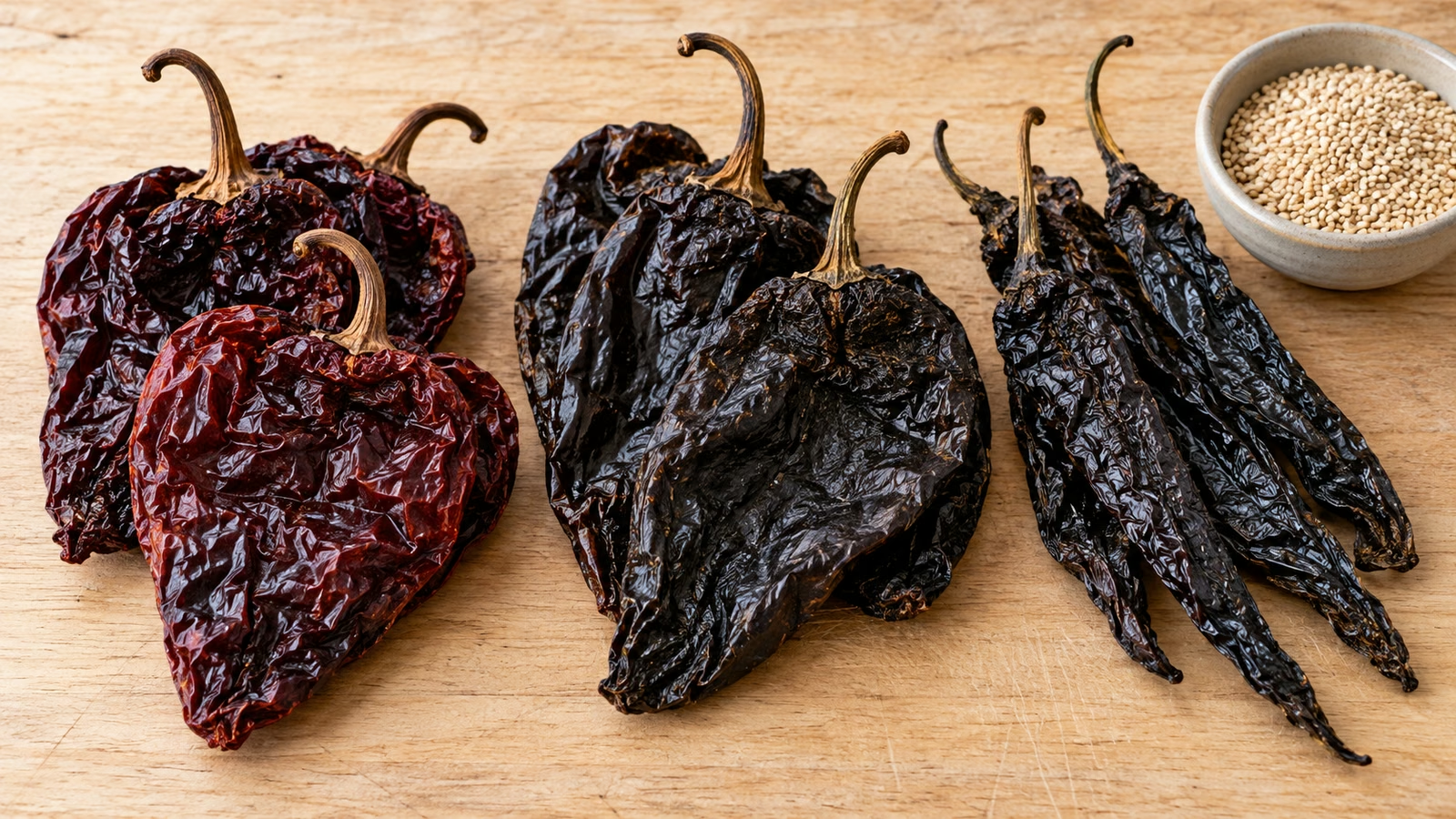
Weigh the dried chiles after removing stems, seeds and tough veins. Their sizes vary too much for a count alone to be the most reliable measurement. Look for the named varieties and keep them separate from fresh peppers; a package labeled simply “chile” does not tell you enough.
- Chiles and broth: clean mulato, ancho and pasilla chiles, with ready-to-use chicken broth for softening and blending.
- Nuts and seeds: unsalted almonds, unsalted dry-roasted peanuts and whole sesame. Reserve some sesame for serving.
- Fruit and starch: raisins, ripe plantain, bolillo and a corn tortilla. Brown these gently instead of allowing them to char.
- Aromatics: tomato, onion, garlic, cinnamon, cumin, anise, pepper and clove. Keep the small spice measures restrained.
- Finishing: sweetened Mexican chocolate, salt and optional sugar. Read the chocolate label for both sweetness and allergens.
If you want the delicate cinnamon commonly called canela, our Ceylon cinnamon guide helps distinguish it from cassia. For broth made with a concentrate, check the dilution instructions before measuring. Salted concentrate straight from the jar would change the sauce considerably.
Cook, blend and simmer in a deliberate order
The separate batches are useful because sesame, bread, chiles and onion do not brown at the same speed. Keep a bowl beside the stove for each prepared group, and transfer ingredients out as soon as they are ready. I would resist turning up the heat simply because the ingredient list is long.
- Briefly fry the cleaned chiles in part of the measured lard until aromatic, without blackening them. Soften them in broth.
- Brown the nuts gently, adding sesame near the end. Reserve the serving portion, then brown the bread and tortilla in the same pan.
- Cook the onion and garlic, followed by tomato and plantain. Add raisins and spices near the end of this stage.
- Let the mixtures cool enough for your blender, then blend in manageable batches with the measured broth. Follow the manufacturer’s directions for hot liquids.
- Cook the chile purée in the remaining lard, add the other purées and broth, then simmer gently while scraping the bottom regularly.
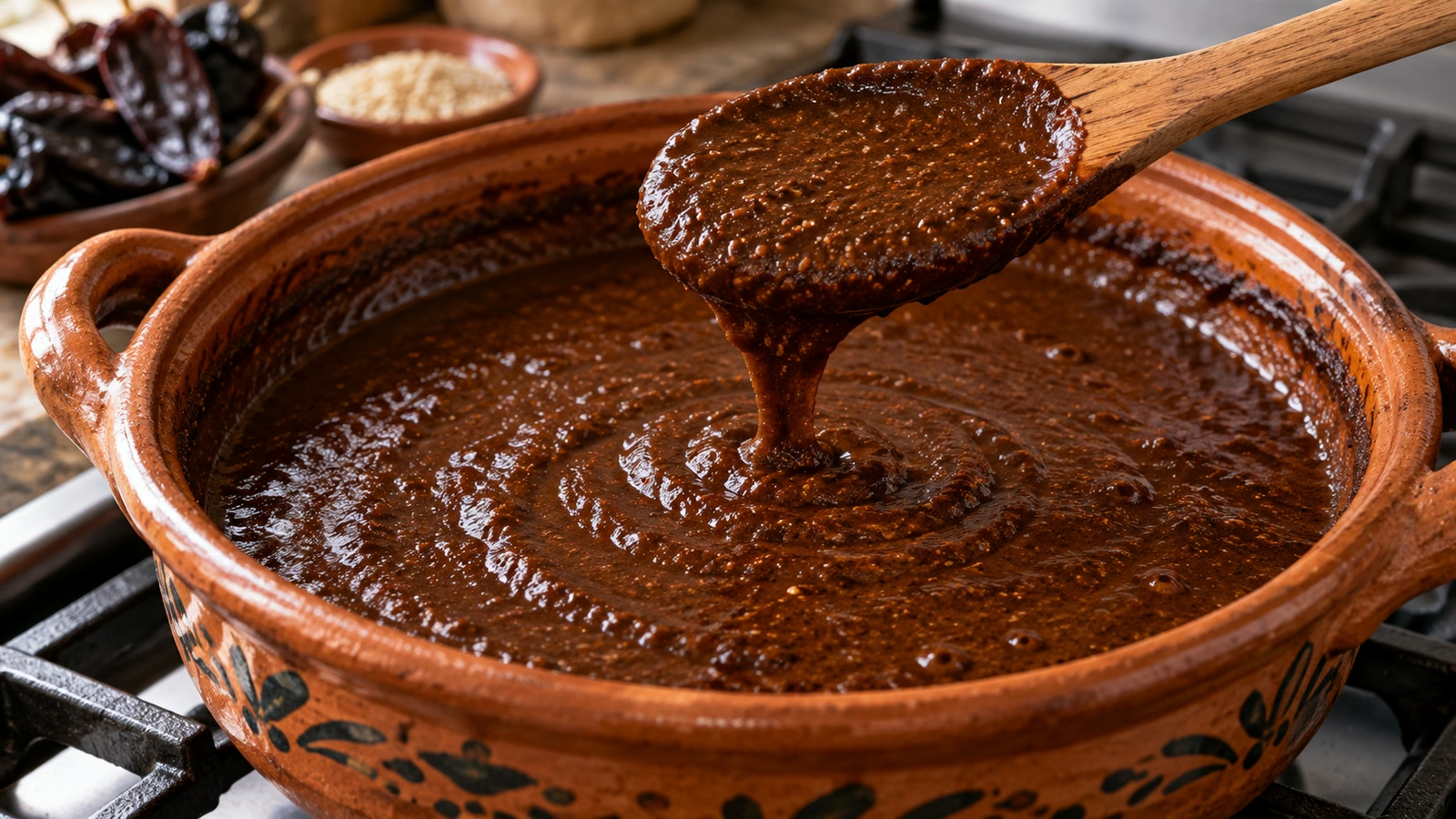
Add chocolate near the end, then taste before deciding on the sugar. The sauce should coat a spoon while still flowing. If it becomes too thick, work in warm broth a little at a time; if it is thin, continue simmering uncovered. A rolling, splattering boil does not make that judgment easier.
Serve a little now and cool the rest promptly
Spoon the hot sauce over fully cooked chicken or turkey, or serve it with your chosen vegetables and rice. The sesame garnish belongs at the end. Because the sauce is concentrated, I would start with a modest amount and offer more at the table rather than submerge everything immediately.
- This recipe contains sesame, peanuts, almonds and wheat. The specified chocolate also contains soy and may carry milk or egg warnings; check your actual packages.
- Divide leftover sauce into shallow containers and refrigerate promptly, within two hours or one hour above 90°F, at 40°F or below.
- Use refrigerated sauce within three to four days. Reheat sauce to a boil, stirring carefully; reheat any leftover poultry to 165°F.
- The estimate includes the optional sugar and all measured lard and sesame. Nutrition varies with chocolate, broth and chile composition, and unsupported fields are left unreported.
Mole Poblano Recipe

Ingredients
- 2.1 oz dried mulato chiles 60 g after removing stems, seeds and tough veins
- 1.4 oz dried ancho chiles 40 g cleaned
- 1.1 oz dried pasilla chiles 30 g cleaned
- 6 1/4 cups ready-to-use chicken broth 1,500 g; plus more only if needed to adjust thickness
- 3.5 oz lard 100 g, divided
- 1.1 oz raw unsalted almonds 30 g
- 1.1 oz unsalted dry-roasted peanuts 30 g
- 1.1 oz whole unhulled sesame seeds 30 g; reserve 5 g for serving
- 1.4 oz seedless raisins 40 g
- 3.5 oz ripe plantain 100 g peeled weight, sliced
- 1.4 oz bolillo 40 g, sliced; weight before browning
- 1.1 oz corn tortilla 30 g, torn; weight before browning
- 10.6 oz tomatoes 300 g, chopped
- 3.5 oz onion 100 g, chopped
- 4 garlic cloves 12 g, peeled
- 3/4 tsp ground cinnamon 2 g
- 1/2 tsp ground cumin 1 g
- 1/4 tsp anise seeds 0.5 g
- 1/4 tsp ground black pepper 0.5 g
- 1/8 tsp ground cloves 0.3 g
- 2.1 oz sweetened Mexican table chocolate 60 g Abuelita tablets or equivalent; check allergens
- 2 1/2 tsp granulated sugar 10 g, optional; included in nutrition
- 1 tsp fine salt 6 g; adjust to the broth
Equipment
- Heavy pot If using earthenware, choose food-safe, lead-free cookware rated for the heat source
- Large skillet
- Blender suitable for the preparation
- Kitchen scale
- wooden spoon
Instructions
- Clean and weigh the chiles. Heat 30 g of the lard over medium heat and briefly fry the chiles in batches, turning until aromatic but not blackened. Transfer to a saucepan with 600 g (about 2 1/2 cups) broth. Simmer gently for 15 minutes, then let cool enough for blending.
- Use 20 g lard to gently brown the almonds and peanuts in a skillet. Add the sesame near the end and remove before it burns; reserve 5 g for serving. Brown the bolillo and tortilla in the same fat without charring.
- With another 20 g lard, cook the onion and garlic for 5 minutes. Add tomato and plantain and cook for 10–15 minutes until softened. Stir in raisins and spices for 2 minutes, then remove from the heat.
- Let all mixtures cool to a temperature your blender can handle. Blend the chiles with their broth in small batches. Separately blend the other cooked and toasted ingredients with another 600 g broth until fine. Follow the blender instructions for hot liquids and never overfill.
- Heat the final 30 g lard in a heavy pot. Carefully add the chile purée and stir across the bottom for 10 minutes. Add the remaining purées and final 300 g broth.
- Simmer gently for 40–50 minutes, stirring frequently. Add the chocolate and salt and stir until dissolved. Taste the cooked sauce, add the optional sugar only if needed, then simmer about 15 minutes more, until the sauce coats a spoon.
- Thin with additional warm broth if necessary, or simmer uncovered a little longer if too thin. Divide into twelve portions of sauce and garnish with reserved sesame. Serve with separately cooked, hot chicken if desired; chicken is not included in the quantities or nutrition.
Nutrition
Notes
Tried this recipe?
Let us know how it turned out!Sources
- El Gourmet: mole poblano; Larousse Cocina: traditional mole poblano.
- INCMNSZ food tables, USDA SR Legacy and Abuelita product label.
- USDA FSIS: handling leftovers.
Hi, I’m Laura, the voice behind Tastiva. I’ve always believed that eating well should feel enjoyable, comforting, and realistic—not like another complicated rule to follow. I love creating recipes that fit into everyday life, sharing simple nutrition ideas, and finding small ways to make meals feel a little better without losing the pleasure of good food.