
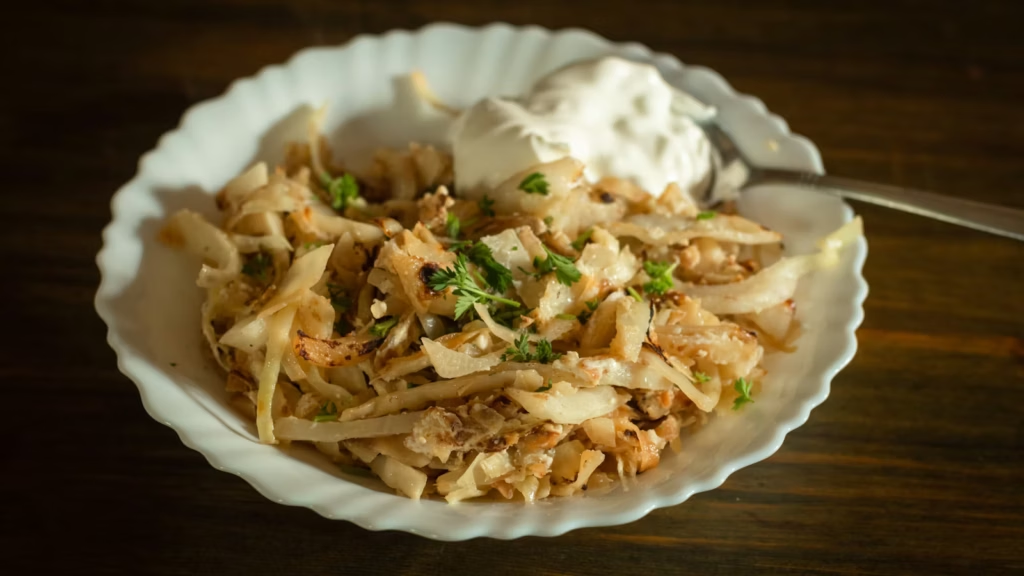
Moo shu chicken is the kind of dinner that looks generous without asking for an afternoon. Thin chicken, soft egg ribbons, shiitake mushrooms, crisp cabbage, and scallions meet a glossy hoisin sauce, then everyone builds a warm little wrap at the table. The ingredient list is lively; the actual cooking takes about ten minutes.
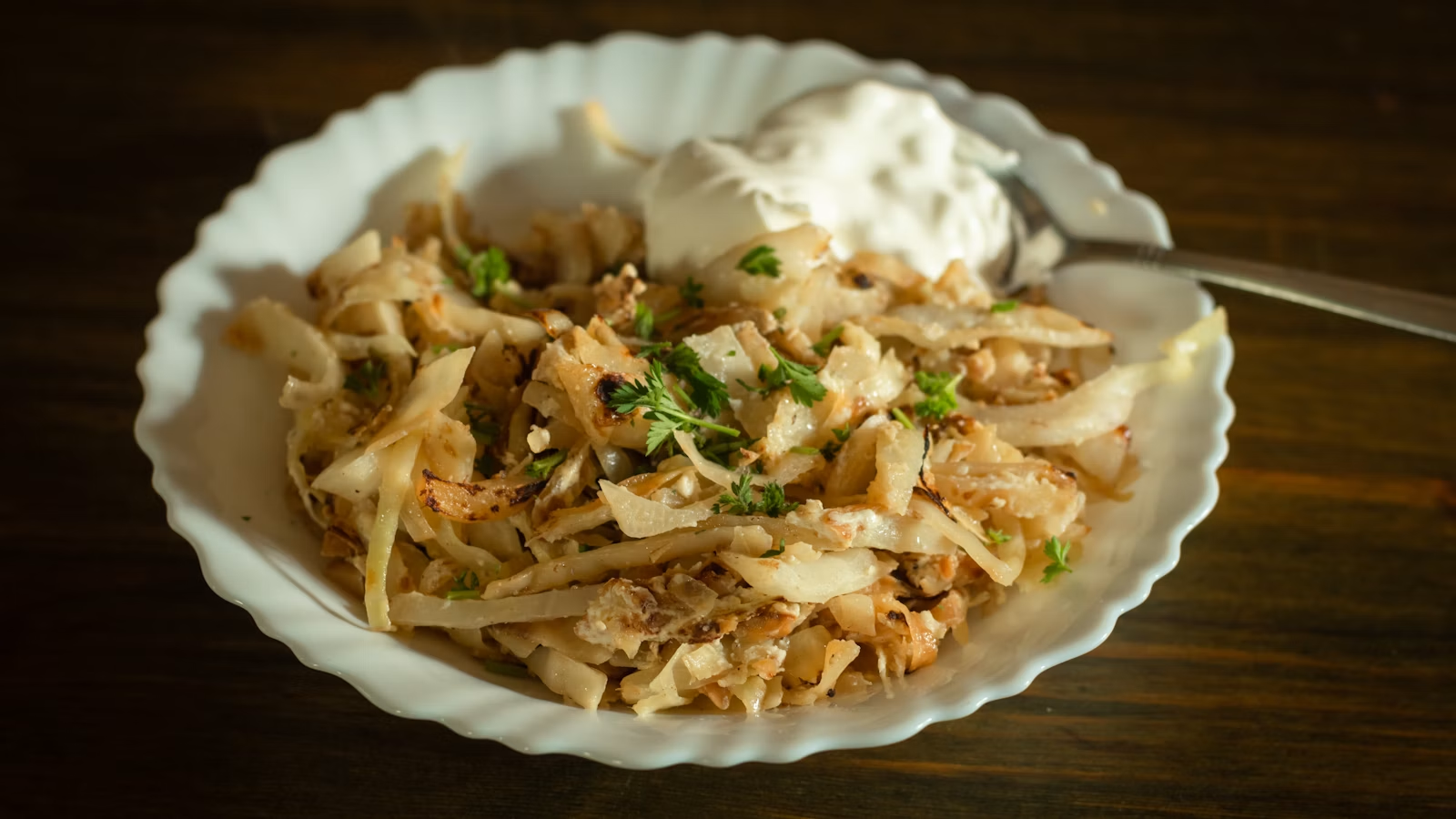
“The secret to moo shu chicken is not another spoonful of sauce—it is giving every ingredient a short turn in a truly hot pan.”
What moo shu chicken is
Moo shu has northern Chinese roots, and versions associated with China commonly feature pork, egg, wood ear mushrooms, and vegetables such as cucumber or daylily buds. The Chinese-American restaurant style evolved differently, often using shredded cabbage and carrots, hoisin sauce, and thin pancakes. Chicken is a later variation rather than the original protein.
This recipe is honest about where it sits: a weeknight Chinese-American interpretation. Napa cabbage gives soft crunch, shiitakes bring savoriness, and flour tortillas stand in comfortably when Mandarin pancakes are not available. I would rather name that adaptation clearly than borrow the word “authentic” for something designed around a U.S. supermarket.
The egg is not filler. In Chinese moo shu traditions, its yellow ribbons are connected to the dish’s name and flower-like appearance, while in the American restaurant version they give the cabbage mixture softness and contrast. Cook them only until set, then remove them. If the eggs stay in the wok for every later step, their delicate texture disappears into dry little crumbs.
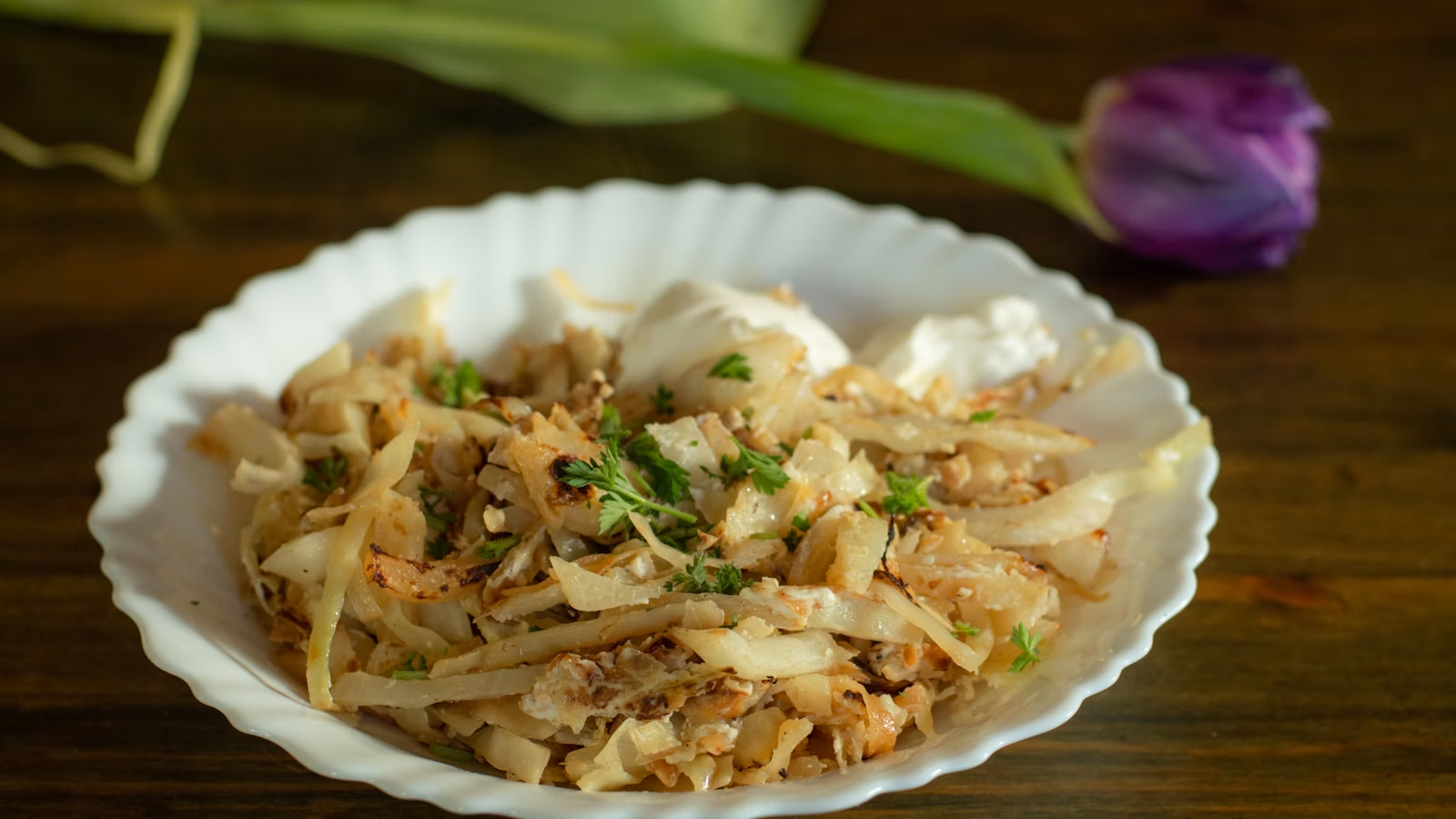
Cook in stages to keep the stir-fry crisp
A crowded skillet steams food, so the recipe gives eggs, chicken, and vegetables separate turns. Scramble the eggs softly and move them out. Sear the chicken in one layer and move it out. Only then cook the mushrooms and vegetables. Everything returns for the sauce at the end.
The method sounds fussy when written down, but it is faster than trying to rescue watery cabbage and rubbery chicken. Have every ingredient sliced and both small bowls mixed before the wok gets hot. Once cooking begins, there is no graceful moment to mince garlic.
Ingredients that earn their place
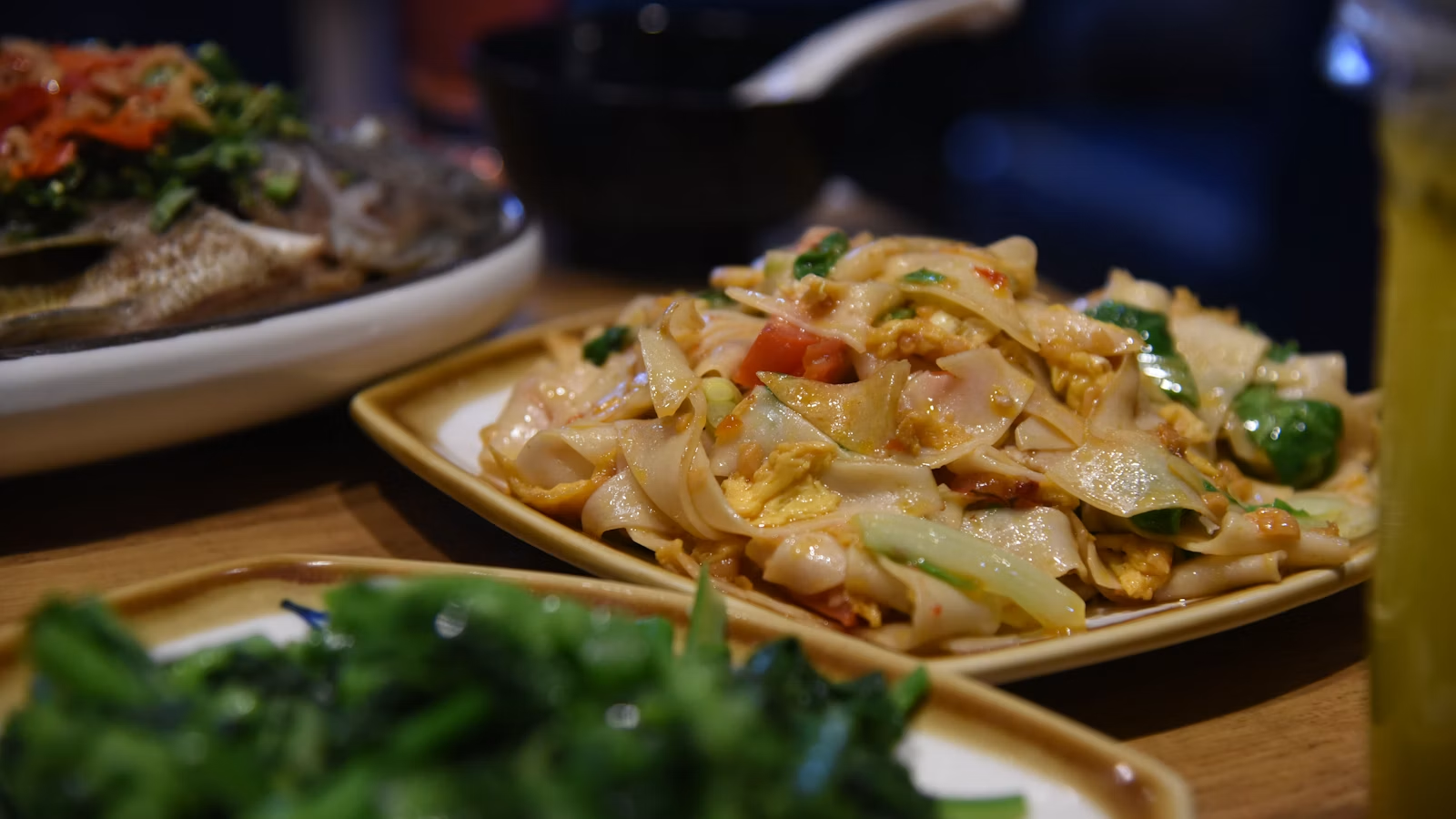
Cornstarch and soy sauce give the sliced chicken a light protective coating, helping it stay tender while the outside browns. Shaoxing wine contributes aroma; dry sherry is a useful substitute. Hoisin carries sweetness and fermented depth, so the finishing sauce needs rice vinegar and water to keep it from becoming sticky and heavy.
Napa cabbage is my first choice because its ribs stay crisp while the leaves soften quickly. Green cabbage or a bag of plain slaw mix works, but may need an extra minute. Fresh shiitakes are earthy without requiring rehydration; wood ear mushrooms are more traditional-leaning and add a springy crunch if you have them.
For a gluten-free version, use certified gluten-free hoisin and tamari, then serve with warm corn tortillas. Always check labels: hoisin and soy-style sauces are frequent sources of wheat.
Moo shu chicken recipe
The card makes four servings in 30 minutes, including preparation. Slice the chicken thinly and keep the vegetables close in size so the fast cooking time works in your favor. USDA recommends that poultry reach 165°F (73.9°C); check the thickest strip before returning everything to the pan.
Moo Shu Chicken Recipe

Ingredients
- 1 pound boneless skinless chicken breast or thighs sliced thinly across the grain
- 1 tablespoon low-sodium soy sauce
- 1 tablespoon Shaoxing wine or dry sherry
- 2 teaspoons cornstarch
- 1 teaspoon toasted sesame oil
- 3 tablespoons hoisin sauce plus more for serving
- 1 tablespoon low-sodium soy sauce
- 1 tablespoon unseasoned rice vinegar
- 2 tablespoons water
- 2 tablespoons neutral oil divided
- 2 large eggs lightly beaten
- 6 ounces shiitake mushrooms stems removed and caps sliced
- 4 cups napa cabbage thinly shredded
- 1 medium carrot cut into matchsticks
- 1/2 cup bamboo shoots drained, optional
- 2 cloves garlic minced
- 2 teaspoons fresh ginger grated
- 4 scallions sliced, whites and greens separated
- 8 small Mandarin pancakes or flour tortillas warmed
Equipment
- 1 large wok or 12-inch skillet
- 1 Instant-read thermometer
Instructions
- Toss the chicken with 1 tablespoon soy sauce, Shaoxing wine, cornstarch, and sesame oil. In another bowl, stir together the hoisin, remaining soy sauce, rice vinegar, and water.
- Heat 1 teaspoon neutral oil in a hot wok or large skillet. Add the eggs and stir just until softly set. Transfer to a plate and break into ribbons.
- Add 2 teaspoons oil and spread the chicken in one layer. Let it sear for 1 minute, then stir-fry 3 to 4 minutes until cooked through and the thickest pieces reach 165°F. Transfer to the egg plate.
- Add the remaining oil, mushrooms, carrot, and bamboo shoots. Cook 2 minutes. Add the cabbage, garlic, ginger, and scallion whites; stir-fry 2 minutes more, keeping the vegetables crisp.
- Return the chicken and egg to the pan. Pour in the sauce and toss for 1 to 2 minutes, until glossy and lightly thickened. Fold in the scallion greens.
- Spread a little hoisin on each warm pancake or tortilla, add the moo shu filling, roll, and eat immediately.
Nutrition
Video
Notes
- This is a Chinese-American moo shu interpretation with cabbage, hoisin, and wrappers. Northern Chinese versions commonly feature pork, egg, wood ear mushrooms, and different vegetables.
- Slice the chicken while slightly chilled for thin, even pieces.
- For gluten-free wraps, use certified gluten-free tamari and hoisin plus warm corn tortillas.
- USDA recommends cooking all poultry to 165°F (73.9°C).
- Nutrition includes two small flour tortillas per serving and will vary by brand.
Tried this recipe?
Let us know how it turned out!Wrappers, serving, and leftovers
Mandarin pancakes are thin, tender, and ideal when you can find or make them. Small flour tortillas are an easy weeknight stand-in. Warm either one so it bends without cracking, spread on only a little hoisin, add a modest scoop of filling, and roll like a soft taco.
If you would rather skip wrappers, serve the stir-fry over rice or in lettuce cups. Keep the filling and wrappers separate for storage; otherwise the vegetables soften the bread. Refrigerate cooked filling promptly and use within three to four days.
Reheat in a hot skillet just until steaming, adding a splash of water if the sauce has tightened. The cabbage will be softer on day two, but the flavor remains good. I would not freeze the finished stir-fry because egg and cabbage both lose their best texture after thawing.
Sources
- The Woks of Life: Moo Shu Chicken — Chinese-American restaurant context, ingredients, and pancake service.
- Omnivore’s Cookbook: Moo Shu Chicken — distinctions between Chinese and American-Chinese preparations.
- USDA FSIS: Safe Minimum Internal Temperature Chart — poultry cooking temperature guidance.
Hi, I’m Laura, the voice behind Tastiva. I’ve always believed that eating well should feel enjoyable, comforting, and realistic—not like another complicated rule to follow. I love creating recipes that fit into everyday life, sharing simple nutrition ideas, and finding small ways to make meals feel a little better without losing the pleasure of good food.