
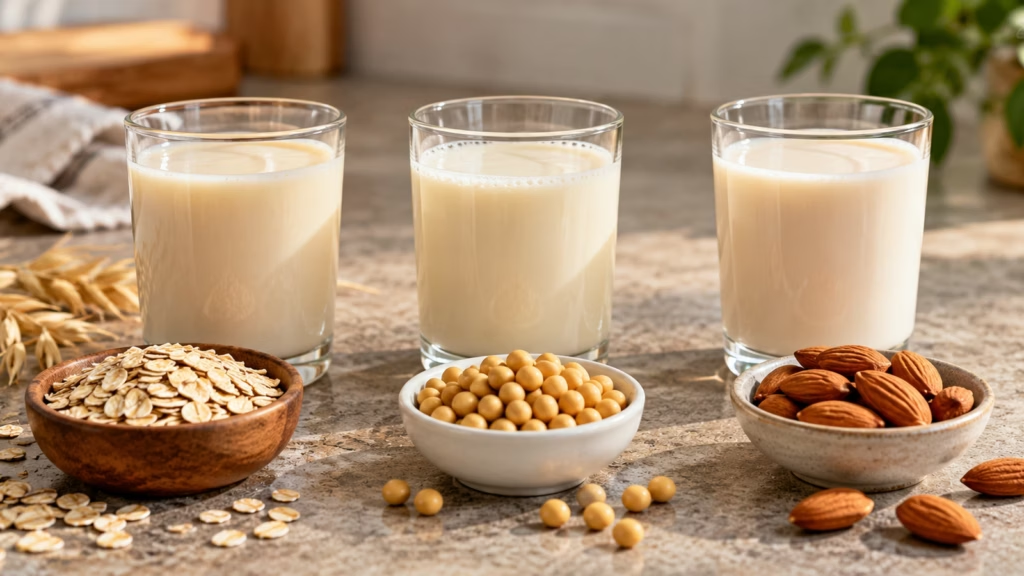
Three pale drinks sit beside the cereal bowl, and the front panels all look reassuring. For oat milk vs soy milk vs almond milk, the useful comparison is the actual carton at the same serving size. Soy often supplies more protein, while oat and almond products vary in fortification, sweetness, and texture. None earns a universal healthiest title just from its plant name.
Choose the carton for the job it needs to do, then check what comes with that pour.
Oat milk vs soy milk vs almond milk at an equal serving
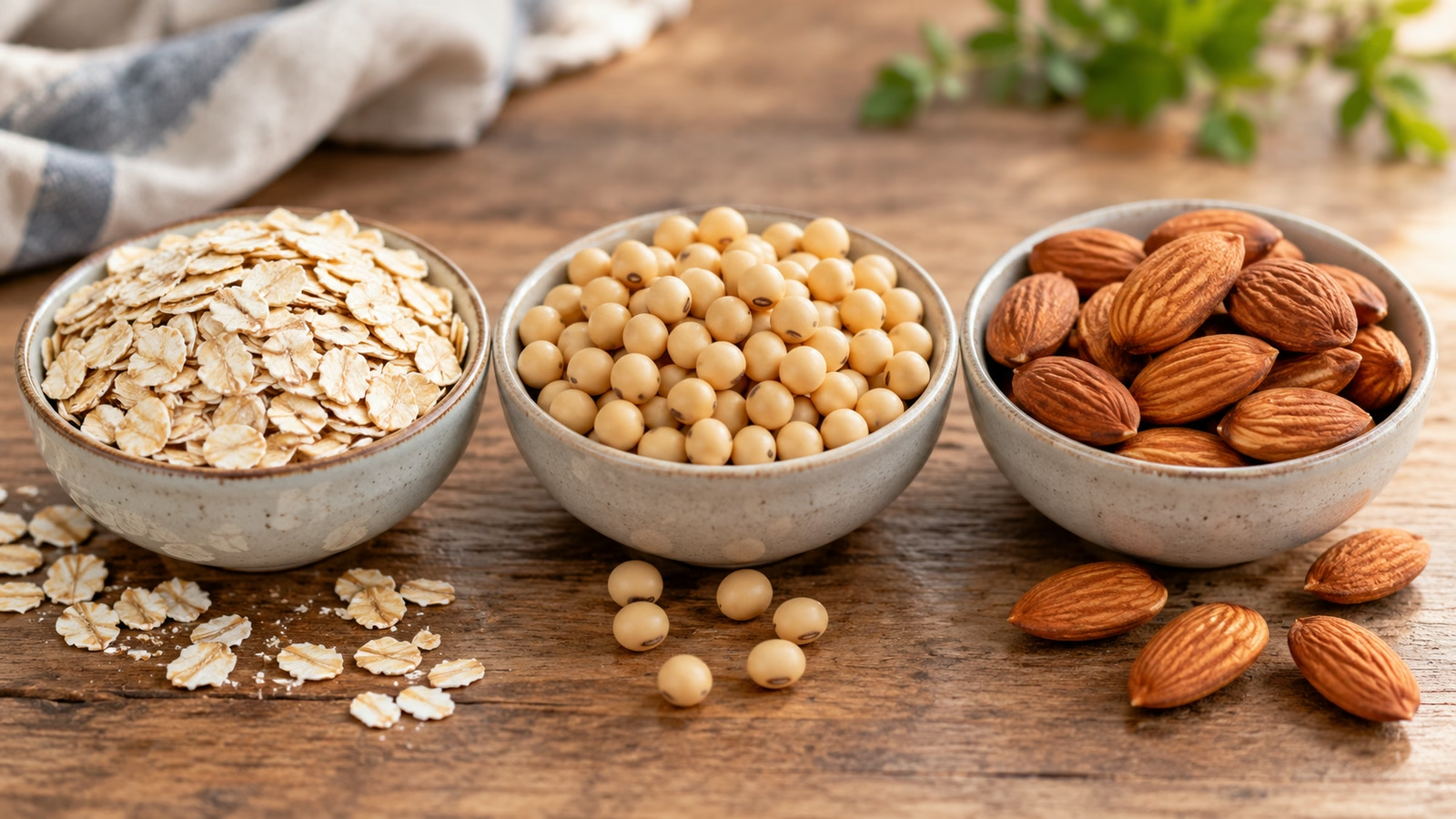
Here are three specific US unsweetened products, each listed at 1 cup (240 mL), checked on their manufacturers’ websites on October 5, 2026. These are examples, not averages for the whole category. Formulas and online information can change, so the carton you buy has the final say.
| Per 1 cup (240 mL) | Oatly Chilled Unsweetened Oatmilk | Silk Organic Unsweet Soymilk | Silk Unsweet Almondmilk |
|---|---|---|---|
| Calories | 40 | 80 | 30 |
| Protein | 0 g | 8 g | 1 g |
| Total carbohydrate | 6 g | 5 g | 1 g |
| Added sugars | 0 g | 0 g | 0 g |
| Saturated fat | 0 g | 0.5 g | 0 g |
| Calcium | 320 mg | 280 mg | 470 mg |
| Vitamin D | 4 mcg | 3 mcg | 4 mcg |
The soy example supplies more protein; the almond example lists more calcium. That combination is exactly why I would resist choosing from one impressive number. A fortified drink can supply calcium while contributing very little protein, and a lower-calorie product is not automatically the right replacement for a food you rely on for nourishment.
- Read the exact name: Original, unsweetened, vanilla, and barista versions are different products. Do not transfer this table’s numbers to another carton.
- Keep the comparison fair: These three happen to have zero added sugars; that does not describe every oat, soy, or almond drink.
- Look for blends: Almond beverages with added pea protein, for example, belong to a different comparison from the almond-only example here.
Read the label in a useful order
The FDA’s plant-based milk guidance emphasizes that ingredients, processing, and fortification affect nutrient content. Compare protein, calcium, vitamin D, potassium, saturated fat, and added sugars rather than relying on the word “milk.” Fortification means nutrients have been added; a plant base alone does not establish the finished drink’s nutrient profile.
- Serving size first: Match the milliliters before comparing grams or percentages. A small coffee splash and a full glass are different amounts.
- Protein next: If the drink is a regular part of breakfast or replaces a usual protein source, check this line directly.
- Fortification after that: Look at the listed calcium and vitamin D amounts. Check vitamin B12 where it is listed if that matters to your eating pattern.
- Read both sugar lines: Total sugars includes added sugars. They are not separate amounts to add together.
- Then ingredients and allergens: The ingredient list helps explain the formulation; the allergen information answers a different, essential question.
Some oat drinks can list added sugars created during processing even without cane sugar in the ingredients; Oatly explains that distinction for its products. Read the actual sugar line instead of guessing from sweetness or ingredient names. Tastiva’s guide to added sugars versus total sugars explains the arithmetic.
Choose for cereal, coffee, or the cooking pot
Taste and texture belong in the decision, too. I would choose an unflavored, unsweetened drink for a savory sauce, then think separately about what I enjoy in coffee. A carton designed for foaming can contain a different formulation from the brand’s ordinary drink; “barista” is a use cue, not a complete nutrition description.
- Cereal or oatmeal: Consider the whole bowl. A low-protein drink can still fit alongside other protein-containing foods, but it does not quietly replace the protein in the soy example.
- Coffee: Judge the amount you actually pour and whether the drink performs well in your cup. Buy a small carton first when changing a familiar routine.
- Smoothies: Count the milk alternative and everything blended into it. Fruit, nut butter, yogurt, or protein powder changes the finished drink.
- Savory cooking: Vanilla flavor or sweetness can stand out in soup and sauces. Check the recipe’s specified milk before substituting.
- Baking: Similar volume does not guarantee the same result. Different fat, protein, and carbohydrate amounts can affect a recipe, especially one built around a particular milk.
The cup-sized table is a comparison tool, not a suggestion that every coffee needs a cup of milk. If you use ¼ cup, divide the listed amounts by four to estimate that pour. Keep the rest of the meal visible rather than asking one carton to handle every nutrition question.
Make the choice fit your dietary needs and shopping habits
Allergy needs come before flavor preferences. Soy and almond are different allergen sources, and an oat drink is not automatically suitable for every allergy or gluten-related requirement. Read the complete package and follow your own care plan. Plant beverages also require special consideration for children: the FDA says they must not replace human milk or infant formula before 12 months.
- For a regular dairy replacement: Pay particular attention to protein and fortification rather than choosing by color or creaminess alone.
- For dairy avoidance: Check the whole ingredient and allergen statement. A familiar brand can sell multiple formulations.
- For gluten-related needs: Check the specific oat product’s gluten-free labeling rather than assuming all oat drinks are equivalent.
- For budget: Compare price per fluid ounce and package size. A bargain carton is less useful if most of it remains unused.
- For storage: Follow the carton’s refrigeration and after-opening instructions. Shelf-stable packaging before opening does not mean the opened drink belongs in the pantry.
- For a first purchase: Choose one size you can realistically finish. There is no need to reorganize the whole refrigerator before discovering whether you like it.
My preference is to settle the essential requirement first, then choose a flavor and texture worth drinking. A soy option may suit a protein-focused breakfast; an oat or almond option may suit another meal or preference. The right choice is specific to the product, portion, and person.
Registered dietitian Katey Davidson compares soy, almond, oat, and other plant-based drinks in this video. Her broader review adds context to the carton-by-carton comparison above.
Sources
- FDA: milk and plant-based milk alternatives
- Oatly US: Chilled Oatmilk Unsweetened, ingredients and Nutrition Facts
- Silk: Organic Unsweet Soymilk, ingredients and Nutrition Facts
- Silk: Unsweet Almondmilk, ingredients and Nutrition Facts

Hi, I’m Laura, the voice behind Tastiva. I’ve always believed that eating well should feel enjoyable, comforting, and realistic—not like another complicated rule to follow. I love creating recipes that fit into everyday life, sharing simple nutrition ideas, and finding small ways to make meals feel a little better without losing the pleasure of good food.