
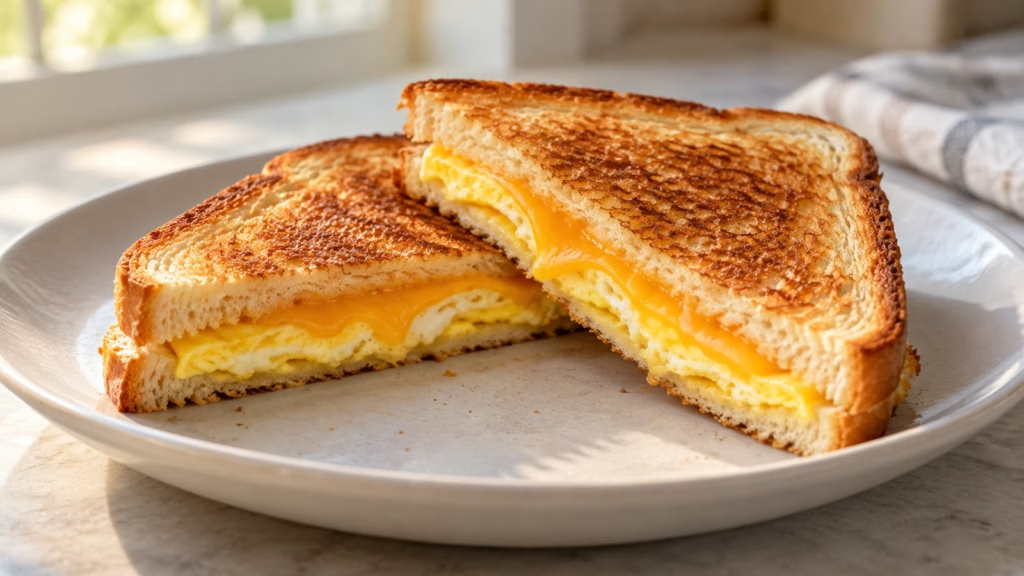
The eggs are ready, the toast is somewhere else, and breakfast has already involved more moving parts than expected. A one-pan egg sandwich brings those jobs together: the bread catches a little beaten egg, the whole layer flips, and cheddar goes inside before the sandwich closes. The useful part is the order, not a dramatic toss.
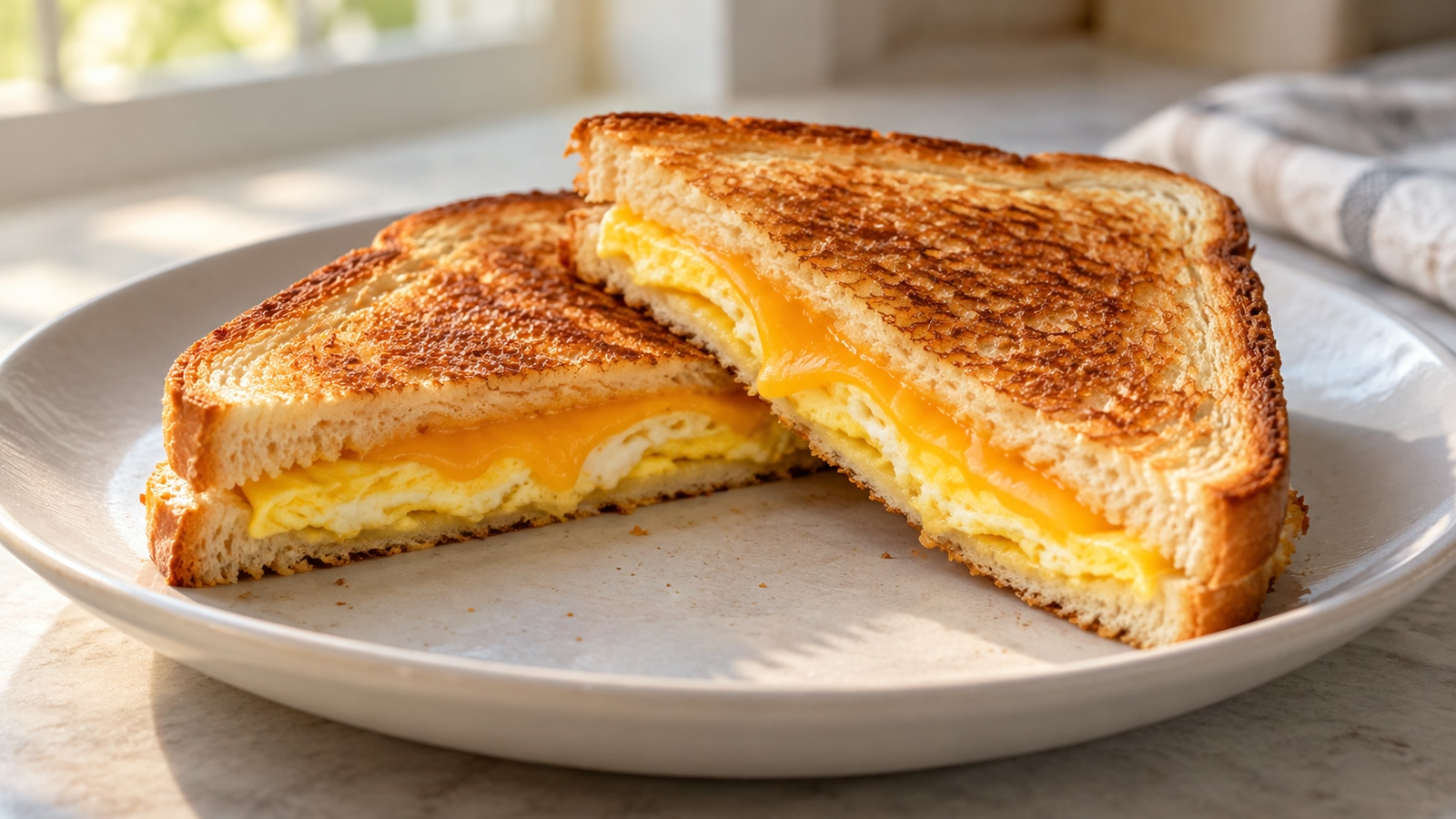
Wait until the egg moves as one sheet, then make a supported flip and let the bread turn golden over gentle heat.
The bread-and-egg flip appeared in Parade’s 2020 coverage of the viral sandwich and remains in its 2026 recipe roundup. This two-egg version makes one manageable sandwich with ordinary white bread and cheddar, without promising that a cold pan and a full breakfast somehow take two minutes.
Set up a one-pan egg sandwich before the heat goes on
Choose bread that fits side by side in the skillet. Thick bakery slices and a tiny pan make the first flip awkward; two standard sandwich slices leave room for a thin egg border that can fold inward.
- Use a 12-inch nonstick skillet with an intact cooking surface. Lay in the bread while the pan is cold to check the arrangement, then remove it before heating.
- Beat the eggs thoroughly. Streaks of unmixed white can set unevenly, while a consistent mixture spreads into a more cooperative sheet.
- Slice or grate the cheese before starting. A modest, even layer melts more readily than one thick piece sitting in the middle.
- Put a wide spatula nearby. A second one can support the far edge; there is no prize for making breakfast with one wrist alone.
White bread is straightforward here, but a comparably sized whole-wheat slice is an option. Our whole-wheat versus multigrain bread guide explains what those labels actually mean.
The first flip is easier when you wait
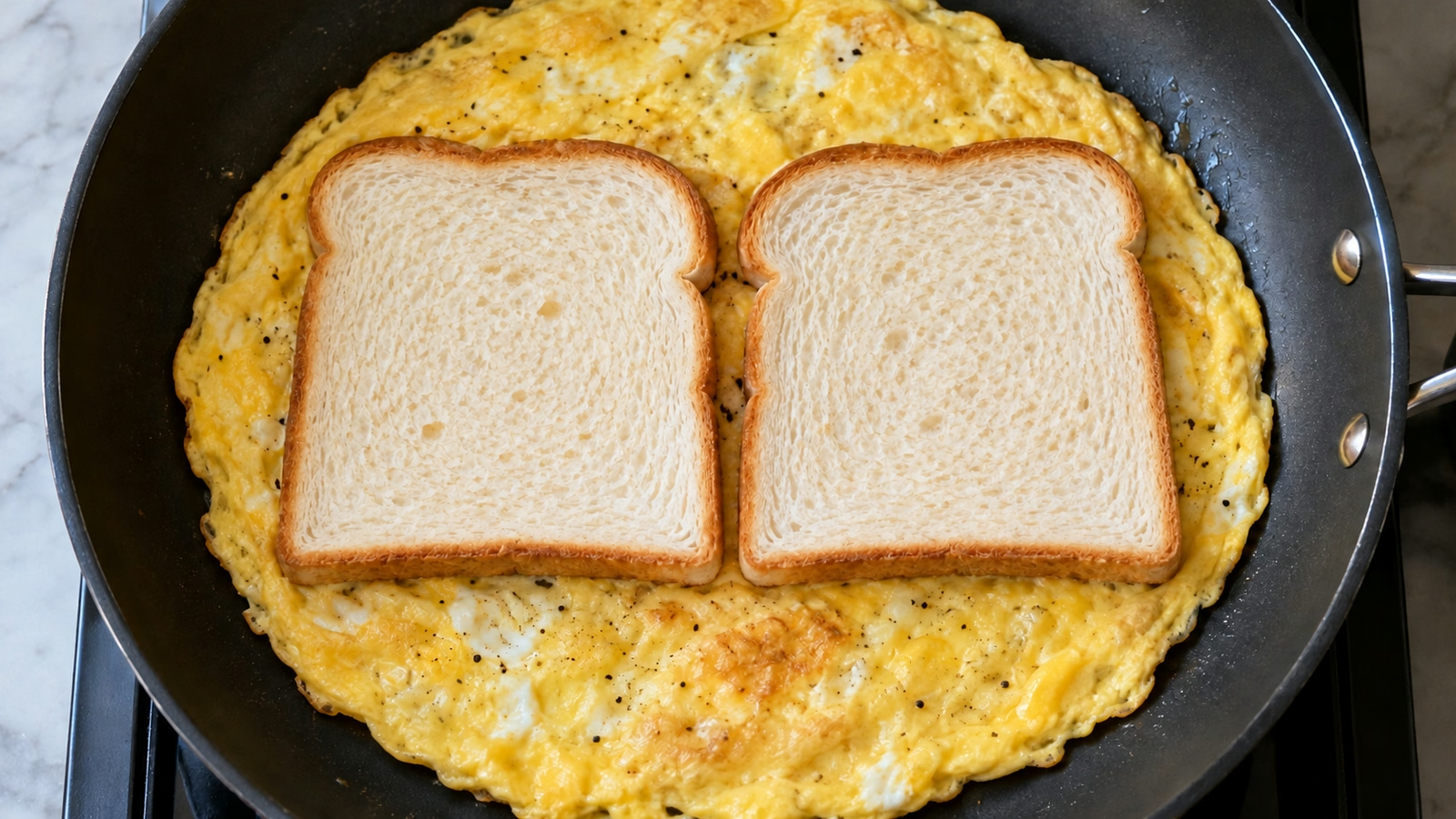
The egg should release from the pan and support the bread before you turn it. If the center flows when the skillet tilts, it needs more time; if the base is dark before the top sets, lower the heat.
- Coat both bread faces lightly in the just-poured egg. Work promptly so the bread makes contact while the egg is still wet.
- Leave a narrow gap between the slices. That gives the egg a flexible hinge when you close the sandwich later.
- Loosen around the edge first, then slide the spatula farther under the center. Lift slowly enough to notice any patch still stuck to the pan.
- Support and turn the assembly close to the skillet. A small controlled movement is more useful than lifting it high and hoping for the best.
If it tears, put the pieces back together with the bread underneath and continue cooking. A slightly untidy seam can still become a perfectly usable sandwich.
Keep the filling simple and the center cooked
Fold the excess egg inward before adding the cheddar, then close the sandwich. Cook the egg center to 160°F (71°C), consistent with FDA guidance for egg dishes; a browned crust alone does not tell you what is happening inside.
- Cheese still firm: Lower the heat and give it another moment. A brief cover can help melting, then uncover so steam does not soften the bread unnecessarily.
- Bread coloring too quickly: Move the pan off the burner briefly, reduce the heat, and continue gently. Do not keep pushing at the same high temperature.
- Want vegetables: Use a small amount of already cooked, well-drained filling. Raw mushrooms or a heap of tomato add moisture and change the timing.
- Want meat: Add only fully cooked, safely handled meat, heat it thoroughly, and keep the layer thin. It is a variation, not part of the base recipe or nutrition.
I would make the plain egg-and-cheddar version first. It is easier to learn the fold when the middle is not negotiating several slippery fillings.
Eat it crisp, or reheat with realistic expectations
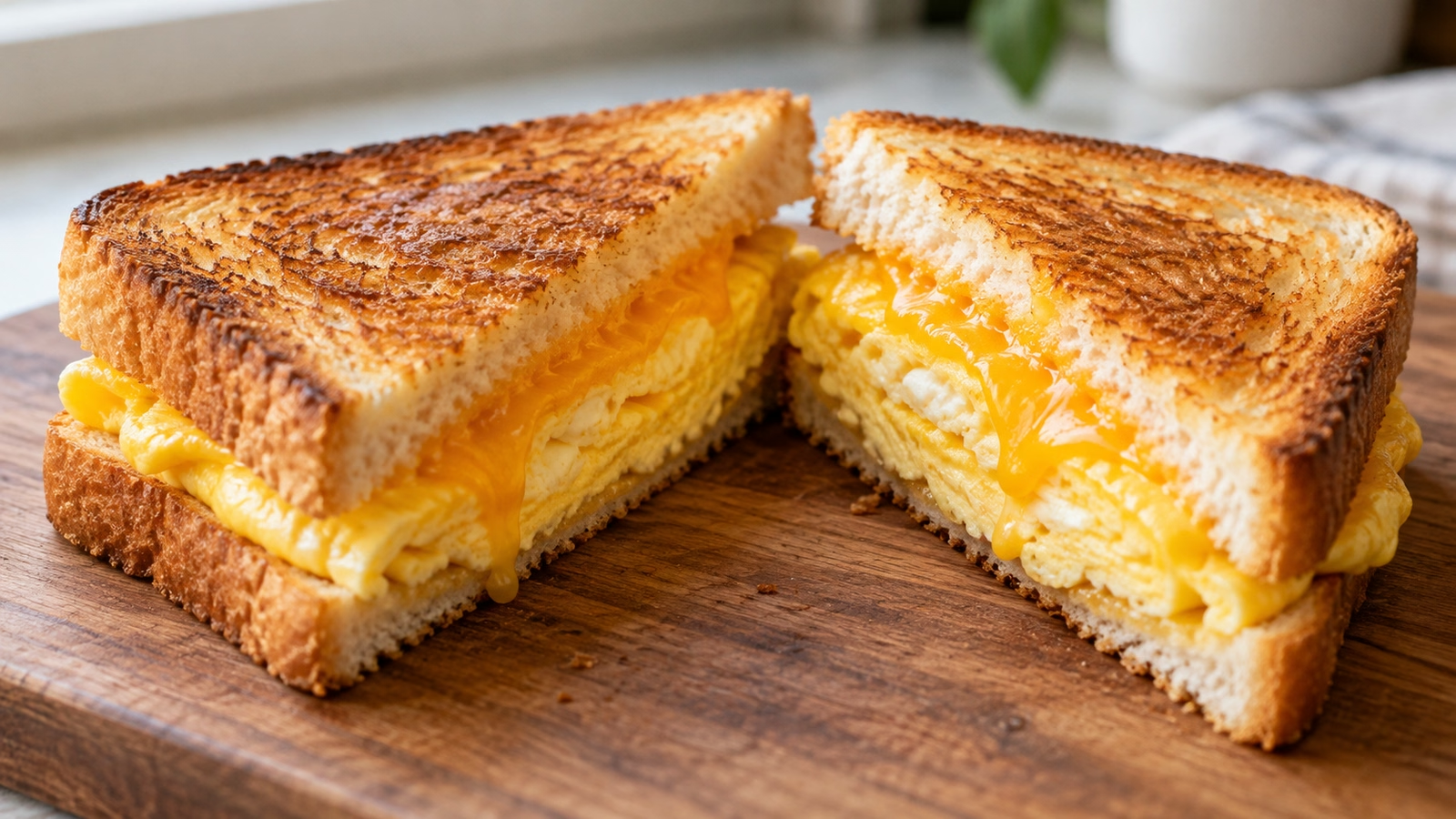
Let the sandwich sit for a minute before cutting so the melted cheese does not rush straight onto the board. Pair it with fruit or another side if you want more breakfast; the card treats the sandwich itself as one serving.
- Eat soon after cooking for the contrast between crisp bread and tender egg. Wrapping it tightly while hot traps moisture against the crust.
- Refrigerate leftovers within two hours, or one hour when temperatures exceed 90°F (32°C), and keep them at 40°F (4°C) or below.
- Use refrigerated leftovers within three to four days. Reheat throughout to 165°F (74°C); a skillet can restore some surface crispness, but the center still needs checking.
- For several people, cook separate sandwiches in batches. Doubling the eggs in the same pan creates a thicker layer and does not preserve this timing.
This is especially useful as a small, immediate breakfast. For a crowd, I would choose a tray-baked dish rather than turn the easy sandwich into a production line.
One-Pan Egg Sandwich Recipe

Ingredients
- 2 large eggs 100 g without shells
- 2 slices white sandwich bread 56 g total; standard thin slices
- 1 ounce cheddar cheese 28 g, thinly sliced or finely grated
- 1 teaspoon unsalted butter 5 g
- 1 pinch black pepper about 0.1 g
Equipment
- 1 12-inch nonstick skillet
- 1 Mixing bowl
- 1 wide spatula
- 1 second spatula
- 1 Food thermometer
Instructions
- Check that the two bread slices fit side by side in a 12-inch (30 cm) nonstick skillet with a little room between them. Beat the eggs and pepper in a bowl until the whites and yolks are evenly mixed.
- Warm the skillet over medium-low heat. Melt the butter and swirl to coat. Pour in the eggs and tilt into a thin, even layer.
- Immediately lay both bread slices side by side on the wet egg, briefly coat one side, then turn each slice over so both sides have some egg. Leave a narrow gap between the slices. Cook for 2–3 minutes, until the egg forms one set sheet that releases with a spatula.
- Slide a wide spatula beneath the egg-and-bread assembly, support it with a second spatula if needed, and turn it over as one piece so the bread touches the skillet. Fold the excess cooked egg edges over the bread.
- Place the cheddar over one slice. Fold the other slice over it to close the sandwich. Cook gently for about 2 minutes per side, pressing lightly, until both bread faces are golden, the cheese melts, and the egg center reaches 160°F (71°C). Reduce the heat if the bread colors too quickly.
- Transfer to a board, rest for 1 minute, and cut in half. Eat while the bread is crisp.
Nutrition
Notes
Tried this recipe?
Let us know how it turned out!Sources
- Parade: the egg-sandwich flip
- Parade: 2026 viral recipe collection
- FDA: egg cooking and storage
- USDA: leftover storage
- USDA FoodData Central: ingredient data
Hi, I’m Laura, the voice behind Tastiva. I’ve always believed that eating well should feel enjoyable, comforting, and realistic—not like another complicated rule to follow. I love creating recipes that fit into everyday life, sharing simple nutrition ideas, and finding small ways to make meals feel a little better without losing the pleasure of good food.