
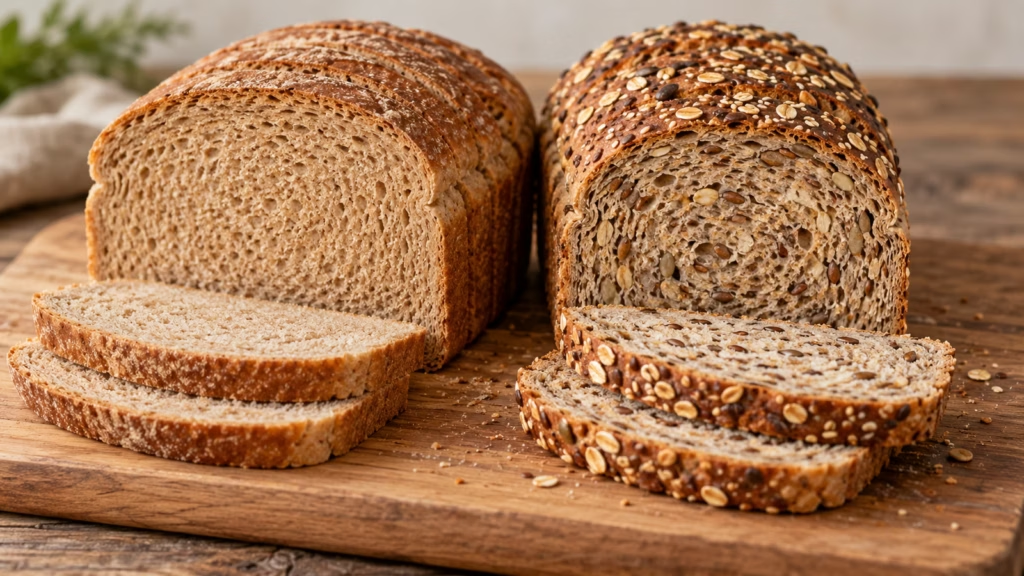
Two loaves sit beside each other: one says whole wheat, the other multigrain, and both look brown enough to make the choice seem obvious. For whole wheat vs multigrain bread, the difference is simpler than the packaging suggests. Whole wheat describes the grain and its form; multigrain describes a mix of grains. A multigrain loaf can also be whole grain, so start with the ingredients and compare the amount you will actually eat.
Choose the loaf by its ingredients, serving size, and place in your meal, not by the seeds on its crust.
Whole wheat vs multigrain bread: the words overlap
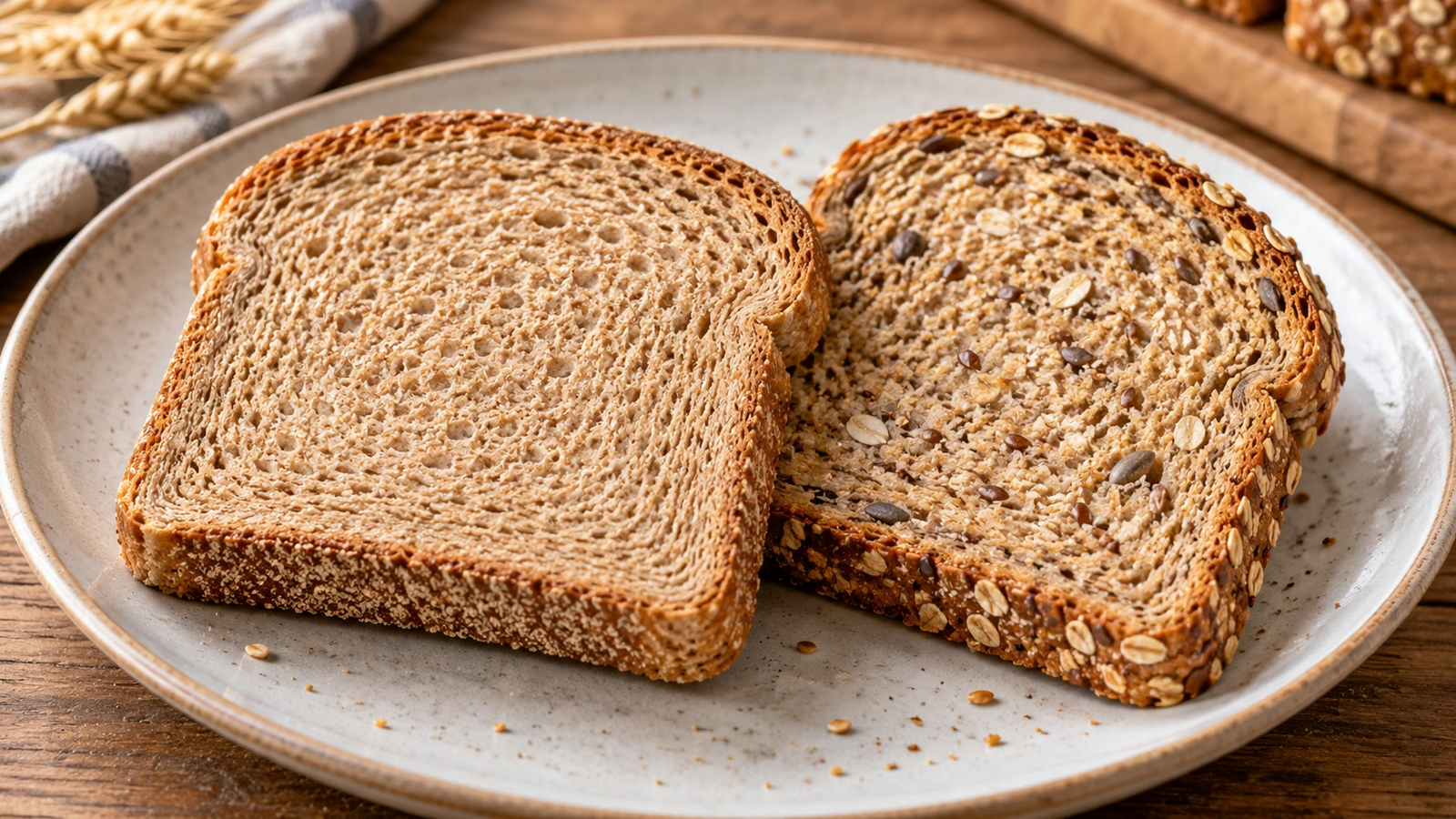
The Whole Grains Council explains that whole wheat is one type of whole grain: the bran, germ, and endosperm remain in their original proportions. That definition describes the flour, not whether a slice is soft, dense, or covered in seeds. “Multigrain” alone does not tell you whether the grains are whole or refined.
| Package wording | What you learn | What to check next |
|---|---|---|
| 100% whole wheat | A specific whole-grain claim about wheat | Ingredients and Nutrition Facts |
| Multigrain | More than one grain is used | Whether those grain ingredients are whole |
| Whole-grain multigrain | Variety plus a whole-grain claim | Exact wording and ingredients |
| Wheat / seeded / brown | Insufficient whole-grain information alone | The grain names and flour forms |
I’d treat this as two separate questions: which grains are present, and how are they processed? A loaf made with whole wheat and whole oats can satisfy both ideas. A loaf with several refined grain ingredients does not become whole grain simply because it offers more variety.
Read the flour names before counting the seeds
The Whole Grains Council’s identification guide recommends checking the ingredients rather than relying on general package language. Whole wheat flour is a useful specific description; wheat flour or enriched flour alone does not identify a whole grain. A first whole-grain ingredient is a clue, but it does not reveal every proportion in a mixed loaf.
- Look for explicit grain forms. Read “whole wheat flour,” “whole rye,” or the named grain description instead of stopping at “wheat.”
- Read the whole grain list. Several smaller whole-grain ingredients can complicate what the first ingredient tells you. Do not calculate an exact whole-grain percentage from their order alone.
- Separate seeds from grains. A seeded surface describes a visible feature. It does not establish what flour makes up the crumb.
- Keep fiber as its own question. A fiber number is useful nutrition information, but it is not proof of the bread’s whole-grain content.
If a loaf carries the Whole Grain Stamp, read which version it uses. The 100% Stamp means all grain ingredients are whole grain; the 50%+ version indicates at least half, while the Basic Stamp can include more refined grain than whole. No stamp does not automatically mean no whole grains: use the other package information.
Compare equal amounts before comparing nutrition
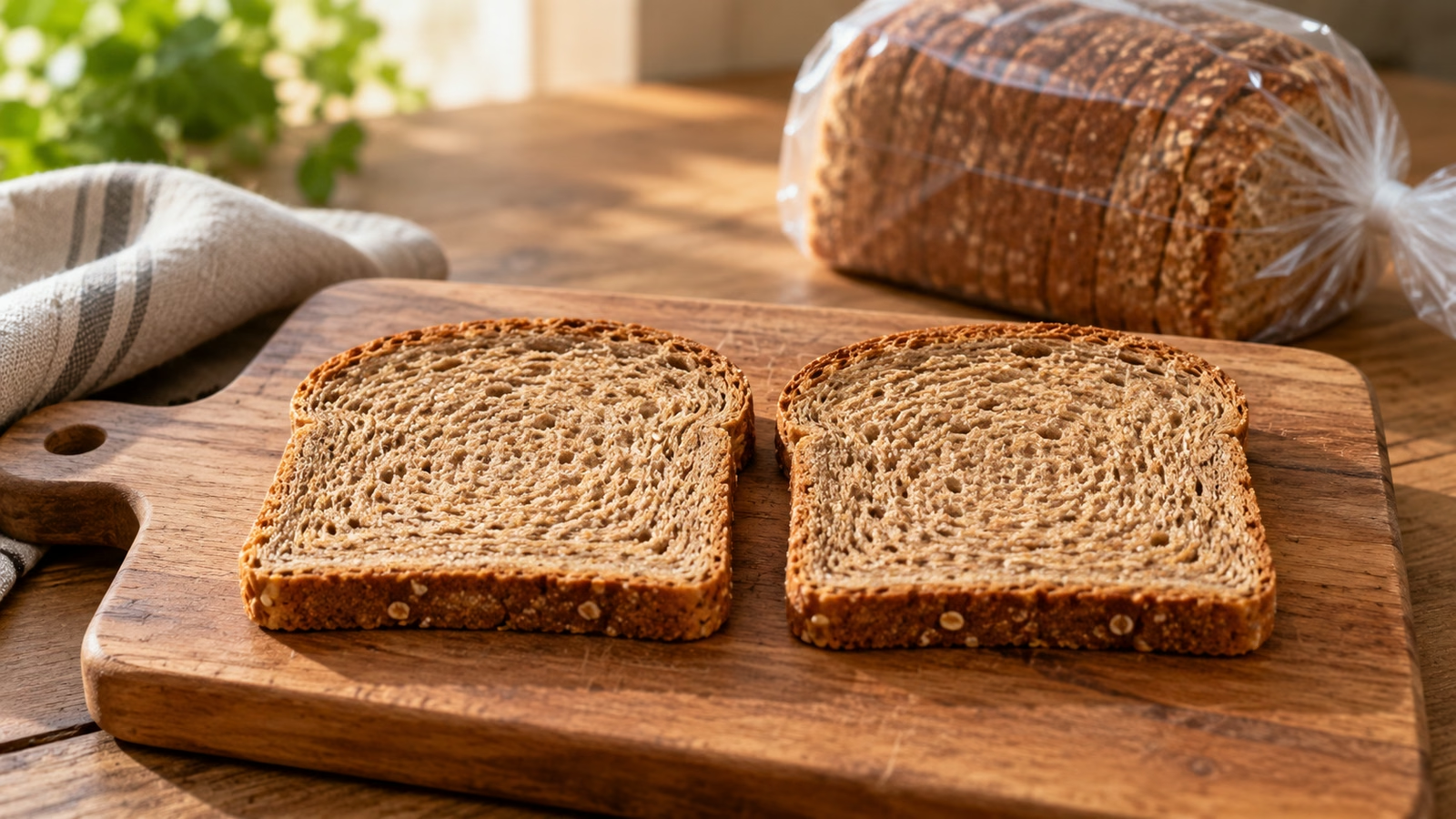
FDA’s Nutrition Facts guidance explains that nutrient values refer to the labeled serving, and the serving is not a recommendation of how much you should eat. Bread makes this especially easy to miss: one bag may list one slice and another two, while the slices themselves can have different weights.
- Find the serving size. Note both the slice count and the weight in grams before comparing calories or nutrients.
- Choose the comparison you need. Equal weights help compare the breads themselves. Your actual sandwich or toast portion helps compare the meal you plan to eat.
- Read several lines together. Look at fiber, sodium, added sugars, and protein for the same amount. A category name cannot supply those values.
- Adjust when the amount changes. If you eat twice the labeled serving, double the listed nutrient amounts. Do not compare one loaf’s single slice with another’s full sandwich by accident.
Here is an illustrative example, not a comparison of measured brands: if one label covers a 30-gram slice and another covers a 60-gram two-slice serving, dividing the second label’s values by two compares equal 30-gram amounts. That calculation answers a different question from choosing two large slices for lunch. I’d check both when the loaves differ noticeably in size.
Let the loaf fit the sandwich, toast, or casserole
Once the labels make sense, give the bread a practical job. A soft, neatly sliced loaf may suit a packed sandwich; a more textured slice may be pleasant as toast if you enjoy the grains and seeds. Those are preferences about the particular loaf, not reliable predictions from the words whole wheat or multigrain.
- For sandwiches: Check slice size and whether the bread will comfortably hold your filling. Compare your two-slice portion alongside what goes between it.
- For toast: Choose a texture you like and consider the topping. Bread is one component of breakfast, not the entire nutrition decision.
- For a shared household: Read the full ingredient and allergen information. “Multigrain” is not a gluten-free claim, and whole wheat contains wheat.
- For budget: Compare price by a useful amount, such as package weight or your usual portion, rather than assuming every bag supplies the same number of lunches.
I’d also be realistic about how much bread you can use while it still suits the meal. Plan sandwiches or toast for fresh slices and a bread-based dish for a loaf that is firm but otherwise suitable. Tastiva’s breakfast casserole with bread, eggs, and cheddar uses whole-wheat bread and discusses letting the slices absorb the egg mixture. That is a different kitchen decision from declaring one label the universal winner.
Mayo Clinic dietitian Angie Murad explains what whole grain means and why words such as multigrain or seven-grain are not enough to identify it. Her label-reading demonstration reinforces the ingredient checks above.
Sources
- Whole Grains Council: Identifying Whole Grain Products
- Whole Grains Council: What’s a Whole Grain? A Refined Grain?
- Whole Grains Council: Whole Grain Stamp
- FDA: How to Understand and Use the Nutrition Facts Label

Hi, I’m Laura, the voice behind Tastiva. I’ve always believed that eating well should feel enjoyable, comforting, and realistic—not like another complicated rule to follow. I love creating recipes that fit into everyday life, sharing simple nutrition ideas, and finding small ways to make meals feel a little better without losing the pleasure of good food.