
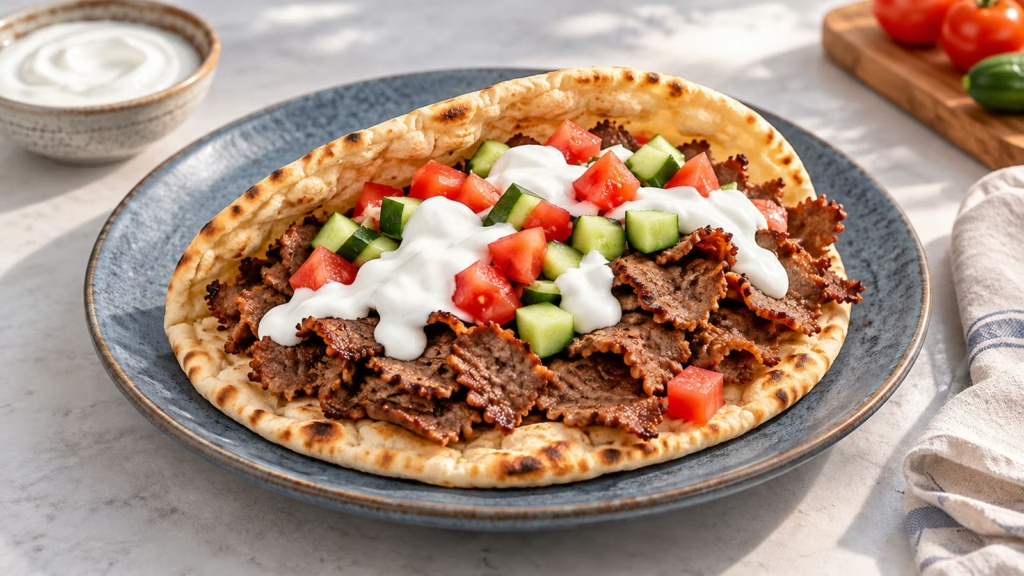
Thin kebab pieces are the attraction; a countertop rotisserie is the obstacle. This parchment doner kebab uses seasoned ground beef rolled in paper, baked until safely cooked and briefly crisped in a skillet. You get a practical, doner-inspired filling for pita without pretending an oven roll is identical to meat shaved from a rotating spit.
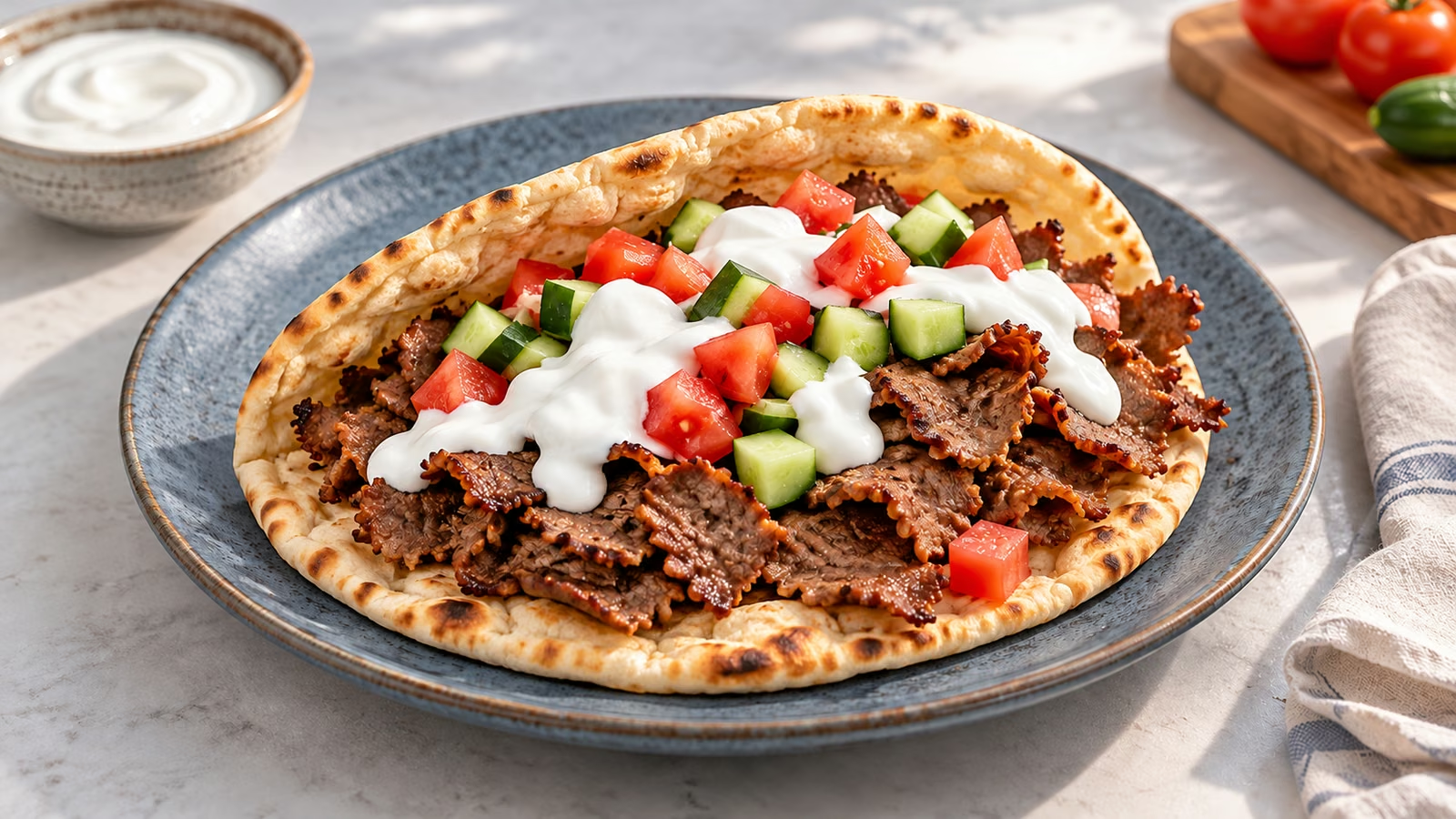
Roll the beef thin, check the center with a thermometer and finish the unwrapped strips in a hot skillet for edges worth tucking into pita.
Why parchment doner kebab uses a thin layer
The parchment is a separator. Instead of baking one thick loaf, you roll a thin sheet of meat with paper between its layers, then open it after cooking. The method has drawn fresh attention in 2026 recipe coverage, including Weelicious; this version finishes in a skillet so the paper never goes near a broiler.
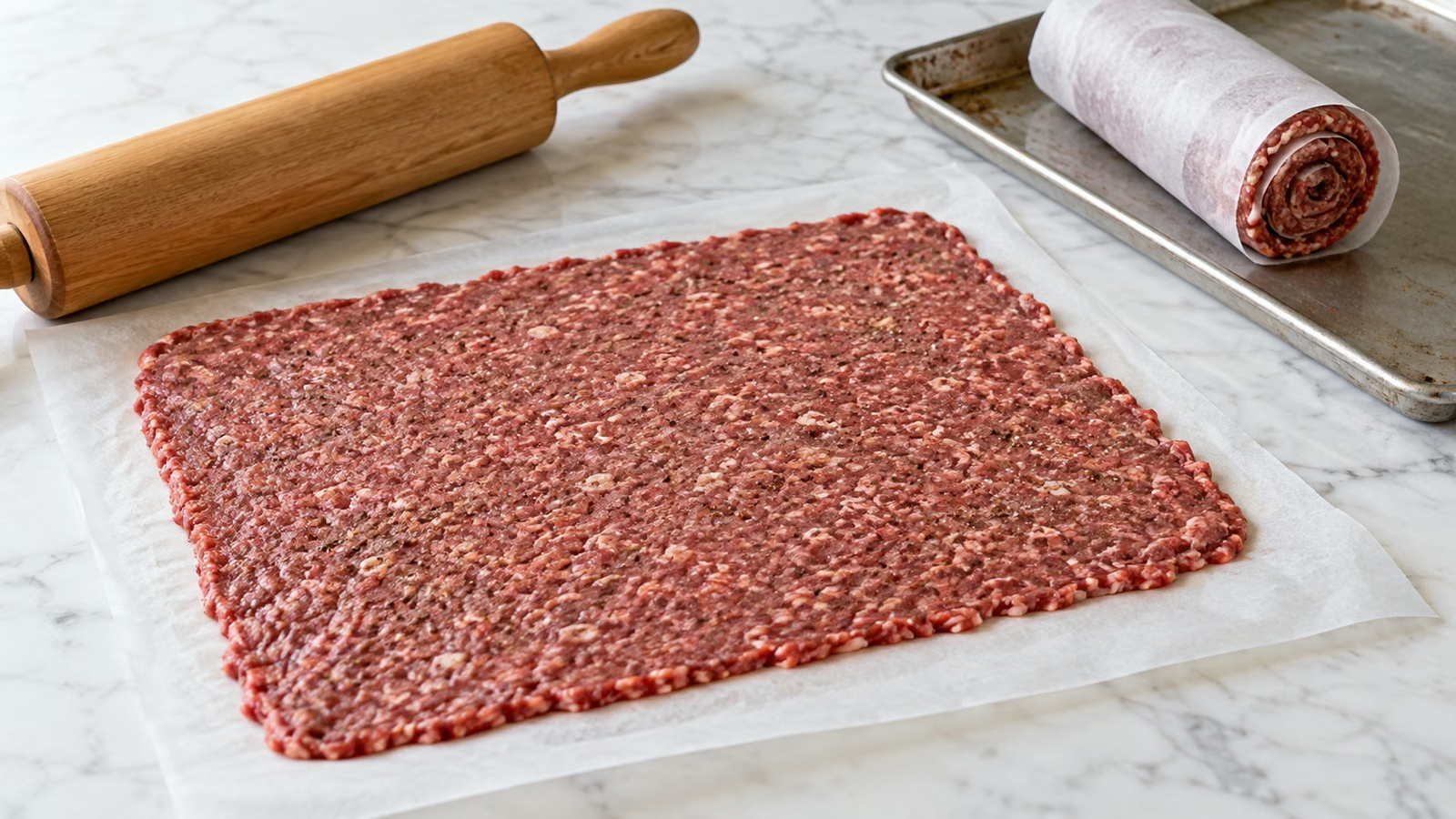
- Aim for even thickness. Thick patches need longer to cook than thin ones. Use the rolling pin across the whole sheet, especially the middle, rather than flattening only the edges.
- Remove the upper sheet. It helps with rolling the raw meat flat, but the lower sheet is the one that travels into the roll. Peel the upper sheet off first.
- Leave a margin. A little clear paper around the meat makes the roll easier to handle and gives the filling less opportunity to squeeze out.
- Use a rimmed pan. Juices and rendered fat can escape. A flat cookie sheet is the wrong place to discover that detail.
Choose beef and seasoning with texture in mind
I would choose regular ground beef rather than the leanest package for this preparation. Thin meat has little room for dryness, and the richer beef suits a sharp yogurt sauce. The nutrition estimate includes its fat instead of quietly assuming that every drop drains away.
- Onion. Finely grate it so the mixture rolls smoothly. Large crunchy pieces can interrupt the thin sheet and make tearing more likely.
- Yogurt. A small amount goes into the meat; the rest becomes the sauce. Plain Greek yogurt keeps both uses straightforward without added sweetness.
- Spices. Paprika, cumin and oregano give the filling warm seasoning. Smoked paprika is an option if you want that additional flavor, but it is not a substitute for an actual grill.
- Salt. Measure the stated fine salt. Coarse kosher salts vary in how much fits in a spoon, so use the gram weight when changing brands.
Mix until cohesive and slightly tacky, then stop. You need a mixture that can hold a thin layer, not an extended arm workout before dinner.
Cook the center before crisping the edges
Color cannot tell you whether the middle of the rolled beef is ready. Follow the recipe’s approximate baking time, then use a thin-probe food thermometer. FoodSafety.gov lists 160°F (71°C) as the minimum internal temperature for ground beef.
- Probe actual meat. Insert through an open end toward the middle and make sure the tip is in the beef rather than sitting in a gap between paper layers.
- Handle steam carefully. Open the rolls away from your face and hands. Hot juices can collect inside even when the paper looks dry.
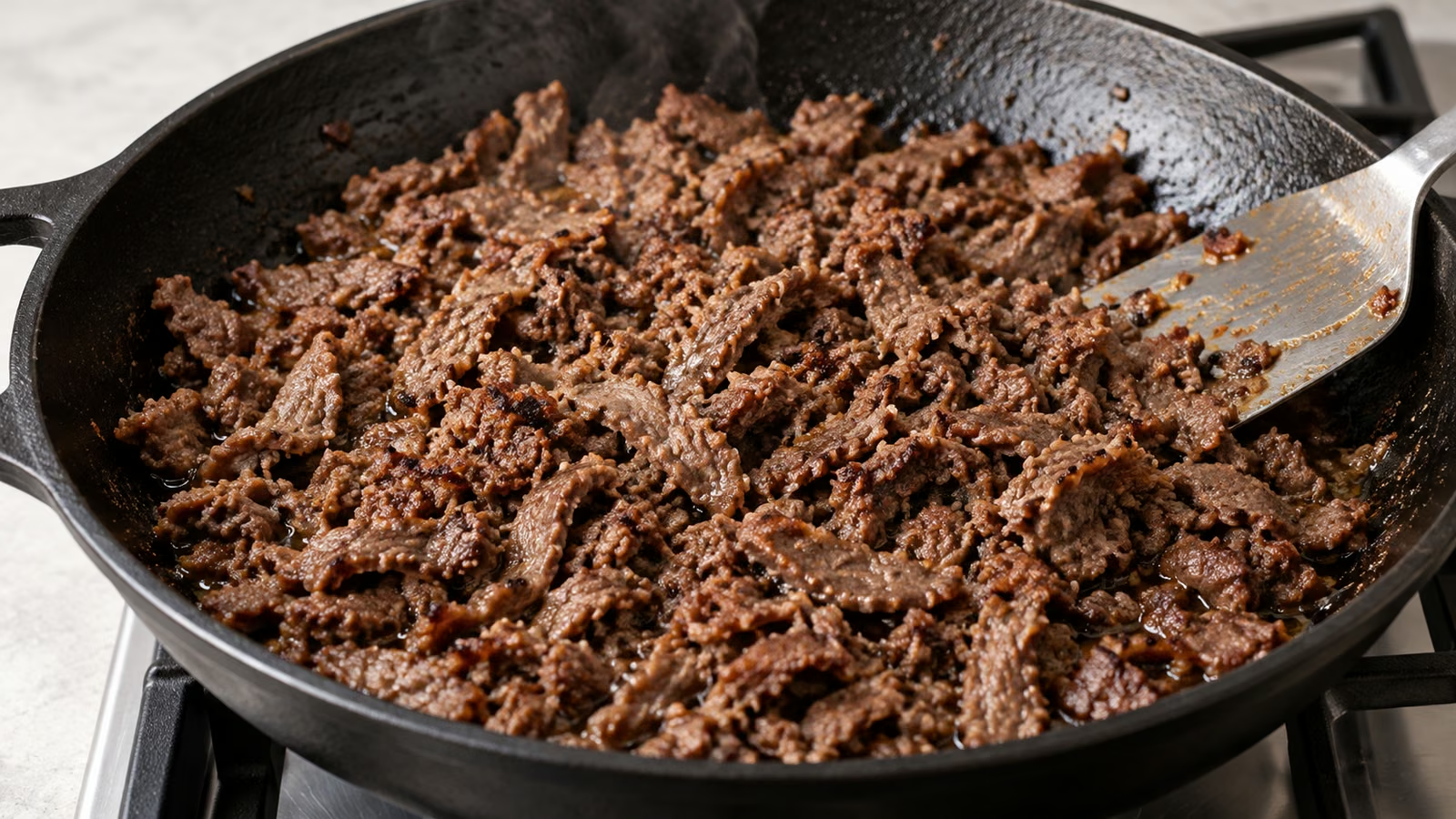
- Separate before searing. Remove all paper and spread the strips in a hot skillet. Crowded meat steams; two smaller batches are easier to brown.
- Avoid the broiler shortcut. Use parchment only within its labeled oven limits. Do not put paper under a broiler, and do not replace it with wax paper.
Build pita and keep leftovers useful
The cool sauce and chopped vegetables are more than decoration. They give the rich beef a fresh contrast and keep a pita from becoming a stack of meat with nowhere for the lemon to go. I prefer a modest spoonful of sauce inside, with the rest offered alongside.
- Fill at the table. Keep warm pita covered in a clean towel and let everyone add cucumber, tomato and sauce. This also keeps the bread from soaking while you finish the last skillet batch.
- Store in parts. Refrigerate beef, sauce and chopped vegetables separately in covered containers within two hours, or one hour when the room is above 90°F (32°C).
- Reheat the beef. Use cooked leftovers within three to four days at 40°F (4°C) or below. Heat the meat to 165°F (74°C), then add cold sauce and vegetables afterward.
- Changing the protein. Ground poultry needs a different safety target of 165°F (74°C) and will change the texture and nutrition. It is not a silent one-for-one promise in this beef recipe.
Parchment Doner Kebab Recipe

Ingredients
- 454 g 80% lean ground beef 1 pound
- 60 g yellow onion finely grated
- 6 g garlic 2 cloves, finely grated
- 180 g plain whole-milk Greek yogurt divided; 3/4 cup
- 2 teaspoons paprika 4.6 g
- 1 teaspoon ground cumin 2.1 g
- 1/2 teaspoon dried oregano 0.5 g
- 1/2 teaspoon fine salt 3 g
- 1/4 teaspoon black pepper 0.6 g
- 15 ml lemon juice 1 tablespoon
- 4 small pita breads about 60 g each
- 200 g tomatoes diced
- 150 g cucumber diced
Equipment
- 1 Oven-rated parchment paper
- 1 Rimmed baking sheet
- 1 Rolling Pin
- 1 Large skillet
- 1 Instant-read thermometer
- 1 Grater
Instructions
- Heat the oven to 400°F (200°C). Check that your parchment is rated for this temperature. Put a rack in the center and set out a rimmed baking sheet.
- Mix the beef, finely grated onion, garlic, 60 g (1/4 cup) yogurt, paprika, cumin, oregano, salt and pepper until evenly combined and slightly tacky. Divide in half.
- Place one half on a 12-by-16-inch parchment sheet, cover with another sheet and roll to an even layer about 1/8 inch (3 mm) thick, leaving a small margin. Remove the top sheet. Starting at a short edge, roll the bottom parchment and meat together so paper separates the layers. Repeat with the second half.
- Put both rolls seam-side down on the rimmed baking sheet. Bake about 25 minutes, then carefully insert a thin instant-read thermometer through the end into the meat at the center. Continue cooking until the ground beef reaches at least 160°F (71°C); time is a guide, not the doneness test.
- While the meat cooks, stir the remaining 120 g (1/2 cup) yogurt with lemon juice. Refrigerate until serving. Warm the pita following its package instructions.
- Open the cooked rolls carefully, letting steam escape away from you. Remove all parchment and tear the meat into strips. Transfer meat with a small amount of its rendered juices to a large skillet over medium-high heat. Cook in a single layer for 2 to 4 minutes, turning once, until some edges brown. Work in batches if needed.
- Divide the beef, yogurt sauce, tomatoes and cucumber among the four pita breads. Serve promptly.
Nutrition
Notes
Tried this recipe?
Let us know how it turned out!Sources
- Weelicious: parchment doner trend
- FoodSafety.gov: minimum cooking temperatures
- USDA: safe handling of leftovers
- USDA FoodData Central: ingredient nutrients
Hi, I’m Laura, the voice behind Tastiva. I’ve always believed that eating well should feel enjoyable, comforting, and realistic—not like another complicated rule to follow. I love creating recipes that fit into everyday life, sharing simple nutrition ideas, and finding small ways to make meals feel a little better without losing the pleasure of good food.