
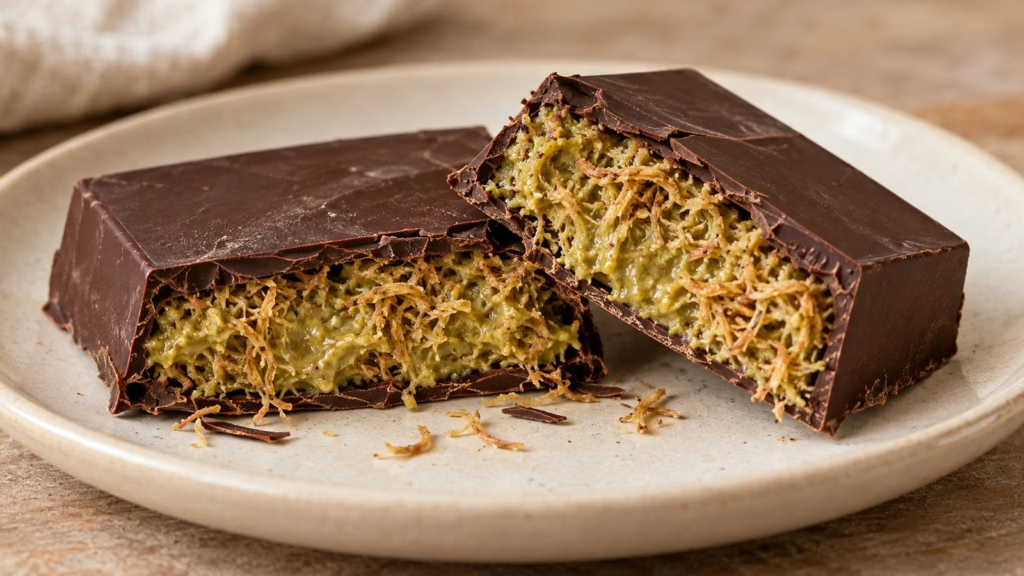
The green center gets the attention, but the crunch is what makes a Dubai chocolate bar interesting. This homemade version wraps toasted kataifi, pure pistachio butter, and a little tahini in 70% dark chocolate. White chocolate sweetens the filling, and the finished bars set in the refrigerator, so you can skip tempering without pretending the result is a professional confectionery shell.
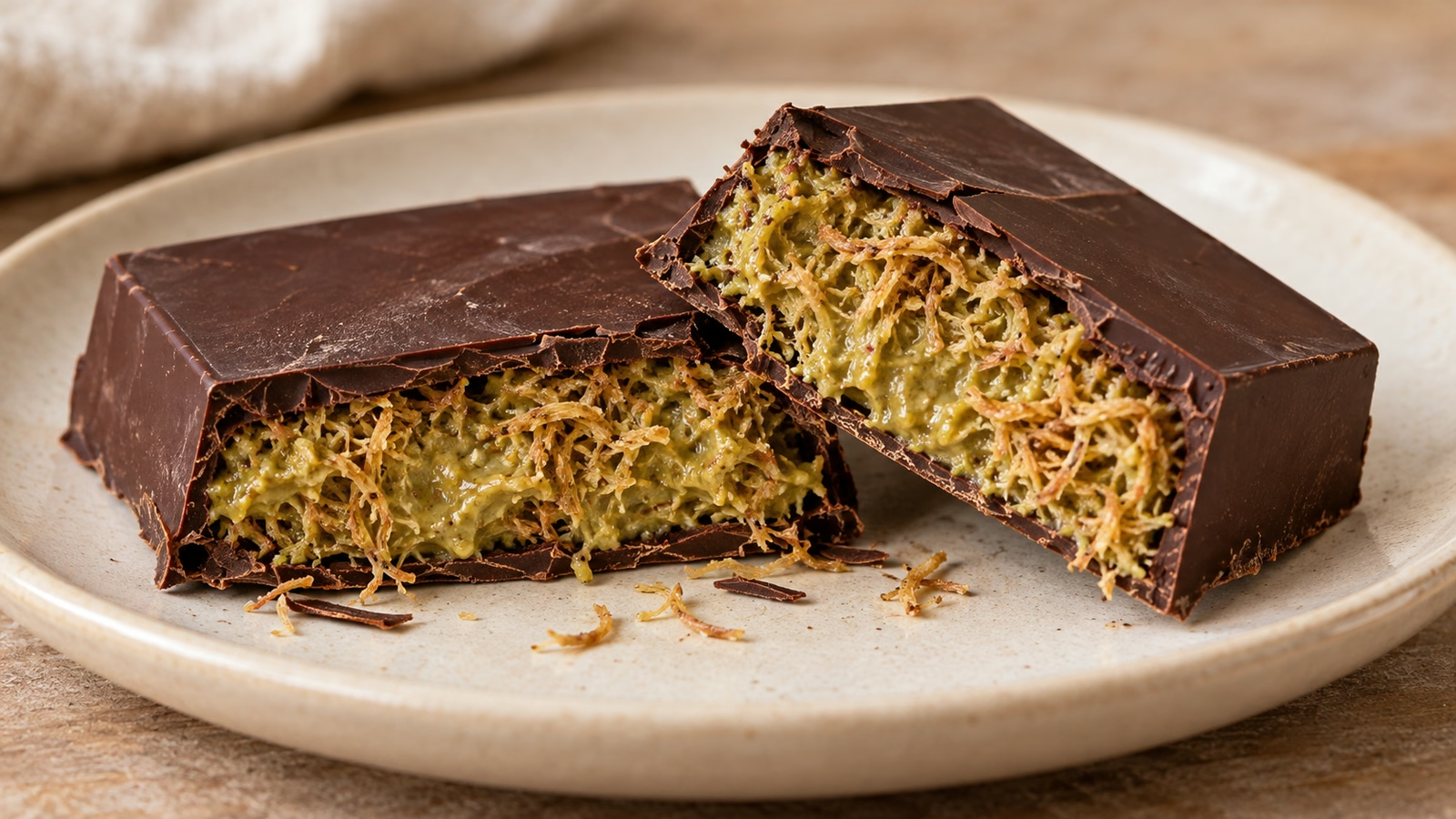
Give the pistachio filling room to shine, and give the toasted pastry time to cool before it meets the chocolate.
Choose the right pistachio butter for a Dubai chocolate bar
The most consequential shopping decision is inside the pistachio jar. This formula uses 180 grams of pure pistachio butter made from ground, unsalted roasted pistachios. A sweetened pistachio cream can contain sugar, oils, and milk ingredients, so the two aren’t interchangeable here.
- Read the ingredient list. Look for pistachios without added sweeteners. Stir any separated oil back into the jar before weighing so you’re using the whole butter, not an unusually oily or dry portion.
- Keep the white chocolate in the filling. Its 60 grams supply sweetness alongside the unsweetened pistachio butter. It isn’t a decorative drizzle, and omitting it changes the balance.
- Use plain tahini. The 15 grams add sesame flavor; stir the jar well before measuring. Halva is a different, sweetened ingredient rather than a direct substitute.
- Choose chocolate you enjoy eating. The 300-gram shell uses 70% dark chocolate. Its cocoa intensity will be prominent, so this version suits someone who actually likes a darker bar.
Tastiva’s pistachio butter guide explains the distinction between pure nut butter and sweetened spreads. I’d settle that question before buying molds; the jar matters more than an elaborate pattern on the outside.
Build the crunch before mixing the filling
Kataifi is a pastry made in fine strands, sometimes described as shredded phyllo. This recipe starts with 100 grams of raw pastry, thawed according to its package directions if frozen. Don’t substitute an equal weight of a ready-to-eat sweet pastry and expect the same result.
- Loosen and shorten the strands. Separate clumps before toasting so butter can coat them and the pan doesn’t contain a pale, tightly packed center.
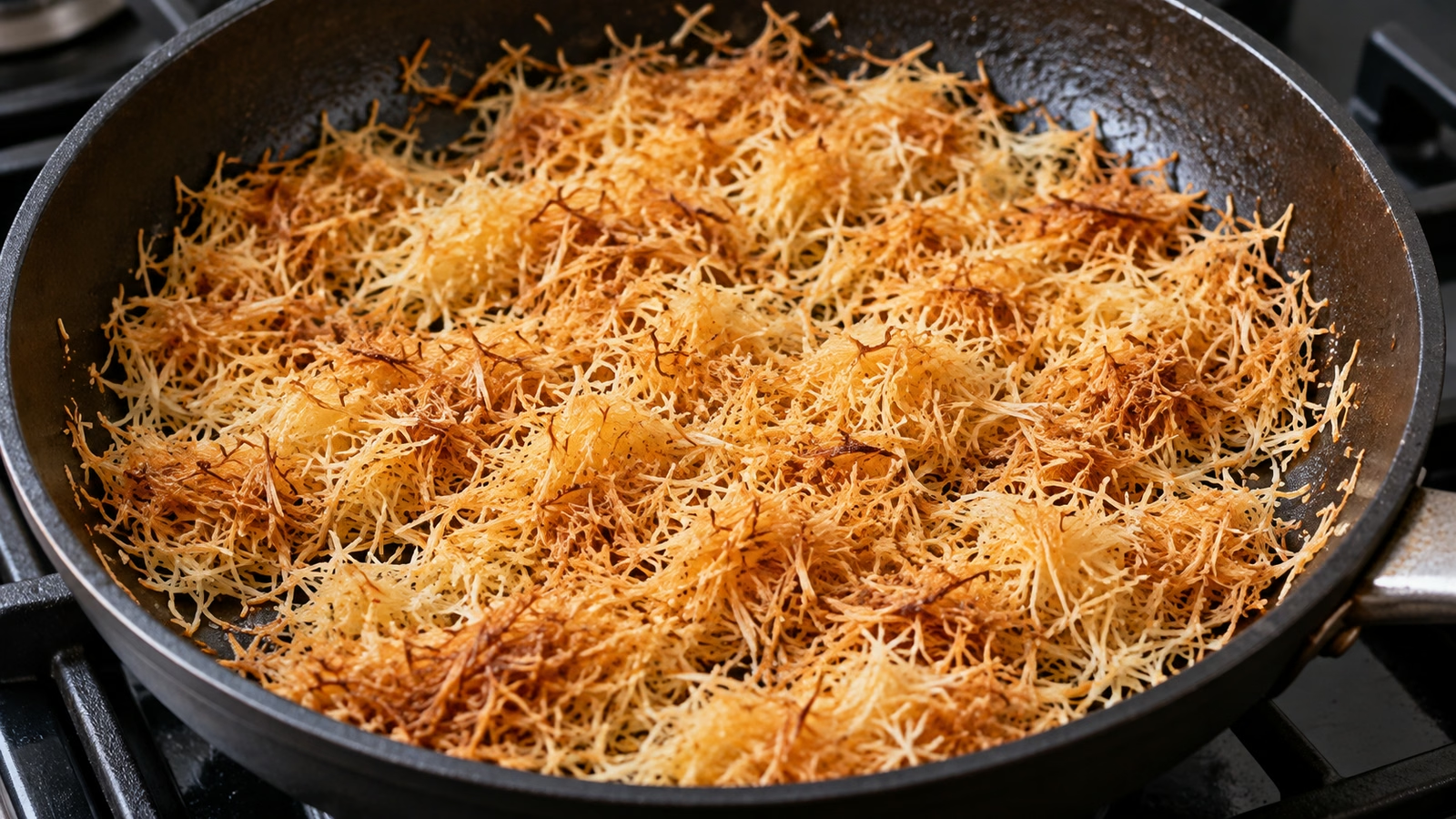
- Watch the color across the pan. Toast in the 20 grams of unsalted butter for about 8–10 minutes, stirring frequently. Look for an even golden color and crisp strands rather than a few dark pieces among soft ones.
- Take the pastry out of the hot pan. Spread it in a bowl or on a plate to cool. Residual pan heat can continue browning it after you’ve turned off the burner.
- Combine only after cooling. Fold the crisp pastry into the pistachio butter, tahini, melted white chocolate, and salt. Let the mixture cool before it goes into the chilled dark-chocolate shell.
I wouldn’t chase a neon-green center. Pistachio products vary in color, and toasted pastry makes the filling look less uniform. Visible golden strands are useful evidence of what’s inside, not a decorating problem.
Make a shell with enough space to close
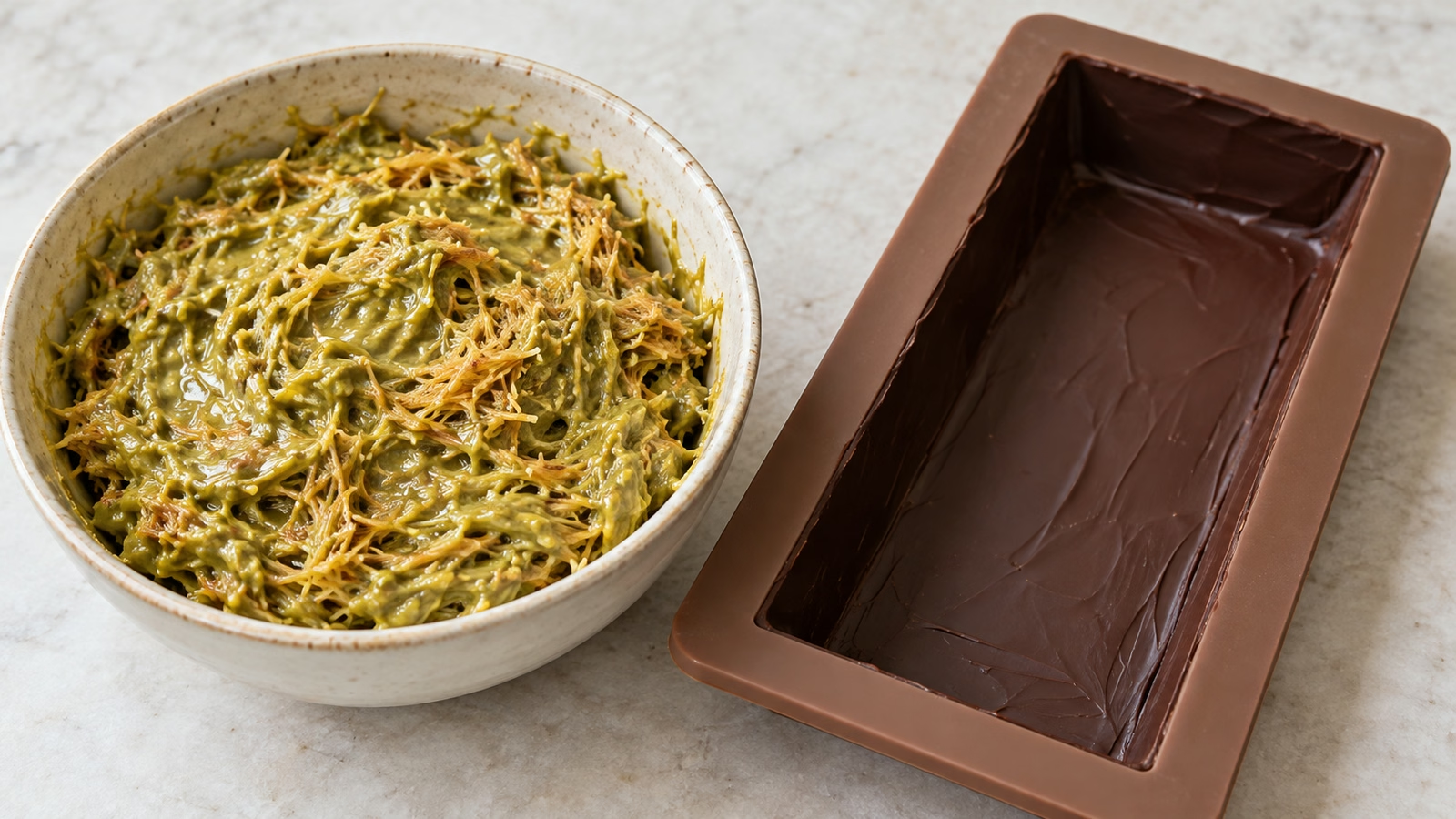
Set two large, deep chocolate-bar molds on a tray before you start; a flexible mold filled with liquid chocolate isn’t something to carry one-handed. The aim is an enclosed bar, with coating along the base and sides and enough chocolate held back to cap the filling.
- Start with dry equipment. Water droplets can make melted chocolate seize into a stiff mass. Keep bowls, spoons, and molds dry, especially if melting over hot water.
- Look for gaps before filling. Chill the coated molds until the shell is firm, then check the corners and sides. A bare patch becomes an exposed patch of filling.
- Leave headroom. Spread the cooled filling below the mold’s rim so the final chocolate layer can meet the sides. Tastiva’s guide to chocolate mold fillings covers that useful finishing detail.
- Allow the final chill. Once capped, refrigerate for about 45 minutes and unmold only when firm. Mold depth and refrigerator conditions can change the setting time.
King Arthur’s tempering guide explains why tempered chocolate has a glossy finish and clean snap. These bars use a simpler chilled method; a duller surface or a shell that softens in your fingers is an expected trade-off.
Portion, store, and check the allergy labels
The batch makes two large bars, divided into 12 small servings altogether. I’d serve small pieces with coffee or tea and let the nuts, pastry, and chocolate do the talking. No garnish needs to audition for the role.
- Keep the bars chilled. Store them in an airtight container in the refrigerator, separating pieces so they don’t stick together. Bring out the portions you plan to serve.
- Plan for near-term serving. This homemade formula has no validated shelf-life window. Start with ingredients stored according to their labels, and don’t borrow a commercial candy bar’s long shelf life.
- Check every label. The recipe contains pistachios, sesame, milk ingredients, and wheat. Athens kataifi also lists soy; chocolate and other pastry brands can have additional allergens or cross-contact warnings.
For sharing, keep those ingredient labels or provide their details with the bars. Replacing one ingredient doesn’t automatically make the finished recipe suitable for someone with an allergy.
Dubai Chocolate Bar Recipe

Ingredients
- 300 g 70% dark chocolate finely chopped
- 100 g kataifi pastry raw shredded phyllo dough, thawed per package; nutrition uses Athens brand
- 20 g unsalted butter
- 180 g pure unsalted pistachio butter made only from roasted pistachios; stir thoroughly
- 60 g white chocolate finely chopped
- 1 tablespoon tahini 15 g, well stirred
- 1 g fine salt about a scant 1/4 teaspoon
Equipment
- 2 deep silicone chocolate bar mold combined capacity at least 750 ml
- 1 small rimmed tray
- 1 Large skillet
- 1 Spatula
- 1 digital kitchen scale
- 2 dry heatproof bowl
Instructions
- Cut kataifi strands into roughly 1/2-inch pieces. Melt butter in a large skillet over medium-low heat. Add kataifi and cook, stirring frequently, 8–10 minutes until evenly golden and crisp. Transfer to a bowl and cool.
- Melt white chocolate in a dry microwave-safe bowl in 15-second intervals, stirring each time, until just smooth. Stir into pistachio butter with tahini and salt, then fold in the toasted kataifi. Cool until no longer warm before filling the shells.
- Set clean, completely dry silicone molds on a small tray. Melt dark chocolate in a dry microwave-safe bowl in 20-second intervals at half power, stirring between intervals. Stop when nearly melted and stir until smooth.
- Spread about half the chocolate across the bottom and sides of both molds, forming an even shell with no bare patches. Refrigerate about 10–15 minutes until firm.
- Divide filling between the shells, pressing gently into an even layer and leaving about 1/8 inch (3 mm) of room at the rim. Spread remaining melted chocolate over the top to seal, warming it briefly if needed. Tap gently to settle.
- Refrigerate at least 45 minutes, until fully firm. Carefully peel back the silicone and unmold. Cut each large bar into 6 small portions. Keep chilled until shortly before serving; this simple method does not temper the shell.
Nutrition
Notes
Tried this recipe?
Let us know how it turned out!Sources
- The Kitchn: Dubai Chocolate Bar
- King Arthur Baking: How to Temper Chocolate
- Athens Foods: Kataifi Ingredients and Allergens
Hi, I’m Laura, the voice behind Tastiva. I’ve always believed that eating well should feel enjoyable, comforting, and realistic—not like another complicated rule to follow. I love creating recipes that fit into everyday life, sharing simple nutrition ideas, and finding small ways to make meals feel a little better without losing the pleasure of good food.