
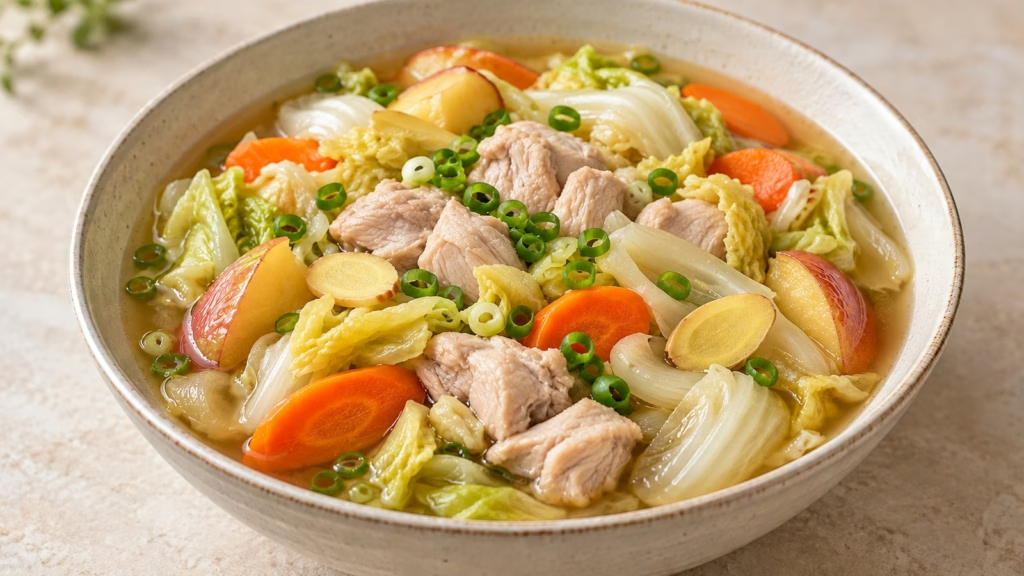
A mountain of chopped cabbage in an otherwise nearly dry pot can make dinner look a little doubtful. Give it gentle heat and a snug lid, though, and it starts to soften into its own juices. This waterless chicken and cabbage soup uses raw boneless thighs, napa cabbage, ginger, and apple for six vegetable-heavy bowls without starting with a carton of broth.
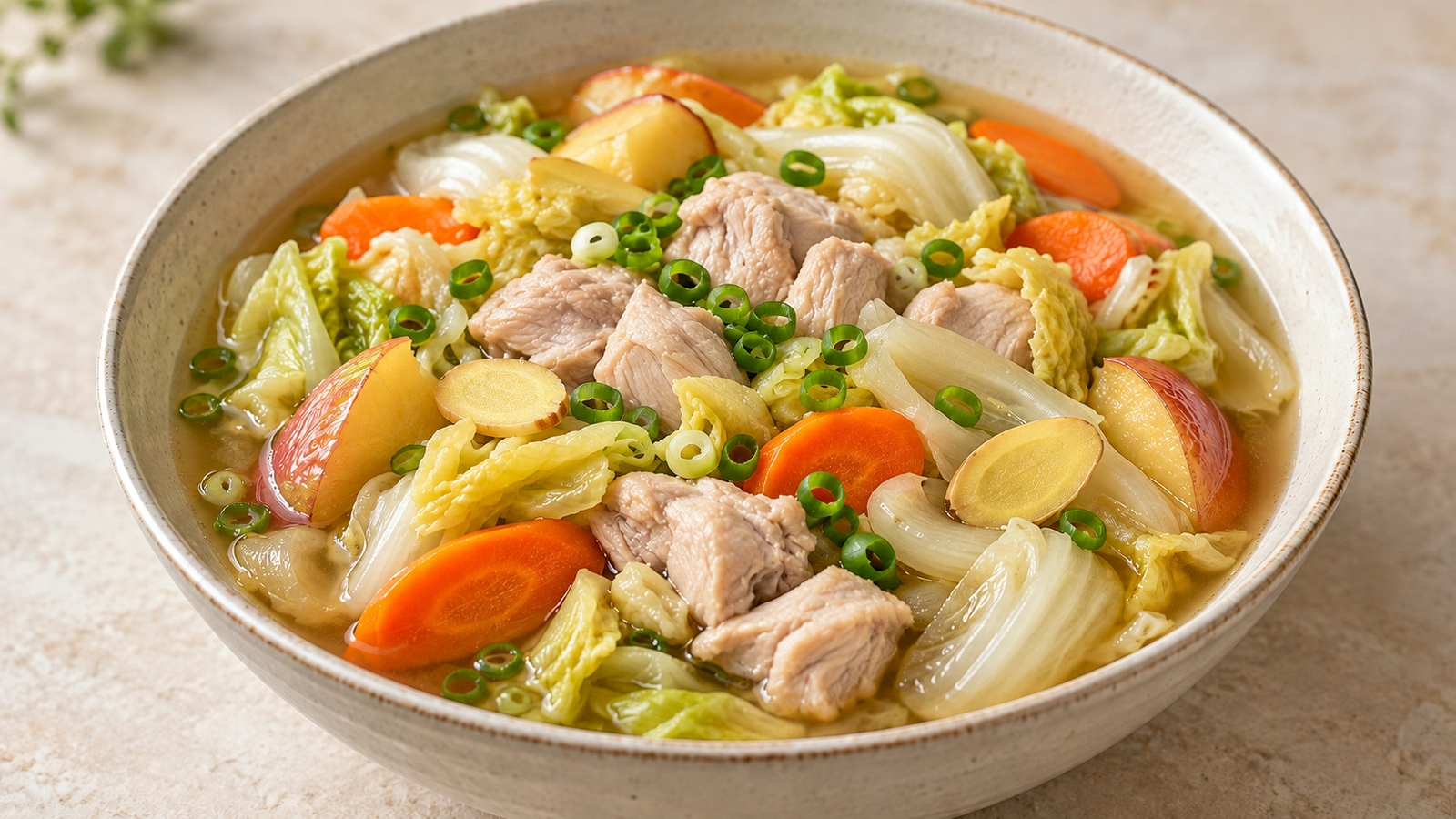
Keep the heat gentle and the bowl simple; chicken, cabbage, ginger, and apple give you plenty to work with.
What waterless chicken and cabbage soup actually means
Waterless describes how the cooking begins. The vegetables and chicken contribute moisture as they cook, so the finished pot contains liquid even though you haven’t poured in stock. Think tender chicken and collapsed cabbage with concentrated cooking juices, rather than six deep bowls of clear broth.
- Use a heavy 6-quart Dutch oven. Its substantial base and close-fitting lid matter more than a particular brand. A thin saucepan makes the dry beginning harder to manage.
- Let the lid close properly. If the chopped cabbage initially stands too high, add it in portions as it softens. Don’t balance the lid on a vegetable mountain.
- Expect the liquid level to vary. The produce, pot, lid, and burner all affect the result. A fixed broth yield would be a promise this method can’t make.
- Keep hot water available. If the bottom threatens to scorch, lower the heat and add a small splash. Protecting dinner is more important than defending the recipe’s name.
Chef John’s no-water chicken soup explores the same general technique. This version uses a different ingredient balance and boneless thighs instead of a whole chicken.
Choose ingredients that suit the gentle cooking
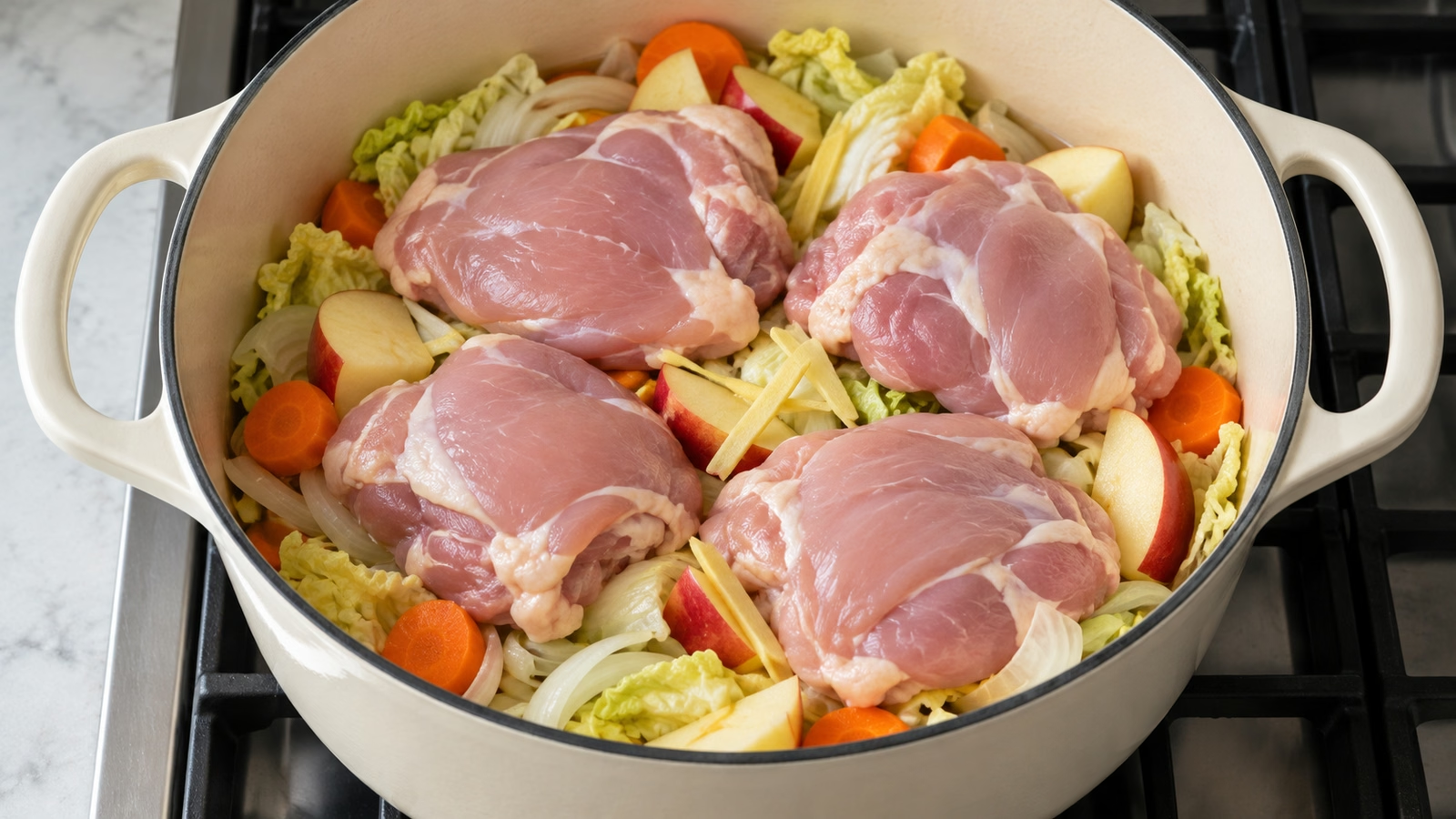
I’d keep napa cabbage here rather than treating every cabbage as interchangeable. Its leaves soften readily, while the thicker white ribs give the bowl some substance. Cut those ribs more thinly than the leafy ends so they can cook together.
- Raw chicken thighs: Start with 900 grams of boneless, skinless thighs. Already-cooked chicken won’t follow the same cooking schedule or contribute moisture in the same way.
- Napa cabbage: Weigh 1,000 grams after removing the tough core and damaged leaves. A casually estimated half-head can change the vegetable-to-chicken balance considerably.
- Apple and carrot: The apple stays unpeeled and is chopped small; carrot should be thinly sliced. Both bring sweetness, so this isn’t a sharply savory stockpot-style soup.
- Ginger: Cut the 15 grams into thin strips, avoiding thick coins that remain unexpectedly forceful in a spoonful.
- Onion and scallion: Onion cooks at the beginning; scallion finishes the bowls. Keeping the scallion for serving gives a fresher contrast to the softened vegetables.
Salt is measured by weight here because crystal sizes differ. Use the specified 4 grams during cooking, then assess the finished juices before adding anything else. I’d taste a spoonful with cabbage and chicken, rather than judging the liquid alone.
Watch the pot, not just the timer
The important transition happens before the chicken goes in: the vegetables need to release visible moisture. A lid helps retain it, but it doesn’t make a dry, overheated pot safe to ignore.
- Start gently. Give the onion about 5 minutes in the olive oil, stirring so it softens without developing a dark crust. Browning isn’t the goal here.
- Check for a pool of liquid. After adding the other vegetables, apple, ginger, and salt, cover for roughly 10–15 minutes. Look beneath the cabbage before moving on; add a hot-water splash if needed.
- Keep the chicken at a quiet simmer. Nestle in the thighs, cover, and allow approximately 30–40 minutes over low heat. Adjust the burner if the liquid boils vigorously or stops gently bubbling.
- Measure doneness. Check several of the thickest pieces with a food thermometer. Chicken must reach 165°F (74°C); continue cooking if it hasn’t, regardless of the timer.
The temperature target comes from USDA’s chicken-handling guidance. Keep the lid on between necessary checks, and finish by dividing or shredding the cooked thighs into spoon-friendly pieces.
Serve the cabbage generously and cool leftovers promptly
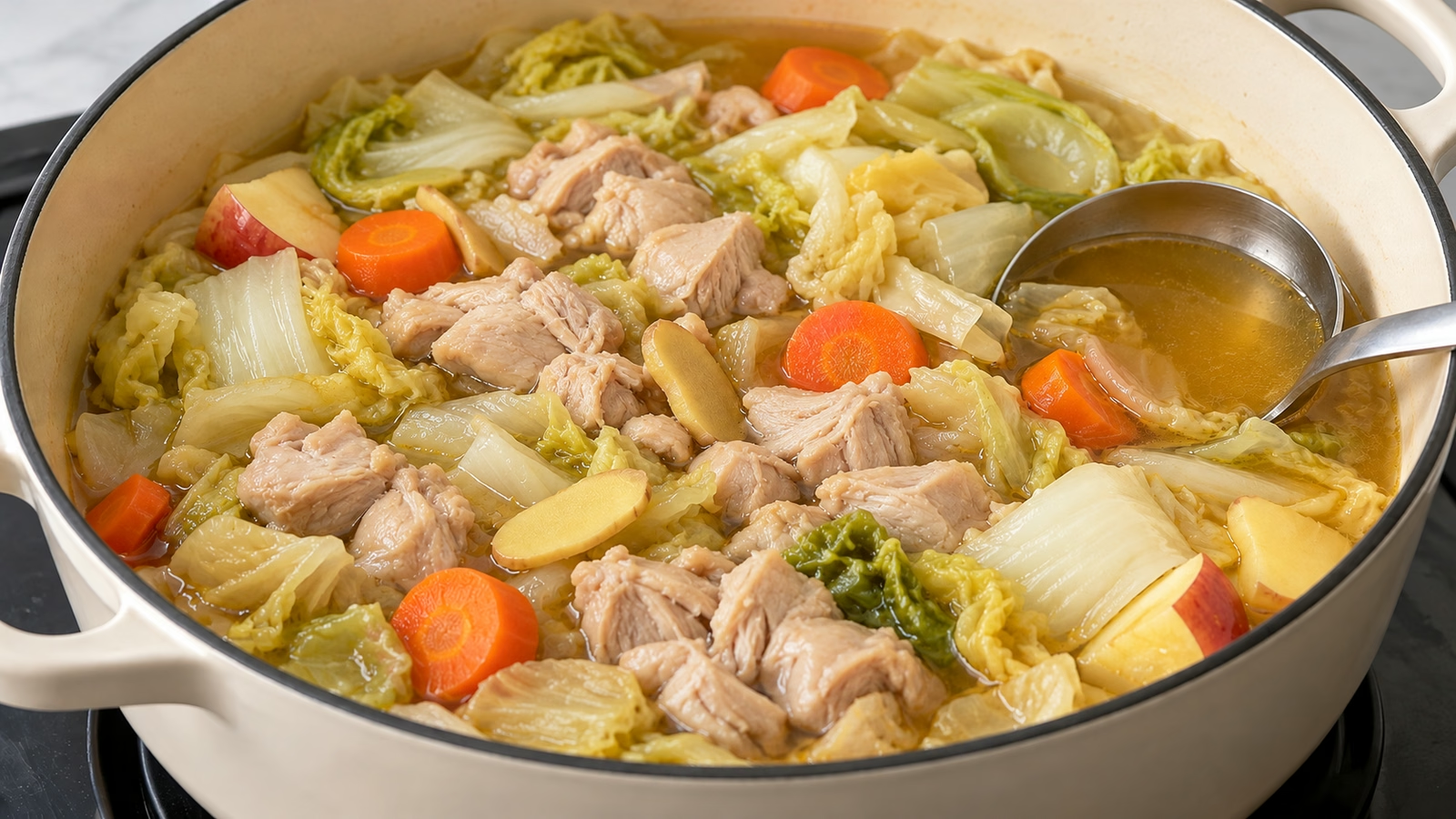
Divide the chicken and vegetables among six bowls, then spoon over the available cooking juices and finish with scallion. I’d put the pot’s contents first and leave any bread or rice alongside, especially when the liquid is modest.
- For a soupier bowl: Add a little hot water to your portion, then check the seasoning again. You can adjust the consistency without stretching the whole pot.
- For refrigeration: Transfer leftovers into shallow containers and refrigerate within 2 hours, or within 1 hour above 90°F (32°C). Don’t wait for the full Dutch oven to cool on the counter.
- For the next meal: Keep the refrigerator at 40°F (4°C) or colder and use the soup within 3–4 days. Freeze portions if you won’t use them within that window.
- For reheating: Stir as the soup heats, bring it to a boil, and check that the chicken reaches 165°F (74°C). Add a small splash of water if the portions need loosening.
These handling limits follow USDA’s leftover safety advice. The cabbage will soften further on reheating, so expect a softer texture in the next bowl.
Waterless Chicken and Cabbage Soup Recipe

Ingredients
- 900 g boneless skinless chicken thighs about 2 lb; no added salt solution
- 1 kg napa cabbage about 2 1/4 lb, roughly chopped
- 200 g yellow onion about 1 large, thinly sliced
- 150 g carrots about 2 medium, thinly sliced
- 200 g apple about 1 large, cored and chopped, skin left on
- 15 g fresh ginger cut into thin strips
- 1 tablespoon olive oil 14 g
- 2/3 teaspoon fine salt 4 g
- 20 g scallions thinly sliced, for serving
Equipment
- 1 6-quart heavy Dutch oven with tight-fitting lid
- 1 Instant-read food thermometer
- 1 Chef’s knife
- 1 Cutting board
- 1 wooden spoon
- 1 ladle
Instructions
- Prepare the vegetables before handling raw chicken. Heat olive oil in a heavy 6-quart Dutch oven over medium-low heat. Add onion and half the salt, and cook about 5 minutes, stirring, until beginning to soften without browning.
- Add carrot, apple, ginger and cabbage in batches as it wilts, plus remaining salt. Cover and cook 10–15 minutes over low heat, stirring once or twice, until the vegetables soften and a visible pool of liquid forms. Do not add chicken to a scorching dry pot.
- Nestle chicken thighs over the vegetables, cover tightly, and maintain a gentle simmer over low heat for about 30–40 minutes. Check briefly after 15 minutes that liquid remains underneath. If the base is catching, lower the heat and add 2–4 tablespoons hot water; preventing scorching matters more than keeping the name literal.
- Check several thick chicken pieces with a food thermometer: each must reach at least 165°F (74°C). Continue cooking if necessary. Remove to a clean plate, cut into serving pieces, and return to the pot.
- Taste the cooking liquid, ladle chicken and vegetables into six bowls, and divide scallions over the top. Expect a chunky bowl with some broth, not a large pot of thin soup.
Nutrition
Notes
Tried this recipe?
Let us know how it turned out!Sources
- Chef John, Allrecipes: No Water Chicken Soup
- USDA: Chicken From Farm to Table
- USDA: Leftovers and Food Safety
Hi, I’m Laura, the voice behind Tastiva. I’ve always believed that eating well should feel enjoyable, comforting, and realistic—not like another complicated rule to follow. I love creating recipes that fit into everyday life, sharing simple nutrition ideas, and finding small ways to make meals feel a little better without losing the pleasure of good food.