
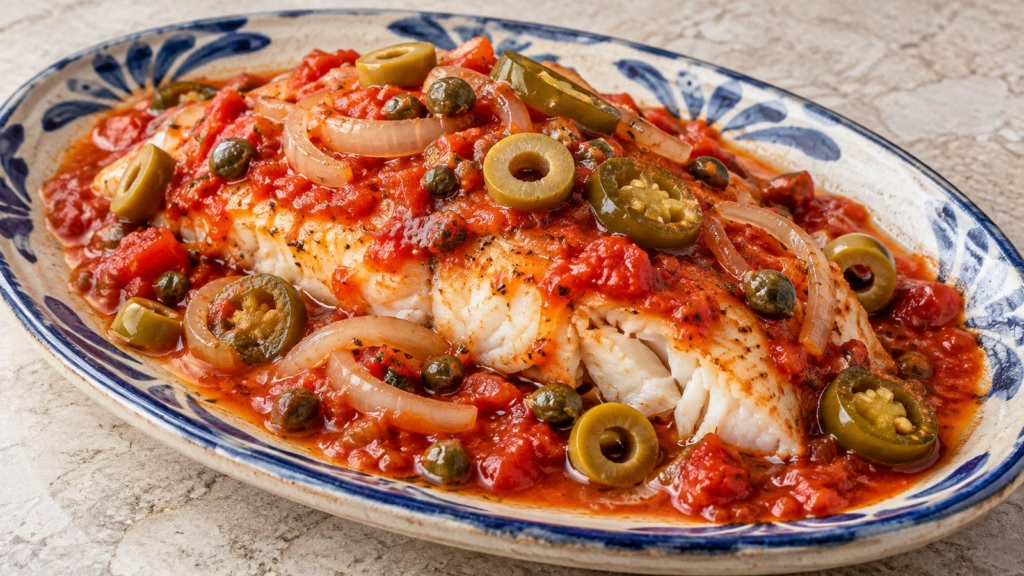
The tomato sauce could use another few minutes, but the fish already looks done. That is the little timing trap behind many dry fillets. For pescado a la veracruzana, give the sauce its own head start: soften the tomato, onion and garlic, add olives and capers, then nestle the fish into the pan. The sauce gets time to come together without making the delicate part of dinner wait in the heat.
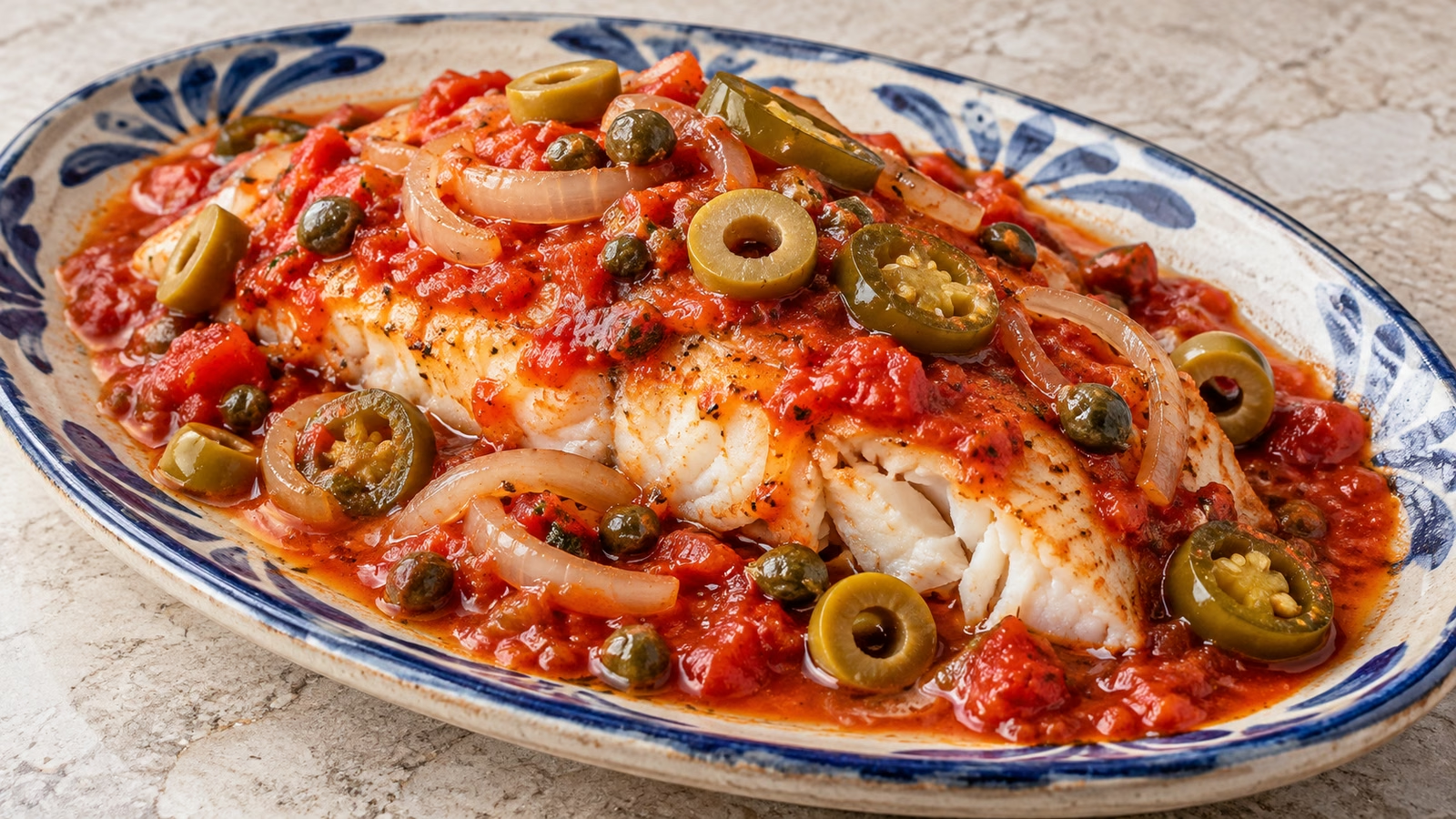
Finish building the sauce before adding the fish. Then lower the heat, cover the pan, and move the fillets as little as possible.
The sauce that makes pescado a la veracruzana
Tomato, onion, olives and capers create the recognizable savory, briny profile of Veracruz-style fish. Profeco’s version includes oregano, bay and chiles, too. This recipe keeps that combination but cooks the fish directly in the sauce, rather than browning it separately and spooning sauce over the top.
- Tomatoes: choose ripe ones and cut them into small pieces. They should soften into a chunky sauce with visible texture, not remain large raw wedges.
- Green olives: use pitted olives and slice them to distribute their flavor. They bring salt as well as richness, so they count toward your seasoning.
- Capers: drain before measuring. A small amount gives the sauce sharp, salty accents without needing a large pour of brine.
- Pickled jalapeño: this version uses sliced jalapeño for a little heat and tang. Reduce the quantity or offer some at the table if needed.
I would taste after all three briny ingredients are in the pan, before opening the salt jar. The tomato and pickles also supply acidity, so extra vinegar is not part of this recipe.
Choose fillets by thickness as well as species
Red snapper is a suitable choice, and the nutrition estimate uses raw snapper. Another firm white fish can work, but the timing and nutrition will change. More important than matching a photograph is choosing four fillets of similar thickness so one piece is not waiting while another finishes.
- For the stated timing: look for fillets roughly 3/4 to 1 inch (2 to 3 cm) thick. Begin checking thinner pieces earlier.
- For frozen fish: thaw safely in the refrigerator in a container that catches liquid. Follow the package’s thawing instructions, especially for vacuum-packed fish.
- Before cooking: pat the surface dry and check for pin bones. Keep the fish refrigerated while you prepare the sauce.
- For the pan: use a wide, lidded skillet or shallow casserole where the fillets fit in one layer. Stacking makes even cooking and neat serving harder.
If you prefer fish in smaller flakes with a crisp vegetable topping, baked cod tacos are another option. Here, the pleasure is a fairly intact fillet surrounded by spoonable sauce.
Let the sauce reduce before the fish goes in
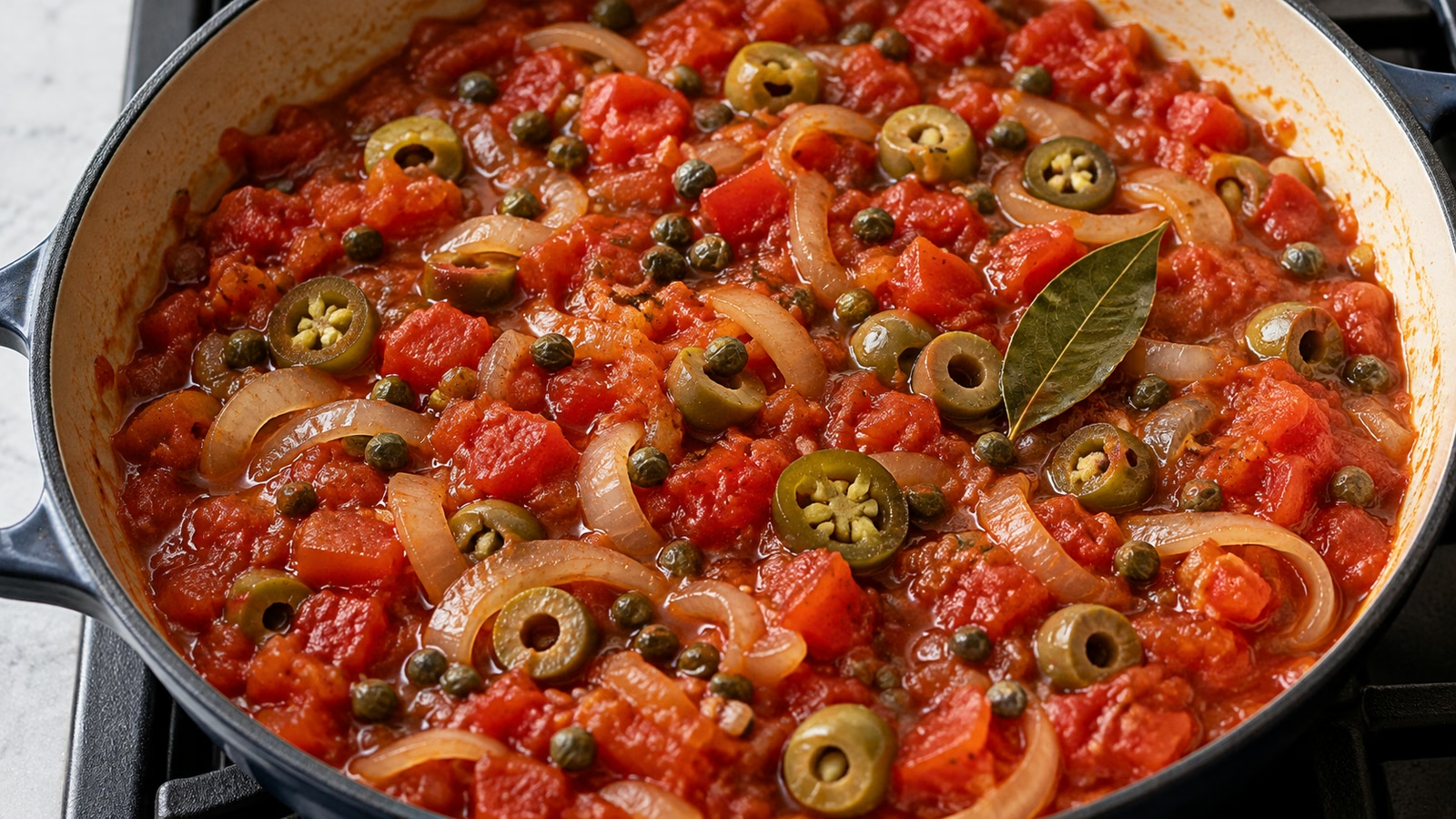
Soften the onion over medium heat, add garlic briefly, then cook the tomatoes until they lose their raw appearance and begin to collapse. Stir in the olives, capers, chile, herbs and measured water. You want a sauce that will surround the fish, with enough liquid left for gentle cooking.
- Taste the sauce and adjust the salt only if needed. Do this before adding raw fish, when tasting is straightforward.
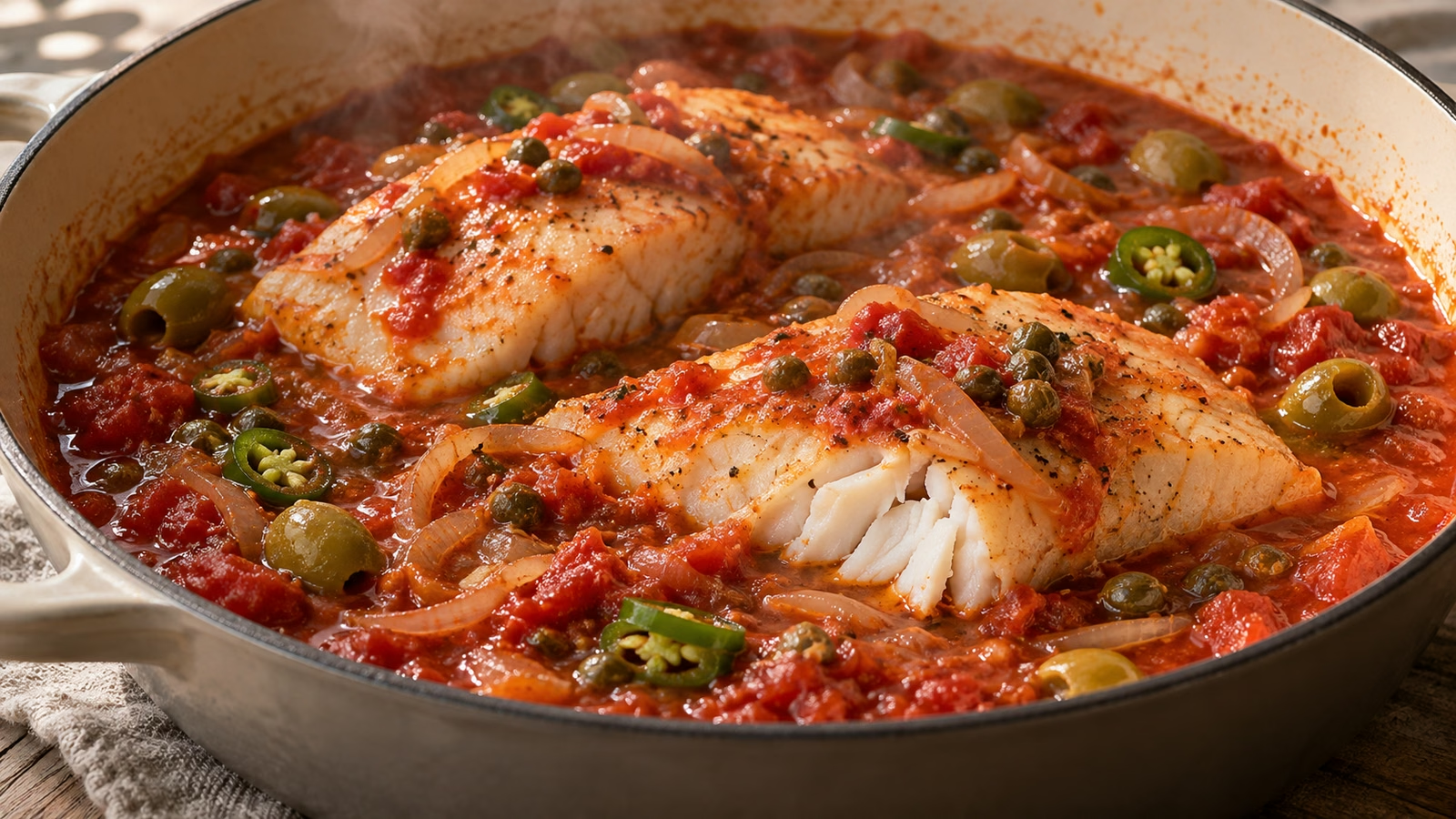
- Nestle the fillets into spaces in the sauce, then spoon a little over their tops. Cover the pan and keep the heat low enough for a quiet simmer.
- Avoid stirring through the fish or flipping it repeatedly. If the sauce needs shifting, gently move the pan or spoon liquid around the fillets.
- Check the thickest part for 145°F (63°C). FoodSafety.gov also describes cooked fish as no longer translucent and separating easily with a fork.
If the fish is done and the sauce is too loose, lift the fillets onto a clean plate before reducing the sauce by itself. That is my preferred correction: the tomatoes can take a little longer, but the fish should not have to.
Serve gently and make ahead in stages
A broad spatula helps move each fillet without breaking it into pieces. Spoon sauce underneath and over the fish, remove the bay leaf, and serve with rice, warm tortillas or a simple vegetable side. Try a bite before reaching for lemon; the sauce may already have all the brightness you want.
- To get ahead: cook the sauce in advance and refrigerate it promptly. Bring it back to a simmer before adding the raw fish; do not partially cook the fish for later.
- To rescue a dry pan: add a small splash of hot water around the fish. Avoid pouring hard onto a fillet that is beginning to separate.
- To store: refrigerate in shallow containers within 2 hours, or 1 hour above 90°F (32°C). Keep at 40°F (4°C) or below and use within 3 to 4 days.
- To reheat: keep a portion covered with its sauce and heat to 165°F (74°C). Expect a firmer texture than when freshly cooked.
The estimate includes one fillet with one-quarter of the sauce, all the olive oil and the full measured salt. Olive and pickle brands can change sodium substantially. Contains fish; check condiment labels if you need to avoid other allergens.
Pescado a la Veracruzana Recipe

Ingredients
- 800 g red snapper fillets 4 similar fillets, about 7 oz (200 g) each and 3/4 to 1 inch (2 to 3 cm) thick
- 600 g ripe tomatoes about 1 lb 5 oz, small dice
- 150 g white onion thin half-moons
- 12 g garlic about 4 cloves, minced
- 30 g olive oil about 2 tablespoons plus 3/4 teaspoon
- 60 g pitted green olives drained and sliced
- 20 g capers drained
- 30 g pickled jalapeno slices reduce to taste
- 1 g dried oregano about 1 teaspoon
- 1 bay leaf
- 0.5 g ground black pepper about 1/4 teaspoon
- 100 ml water about 1/3 cup plus 1 tablespoon
- 2 g table salt about 1/3 teaspoon, only as needed
Equipment
- Wide lidded skillet or shallow casserole
- Broad spatula
- Knife and cutting board
- Food thermometer
Instructions
- Check the fillets for pin bones and pat dry. Keep refrigerated while making the sauce.
- Heat olive oil in a wide pan over medium heat. Soften onion for about 5 minutes. Add garlic and stir for 30 seconds, then add tomatoes and cook 8 to 10 minutes until softened.
- Add olives, capers, jalapeno, oregano, bay leaf, pepper and water. Simmer gently for 5 minutes. Taste before adding the measured salt, since olives and pickles already contribute salt.
- Arrange fillets in one layer in the sauce and spoon a little sauce over the tops. Cover and simmer gently for about 8 to 12 minutes, adjusting for thickness. Do not stir through the fish or turn it repeatedly.
- Check the thickest part for 145°F (63°C), or fish that is no longer translucent and separates easily with a fork. Remove bay leaf. Lift fillets with a broad spatula and serve with the sauce. If the sauce needs reducing, remove cooked fish first.
Nutrition
Notes
Tried this recipe?
Let us know how it turned out!Sources
- Profeco: Veracruz-style fish ingredients and preparation
- FoodSafety.gov: safe fish cooking temperatures
- USDA: handling leftovers safely
- USDA FoodData Central: ingredient composition data
Hi, I’m Laura, the voice behind Tastiva. I’ve always believed that eating well should feel enjoyable, comforting, and realistic—not like another complicated rule to follow. I love creating recipes that fit into everyday life, sharing simple nutrition ideas, and finding small ways to make meals feel a little better without losing the pleasure of good food.