
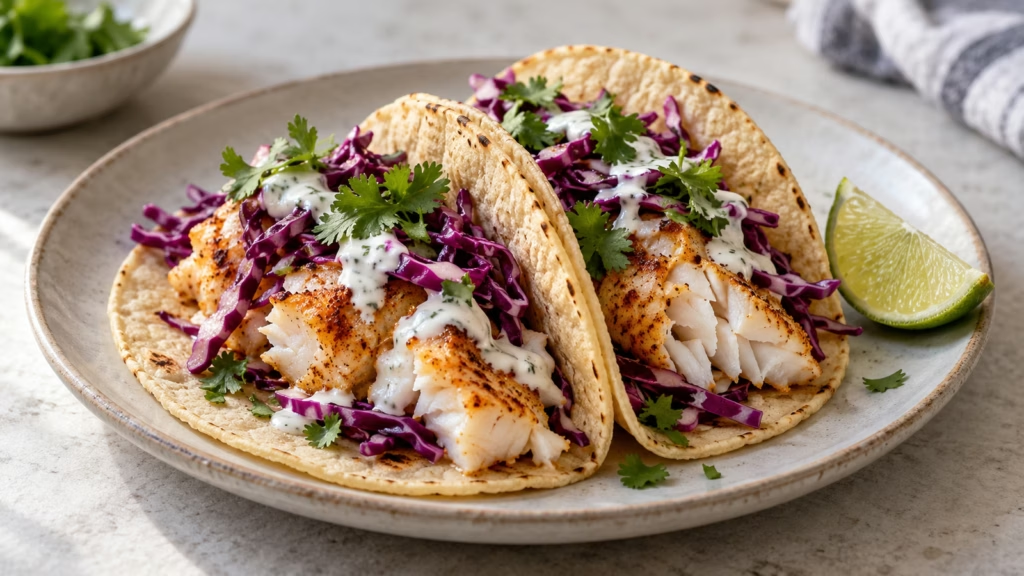
Fish tacos come together quickly enough that the last few minutes can turn into a small kitchen traffic jam: the cod is ready, the tortillas are cold, and someone is still looking for the lime. These baked cod tacos solve that by putting the slaw and yogurt sauce first. The fish cooks in the oven with smoky seasoning, then goes into warm corn tortillas with crunchy purple cabbage and a cool, tangy drizzle.
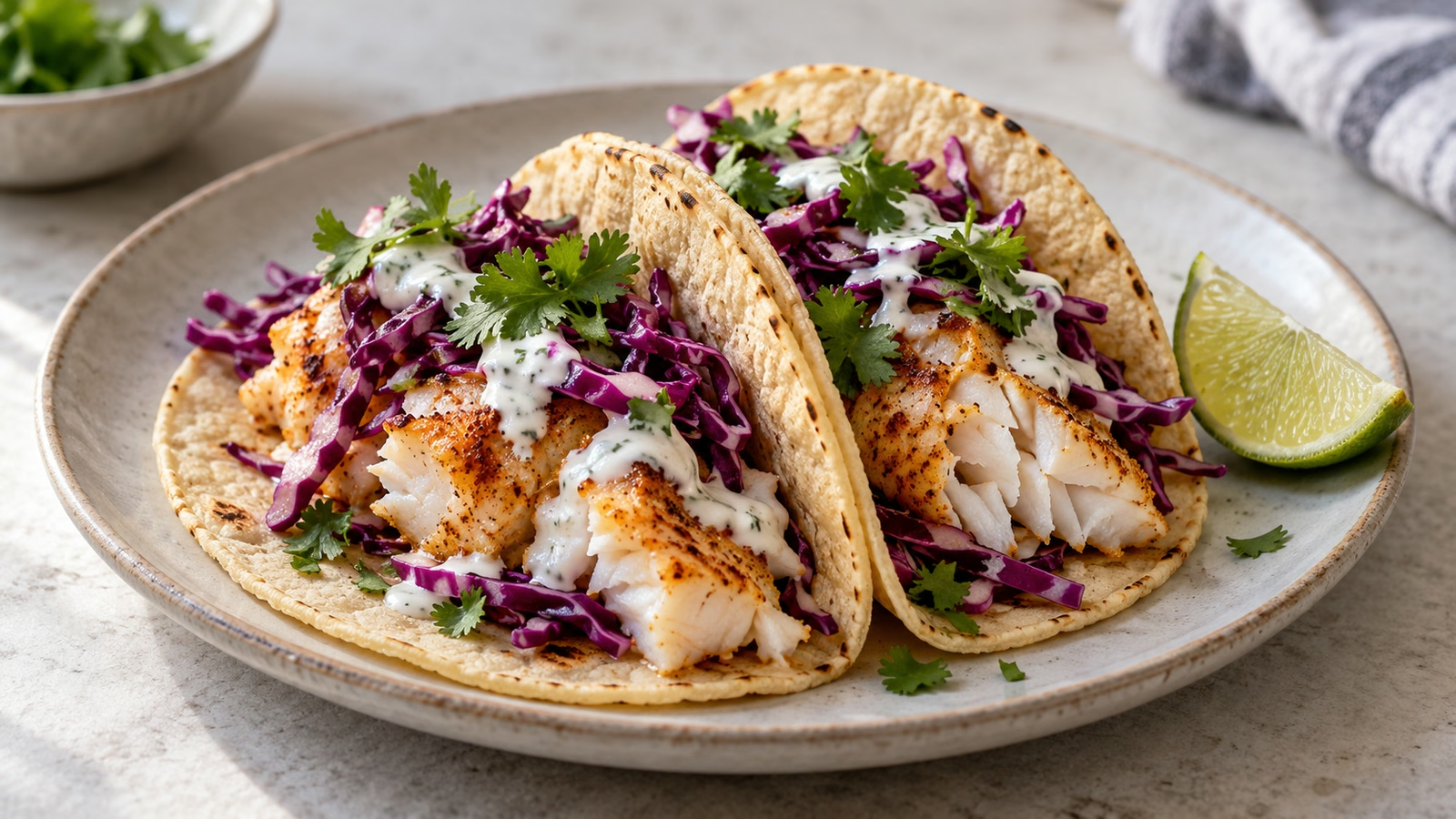
Get the cold toppings ready before the fish goes in, so the last job is filling warm tortillas while the cod is still tender.
A taco dinner built around contrast
The appeal here is the combination: mild flakes of cod, sharp lime, cabbage that still has bite, and a small amount of creamy sauce. The fish is seasoned and baked without a coating of breadcrumbs or batter. Expect tender flakes, not a fried shell.
October is National Seafood Month, a useful reason to put a straightforward fish dinner on the menu. I’d choose this version for a night when you want something fresh-tasting but do not want to stand over a pan of frying oil.
- Prep the cold parts first: the slaw can wait briefly in the refrigerator while you season and bake the fish.
- Keep the sauce separate: spooning it over the tacos lets each person choose the amount without soaking all the cabbage.
- Warm the tortillas last: they should be soft and pliable when the fish is ready, rather than cooling on a plate.
Choose the fish and understand the swaps
Choose skinless, boneless cod portions of roughly even thickness. Thin tail pieces cook faster than thick center pieces, so check each portion rather than treating the entire pan as one piece of fish. If using frozen fillets, thaw them according to their package instructions in the refrigerator; this recipe starts with thawed fish.
| Ingredient | Practical option | What changes |
|---|---|---|
| Cod | Another mild, firm white fish, such as pollock or haddock | Thickness and species affect cooking time; still check safe internal temperature |
| Red cabbage | Green cabbage, finely shredded | The color changes; the crunchy role stays the same |
| Plain lowfat Greek yogurt | Plain whole-milk Greek yogurt | The sauce is richer, and the nutrition estimate changes |
| Corn tortillas | Small flour tortillas | Different flavor, texture and allergen profile; do not call the result gluten-free |
Use unsweetened yogurt. Vanilla would take this dinner on a detour it never requested. The lime is divided between the slaw and sauce; it is not a long fish marinade, so you do not need an extra bowl or a waiting period before baking.
Baked Cod Tacos Recipe
The card makes eight small tacos, or four servings of two tacos each. Allow about 35 minutes from preparation to the table, with the exact baking time guided by the thickness of your fish and a food thermometer.
Each serving is estimated at about 315 calories and 32 grams of protein using generic USDA ingredient data, including the slaw, sauce and two tortillas. Brands, substitutions and portion sizes change the estimate.
Baked Cod Tacos Recipe
Ingredients
- 600 g skinless, boneless cod fillets about 1 1/3 lb; thawed, in 4 portions of similar thickness
- 1 tablespoon olive oil 13.5 g
- 1 teaspoon smoked paprika 2.3 g
- 1/2 teaspoon ground cumin about 1 g
- 1/2 teaspoon garlic powder 1.55 g
- 1/4 teaspoon table salt 1.5 g
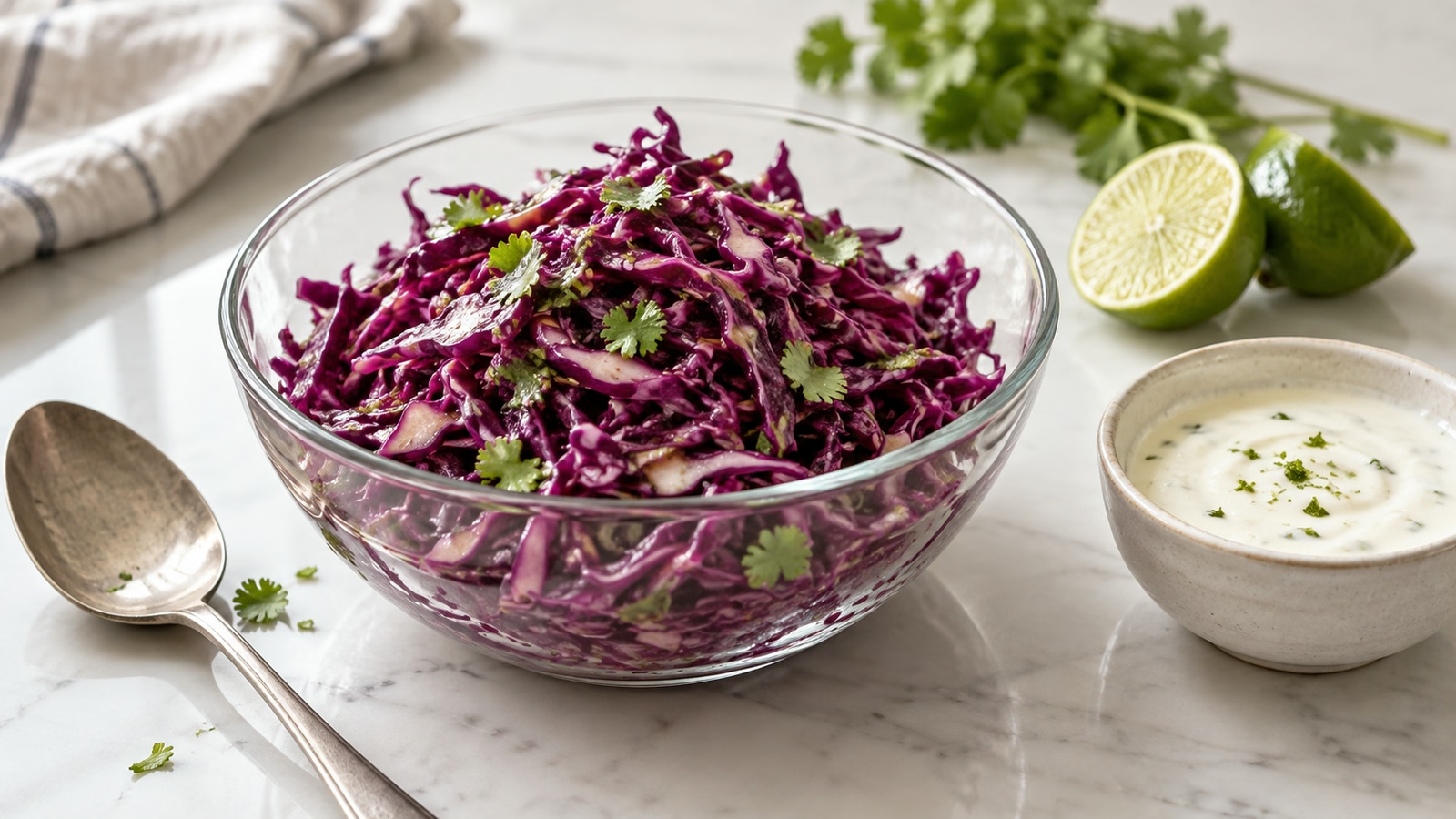
- 3 cups red cabbage finely shredded; 210 g
- 2 tablespoons fresh lime juice 30 g
- 2 teaspoons olive oil 9 g
- 1/8 teaspoon table salt 0.75 g
- 2 tablespoons fresh cilantro finely chopped; about 2 g, divided
- 1/3 cup plain lowfat Greek yogurt 80 g; unsweetened
- 1 tablespoon fresh lime juice 15 g
- 1 tablespoon water add gradually, as needed
- 8 small corn tortillas about 6 inches across and 24 g each; 192 g total
Equipment
- 1 Rimmed baking sheet
- 1 sheet of parchment paper rated for 425°F (220°C)
- 2 Mixing bowls plus a small bowl for seasoning
- 1 Instant-read food thermometer
- 1 Skillet for warming tortillas
- 1 Spatula and clean tongs
- 1 Kitchen scale or measuring cups and spoons
Instructions
- Heat the oven to 425°F (220°C). Line a rimmed baking sheet with parchment rated for this temperature.
- In a clean bowl, toss the cabbage, 2 tablespoons lime juice, 2 teaspoons olive oil, 1/8 teaspoon salt and half the cilantro. In a second bowl, stir the yogurt with the remaining 1 tablespoon lime juice and remaining cilantro. Add the water gradually, only as much as needed for a spoonable drizzle. Refrigerate both while preparing the fish.
- Pat the thawed cod dry with paper towels. Mix the 1 tablespoon olive oil, paprika, cumin, garlic powder and 1/4 teaspoon salt. Rub over the fish and arrange the portions apart on the prepared pan. Wash hands and clean surfaces and utensils that contacted raw fish.
- Bake for approximately 10–15 minutes, checking thinner pieces at the earlier end. The thickest part of each portion must reach 145°F (63°C) on an instant-read food thermometer. Time varies with thickness. Move finished pieces to a clean plate if others need longer.
- While the fish finishes, warm the tortillas in a dry skillet over medium heat, about 20–30 seconds per side or according to the package, until flexible. Stack them inside a clean kitchen towel to keep warm.
- Break the cooked cod into large flakes. Divide the fish and slaw among 8 warm tortillas and spoon the yogurt sauce over the top. Serve promptly, allowing 2 tacos per serving.
Nutrition
Video
Video: Minimalist Baker demonstrates smoky oven-baked cod tacos. Its version cuts the fish before baking and uses guacamole and different toppings, with cornmeal optional; follow the recipe above for unbreaded cod portions, lime slaw, yogurt sauce, and cooking temperature.
Notes
Tried this recipe?
Let us know how it turned out!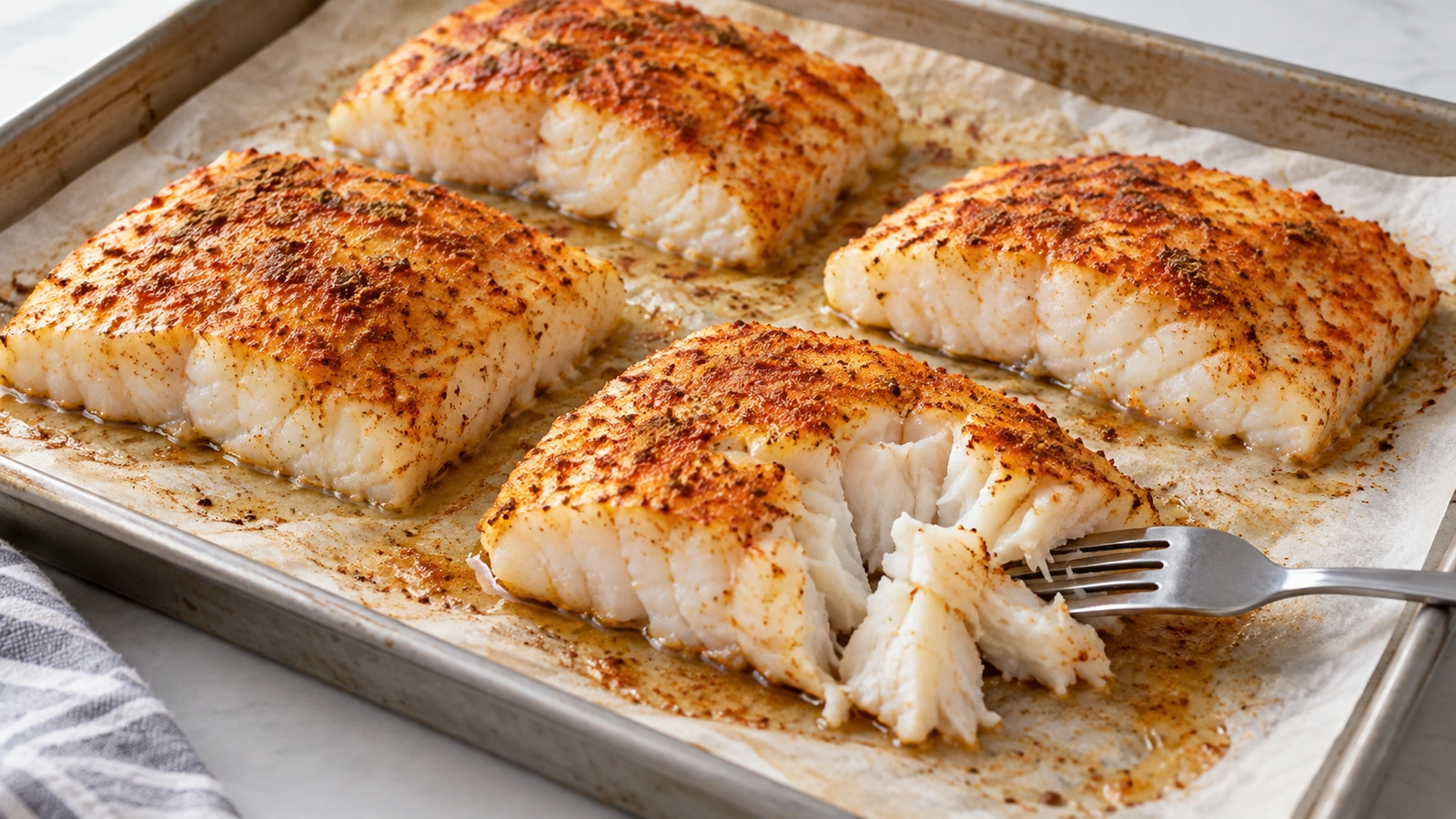
Keep the fish tender and the tortillas flexible
Patting the thawed fish dry helps the oil-and-spice mixture coat its surface. Spread the portions apart on the pan, then check the thickest part with an instant-read thermometer. FDA guidance sets 145°F (63°C) as the cooking temperature for most seafood. The timer is a cue to check, not proof that dinner is done.
- If one piece is ready first: move it to a clean plate while a thicker piece finishes. Repeatedly baking everything together can dry out the thinner portions.
- If the pan has juices: lift the cod with a slotted spatula and break it into large flakes. You do not need to pour the liquid into the tortillas.
- If the tortillas crack: warm them until flexible and keep the stack covered in a clean towel. Avoid overfilling; two modest tacos are easier to manage than one overloaded one.
- If the sauce seems too thick: use the small amount of water in the card, adding it gradually so the sauce drizzles rather than runs.
I’d leave the fish in fairly generous flakes. Crushing it into tiny pieces makes it harder to appreciate the soft fish against the crisp cabbage, and it encourages more fussing at exactly the moment you should be eating.
Serve now, store the components separately
Put the warm fish, tortillas, slaw and sauce on the table separately if people are building their own tacos. A little pico de gallo can go alongside; drain a spoonful before adding it so the tortilla does not become a catch basin. It is an optional extra and is not included in the recipe’s nutrition estimate.
- Keep raw fish away from ready-to-eat toppings: use clean utensils and a clean work surface for cabbage and sauce after handling fish.
- Refrigerate promptly: put perishable leftovers into covered containers within two hours, or within one hour if the surrounding temperature is above 90°F (32°C).
- Separate before storing: fish, slaw and sauce keep better as individual components; assembled tacos become soft. Keep refrigerated at 40°F (4°C) or below.
- Use the cooked fish within three to four days: reheat leftovers to 165°F (74°C). Follow any shorter ingredient-specific directions for the sauce, and keep the cold toppings cold while reheating the fish.
Sources
- NOAA Fisheries: National Seafood Month, October 2026
- FDA: selecting, preparing and serving seafood safely
- USDA FSIS: leftovers and food safety
- USDA Standard Reference nutrient data documentation

Hi, I’m Laura, the voice behind Tastiva. I’ve always believed that eating well should feel enjoyable, comforting, and realistic—not like another complicated rule to follow. I love creating recipes that fit into everyday life, sharing simple nutrition ideas, and finding small ways to make meals feel a little better without losing the pleasure of good food.