
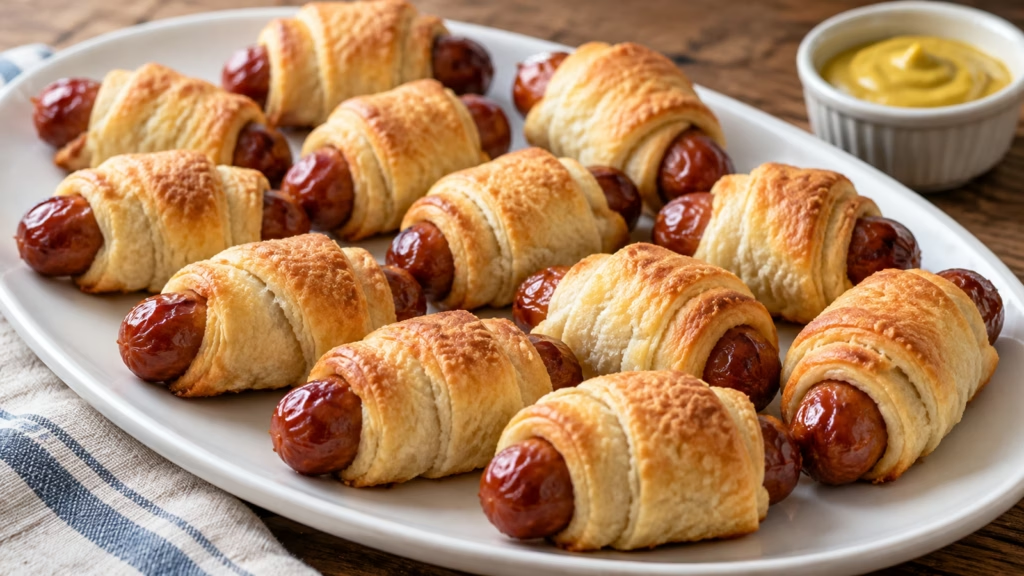
Pigs in a blanket are a small snack with a very clear job: warm sausage, golden dough and something tangy for dipping. This is the American crescent-dough version, made with fully cooked cocktail sausages. One standard can of dough makes 24 little wraps, enough for a modest platter without committing to a huge party batch.
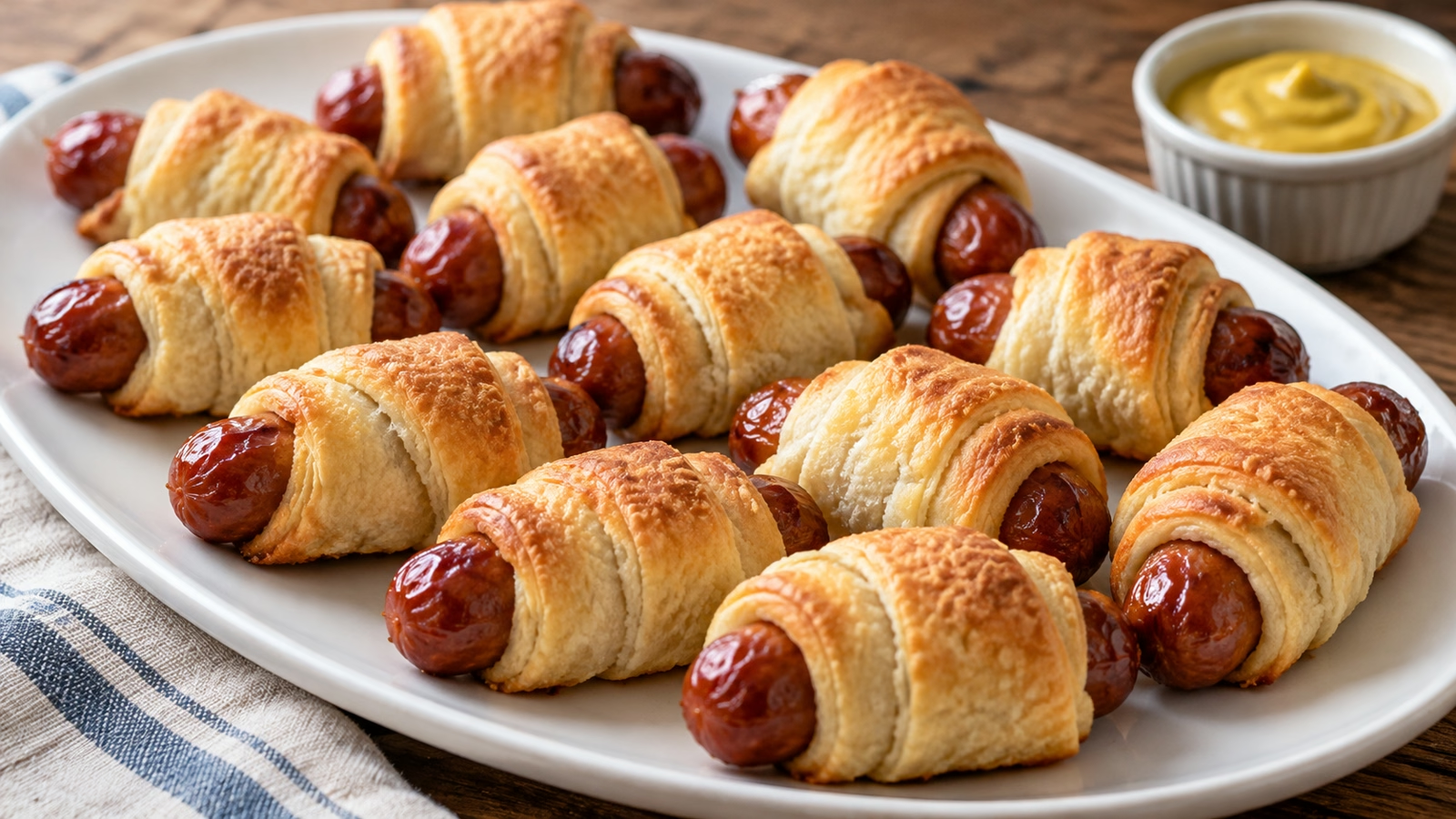
I like these best while the dough still has a little crispness at the edges. A small batch coming out of the oven is more appealing to me than a mountain of pastries that have been waiting under a lid.
Two ingredients, but check both packages
Look for an 8-ounce can of refrigerated original crescent-roll dough divided into eight triangles. Larger crescent products, biscuits and frozen puff pastry are different starting points. They can make good sausage pastries, but they do not share the same portioning or baking time.
The sausages must say fully cooked on the package. Smoked does not automatically mean ready to eat, and raw breakfast links do not belong inside this quick version. If you have fresh full-size links instead, use a method designed to cook them through, such as our guide to sausages in the air fryer.
Choose small links of similar size, roughly 12 g each for the yield and nutrition shown here. You need 24, not necessarily the entire package. Keep unused sausages refrigerated and follow their label’s storage instructions. Different brands contain different meats, seasonings and allergens, so the ingredient list matters more than the front-of-pack photograph.
Cut narrow triangles and keep the dough cool
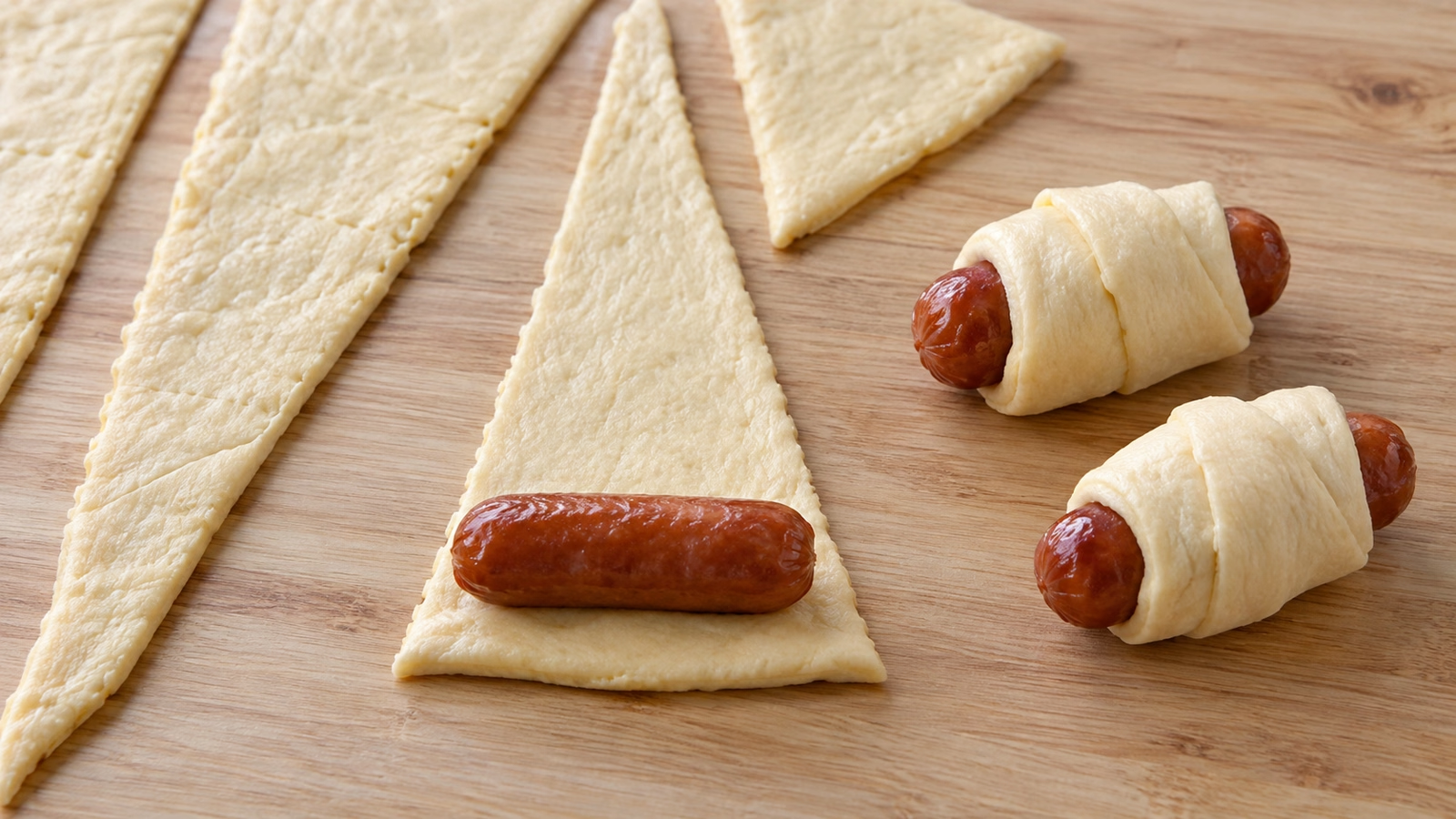
Open the dough only when the oven is heating and your tray is ready. Separate the eight original triangles, then divide each lengthwise into three narrower triangles. A small knife or pizza cutter makes this easier than pulling at the soft dough.
Place one sausage across the broad end of a narrow triangle and roll toward its point. Leave both sausage ends visible rather than stretching dough over them. Set the finished wrap with the point underneath, where its own weight helps keep it from lifting during baking.
If the dough becomes sticky and difficult to lift, put it back in the refrigerator briefly instead of adding handfuls of flour. A lightly chilled piece is easier to wrap neatly. The goal is an even band around each sausage, not a tight knot of dough that stays pale and soft in the middle.
Watch the pastry as well as the clock
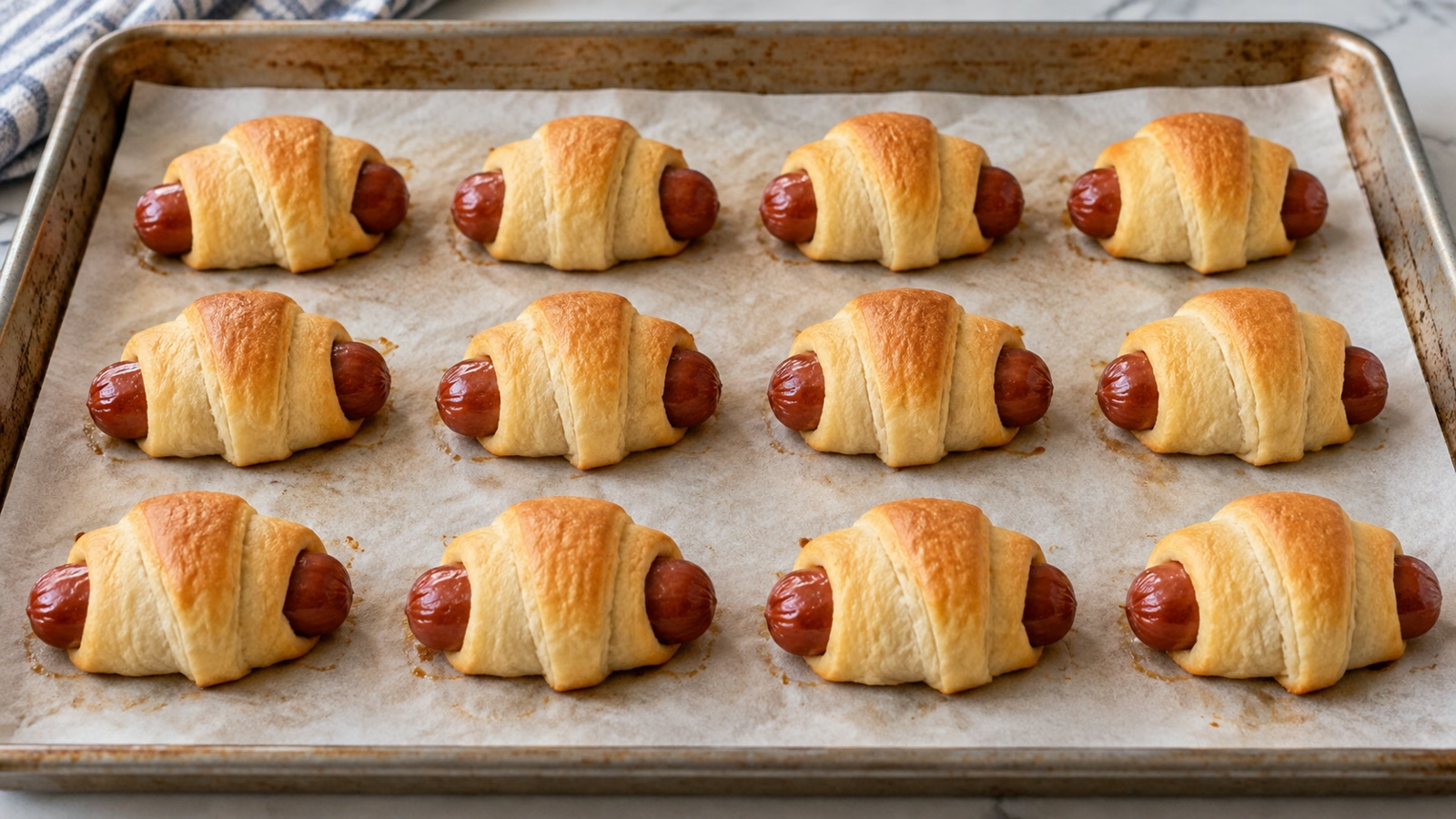
Give the pieces about an inch of space on the tray. That gap lets the dough expand and exposes the sides to the oven’s heat. If your baking sheet cannot hold all 24 comfortably, use two trays or bake in batches rather than pressing them together.
At 375°F, begin looking around 12 minutes. The dough should be golden, including the lower edges, and no thick seam should look raw or gummy. The filling should be thoroughly hot; a thermometer in the center of a sausage should reach 165°F. If the pastry colors early, loosely shield it with foil while the center heats.
Move the finished pieces to a rack or platter after a brief rest. Avoid stacking them immediately in a deep covered bowl: trapped steam softens the pastry. For a gathering, consider baking two smaller trays at different times so the second arrives warm as the first disappears.
Dips, serving and the leftovers question
Mustard brings a sharp contrast to the rich dough and smoky filling. Ketchup and barbecue sauce work too. Put dips in separate small bowls so the pastry stays dry until someone takes a bite. The basic recipe needs no extra salt, and a salty seasoning blend can be more than it needs.
These are not an appropriate whole-shaped finger food for young children. Sausages are a choking hazard; remove the rounded shape by cutting lengthwise into short, thin strips appropriate to the child’s abilities, and supervise eating. The small size of a cocktail sausage does not remove that risk.
Serve promptly, or keep hot food at 140°F or above. Refrigerate leftovers in shallow containers within two hours, or one hour above 90°F, and use within three days. To reheat, arrange them on a tray in a 350°F oven until the centers reach 165°F. A microwave will heat them, but the pastry will be softer.
Pigs in a Blanket Recipe

Ingredients
- 1 can refrigerated original crescent-roll dough 8 oz / 227 g, eight original-size triangles; not large crescents
- 24 fully cooked cocktail sausages about 288 g total, approximately 12 g each; check the label says fully cooked
Equipment
- 1 large baking sheet or two if needed for spacing
- 1 small knife or pizza cutter
- 1 Instant-read food thermometer
Instructions
- Heat the oven to 375°F (190°C). Line a large baking sheet with parchment. Pat the cocktail sausages dry. Keep the dough refrigerated until ready to cut.
- Unroll the dough and separate into 8 triangles. Cut each triangle lengthwise into 3 narrow triangles, giving 24 pieces.
- Place a sausage across the broad end of a triangle and roll toward the point, leaving the sausage ends exposed. Place point-side down on the tray. Repeat, leaving about 1 inch between pieces. Use a second tray if needed rather than crowding.
- Bake for about 12–16 minutes, until the dough is golden and cooked through, including the lower edges, and the sausage centers reach 165°F. Rotate the tray if browning is uneven. If using two trays, swap their positions halfway through. Loosely shield with foil if the tops brown before the filling is hot.
- Let stand briefly, then transfer to a platter and serve warm. Optional mustard, ketchup or barbecue sauce can be offered separately; dips are not included in nutrition.
Nutrition
Video
Notes
Tried this recipe?
Let us know how it turned out!Sources
- Pillsbury: crescent-wrapped cocktail sausages
- Pillsbury Original Crescents: product and nutrition information
- Hillshire Farm: fully cooked cocktail-link label
- USDA: hot dogs and food safety
- CDC: preparing cylindrical foods for young children
- USDA: hot holding temperature
Hi, I’m Laura, the voice behind Tastiva. I’ve always believed that eating well should feel enjoyable, comforting, and realistic—not like another complicated rule to follow. I love creating recipes that fit into everyday life, sharing simple nutrition ideas, and finding small ways to make meals feel a little better without losing the pleasure of good food.