
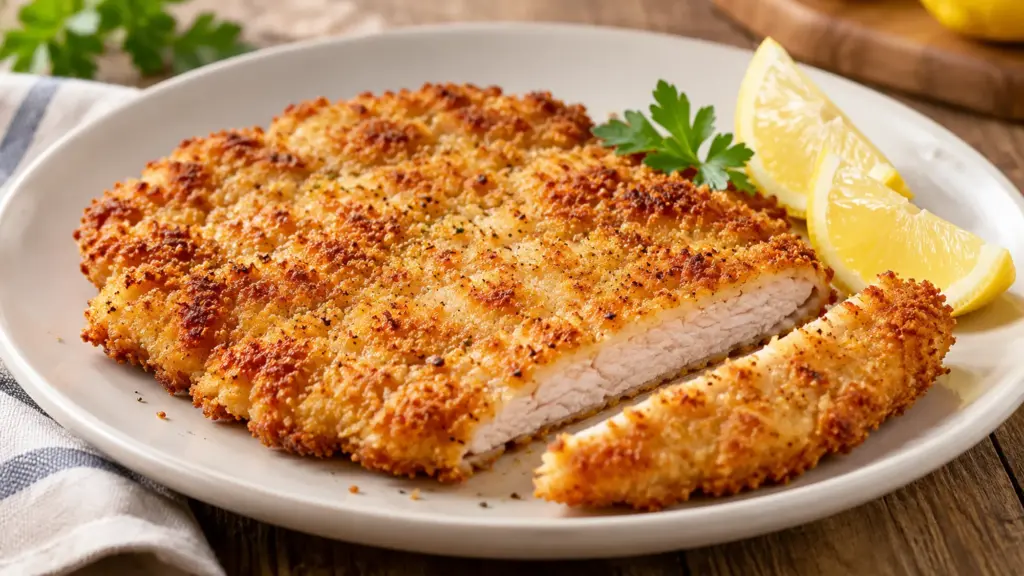
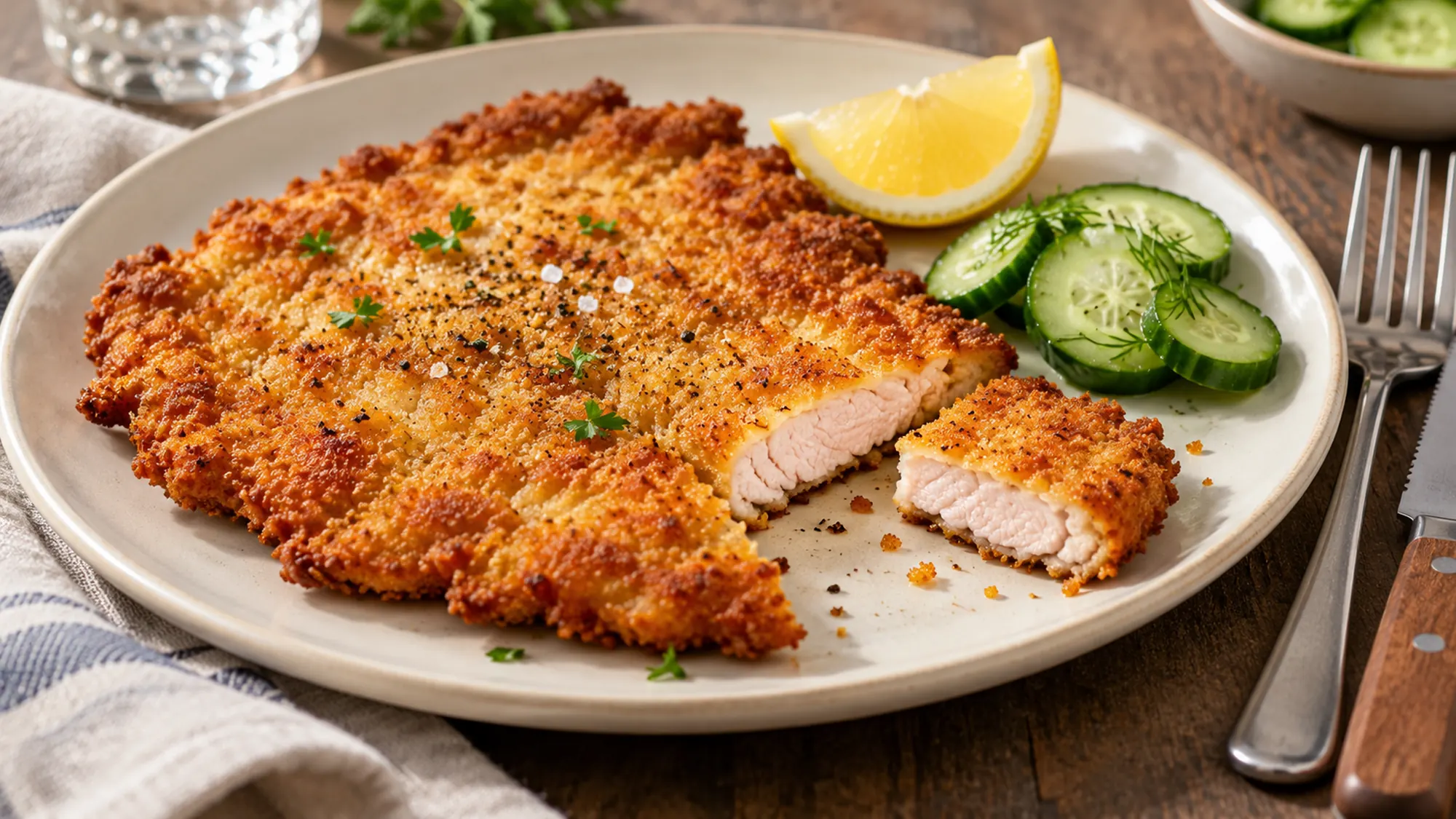
The first cut through a pork schnitzel should meet a delicate crunch before reaching tender meat. That contrast depends less on an elaborate seasoning blend than on an evenly flattened cutlet and oil that is hot enough to fry the crumbs without scorching them. Lemon at the table provides the final sharp, fresh note.
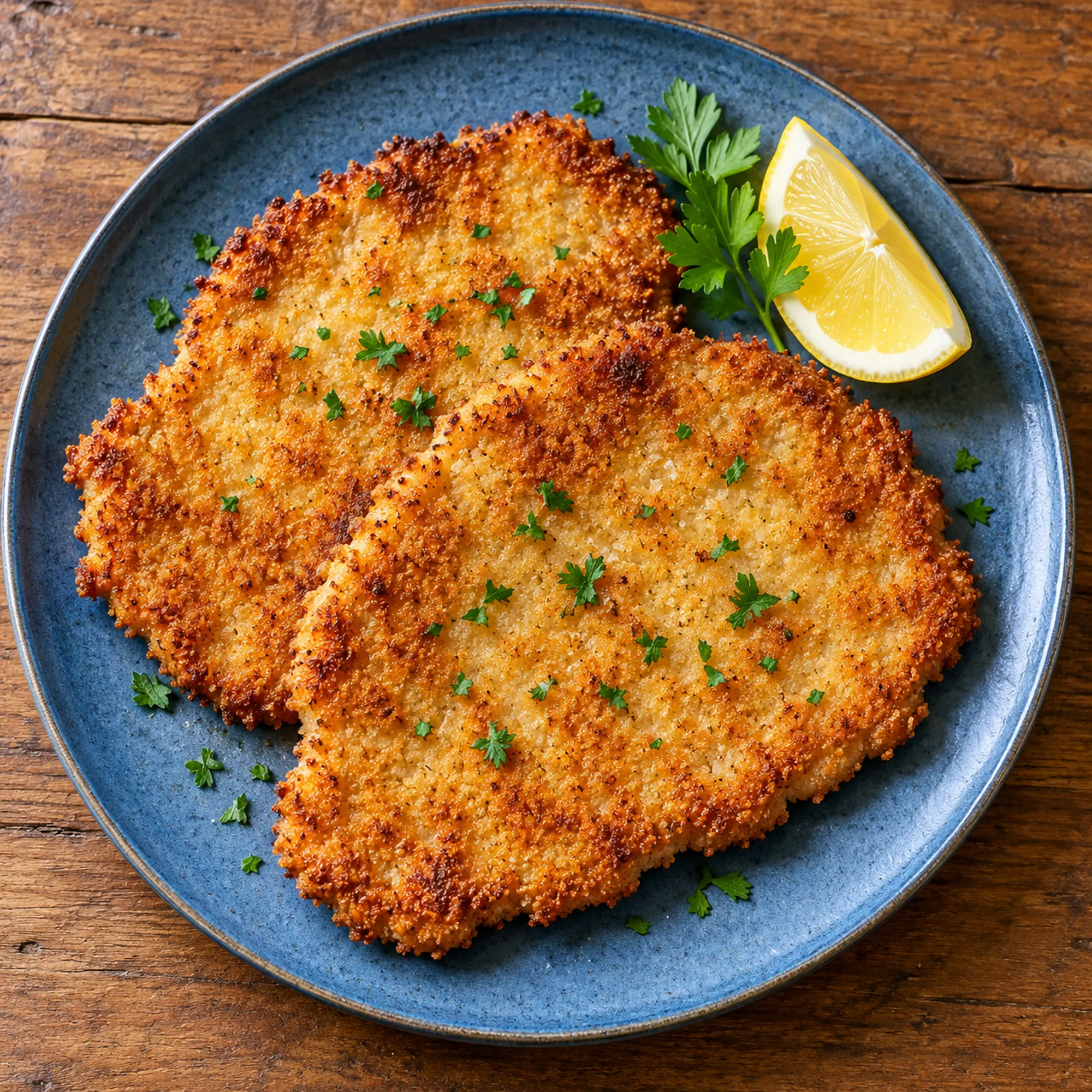
For crisp pork schnitzel, pound the cutlets evenly, coat them lightly and fry in uncrowded batches; give each one a short rest on a rack.
I prefer a thin, closely attached crust for this home-skillet version. It uses fine breadcrumbs and no vodka, rather than aiming for an especially inflated restaurant-style coating. The pork should be thin enough to cook quickly but not torn into holes. A heavy pan helps hold steady heat when the cooler cutlets go in.
Serving Pork Schnitzel While It Is Crisp
Serve the cutlets soon after their required rest, while the crumb coating still sounds crisp under a knife. Put lemon wedges beside the meat, not squeezed over everything in advance. Wetting the entire surface early trades away the very texture you worked to create.
A cucumber salad offers cool contrast. Tastiva’s whole cucumber salad has a soy-sesame dressing, so consider it a different flavor direction rather than a traditional accompaniment. Plain sliced cucumber or a lightly dressed green salad keeps the plate simpler.
- Place salads beside the schnitzel so their liquid does not pool underneath it.
- Add potatoes if you want a more substantial meal, keeping the portion separate from the crust.
- Use a rack rather than stacking finished cutlets; trapped steam softens the lower surfaces.
| Serving choice | Texture effect |
|---|---|
| Lemon wedge on the side | Adds brightness when squeezed at the table |
| Salad beside the cutlet | Keeps dressing away from the breading |
| Cutlets stacked together | Traps steam and softens the crust |
Keep wet accompaniments separate until the moment you eat, and the breading has a better chance to stay crisp.
Coating and Frying Variations
The video from J. Kenji López-Alt demonstrates a more buoyant schnitzel technique. His supporting schnitzel recipe explains why loosely applied crumbs matter. This adaptation omits optional vodka, uses less frying oil and slightly thicker cutlets, so it should not be mistaken for an identical extra-puffy result.
I would choose fine, plain crumbs over heavily seasoned ones here. They give a more even surface and let you control the salt. Coarse panko makes a different, craggier crust; it can be delicious, but it is not the fine-textured coating pictured. Flour and egg should cover the meat without forming thick, gummy patches.
- Shake excess flour off before the egg dip. A heavy flour layer can separate from the meat.
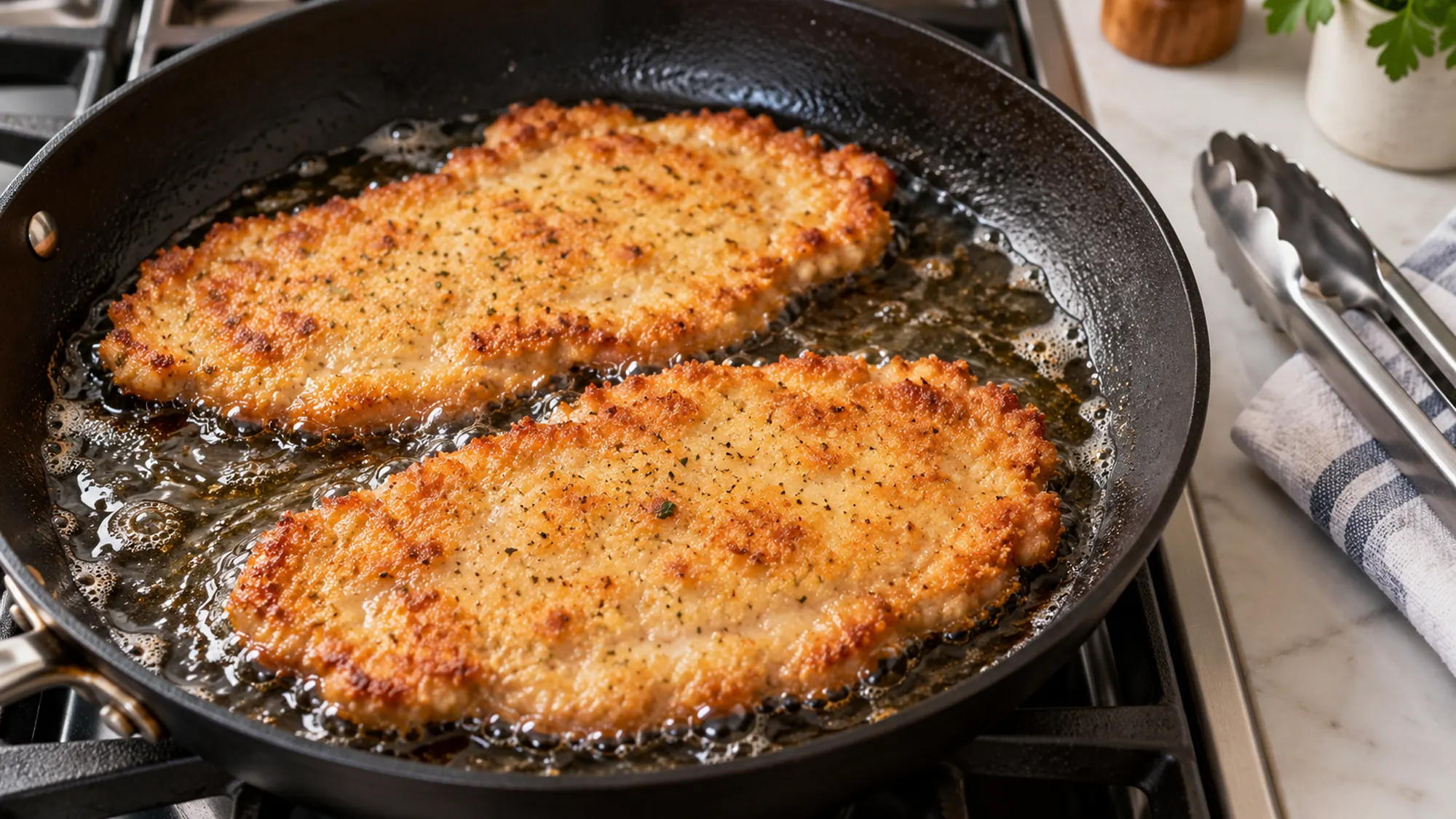
- If the first cutlet browns too quickly, lower the heat before adding the next batch.
- Chicken cutlets need their own safe temperature and timing; do not use the pork temperature for a poultry substitution.
- Discard dredging ingredients that contacted raw pork rather than saving them for another meal.
Even thickness and controlled heat are more useful than pressing on a heavier layer of crumbs.
Nutrition and Safe Pork Cooking
Pork provides protein, while frying oil and breading contribute a meaningful share of the meal’s energy. The card gives a deliberately conservative estimate of about 670 calories and 35 grams of protein per cutlet portion. It counts all measured oil, flour, egg and breadcrumbs, even though some normally remains behind.
That calculation is not a measurement of oil absorption. Actual intake will be lower when unused coating and oil are discarded, but the difference cannot be known accurately from appearance alone. Optional lemon and side dishes are separate. Choose sides according to appetite rather than treating the estimate as an exact plated total.
- Use a thermometer to check pork reaches 145°F (63°C), followed by at least a three-minute rest. Golden crumbs do not prove the meat is done.
- Keep the skillet handle turned inward and lower cutlets away from you to reduce splashing.
- Cool leftover cutlets promptly and refrigerate. Reheat to 165°F (74°C); an oven or skillet can help the crust regain texture better than a covered, steamy container.
A thermometer protects the pork’s safety while a realistic oil estimate keeps the nutrition numbers honest.
Bottom Line
Pork schnitzel is a short cooking project with a few details that matter: consistent thickness, a light coating and enough room in the pan. Set the sides out before frying, keep the finished cutlets unstacked, and bring the lemon to the table. Crispness is best enjoyed promptly, not held indefinitely while everything else gets ready.
Prepare the plate first, fry with attention, and let the thin golden crust do the talking.
Pork Schnitzel Recipe

Ingredients
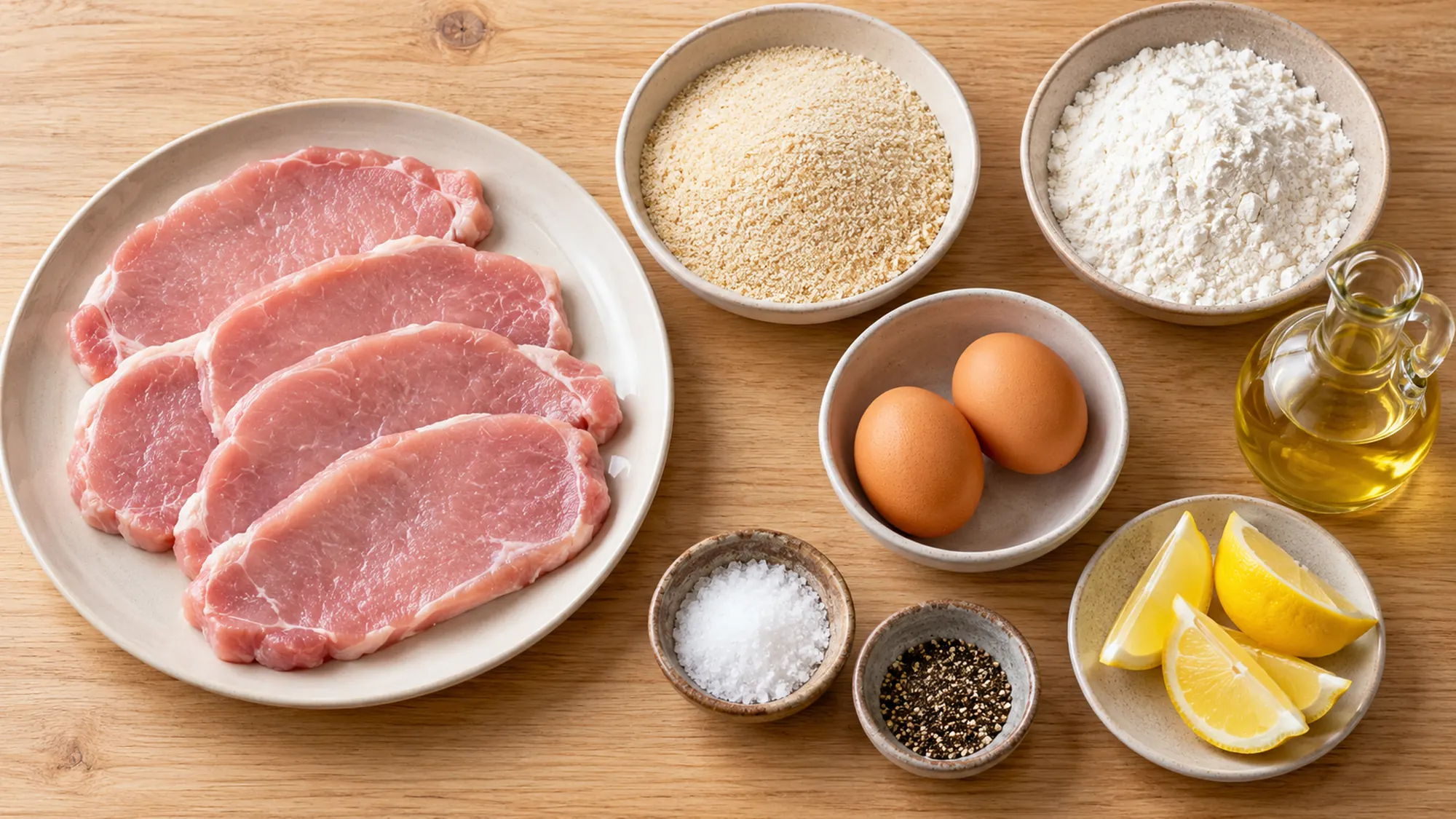
- 560 g boneless pork loin chops 4 cutlets; pound to 1/4 inch thick
- 80 g all-purpose flour
- 2 large eggs about 100 g without shells
- 100 g fine dry breadcrumbs
- 120 ml olive oil for shallow frying; about 108 g
- 4 g fine salt
- 1 g black pepper
- lemon wedges optional, for serving
Equipment
- 1 Meat mallet
- 1 Wide heavy skillet
- 1 Three shallow dishes
- 1 Wire rack
- 1 Instant-read thermometer
Instructions
- Pat the pork dry. Place each chop between two sheets of parchment or in a sturdy food bag and pound evenly to about 1/4 inch (6 mm). Season both sides with the salt and pepper.
- Put flour, beaten eggs and fine breadcrumbs in three separate shallow dishes. Dust each cutlet with flour and shake off excess, dip in egg, then coat lightly with breadcrumbs without pressing firmly.
- Heat half the oil in a wide heavy skillet over medium-high heat to about 350°F (175°C). Fry two cutlets without crowding, about 2–3 minutes per side. Lower the heat if crumbs darken before the pork cooks.
- Check the thickest part with an instant-read thermometer: pork must reach 145°F (63°C). Transfer to a rack over a tray and rest at least 3 minutes. Repeat with the remaining oil and cutlets, carefully removing burnt crumbs between batches.
- Serve promptly with optional lemon wedges. Discard unused flour, egg and crumbs that touched raw pork. Nutrition is a conservative estimate counting all measured coating and oil; actual consumption is lower when some remains.
Nutrition
Video
Notes
Tried this recipe?
Let us know how it turned out!Hi, I’m Laura, the voice behind Tastiva. I’ve always believed that eating well should feel enjoyable, comforting, and realistic—not like another complicated rule to follow. I love creating recipes that fit into everyday life, sharing simple nutrition ideas, and finding small ways to make meals feel a little better without losing the pleasure of good food.