
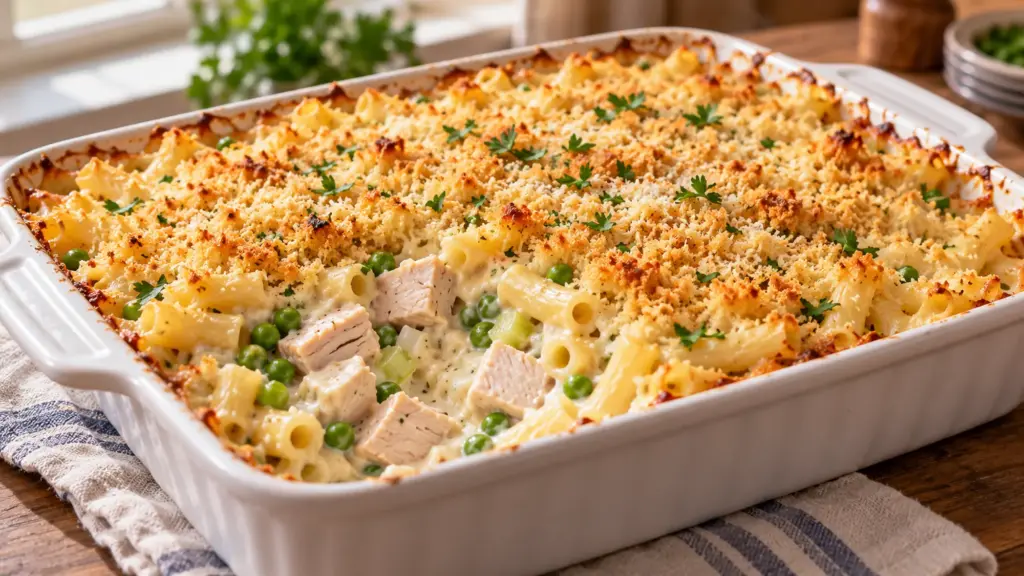
Leftover turkey can feel like a question you have already answered twice. Turkey tetrazzini changes the conversation with short pasta, sweet peas and a creamy cheese sauce, finished under a golden crumb topping. The turkey is already cooked, so the goal is to warm it gently inside something generous rather than subject it to another long roast.
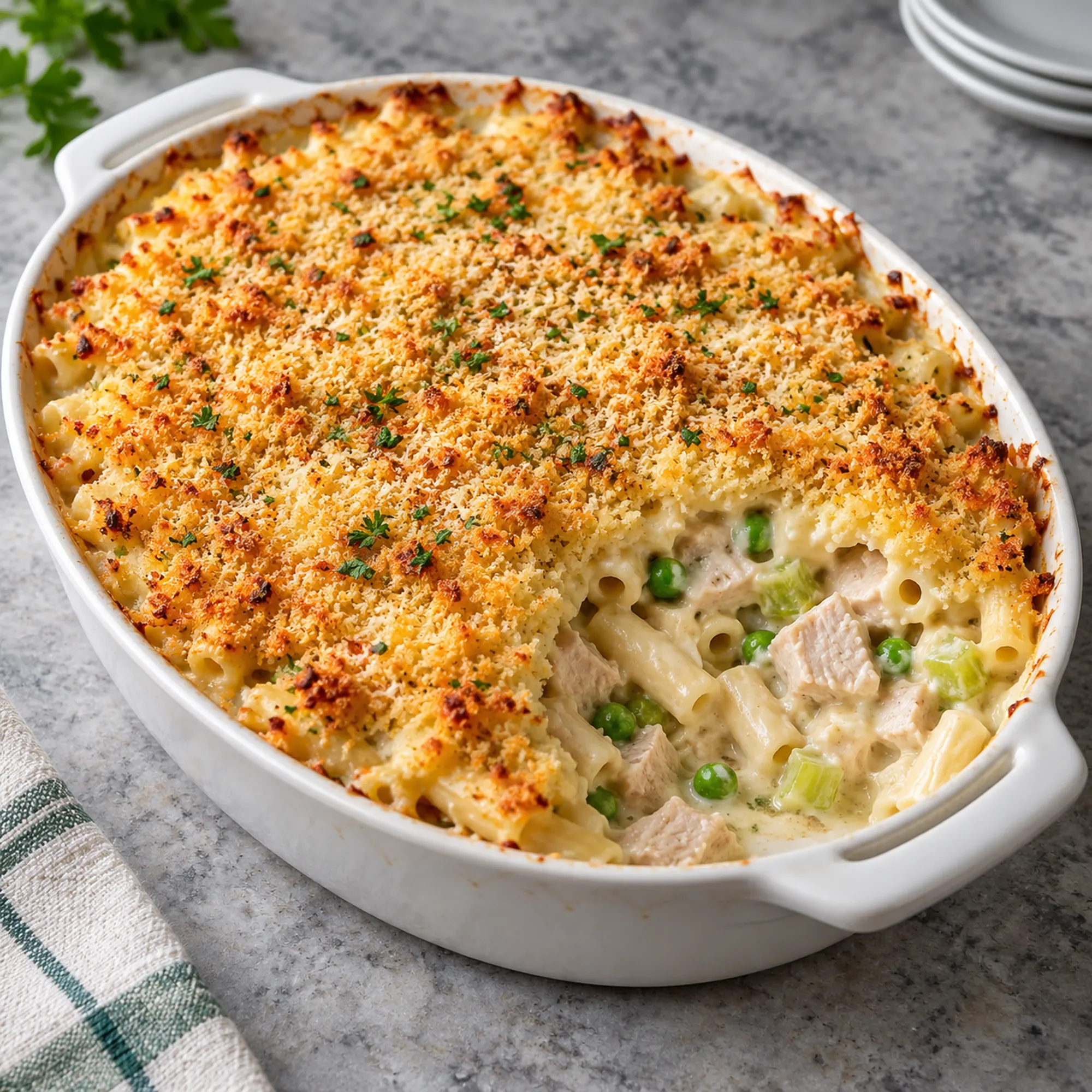
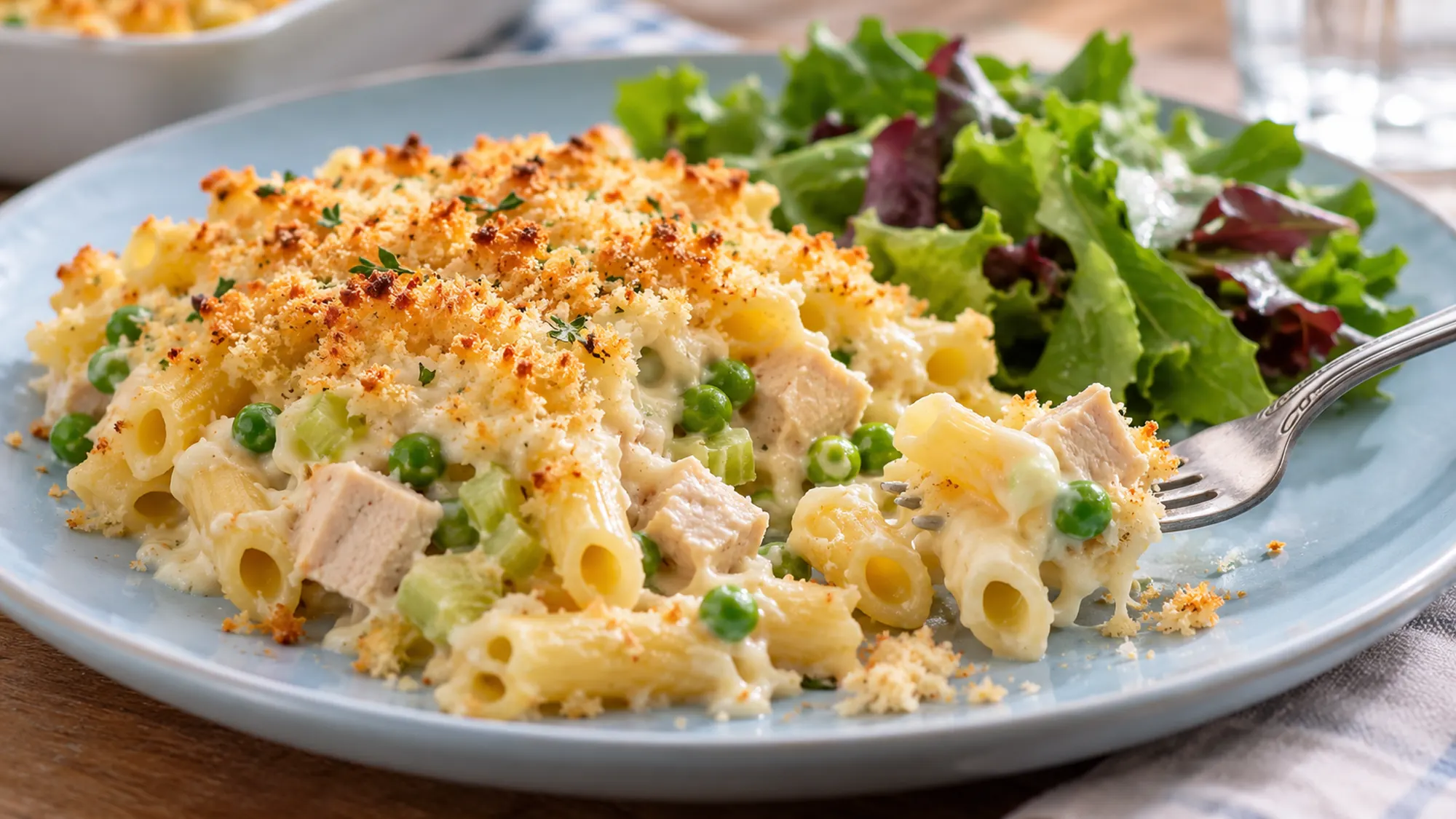
This turkey tetrazzini pairs short pasta and cooked turkey with a creamy cheddar sauce, then adds a buttery Parmesan crumb topping for contrast.
I like short tubes here because a spoon can gather turkey, peas and pasta together without chasing long strands around the plate. This is a macaroni-style variation rather than the familiar mushroom-and-spaghetti version. Celery and onion give the sauce a savory base; a little nutmeg sits quietly behind the cheese rather than making dinner taste like dessert.
Serving Turkey Tetrazzini
Let the casserole stand briefly after baking so the sauce settles around the noodles. Divide it into six portions and add something crisp or simply cooked alongside. A creamy main dish does not need a second creamy side; a plate with different textures is more inviting.
Tastiva’s garlic-and-lemon green beans bring a firmer bite and a bright edge. A leafy salad with a light vinaigrette is another useful direction. Keep the dressing on the vegetables rather than letting it soak into the crumb topping.
- Bring the baking dish to the table on a heatproof trivet and use a broad serving spoon.
- Offer extra black pepper separately instead of adding more cheese automatically.
- Keep any salad undressed until serving so its leaves stay lively beside the warm pasta.
| Side | Why it works |
|---|---|
| Green beans | Firm texture beside soft pasta |
| Leafy salad | Cool crunch and a tart dressing |
| Sliced tomatoes | Juicy freshness without another pan |
A simple vegetable side gives the rich casserole some breathing room on the plate.
Pasta and Sauce Variations
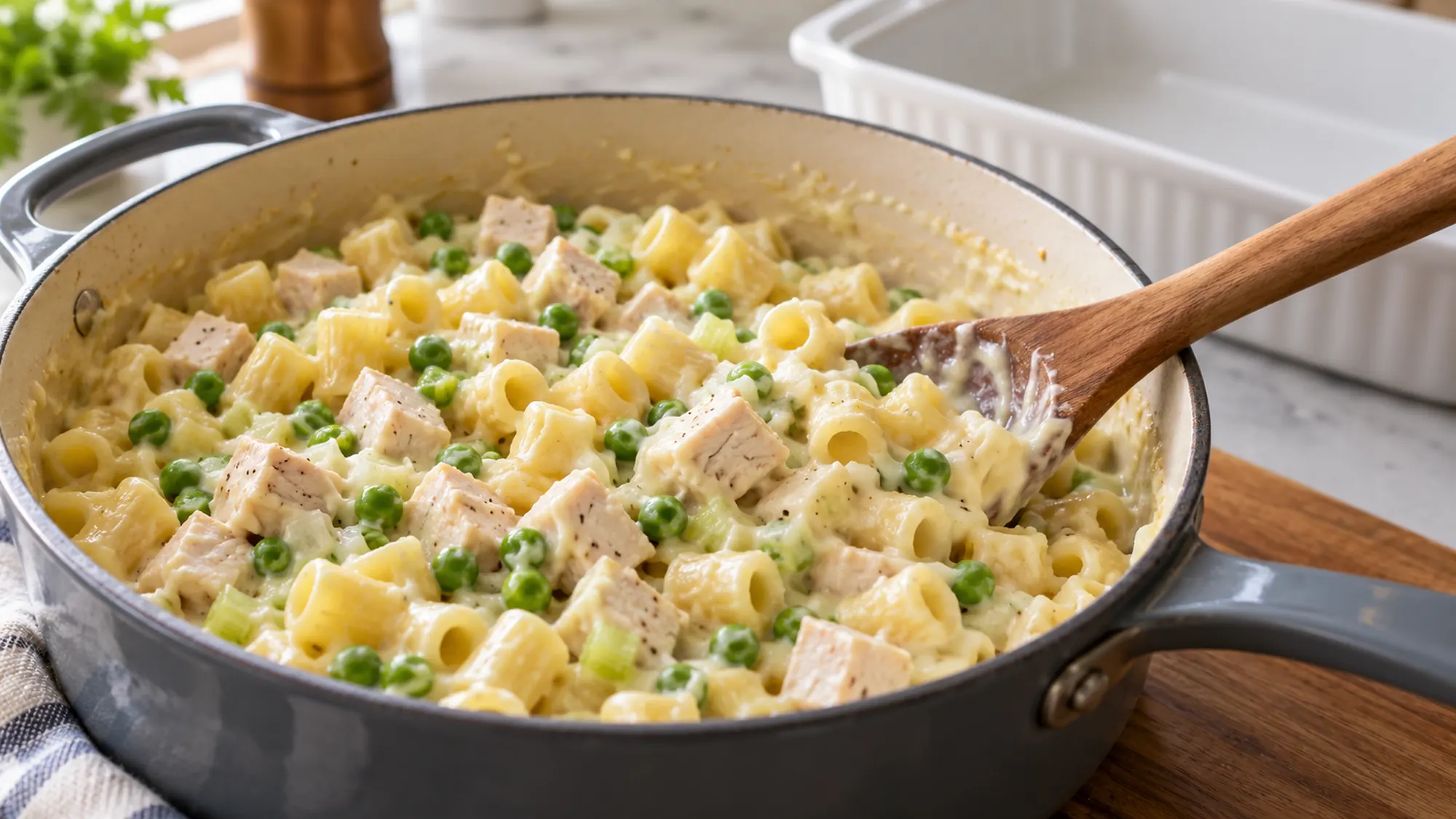
This version follows the short-pasta approach in Andrew Zimmern’s turkey tetrazzini, with measured ingredient weights and a six-portion yield. The accompanying video uses the same essential roux, turkey, peas and cheese combination. White cheddar keeps the sauce pale, but the flavor matters more than its color.
I would grate the cheese from a block when possible; it is easier to fold evenly into the warm sauce. Remove the pan from direct heat before adding it, and avoid a vigorous boil afterward. A sauce that looks comfortably loose before baking is preferable to one that already resembles paste.
- Cooked chicken can replace cooked turkey by weight; the flavor and nutrition estimate will change.
- For a wine-free version, use the same volume of unsalted stock. It will not have precisely the same acidity.
- Keep fresh breadcrumbs for the soft-crisp topping described here. Dry crumbs absorb butter differently, so do not swap them cup for cup.
- Pasta should still resist a little before baking. Fully soft noodles are likely to soften further in the sauce.
Protect the creamy interior by keeping the pasta slightly firm and the cheese sauce below a hard boil.
Nutrition and Safe Use of Leftover Turkey
Turkey supplies protein, peas add some fiber, and the dairy contributes both protein and fat. This is a substantial pasta meal, not a lightened-up casserole by default. Butter, cheddar, Parmesan and half-and-half all count toward the finished dish; adding vegetables does not cancel those ingredients.
The nutrition estimate is based on one-sixth of the pan and includes the measured topping and wine. It does not assume all alcohol disappears during cooking. If avoiding alcohol is important, choose the stock substitution rather than relying on oven time. Different turkey seasoning and cheese brands can also change the result.
- Use cooked turkey that has been kept safely refrigerated, not meat left on a serving platter for an extended period.
- Check the center of the casserole reaches 165°F (74°C); bubbling edges alone do not establish the center temperature.
- Refrigerate leftovers promptly in shallow containers. Reheat a covered portion with a small splash of stock if the pasta has absorbed the sauce.
Treat the turkey carefully and judge the casserole by its center temperature, not just its browned top.
Bottom Line
Turkey tetrazzini gives cooked poultry a different texture and a different purpose: tender pieces tucked into creamy pasta beneath a crisp, savory lid. Keep the noodles slightly firm, let the sauce stay supple, and choose a fresh-tasting side. That combination makes the leftovers feel like an intentional dinner rather than a repeat performance.
Tender turkey, a flowing cheese sauce and a thin golden crust are the three details worth protecting.
Turkey Tetrazzini Recipe

Ingredients
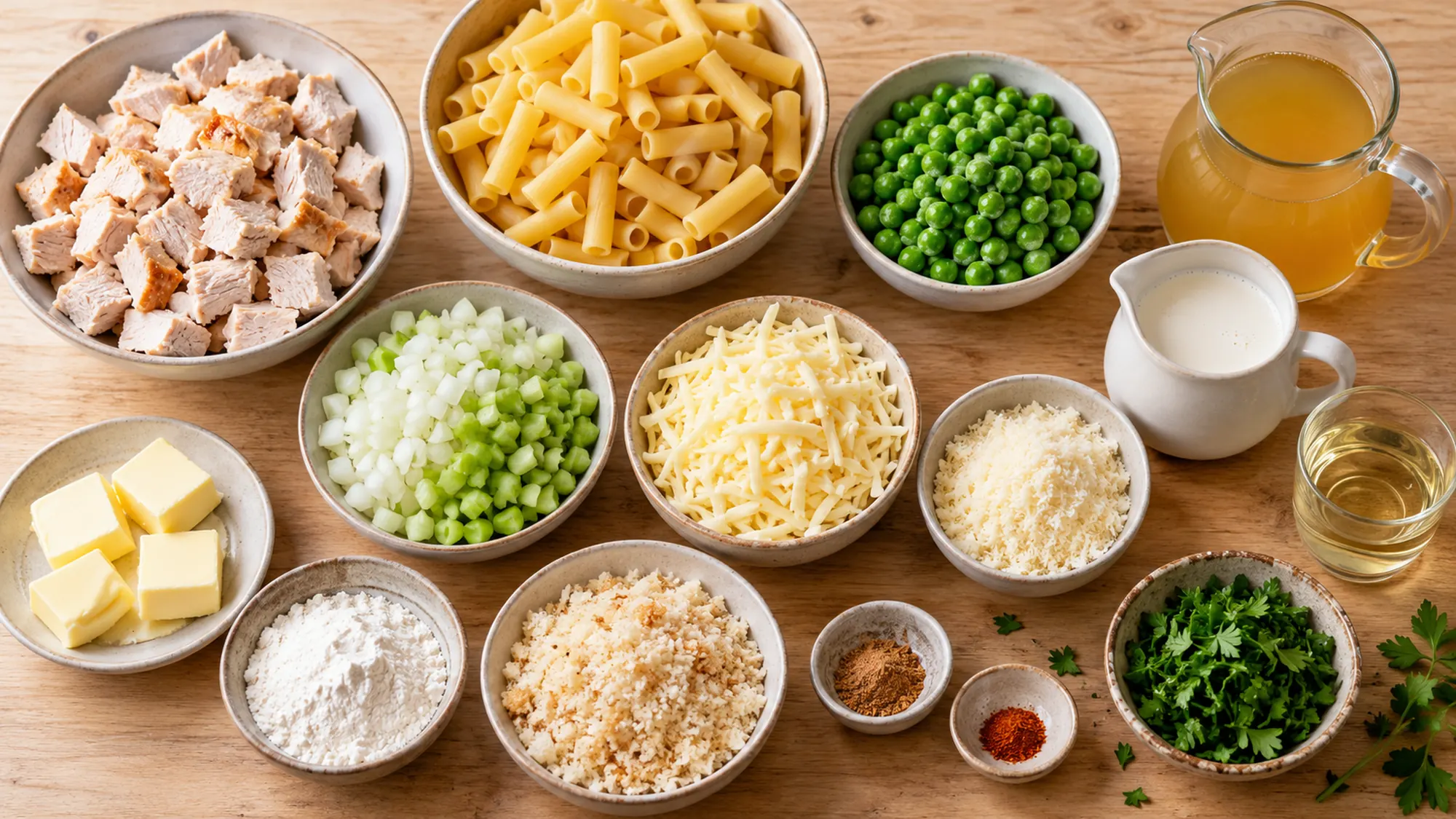
- 340 g dry short pasta such as elbows or ditalini
- 84 g unsalted butter divided: 42 g sauce, 42 g topping
- 30 g all-purpose flour
- 0.25 g ground cayenne
- 0.25 g ground nutmeg
- 100 g onion finely diced
- 100 g celery finely diced
- 450 g cooked turkey breast diced; about 3 cups
- 60 ml dry white wine
- 480 ml unsalted chicken stock
- 240 ml half-and-half
- 227 g white cheddar grated
- 85 g Parmesan grated, divided
- 150 g frozen peas
- 100 g fresh white breadcrumbs
- 2 g fine salt
- 1 g black pepper
Equipment
- 1 9-by-13-inch baking dish
- 1 Large saucepan
- 1 Pasta pot
- 1 Instant-read thermometer
Instructions
- Heat the oven to 375°F (190°C). Grease a 9-by-13-inch baking dish lightly using a little of the measured butter. Cook the pasta in unsalted water until just shy of al dente; drain.
- Melt 42 g butter in a large saucepan over medium heat. Stir in flour, cayenne and nutmeg for 1 minute. Add onion and celery and cook, stirring, for about 5 minutes until softened.
- Add diced cooked turkey and wine. Bring to a simmer, then gradually stir in stock and half-and-half. Simmer gently until the sauce coats a spoon, about 5 minutes. Remove from the heat and stir in the cheddar and half the Parmesan.
- Fold in peas and drained pasta. Season with the measured salt and pepper, tasting before adding more because cheeses vary. Transfer to the baking dish.
- Melt the remaining 42 g butter and toss with fresh breadcrumbs and remaining Parmesan. Scatter evenly over the casserole. Bake 25–30 minutes until golden, bubbling and 165°F (74°C) in the center. Rest 5 minutes before serving.
Nutrition
Video
Notes
Tried this recipe?
Let us know how it turned out!Hi, I’m Laura, the voice behind Tastiva. I’ve always believed that eating well should feel enjoyable, comforting, and realistic—not like another complicated rule to follow. I love creating recipes that fit into everyday life, sharing simple nutrition ideas, and finding small ways to make meals feel a little better without losing the pleasure of good food.