
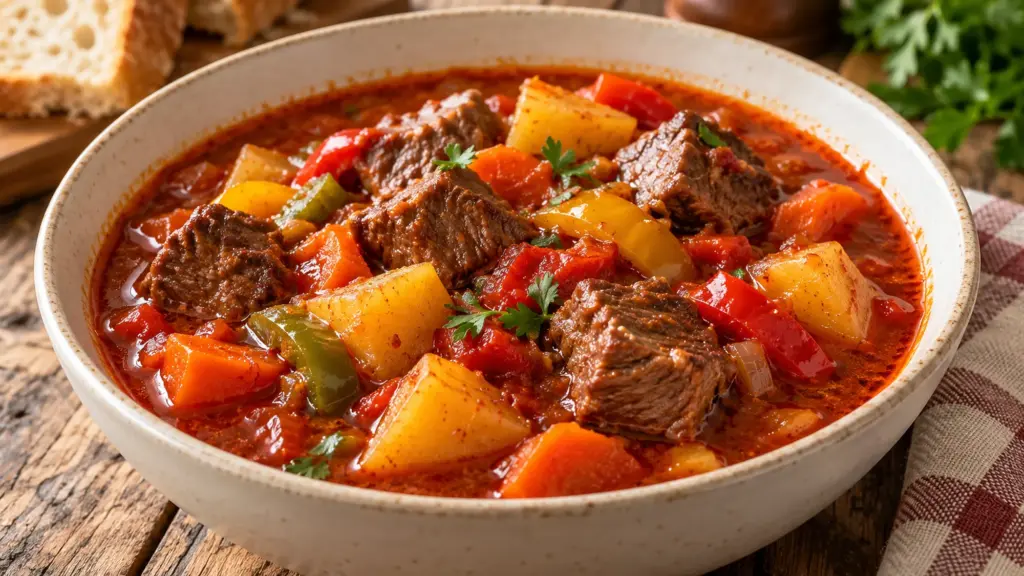
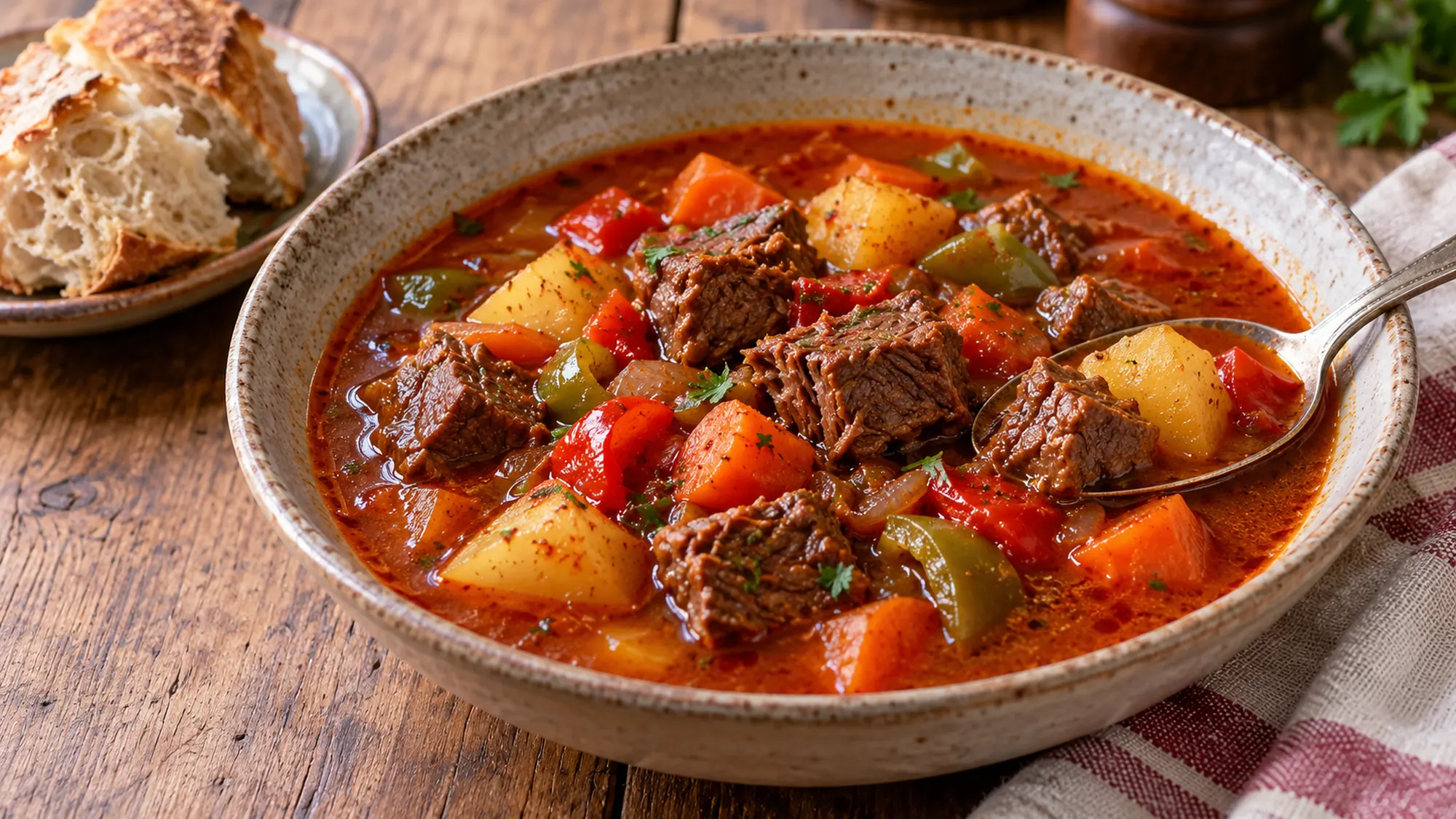
A pot of beef goulash fills the kitchen gradually: first browned meat, then softened onions, then the warm aroma of paprika. This Hungarian-style version is a brothy beef-and-potato dish, not the American ground-beef-and-macaroni casserole that shares its name. Give it time, and chuck becomes tender enough to yield to a spoon.
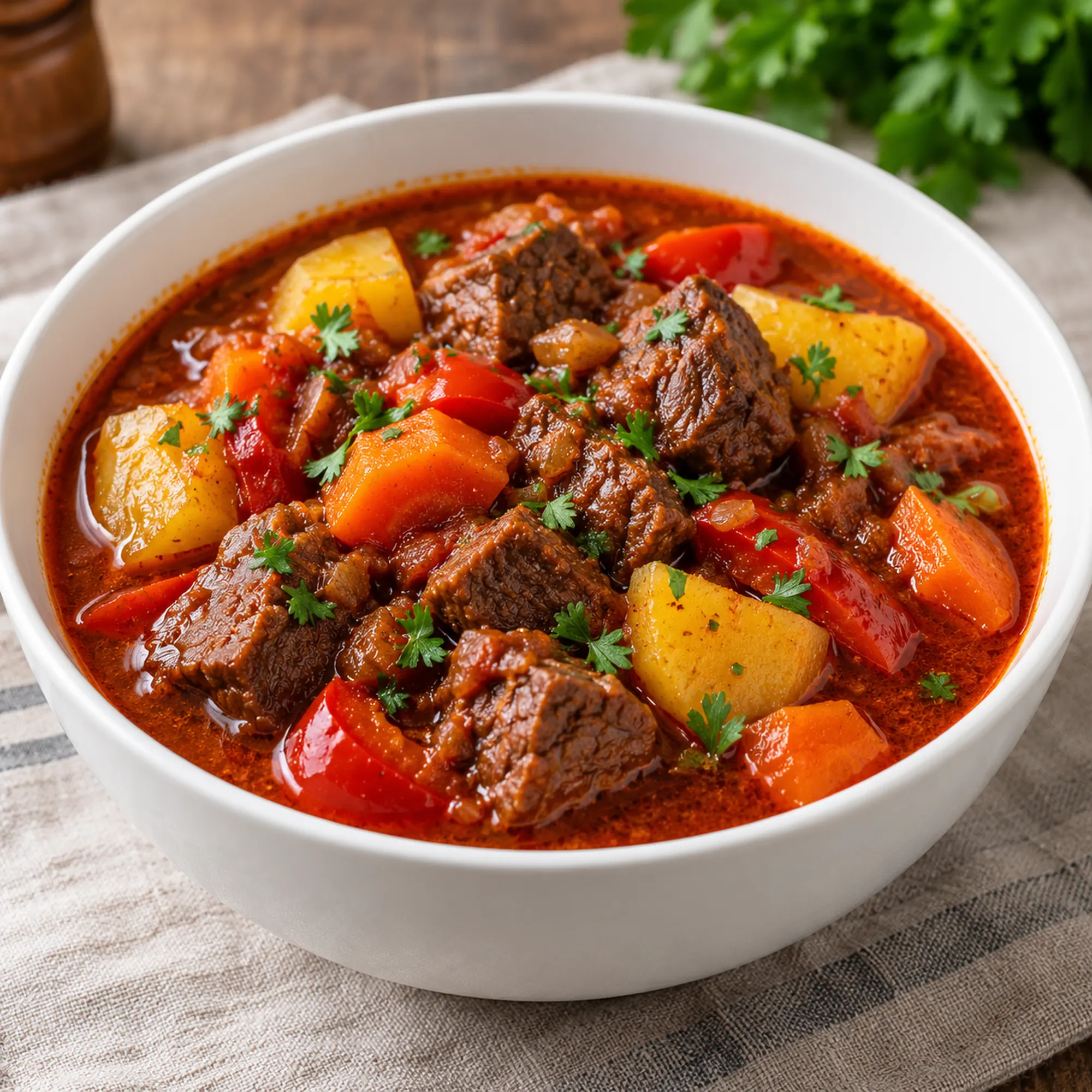
This beef goulash builds a paprika-rich broth around chuck, peppers and carrots, with potatoes added near the end so they keep their shape.
I prefer a soupier bowl here rather than reducing everything to a thick gravy. The potatoes already make the dish substantial, and the broth carries the sweet pepper flavor between bites. A gentle simmer is the useful setting: a rolling boil evaporates liquid quickly without telling you whether the beef has become tender.
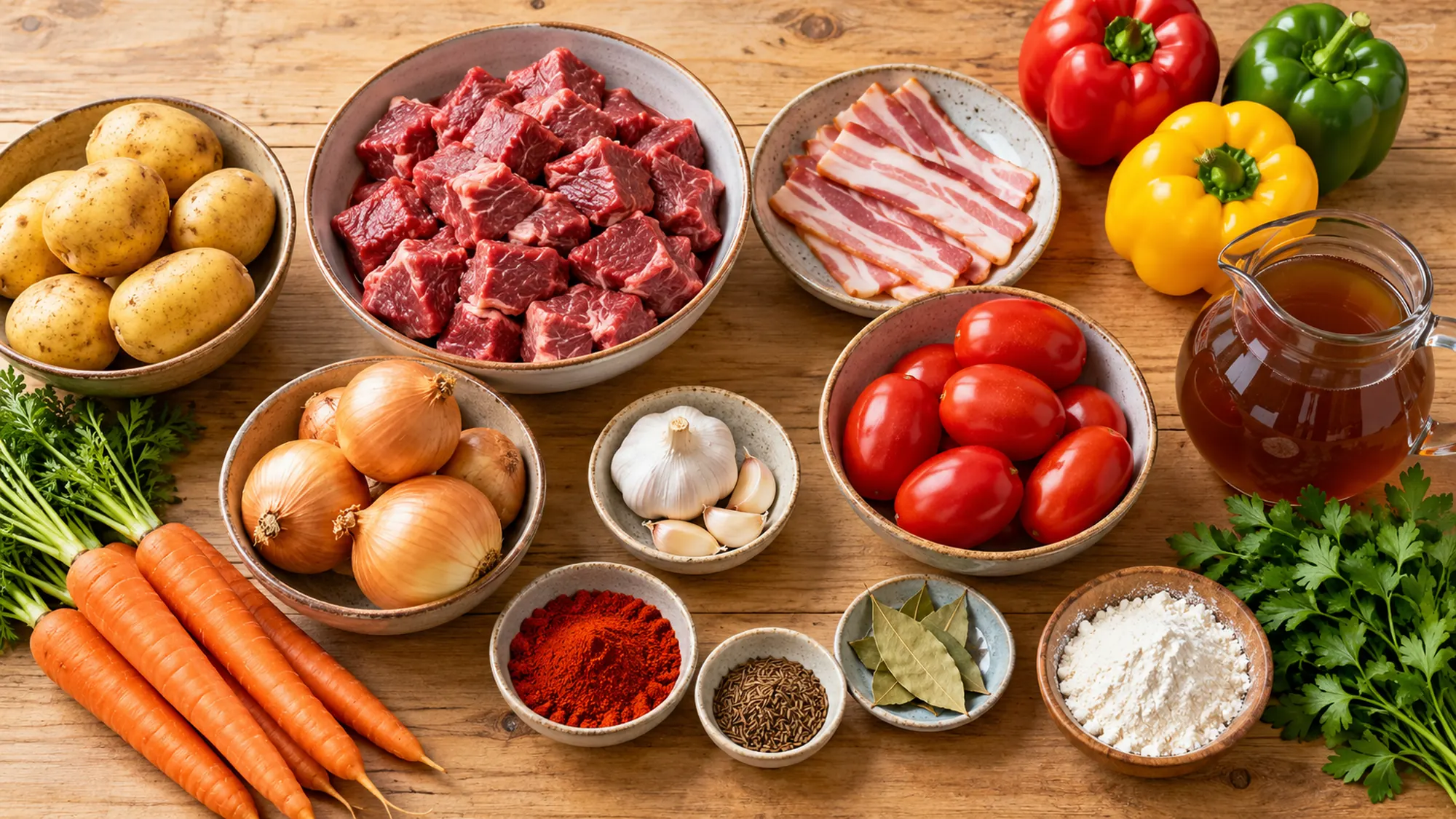
Serving Beef Goulash in Generous Bowls
Use deep bowls and set out spoons as well as forks. Beef, potatoes and vegetables are already in the pot, so additional starch is optional. A small piece of crusty bread is helpful for catching the last broth, but there is no need to build the whole meal around several heavy sides.
For a vegetable with a different texture, try Tastiva’s green beans with garlic and lemon. Keep their lemon seasoning separate from the stew. A simple cabbage or leafy salad also gives a cool, crisp contrast to the long-simmered ingredients.
- Stir gently before ladling so each bowl receives beef, potatoes and vegetables, not just broth.
- Remove the bay leaves before serving; their flavor belongs in the pot, not the spoon.
- Offer bread separately so it stays crisp until someone chooses to dip it.
| What you notice | Useful adjustment |
|---|---|
| Beef still feels firm | Continue gentle simmering before adding potatoes |
| Broth reducing too fast | Lower heat and add a little water |
| Potatoes already tender | Stop stirring vigorously to protect their shape |
A balanced bowl needs enough broth to surround the meat and potatoes, not merely coat them.
Paprika, Meat and Timing Variations
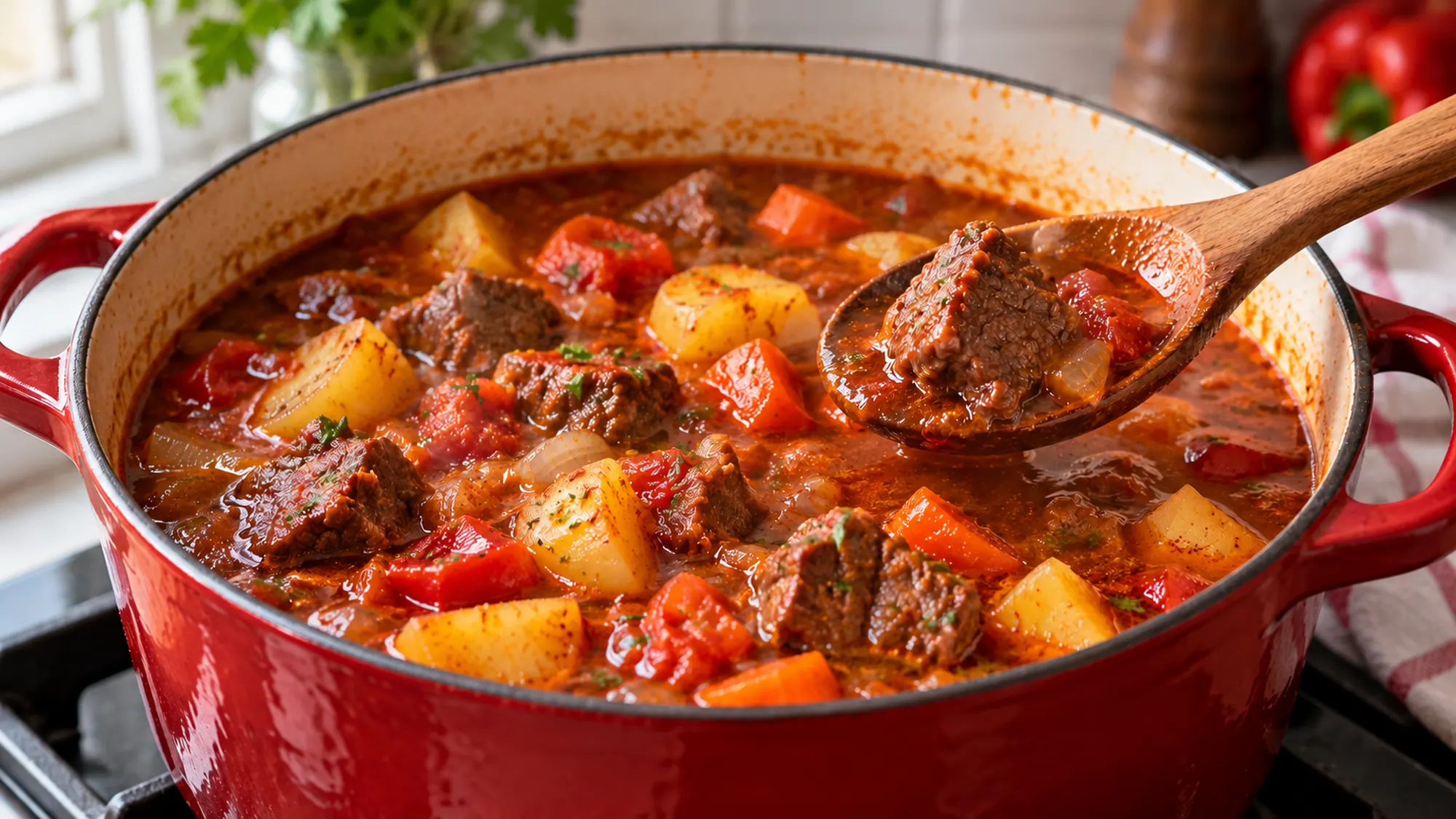
The recipe uses the bacon-and-vegetable approach in Sip and Feast’s Hungarian goulash. Bacon provides rendered fat for browning and a smoky note. It is one version of the dish, not a claim that every Hungarian household uses the same ingredients or proportions.
I would buy sweet Hungarian paprika specifically for this pot. Thirty grams is a flavor-building ingredient, not a decorative dusting. Replacing all of it with hot paprika could make the broth much hotter than intended, while smoked paprika would shift the flavor strongly toward smoke. The labels are worth reading before measuring.
- Caraway brings a distinct earthy, slightly citrusy flavor. Omit it if you dislike it rather than substituting cumin and expecting the same result.
- Different chuck pieces soften at different rates; the clock is a guide, and fork tenderness decides the finish.
- Add paprika off direct heat and follow quickly with liquid so the spice does not scorch.
- A little extra water restores broth volume without adding another dose of salt from stock.
Keep sweet paprika as the main spice and let the beef’s tenderness determine when the potatoes join it.
Nutrition and Leftover Care
Beef contributes protein, and the potatoes, peppers, carrots and onions add vegetable variety and fiber. Bacon and the beef’s own fat also matter to the meal’s overall richness. This is not a low-fat stew simply because it contains broth; the estimate counts the rendered bacon fat retained in the pot.
The card divides the full batch into six portions. Nutrition uses a raw smoked-bacon proxy rather than a cooked, drained bacon label, because those are different foods by weight. Meat trimming and stock brands vary, so the calculation is an approximation. Optional bread and other accompaniments are not included.
- Unsalted stock makes the final seasoning easier to control, but bacon still brings salt; taste before adding more.
- Keep raw beef and its utensils separate from vegetables that will be eaten uncooked.
- Transfer leftovers to shallow containers for prompt refrigeration instead of leaving the heavy pot to cool slowly on the stove.
- When reheating, follow the 165°F (74°C) guideline for leftovers and stir so the center heats evenly.
Count the bacon and retained fat honestly, then choose portions and sides that suit the rest of the meal.
Bottom Line
Beef goulash is most satisfying when its elements finish together: tender chuck, potatoes that still hold a corner, and enough paprika broth for every spoonful. Resist adding the potatoes too early or boiling the pot hard to hurry it along. A patient simmer and an occasional check on the liquid are more useful than constant stirring.
Wait for the beef, add the potatoes later, and keep the paprika broth generous.
Beef Goulash Recipe

Ingredients
- 113 g smoked bacon diced
- 907 g beef chuck cut into 1 1/2–2 inch pieces
- 30 g all-purpose flour
- 400 g onions chopped
- 450 g bell peppers 150 g each red, green and yellow; chopped
- 200 g carrots sliced
- 15 g garlic minced
- 300 g plum tomatoes chopped
- 2 g caraway seeds
- 30 g sweet Hungarian paprika
- 1200 ml unsalted beef stock
- 2 bay leaves
- 600 g peeled Yukon Gold potatoes cut into bite-size chunks
- 6 g fine salt adjust to taste
- 1 g black pepper
Equipment
- 1 Large Dutch oven with lid
- 1 wooden spoon
- 1 knife
Instructions
- Cook diced bacon in a large heavy Dutch oven over medium heat until its fat renders and the pieces begin to brown, 7–10 minutes. Transfer bacon to a plate, leaving fat in the pot.
- Pat beef dry and toss with flour. Brown in two or three batches in the bacon fat, 5–7 minutes per batch, then transfer to the plate. Do not crowd the pot; add a splash of stock if the browned bits threaten to burn.
- Cook onions in the pot for about 8 minutes. Add peppers and carrots and cook 8–10 minutes more, stirring. Add garlic for 1 minute, then tomatoes and caraway.
- Take the pot briefly off the heat and stir in paprika. Immediately add stock, scraping up browned bits. Return beef, bacon and their juices to the pot. Add bay leaves, salt and pepper, then bring to a gentle simmer.
- Partially cover and simmer gently for 90 minutes, stirring occasionally. Uncover and continue about 30 minutes, adding a little water if needed to keep a brothy consistency. The beef should be approaching tenderness before potatoes go in.
- Add potatoes and simmer 20–30 minutes until potatoes are tender and beef yields easily to a fork. Tougher beef may need longer. Remove bay leaves, taste for seasoning, and serve in bowls.
Nutrition
Video
Notes
Tried this recipe?
Let us know how it turned out!Hi, I’m Laura, the voice behind Tastiva. I’ve always believed that eating well should feel enjoyable, comforting, and realistic—not like another complicated rule to follow. I love creating recipes that fit into everyday life, sharing simple nutrition ideas, and finding small ways to make meals feel a little better without losing the pleasure of good food.