
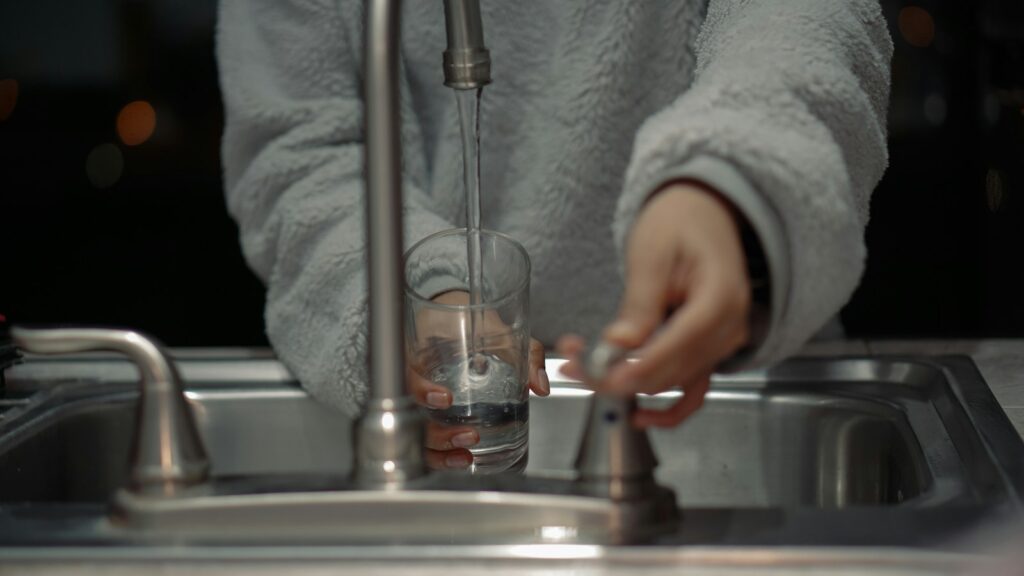
A clear glass beside the kitchen sink seems like the simplest thing in the world—until a boil-water notice arrives, a private well changes hands, or a campsite has a beautiful stream. Potable water means water that is safe to drink and use for food preparation. The label describes its suitability for that use, not whether it is bottled, filtered, cold, or perfectly clear. In the United States, the next useful question is where the water came from and what you know about its safety.
Start with the water source and any local advisory; a clear appearance or a pleasant taste cannot establish that water is safe to drink.
What potable water means at the kitchen sink
You may see “potable” on a building sign, a campsite map, or a water delivery description. It means suitable for drinking. “Nonpotable” means it has not been established as safe for drinking, even if it can serve another purpose such as irrigation. Don’t use water marked nonpotable to fill a glass, wash produce, make ice, or prepare food. The same caution applies to an unfamiliar tap whose purpose is unclear.
Water can contain germs or chemicals without looking murky. Conversely, mineral taste or an unfamiliar smell doesn’t tell you exactly what contaminant, if any, is present. I would treat appearance as a reason to investigate, never as a laboratory result. If a utility issues an advisory, follow its instructions rather than relying on a home taste test.
For ordinary drinking and cooking, safe public tap water can be a practical choice. A reusable glass or pitcher may make it easier to keep water handy, but neither the container nor a decorative filter can certify the source. If water stands in a container, keep that container clean and covered; storage hygiene matters after water leaves the tap.
Public tap water and private wells have different checks
Most U.S. public drinking-water systems are regulated under federal and state rules. The supplier monitors the water and must notify customers when certain standards aren’t met. EPA says customers can ask their supplier for the Consumer Confidence Report, an annual summary of water quality. Read the report for the specific system serving your address; a report from another town answers a different question.
A private household well has a different responsibility. EPA and CDC explain that well owners need to arrange testing and address problems themselves. CDC recommends testing private well or rainwater-collection water at least annually for harmful germs and chemicals, with local health officials or a certified lab advising which tests fit the area. A recent test is especially important after flooding or a change in taste, odor, or appearance.
If you rent or visit a place with a well, ask for recent testing rather than assuming the water receives municipal monitoring. No single household filter solves every possible problem. Test first, identify the concern, then choose a treatment method certified for that contaminant and maintain it as directed. A filter that improves flavor may do nothing about the hazard you are trying to remove.
Know which water advisory applies
The wording of an advisory changes what you should do. A boil-water advisory generally concerns possible microbial contamination and tells you how to prepare water for drinking and food tasks. A do-not-drink advisory can involve contaminants for which boiling is inappropriate; a do-not-use advisory can impose broader restrictions. CDC says to follow the local health department’s exact directions for drinking, cooking, brushing teeth, and other uses.
For a boil-water advisory, CDC advises bringing clear water to a rolling boil for one minute, or three minutes above 6,500 feet (about 2,000 meters), then letting it cool before use. Use safe bottled water if available. If the notice concerns chemicals or radioactive materials, boiling and ordinary disinfection cannot make that water safe. Don’t improvise by boiling longer or adding a countertop filter.
An advisory can also affect the less obvious things in the kitchen: ice, a coffee maker, rinsed salad leaves, and water mixed into infant formula. Follow the notice for each use and discard ice made with affected water when officials direct you to. Wait for the issuing authority to lift the advisory before returning to the usual routine.
Filtering, boiling, and bottled water each have limits
A household filter is a tool for a named job. CDC’s filter guidance recommends looking at the filter’s certification and the specific substances it removes. Pitcher filters, faucet units, and under-sink systems differ, and cartridges need replacement. A claim that water tastes better is different from evidence that a particular contaminant has been reduced.
Boiling is useful against germs under the appropriate advisory; it doesn’t remove harmful chemicals. Portable camping filters can also miss viruses or bacteria, depending on the design. For outdoor water, CDC recommends boiling when possible, or filtering and then disinfecting when boiling is unavailable. A sparkling mountain stream is still an unknown source. The right method depends on the hazard, equipment, and local guidance.
Bottled water is a reasonable temporary source when officials say not to use the tap, but a bottle isn’t a reason to ignore storage or expiration instructions. Keep containers sealed until needed and use clean hands and vessels. If a storm or outage is forecast, checking official local advice ahead of time is more useful than guessing how much a random filter can do.
A simple way to decide what to pour
Start with three questions: Is this a regulated public supply, a tested private well, or an unknown source? Is there a current local advisory? If there is a known problem, what treatment does the responsible agency recommend? That sequence keeps the decision tied to evidence instead of an attractive bottle or an alarming social post.
For everyday public tap water, look up your supplier’s water-quality report and notices. For a private well, arrange the recommended testing and keep the results; ask the local health department how to interpret a concerning finding. For travel or camping, use a verified safe source or a treatment plan suited to the setting. If water safety is uncertain, choose a known safe supply while you investigate.
I like the plain meaning of potable water because it points to a practical standard: water you can use confidently for a drink and a meal. It doesn’t promise that every source stays safe forever. Knowing who tests it, where alerts appear, and which treatment addresses a specific problem makes that confidence much more grounded.
Sources
- EPA: Basic Information about Your Drinking Water
- CDC: About Drinking Water
- CDC: Choosing Home Water Filters
- CDC: Drinking Water Advisories
- CDC: How to Make Water Safe in an Emergency

Hi, I’m Laura, the voice behind Tastiva. I’ve always believed that eating well should feel enjoyable, comforting, and realistic—not like another complicated rule to follow. I love creating recipes that fit into everyday life, sharing simple nutrition ideas, and finding small ways to make meals feel a little better without losing the pleasure of good food.