
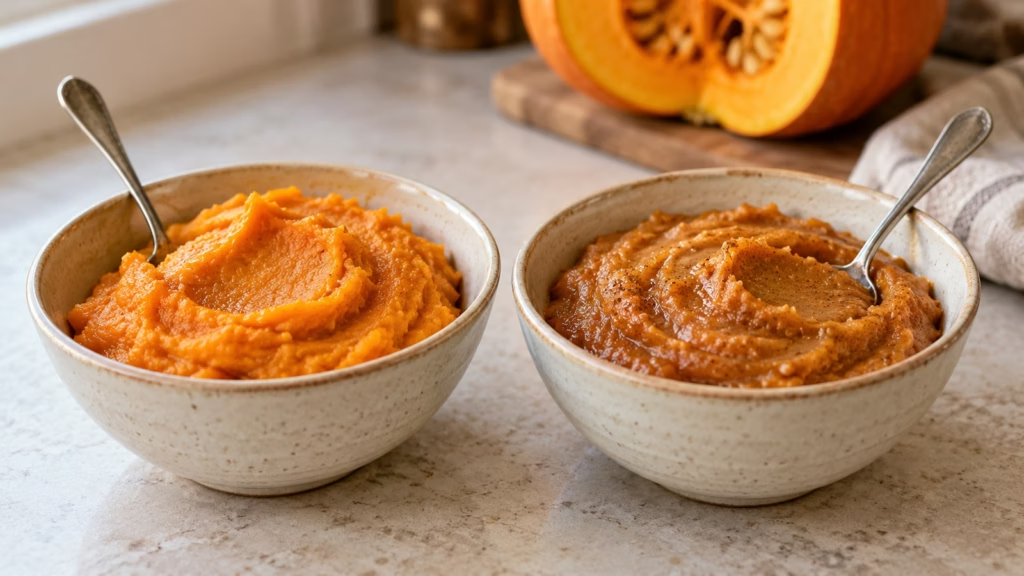
The mixing bowl is out, the spices are measured, and the orange can looks right. Then the small print says “pie mix.” In the canned pumpkin vs pumpkin pie filling decision, that wording matters: plain pumpkin is an unsweetened base, while pie filling or pie mix already contains sweeteners and seasonings. Check the ingredient list before you add it to a recipe, especially one that already supplies its own sugar and spices.
Choose the pumpkin your recipe was written for; a familiar-looking can can still bring a different ingredient to the bowl.
Canned pumpkin vs pumpkin pie filling starts with the label
A picture of a pie on the front does not settle what is inside. Plain pumpkin can be sold for pie-making without containing pie filling. The ingredient list is the useful part: Libby’s explains that its pure pumpkin has nothing added, while its pie mix includes sugar and spices. Other brands deserve the same label check.
| What you have | What it contributes | Where to use it |
|---|---|---|
| Plain canned pumpkin or pumpkin puree | Pumpkin flavor, color and moisture without a premixed sweetener or spice blend | Recipes that call for plain pumpkin, whether sweet or savory |
| Pumpkin pie filling or pie mix | Pumpkin plus sweetening and seasoning; the exact formulation varies | Recipes explicitly written for that pie mix |
| Prepared homemade pie filling | The mixture after the recipe’s other ingredients have been added | The pie or custard recipe it belongs to; not a plain-pumpkin substitute |
I’d make that check while the can is still closed. It is a much friendlier moment to change plans than after half the ingredients have met. Pumpkin pie spice is another separate product: a dry seasoning blend, not a can of pumpkin.
Match the recipe, rather than correcting it by guesswork
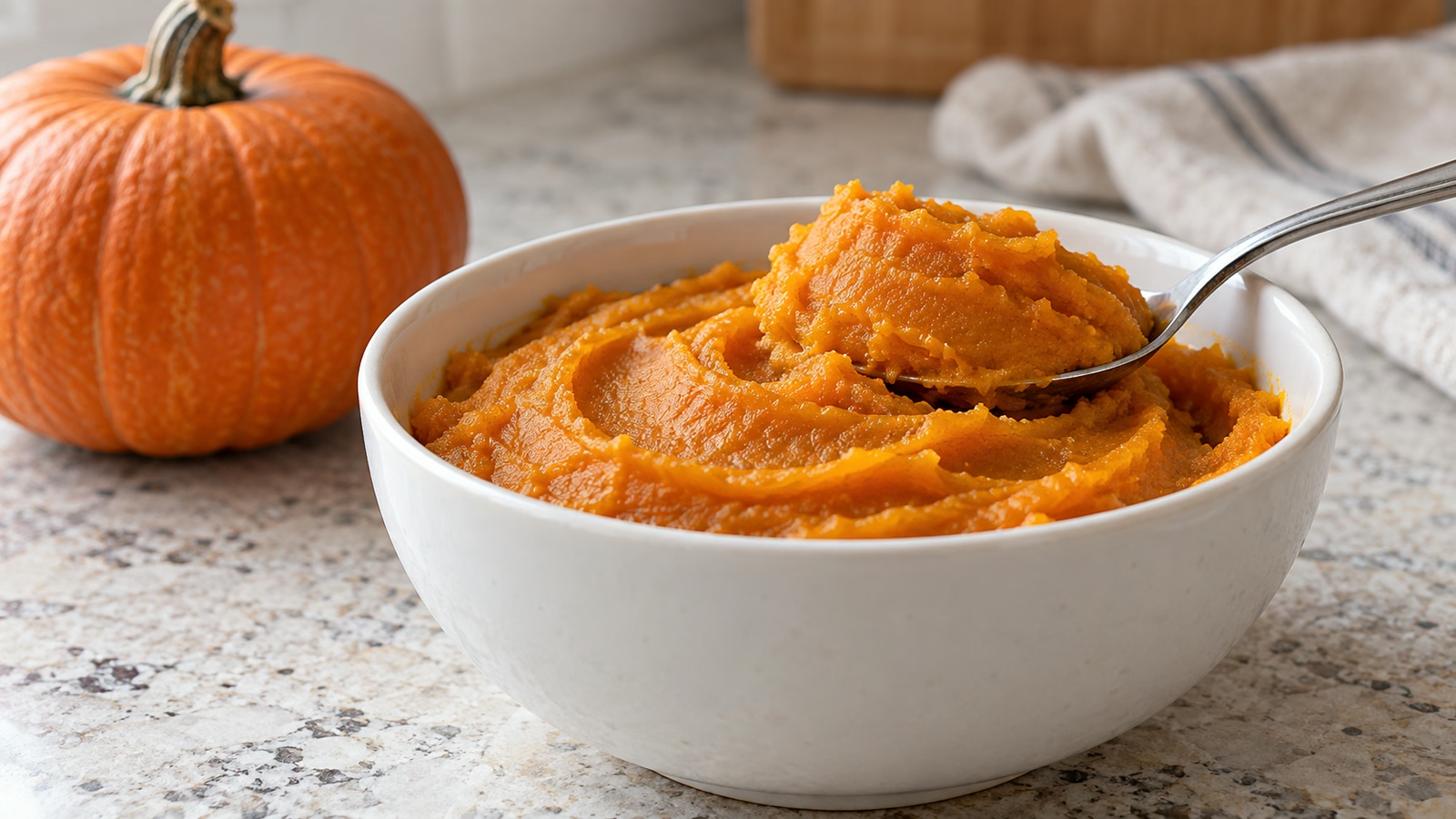
A baking recipe balances several ingredients at once. King Arthur Baking advises against swapping canned pie filling for puree, because the filling brings its own sweetness and seasoning. Taking out a random spoonful of sugar does not establish an equivalent recipe.
- For muffins, quick bread or baked oatmeal: use the form and measured amount in the ingredient list. Our pumpkin cottage cheese baked oatmeal, for example, calls for plain pumpkin and measures one cup; a whole can is not that measurement.
- For savory cooking: plain puree leaves the seasoning direction open. A sweetened pie mix can pull a soup or sauce toward dessert before you have chosen the other flavors.
- If you bought pie mix: choose instructions written for that product. The mix is a convenience ingredient, not a failed shopping trip.
- If you have fresh puree: follow a recipe that allows it. Homemade and commercial purees can differ in moisture, so “pumpkin” does not automatically mean identical performance.
Pie mix is not necessarily a finished, ready-to-bake filling. The Libby’s product instructions still call for eggs and evaporated milk. Follow the particular package and recipe, rather than borrowing the additions from a plain-pumpkin pie.
Compare nutrition using the same amount
A quick glance at calories can be misleading when the label servings differ. The current Libby’s plain-pumpkin label uses 1/2 cup, while its pie-mix label uses 1/3 cup. Those numbers describe different amounts of different products; they are not a ready-made side-by-side comparison.
- Start with serving size: check both the household measure and the weight in grams. The FDA explains that the listed serving is a labeling basis, not a recommendation for how much you should eat.
- Separate total and added sugars: plain pumpkin can contain naturally occurring sugars. “No added sugar” does not mean the total-sugars line must be zero.
- Count the finished recipe: eggs, milk, sweeteners, crust and portion size change what ends up in a serving. A canned ingredient’s label does not describe a slice of completed pie.
My priority would be choosing the ingredient that fits the dish, then considering the meal or dessert as a whole. The pure version offers more control over additions; the mix offers a specific shortcut. Neither label can make all those decisions for you.
Give the opened can a leftover plan
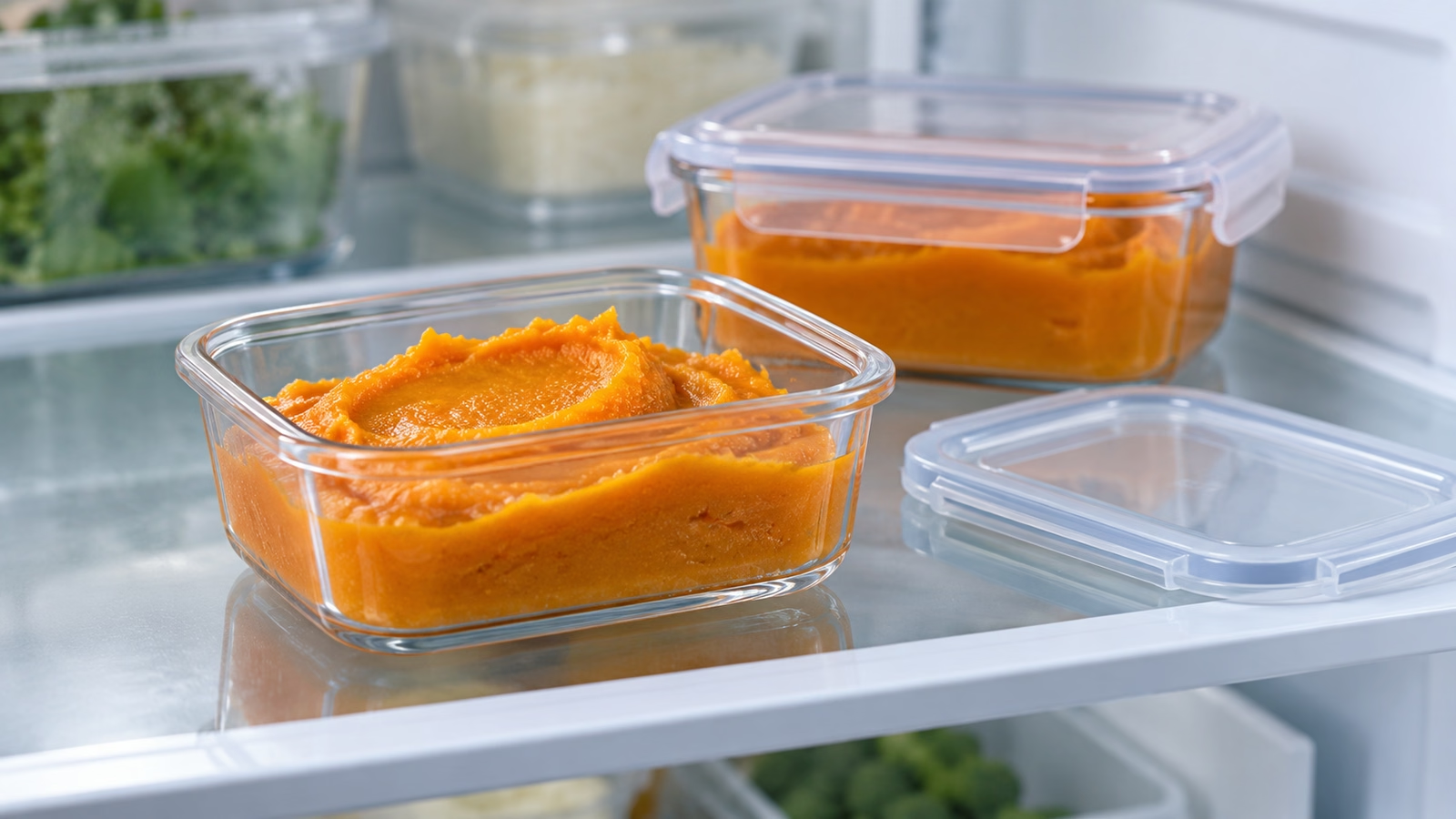
A partially used can is useful only if you can find it in time. USDA lists opened low-acid canned foods, including pumpkin, for three to four days in the refrigerator. Use a clean covered container and mark what it contains and when you opened it; orange puree and sweetened mix become much harder to distinguish without their cans.
- Refrigerate promptly: keep the refrigerator at 40°F (4°C) or below, and follow any shorter product-specific instructions.
- Freeze what you will not use: portion it for a realistic future recipe in a freezer-safe container. Record the amount, because “a little pumpkin” is less helpful when the measuring cup comes out.
- Keep mixtures separate: once raw eggs, dairy or other ingredients are added, follow the completed recipe’s handling instructions. Do not apply the unopened can’s shelf life to your mixing bowl.
- Skip pantry-storage improvisation: homemade pumpkin puree needs an appropriate refrigerator or freezer plan; pouring it into a jar does not make it shelf-stable.
That last distinction is timely for fall projects. In its September 2026 pumpkin guidance, University of Minnesota Extension emphasizes pumpkin’s moisture and the limits of home-canning puree. For an ordinary baking day, a modest labeled portion in the refrigerator is a simpler next step.
Nestlé Toll House demonstrates a pie made with Libby’s 100% Pure Pumpkin, adding the sugar and spices separately. It is a useful illustration of plain pumpkin’s role; those additions are not interchangeable with the directions for a can of sweetened pie mix.
Sources
- Libby’s: pumpkin product questions and pie-mix ingredients and preparation
- King Arthur Baking: pumpkin baking questions
- FDA: serving sizes on Nutrition Facts labels
- USDA: shelf-stable food and opened-can storage
- University of Minnesota Extension: pumpkin spice and everything nice

Hi, I’m Laura, the voice behind Tastiva. I’ve always believed that eating well should feel enjoyable, comforting, and realistic—not like another complicated rule to follow. I love creating recipes that fit into everyday life, sharing simple nutrition ideas, and finding small ways to make meals feel a little better without losing the pleasure of good food.