
The first time you see raclette at a table, it can look like dinner has been given its own tiny workshop: hot pans, bubbling cheese, potatoes waiting nearby, and everyone assembling a plate at a different pace. Raclette is both a semi-hard Alpine cheese and the Swiss meal made by melting it, then scraping the soft layer over simple accompaniments. That double meaning explains why people may be talking about a cheese, a dish, or even the tabletop grill.
Raclette is deliberately simple: melt good cheese, pair it with potatoes and something sharp, and let the table set the pace.
What raclette means in Switzerland
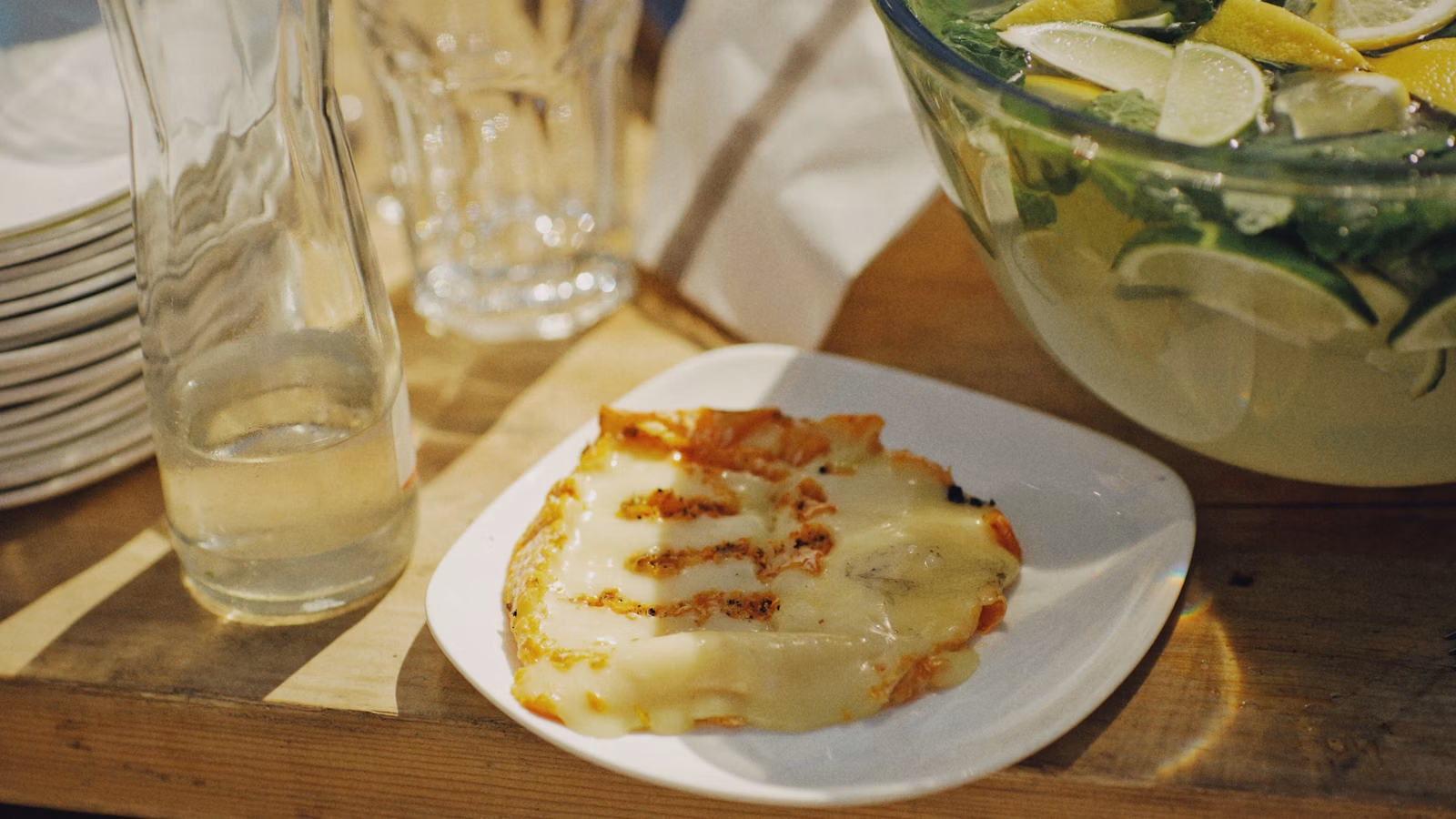
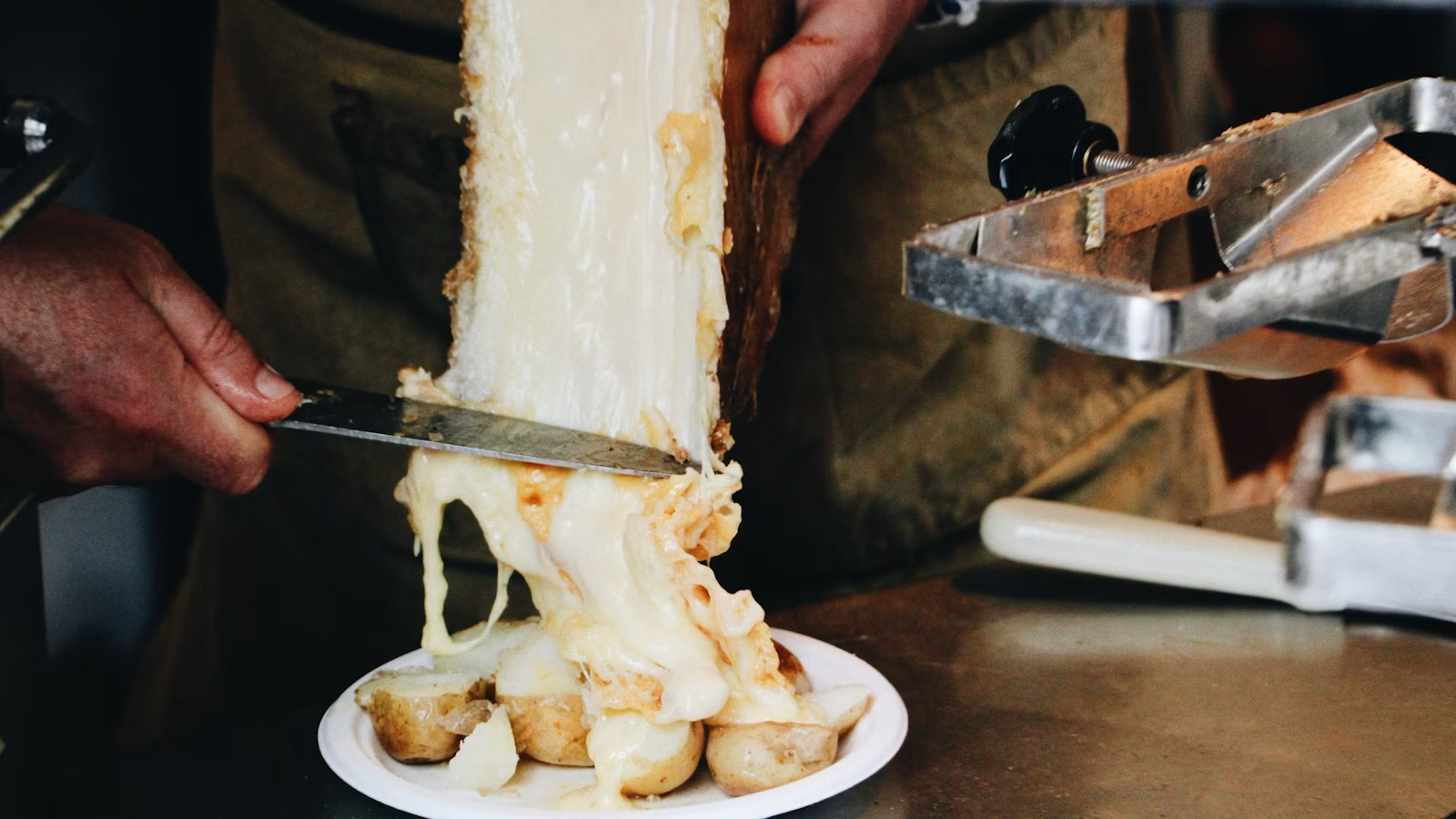
The name comes from the French verb racler, meaning “to scrape.” Traditionally, a cut face of a cheese wheel is warmed near a fire and the softened layer is scraped onto a plate. A home raclette grill miniaturizes that idea: each diner melts a slice in a small pan, while potatoes or vegetables warm on the top surface.
Switzerland’s official country information describes raclette as a national dish, and the Valais tradition remains especially important. The social part matters just as much as the equipment. This is not a meal designed to sprint toward the finish; it works because everyone melts, eats, talks, and starts another little pan when ready.
- The cheese: A semi-hard cow’s-milk cheese selected for smooth, even melting.
- The dish: Melted cheese scraped over potatoes, often with cornichons and pickled onions.
- The grill: A tabletop appliance with individual pans, sometimes called coupelles.
What raclette cheese tastes like and how to buy it
Raclette cheese is creamy and savory, with an aroma that becomes more assertive as it warms. The flavor can range from mild and milky to earthy, nutty, or gently funky, depending on producer and age. I would choose a plainly flavored wheel or sliced package for a first meal; peppercorn, smoked, and herb versions are fun, but they make it harder to understand the cheese itself.
- Look for “raclette” on the label: The melting behavior is part of the product’s identity.
- Ask the counter: A cheesemonger can suggest a Swiss or French Alpine option with a similar melt if raclette is unavailable.
- Buy slices for a tabletop grill: They should fit the small pans without folding into a cheese tent.
- Plan modestly: About 5 to 7 ounces (140 to 200 grams) per adult is a practical range when potatoes and vegetables are substantial.
Gruyère, fontina, or young Appenzeller can melt well, but each changes the flavor. I would treat them as useful alternatives, not claim they are indistinguishable substitutes.
How a raclette meal comes together
Start with small waxy potatoes, boiled or steamed until tender and kept warm. Add cornichons and pickled onions for acidity; they cut through the richness more effectively than a pile of extra seasonings. A crisp green salad, steamed broccoli, mushrooms, or roasted peppers can make the spread feel generous without asking the cheese to carry the entire evening.
- Set the grill on a stable, heat-safe surface with space around it.
- Arrange sliced cheese, hot potatoes, pickles, and vegetables in separate dishes.
- Melt one slice at a time until bubbling at the edges but not scorched.
- Slide the cheese over a potato, add black pepper if you like, and eat while hot.
- Repeat slowly rather than stacking several cold portions on one plate.
No tabletop grill? Place heatproof plates near the stove and melt cheese slices briefly under a broiler, watching continuously. This loses some of the cook-together charm, but it preserves the essential contrast of molten cheese, warm potato, and sharp pickle. Cheese waits for no conversation once it leaves the heat, so have everything else ready first.
Portions, nutrition, and food-safety checks
Raclette is a concentrated dairy food, so its calories, saturated fat, protein, calcium, and sodium depend on the brand and serving size. Rather than calling the meal healthy or unhealthy, I would build the plate intentionally: plenty of vegetables, enough potato to make it a meal, and cheese in a portion that lets you enjoy its flavor. Cured meats are traditional for many tables, but they are optional rather than structural.
- Check the milk statement: Raclette may be made from pasteurized or raw milk. People at higher risk of foodborne illness should follow their clinician’s advice and current FDA guidance.
- Keep cold foods cold: Bring out smaller batches of cheese and meat, replenishing them as needed instead of leaving everything warm for hours.
- Avoid cross-contamination: Use separate utensils and plates for raw meat if your grill setup includes it.
- Refrigerate leftovers promptly: Wrap cheese well so it does not dry out or perfume the entire refrigerator with Alpine determination.
For pregnancy in particular, FDA advises checking labels and avoiding cheeses made from unpasteurized milk when safety guidance calls for pasteurized products. Melting improves the eating experience, but it should not be used as a guess about whether a specific cheese is suitable for someone at higher risk.
Alpenwild’s video introduces raclette’s Swiss roots and the way the cheese is served. It is a useful visual companion to the melting, scraping, and serving steps above.
Sources
- Swiss Federal Department of Foreign Affairs: Switzerland’s national dishes
- Raclette Suisse: The cheese and its melting qualities
- U.S. Food and Drug Administration: Cheese and food safety during pregnancy

Hi, I’m Laura, the voice behind Tastiva. I’ve always believed that eating well should feel enjoyable, comforting, and realistic—not like another complicated rule to follow. I love creating recipes that fit into everyday life, sharing simple nutrition ideas, and finding small ways to make meals feel a little better without losing the pleasure of good food.