
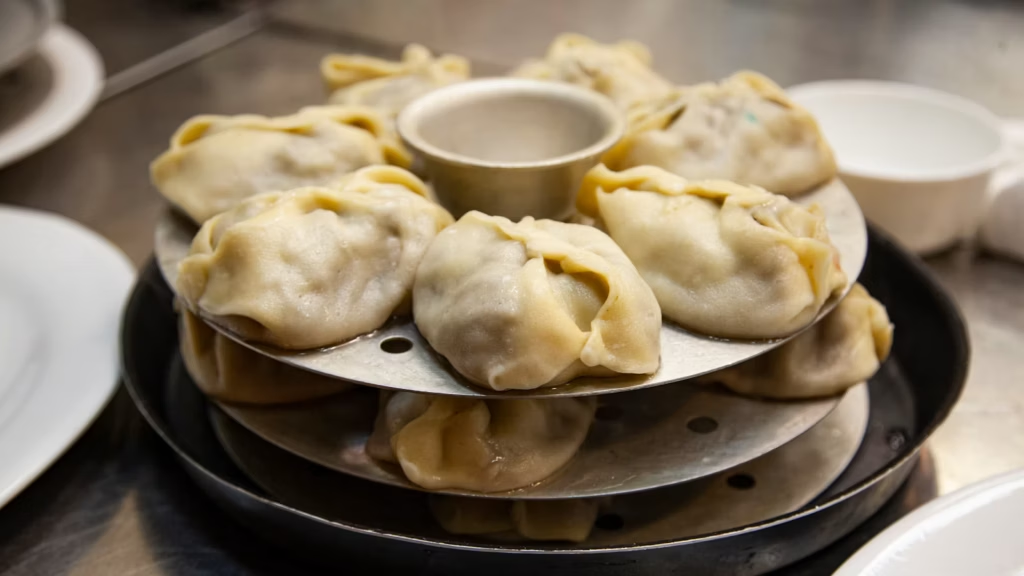
Manti are filled dumplings with a family resemblance that stretches across Anatolia, Central Asia, the South Caucasus, and nearby regions. They may be tiny enough to gather on a spoon or large enough to feel like a full parcel. Some are boiled, some steamed, and some baked crisp. Calling every version “Turkish ravioli” is convenient, but it flattens a much richer story.
Manti are not one dumpling with one rulebook; they are a whole conversation in dough.
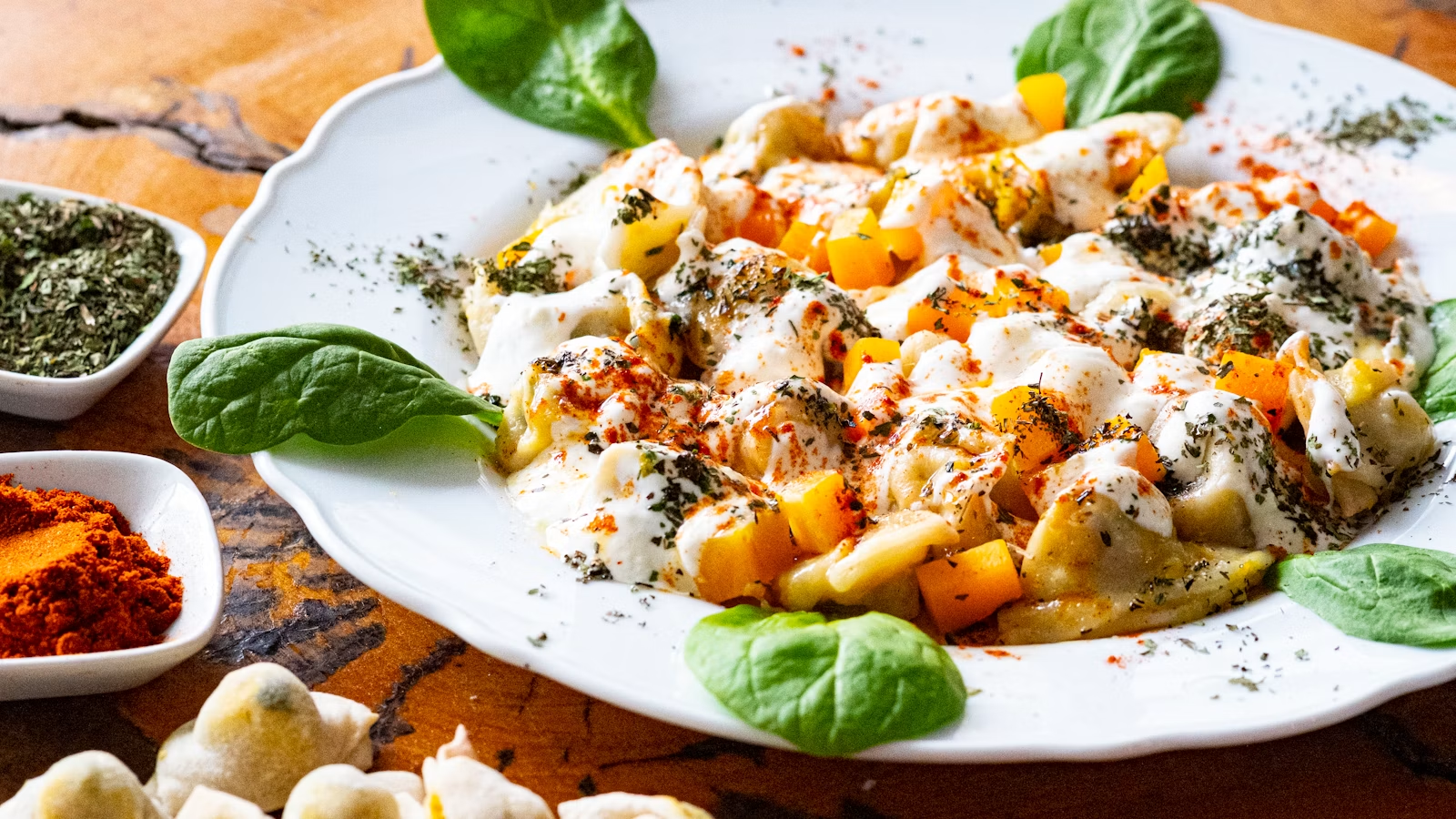
The version most familiar on Turkish menus uses little meat-filled dumplings topped with cool garlic yogurt and warm peppery butter. It is a splendid contrast: tender dough, savory filling, tangy dairy, and a red shimmer of spice. But that is one branch of the family, not the border around it.
What are manti?
Manti—written mantı in Turkish and spelled manty or mantu in other places—are dumplings made from wheat dough wrapped around a filling. Ground lamb or beef with onion is common, though meat, pumpkin, potato, or even unfilled regional styles also exist. In English, “manti” is often treated as both singular and plural.
The exact origin is hard to reduce to a neat sentence. Related names and dumpling forms appear across a wide Eurasian area, and centuries of trade, migration, and local cooking shaped them differently. It is more accurate to speak of a connected family than to hand the entire dish to one modern border.
What joins the versions is the basic pleasure of dough, filling, and concentrated savory flavor. What separates them can be everything else: scale, fold, filling, cooking method, sauce, and occasion.
Why manti look different from place to place
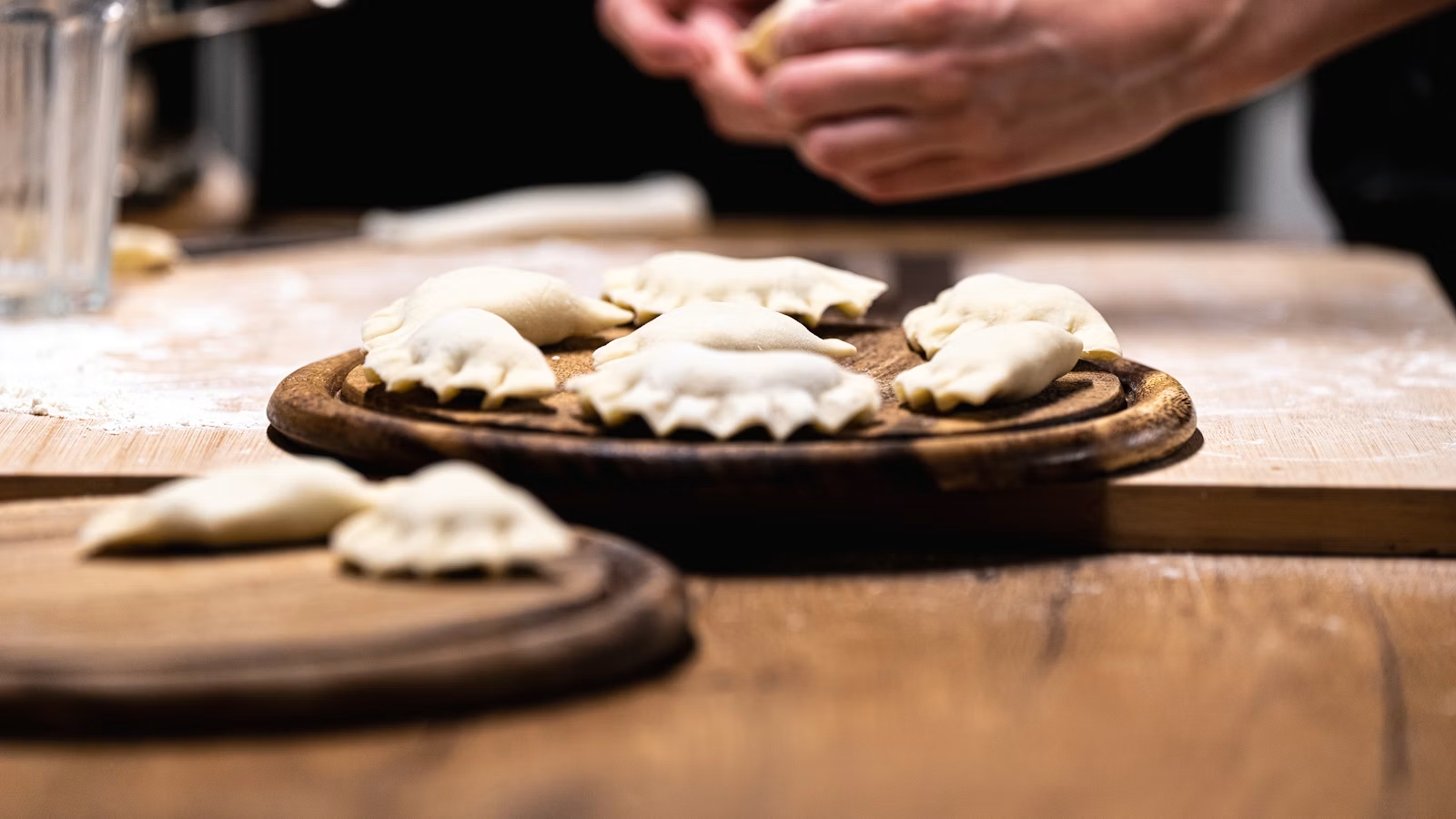
Turkish mantı, especially the Kayseri style, are known for their small size. Thin dough is cut into squares, dotted with a little filling, and pinched into tidy bundles before boiling. A popular measure of skill says many pieces should fit on one spoon—not a challenge I recommend issuing when someone has kindly made dinner by hand.
Across Kazakhstan, Uzbekistan, Kyrgyzstan, and neighboring cuisines, manty are often larger and steamed in stacked trays. Their filling may be juicy with onion and sometimes includes pumpkin or chunks of meat. They are substantial dumplings rather than tiny pasta-like parcels.
- Turkish: commonly small, boiled, and served with yogurt and seasoned butter.
- Central Asian: often larger, steamed, and served with butter, broth, cultured dairy, or sauces.
- Armenian: frequently open-topped and baked until crisp before broth and yogurt are added.
- Afghan mantu: typically steamed and finished with yogurt plus a seasoned meat or lentil topping.
What Turkish manti taste like
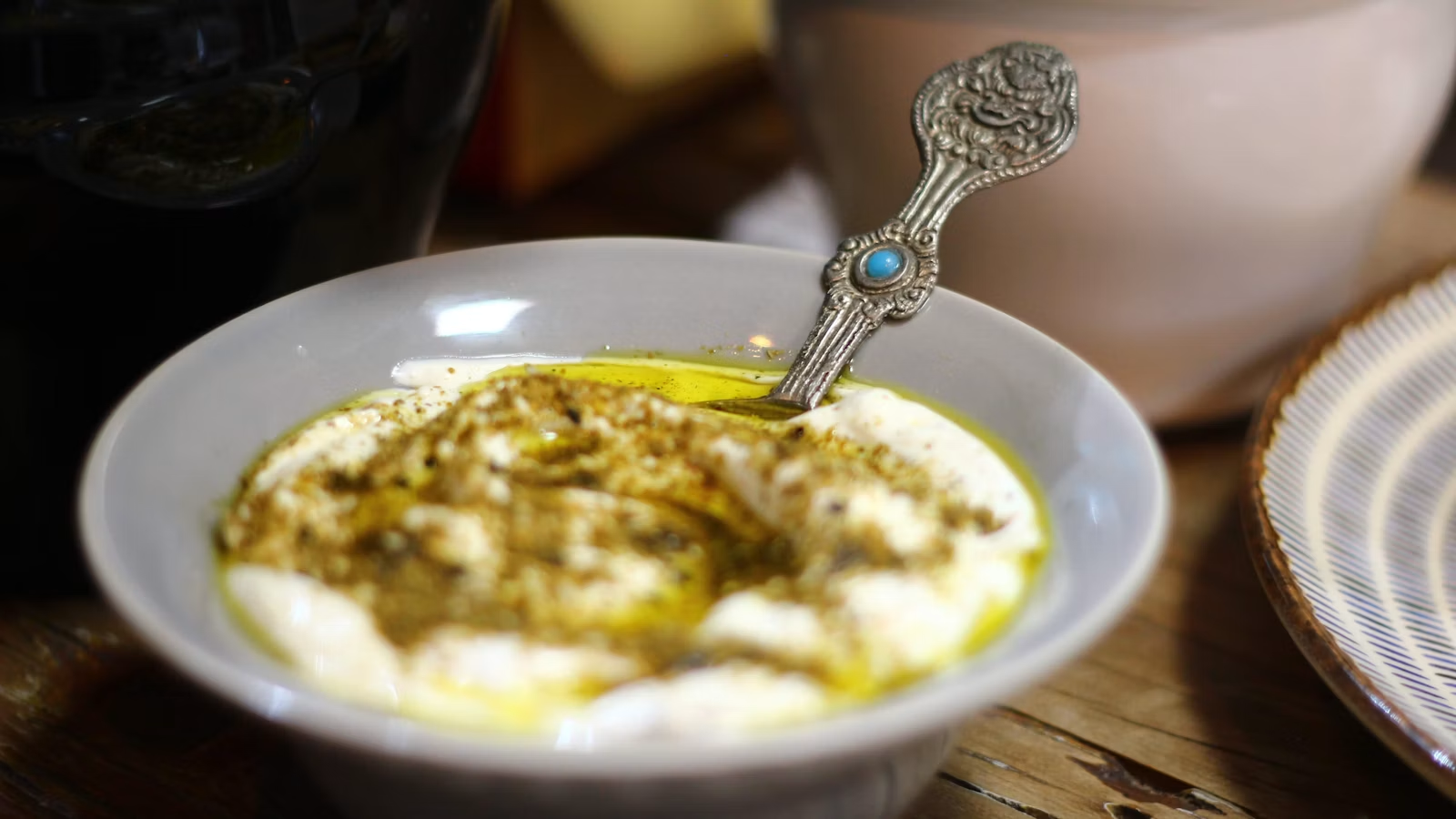
The dumplings themselves are mild and savory, so the toppings do important work. Garlic stirred into plain yogurt brings cool tang. Melted butter infused with red pepper, paprika, or chile brings warmth and richness. Dried mint or sumac may add an herbal or tart finish.
Texture matters just as much. The dough should be tender but not waterlogged, the filling juicy and fully cooked, and the yogurt loose enough to coat the dumplings. Add very cold yogurt to very hot manti and the temperature clash can feel abrupt; letting the yogurt lose its refrigerator chill makes the dish more harmonious.
Serve manti promptly in a shallow bowl so every piece catches some sauce. A spoon is practical when the yogurt is generous. Bread is optional—the dumplings already bring their own dough—but a sharp salad beside them is welcome.
How to buy, cook, and serve frozen manti
Frozen manti are a sensible entry point. Check whether the package describes a Turkish-style boiled dumpling or a larger steamed manty, because the method is not interchangeable. Keep them frozen until cooking unless the label says otherwise; thawing can make thin wrappers sticky and prone to tearing.
For small boiled manti, use plenty of gently boiling salted water and stir once early so they do not settle together. For larger manty, lightly oil the steamer trays and leave space between pieces. Follow the package time, then check the center of a larger dumpling rather than trusting appearance alone.
- Prepare the yogurt sauce before the dumplings are done.
- Warm the butter and spices gently so they bloom without burning.
- Drain boiled manti well, but do not rinse away the starch that helps sauce cling.
- Layer yogurt first or spoon it over the top—both routes end happily.
Nutrition and food-safety notes
Manti can be a satisfying mixed dish of starch, protein, fat, and dairy. The balance changes dramatically with portion size and toppings: a modest bowl with plenty of yogurt is different from a platter swimming in butter. Add vegetables or a bright salad if you want a fuller meal without simply doubling the dumplings.
When the filling contains ground beef, lamb, pork, or veal, USDA guidance calls for 160°F in the center; ground poultry needs 165°F. Tiny dumplings are awkward to test individually, so check a representative larger piece or make a small test dumpling from the same filling.
Keep raw filling cold, separate it from ready-to-eat foods, and wash hands and tools after shaping. Refrigerate cooked leftovers within two hours and reheat them thoroughly. Yogurt sauce is best stored separately when possible, since repeated heating can make it split.
Refika Birgül shows a larger, beginner-friendly Turkish mantı with garlic yogurt and pepper butter. It represents one regional style; for meat-filled dumplings, use the internal-temperature guidance above rather than judging doneness by the dough alone.
Sources
- Google Arts & Culture: Turkish Cuisine—Preparing Mantı
- GoTürkiye: Mantı Traditions and Regional Variations
- Epicurious: Manti
- USDA FSIS: Ground Beef and Food Safety

Hi, I’m Laura, the voice behind Tastiva. I’ve always believed that eating well should feel enjoyable, comforting, and realistic—not like another complicated rule to follow. I love creating recipes that fit into everyday life, sharing simple nutrition ideas, and finding small ways to make meals feel a little better without losing the pleasure of good food.