
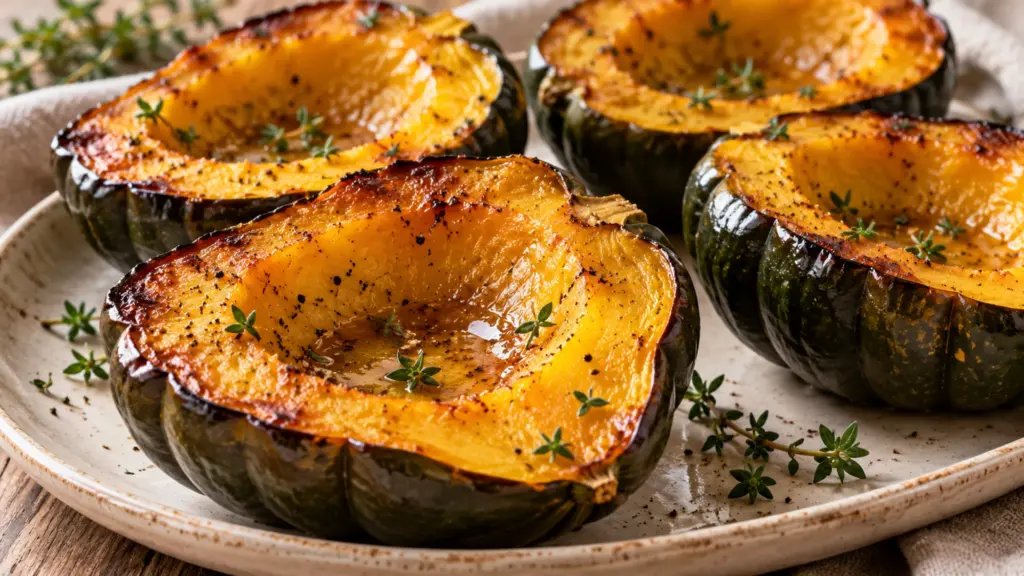
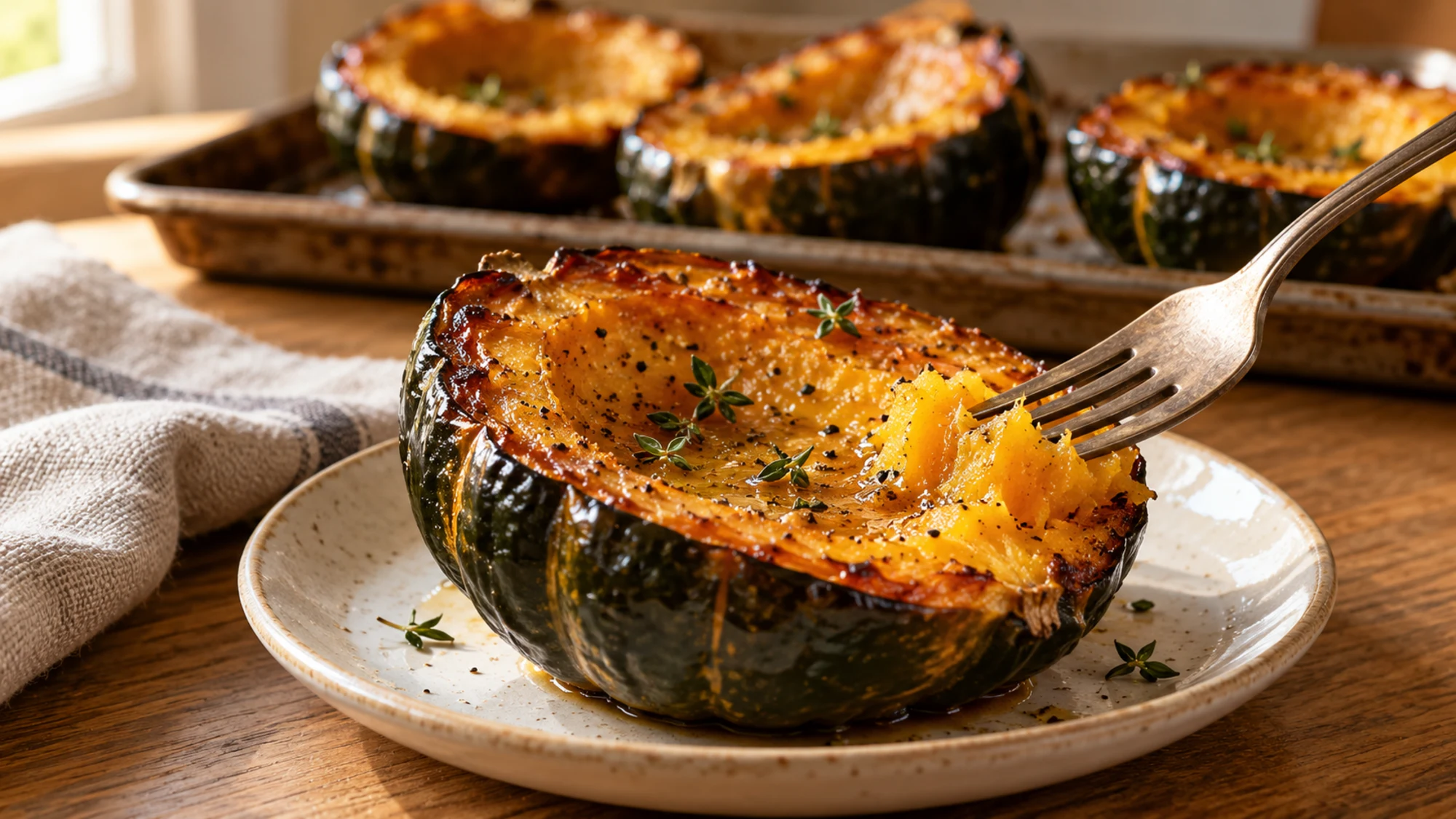
A whole acorn squash can look more like a centerpiece than a side dish, especially when you are wondering how to get through that ridged shell. This roasted acorn squash keeps the shape intact: four halves bake until the flesh yields easily, then carry a buttery maple-and-thyme finish straight to the table.
Roast the squash until genuinely tender, not merely browned. Adding the maple butter partway through gives the flesh a head start and keeps the sweet topping from spending the entire cooking time in a hot oven.
Choose two squash of similar size so the halves have a better chance of finishing together. Wash and dry them before cutting, then steady your board with a damp towel underneath. A sharp, sturdy knife matters more than speed here; keep your free hand clear of the blade, and never try to catch a rolling squash.
The appeal is the contrast: mild, soft flesh, an earthy herb note, and just enough maple to make the edges feel special. I’d keep the thyme rather than piling on baking spices. It gives this side a clear place beside dinner instead of nudging it toward dessert.
Serving suggestions for roasted acorn squash
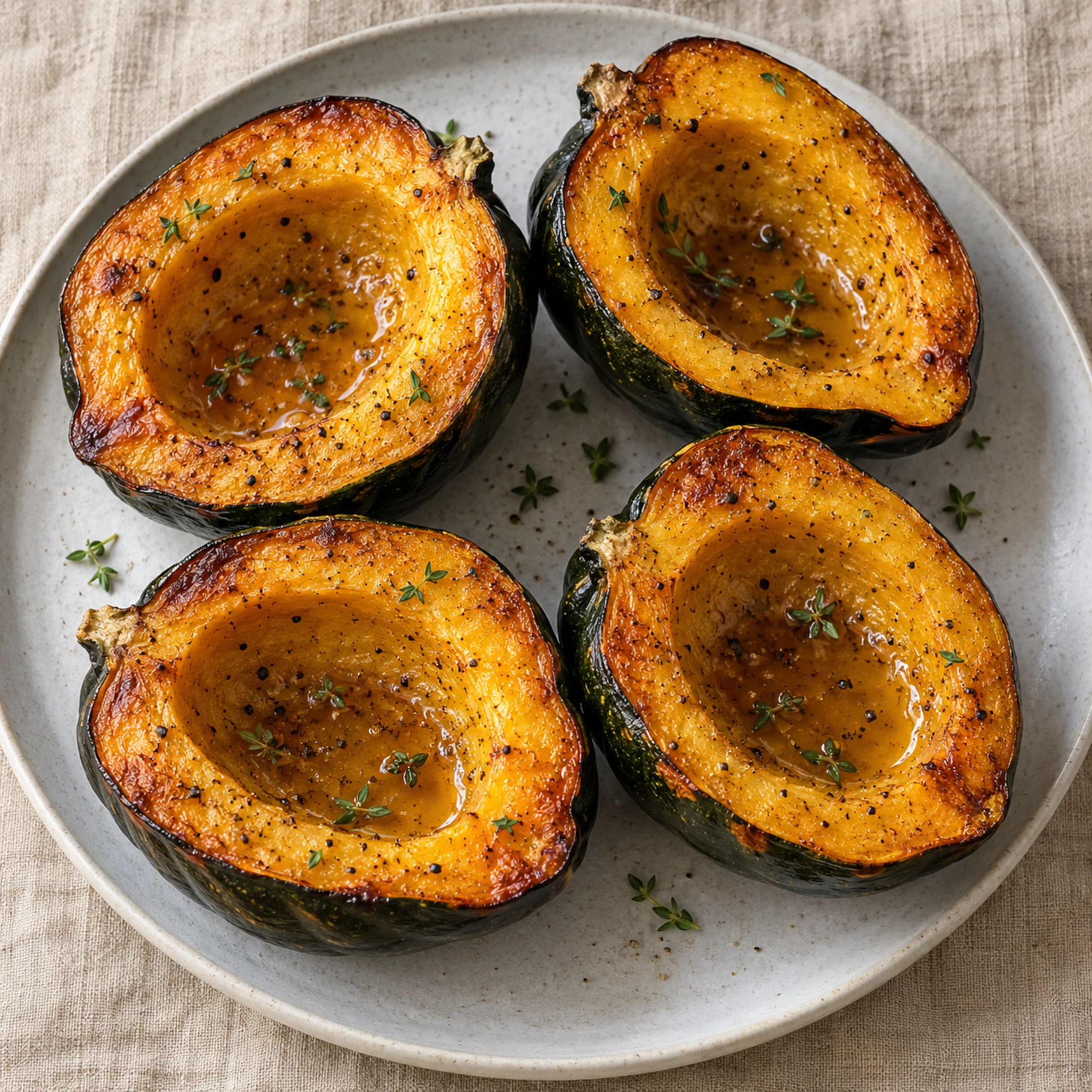
Serve one half per person as a generous side, or divide the cooked halves again when the table already has several vegetables. The cavity makes a natural little bowl, but spoon some of its buttery liquid across the surrounding flesh before serving so the seasoning does not stay in one puddle.
Match the squash with something that brings a different texture or flavor. These are serving ideas, not extra ingredients included in the recipe’s quantities.
| Meal direction | Add alongside | Why it works |
|---|---|---|
| Simple roast dinner | Chicken and garlic-lemon green beans | Savory protein and fresh crunch balance the soft squash. |
| Vegetarian plate | Lentil salad with lemon dressing | Earthy legumes and acidity keep the plate varied. |
| Holiday spread | Turkey and a tart cranberry relish | Tart fruit contrasts with the maple finish. |
For leftovers, follow the USDA’s guidance: refrigerate promptly in shallow containers within two hours, or within one hour when the temperature is above 90°F. Keep refrigerated leftovers for three to four days and reheat to 165°F. Scoop the flesh into a covered microwave-safe dish for easier, more even reheating.
A little acidity elsewhere on the plate is more useful than another sweet topping. Let the maple squash be the mellow part of dinner.
Variations
Start by deciding whether you want to change the flavor or the cooking format. Small seasoning changes are simpler than swapping the vegetable, because the size and thickness of another squash can change the roasting time substantially.
- Prefer it less sweet? Omit the maple syrup and keep the butter, thyme, salt, and pepper. The squash brings its own mild sweetness, though the finish will be less glossy.
- Want a different herb? Chopped sage can take the flavor in a more woodsy direction. Add a modest amount rather than treating herbs as interchangeable by the handful.
- Looking for crunch? Scatter toasted pumpkin seeds over the cooked halves at serving time. Keep them out of the initial roast so their texture stays distinct.
- Working with uneven squash? Check each half separately. Remove tender pieces while thicker ones continue cooking; a timer should not overrule a knife meeting resistance.
I’d avoid turning this version into thin slices without changing the schedule. Halves give you spoonable centers; slices expose much more flesh to the pan and heat.
Choose one change that suits your meal, then leave the rest alone. The maple, herb, and squash combination does not need a crowded supporting cast.
Health benefits
Acorn squash contributes fiber and potassium. The USDA classifies it as a starchy vegetable, whose carbohydrates supply energy. Those are useful reasons to include it in a varied diet, not a promise that this particular side dish will prevent or treat a health condition.
- Keep the whole recipe in view: butter and oil add fat, while maple syrup adds sugar.
- Treat the serving size honestly: a large half is a substantial vegetable portion, and squash sizes vary.
- Add a protein food alongside: the squash is the vegetable component of the meal, not a protein-rich main by itself.
The practical benefit is a vegetable side you can build a balanced plate around. Enjoy the buttery finish without asking a spoonful of maple syrup to become a health claim.
Bottom Line
For roasted acorn squash, tenderness is the finish line. Give similar-sized halves room on the pan, add the maple butter after their initial roast, and check the thickest flesh before serving. I’d rather wait a few extra minutes for a soft center than rush a beautifully browned half that still fights the spoon.
Roasted Acorn Squash Recipe

Ingredients
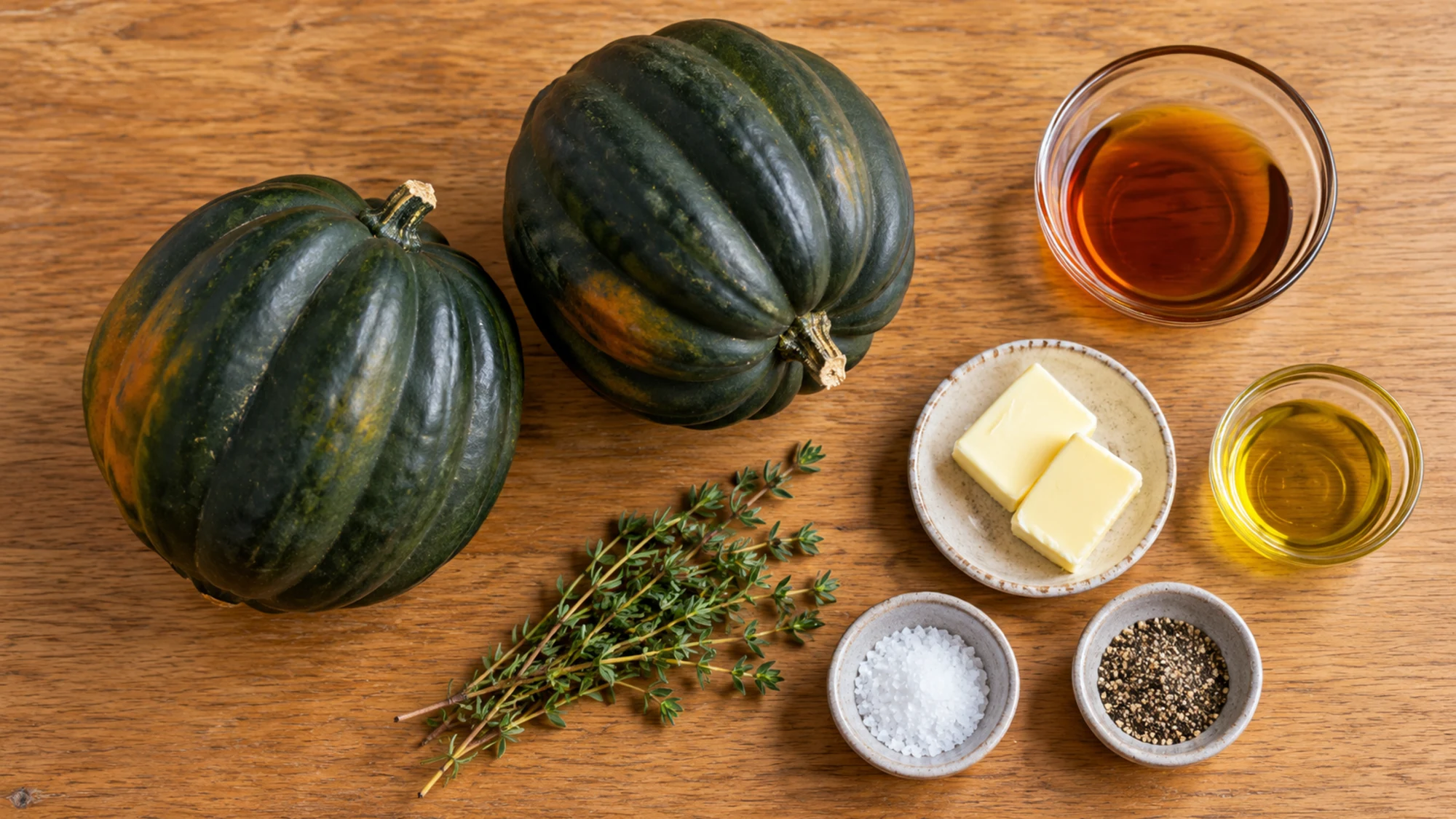
- 2 acorn squash approximately 1½ pounds each
- 1 tablespoon olive oil
- 2 tablespoons unsalted butter melted
- 2 tablespoons pure maple syrup
- 1 teaspoon fresh thyme leaves
- 1/2 teaspoon fine salt
- 1/4 teaspoon ground black pepper
Equipment
- 1 Large stable cutting board
- 1 sharp chef’s knife
- 1 spoon
- 1 Rimmed baking sheet
- 1 small bowl
- 1 pastry brush
- 1 Oven mitts
Instructions
- Heat the oven to 400°F (200°C). Set a rack near the center and prepare a rimmed baking sheet.
- Wash and dry the squash. Secure the cutting board with a damp towel underneath. Carefully halve each squash lengthwise beside the stem, keeping your fingers clear of the blade. Scoop out the seeds and stringy center.
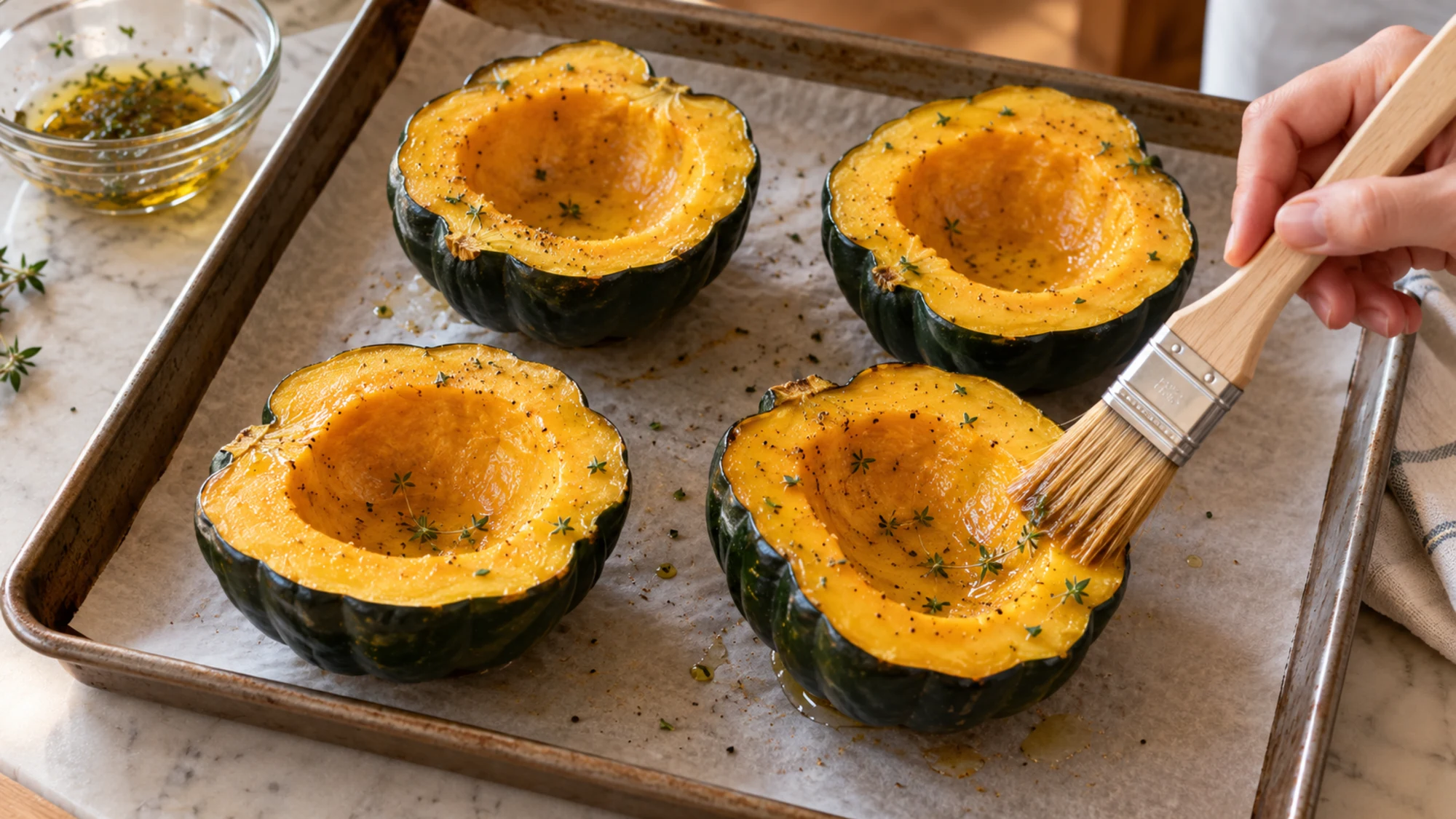
- Set the halves cut-side up on the baking sheet. If a half rocks, trim only a thin sliver from its underside to make a stable base without cutting through the cavity. Brush the exposed flesh with olive oil.
- Roast for 30 minutes. Meanwhile, stir the melted butter, maple syrup, fresh thyme, salt and pepper together.
- Carefully remove the pan. Divide the maple-butter mixture among the four cavities and brush some over the exposed flesh. Return to the oven.
- Roast another 15–30 minutes, brushing the pooled butter over the flesh once during this final period. The squash is ready when a knife slides into the thickest flesh with little resistance. Remove tender halves before the others if needed.
- Spoon the remaining maple butter over the flesh and serve warm.
Nutrition
Video
Notes
Tried this recipe?
Let us know how it turned out!Hi, I’m Laura, the voice behind Tastiva. I’ve always believed that eating well should feel enjoyable, comforting, and realistic—not like another complicated rule to follow. I love creating recipes that fit into everyday life, sharing simple nutrition ideas, and finding small ways to make meals feel a little better without losing the pleasure of good food.