
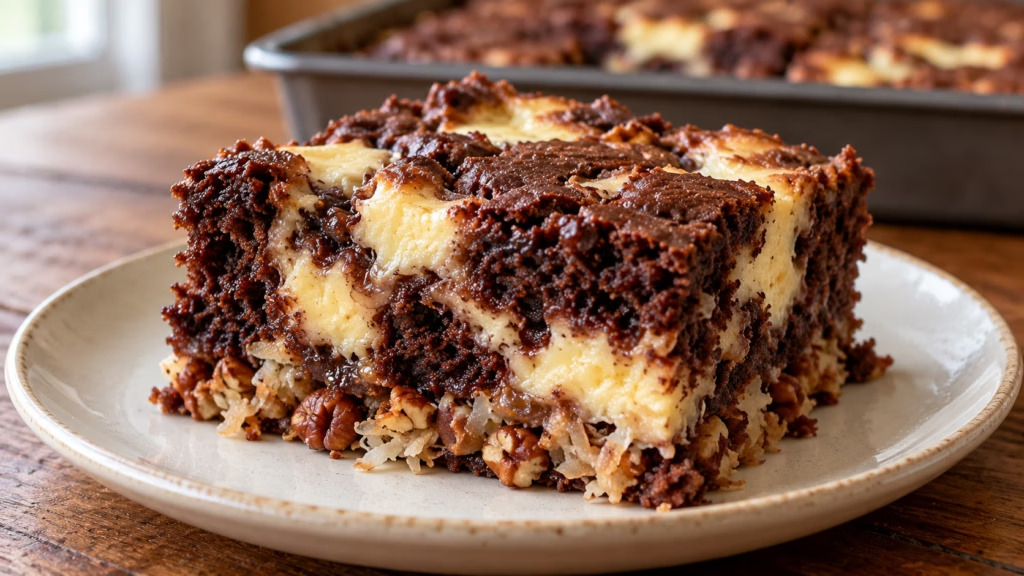
A cake comes out of the oven with a cracked, uneven top, and usually that calls for frosting. Earthquake cake takes the opposite approach: those cream-cheese pockets and chocolate ridges are the whole point. Underneath, coconut and chopped pecans give the soft cake a chewy, nutty base.
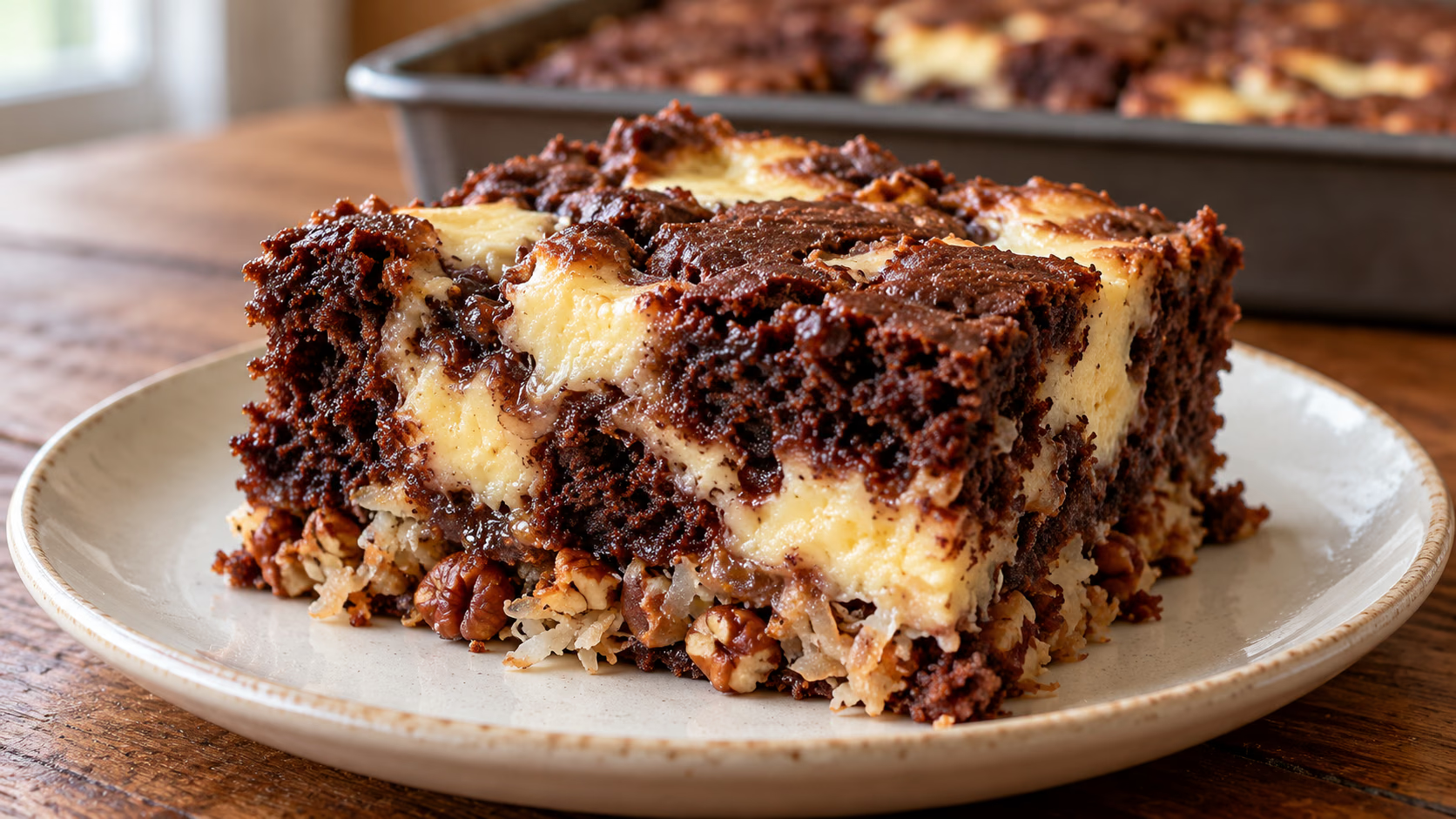
Keep the cream cheese in distinct pockets, not a perfectly blended swirl. This cake is meant to look a little unruly.
Earthquake cake starts with three different textures
Think of this as a chocolate sheet cake with its extras baked inside, rather than a layer cake waiting for frosting. The cake batter rises around a sweet cream-cheese mixture, while coconut and pecans sit underneath.
The ingredient proportions here follow Tammy Nichols of Collard Valley Cooks, with a specific cake-mix size and measured batter ingredients supplied below. I like the contrast enough to leave out the optional chocolate chips: there is already plenty happening between the tender cake, creamy filling and nutty bottom.
- Chocolate layer: German chocolate cake mix provides a milder chocolate base. Check the package size before shopping; boxes from different brands are not necessarily interchangeable.
- Coconut and pecans: Spread these across the pan rather than piling them in the center. Chopped nuts make the base easier to cut than whole halves.
- Cream-cheese pockets: Use a full-fat block, not whipped spread from a tub. Softened butter and cream cheese should blend smoothly before the sugar goes in.
Check the box before mixing
This version specifies a 13.25-ounce Betty Crocker German chocolate mix, with the water, oil and eggs listed on its current package. If your box has different directions, follow that box for the batter additions and expect the baking time and nutrition to change. Do not add our measurements on top of the package quantities.
I would keep the filling fairly simple rather than trying several substitutions at once. Powdered sugar dissolves into the softened dairy mixture; granulated sugar is not an equal-texture replacement. Give the mixer a low-speed start, unless you would like a white cloud hovering over the counter.
| Ingredient choice | Practical difference |
|---|---|
| Sweetened flaked coconut | The soft, sweet base used here. |
| Unsweetened coconut | Less sweet; often drier and a different texture. |
| Pecans replaced with walnuts | A different nut flavor, not a nut-free cake. |
| Tub-style cream cheese | Not the block cheese specified for this filling. |
For a gathering, tell guests that the recipe contains wheat, eggs, milk and pecans, and check all package labels for additional allergens. Removing the nuts alone does not establish allergy safety. If you need a gluten-free or dairy-free dessert, choose a recipe developed for that requirement instead of treating this as a guaranteed conversion.
Stop swirling before the colors blend
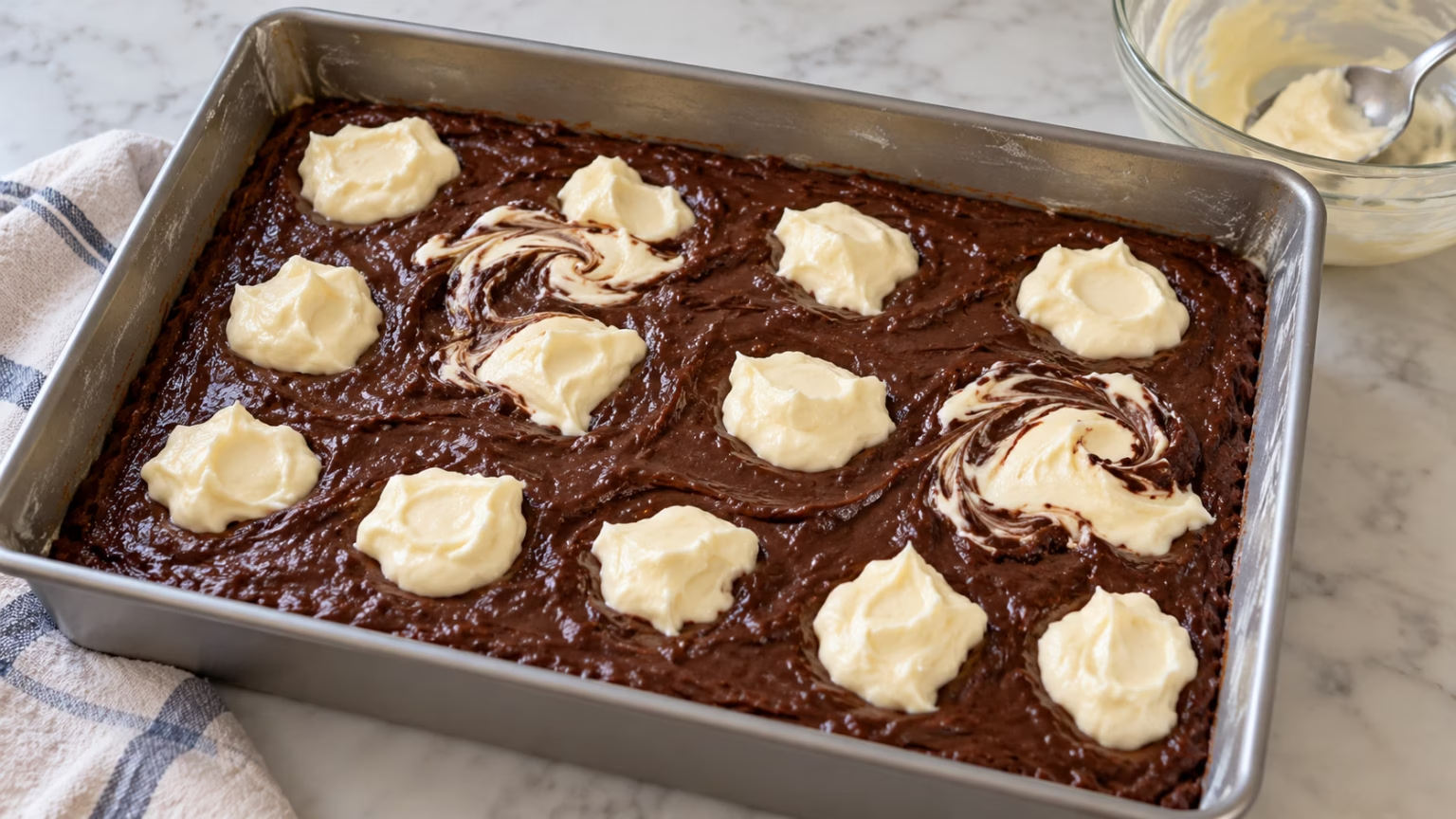
Once the batter covers the coconut and pecans, distribute the filling in spoonfuls across the surface. Draw a butter knife through just the top a few times, leaving obvious pale patches. Stirring all the way down would pull the bottom layer into the batter and blur the contrast you are trying to keep.
- Use the right pan: A 9-by-13-inch metal pan at least 2 inches deep gives this quantity room. Set it on the middle oven rack.
- Start checking early: The card allows 50–60 minutes, but begin looking at 45 minutes. Oven behavior and pan finish can shift the timing.
- Check the chocolate areas: Look for set edges and cake that springs back lightly. A tester in chocolate crumb should not show liquid batter; a creamy streak from a filling pocket is different.
- Protect the surface: If the top is getting dark before the chocolate center sets, tent loosely with foil and continue baking. A dramatic crack is welcome; uncooked batter is not.
Resist using the plain cake-mix baking time as the finish line. The extra filling changes what is in the pan. Let the cake rest before cutting so the hot filling is not running across the plate; a broad spatula helps lift the coconut-and-pecan base along with the cake.
Serve small squares and refrigerate the rest
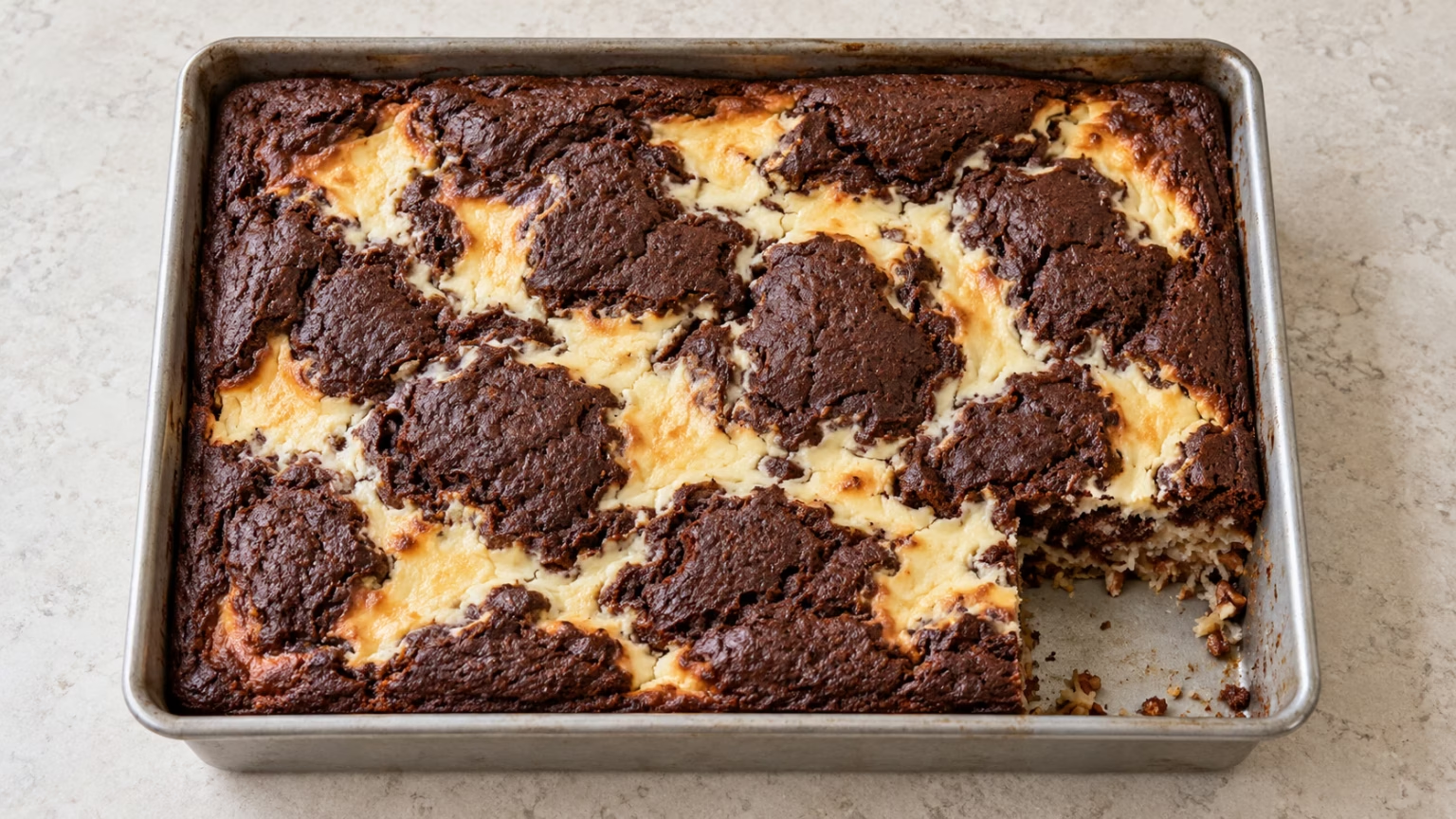
Cut the pan into fifteen portions, three rows by five. I would serve it on its own with coffee or unsweetened tea rather than add frosting. For cleaner pieces, refrigerate after the initial cooling period and cut the chilled cake with a knife wiped between slices; for a softer serving, enjoy a portion after its 30-minute rest.
- Cool promptly: After that initial rest, portion leftovers into shallow containers. Refrigerate within two hours of baking, or one hour if the room is above 90°F (32°C). Do not wait all evening for the entire pan to feel cold.
- Keep it cold: Store covered at 40°F (4°C) or below and use within three to four days, following USDA leftover guidance.
- Plan ahead: Make it the day before and refrigerate it. Put out only the portions you expect to serve, keeping the remaining cake chilled.
The card’s nutrition is an ingredient-label estimate for one fifteenth of the pan, without toppings. Different mix brands, coconut measurements and portion sizes change those numbers. If you would rather make a fruit-centered dessert, Tastiva’s apple crumble with an oat topping takes a different direction without needing a decorated finish.
Earthquake Cake Recipe

Ingredients
- 1 1/2 cups sweetened flaked coconut 180 g; loosely filled cups
- 1 cup chopped pecans 109 g
- baking spray for the pan
- 1 box Betty Crocker German chocolate cake mix 13.25 oz / 375 g; see package note
- 1 cup water 240 ml
- 1/2 cup vegetable oil 120 ml
- 3 large eggs
- 8 ounces full-fat block cream cheese 227 g, softened
- 1/2 cup salted butter 113 g, softened
- 2 cups powdered sugar 240 g, spooned and leveled
Equipment
- 1 9-by-13-inch metal baking pan at least 2 inches deep
- 2 Mixing bowls
- 1 electric hand mixer
- 1 Butter knife for light swirling
- 1 Wire cooling rack
Instructions
- Heat the oven to 350°F (175°C), with a rack in the middle. Grease a 9-by-13-inch metal baking pan at least 2 inches deep. Distribute coconut across the bottom, then scatter pecans evenly over it.
- Beat the softened cream cheese and butter until smooth. Add the powdered sugar gradually at low speed, then beat just until creamy. Set aside.
- In a separate bowl, mix the specified cake mix with water, oil and eggs at medium speed for 2 minutes, following the current package. Pour the batter over the coconut and nuts without stirring the base.
- Drop tablespoon-size spoonfuls of filling across the batter. Pass a butter knife through the top a few times, keeping distinct pale patches and leaving the bottom layer undisturbed.
- Bake for about 50–60 minutes, starting checks at 45 minutes. The edges should be set, and the chocolate areas should spring back lightly. A tester in chocolate cake should show moist crumbs, not liquid batter; filling pockets can leave creamy streaks. If the top darkens early, tent loosely with foil and continue until the cake is baked through.
- Rest the pan on a rack for 30 minutes. Cut into 15 squares and serve, or move portions to shallow containers and refrigerate promptly. Refrigerate within 2 hours of baking, or 1 hour above 90°F (32°C). Keep covered at 40°F (4°C) or below for 3–4 days.
Nutrition
Video
Notes
Tried this recipe?
Let us know how it turned out!Sources
- Collard Valley Cooks: earthquake cake formula
- Betty Crocker: mix directions and nutrition
- Domino: powdered sugar substitutions
- USDA: cooling and leftover storage
Hi, I’m Laura, the voice behind Tastiva. I’ve always believed that eating well should feel enjoyable, comforting, and realistic—not like another complicated rule to follow. I love creating recipes that fit into everyday life, sharing simple nutrition ideas, and finding small ways to make meals feel a little better without losing the pleasure of good food.