
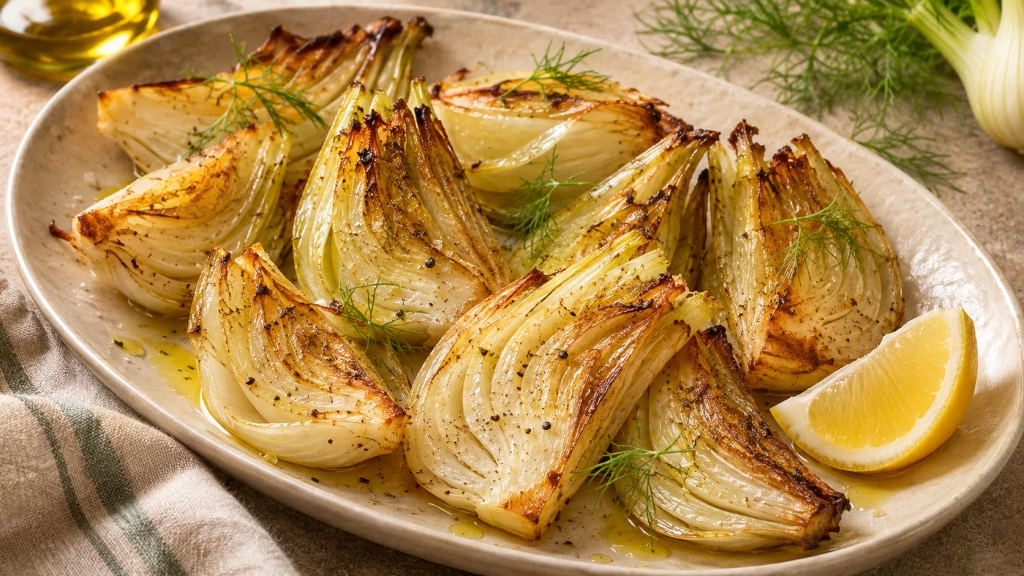
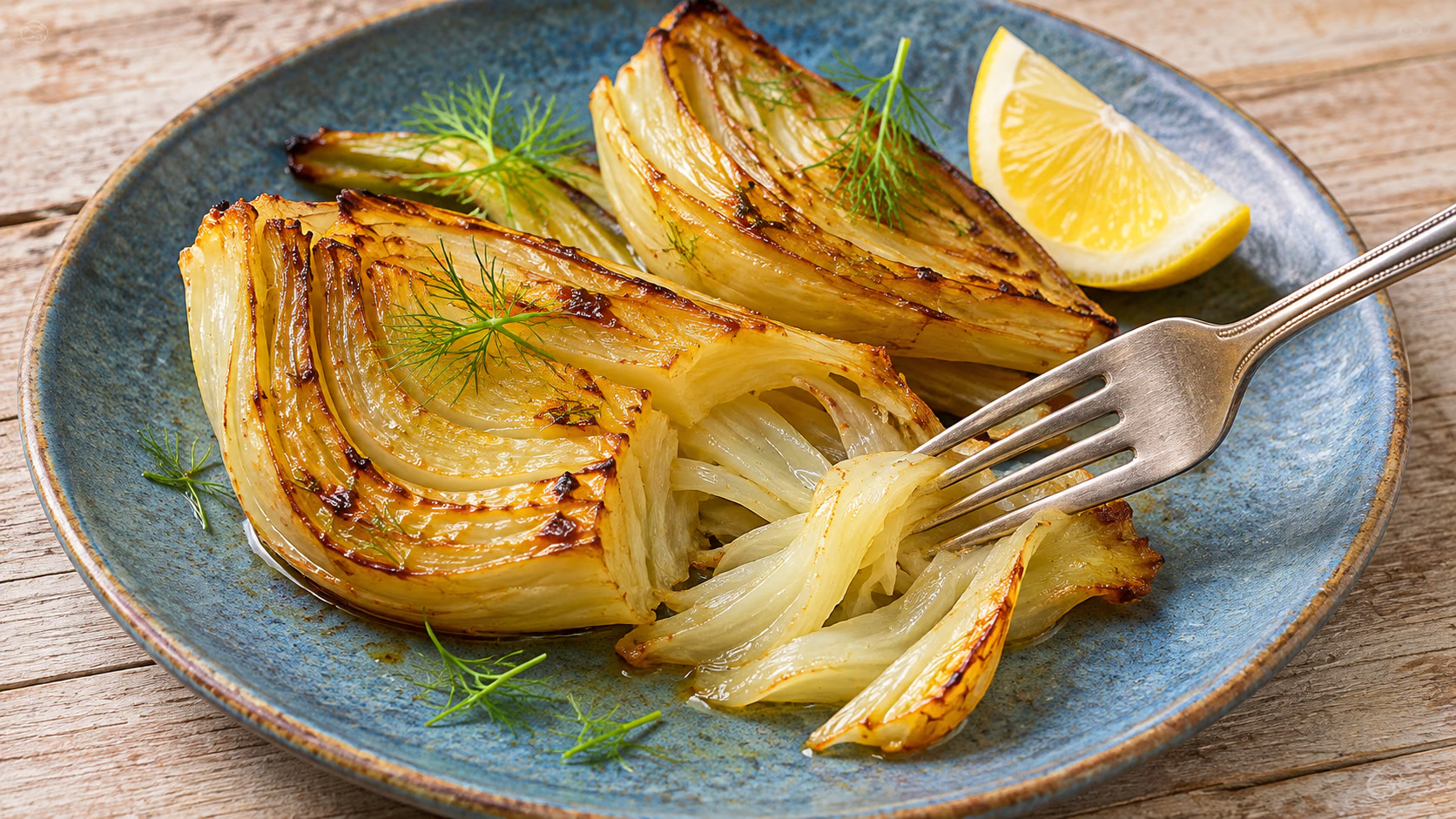
A fennel bulb can look like a small kitchen puzzle: stalks on top, feathery leaves, and a tightly layered base. Roasted fennel keeps the answer simple. Cut that bulb into wedges, give them room on a hot pan, and let the oven soften the centers while the cut edges turn golden.
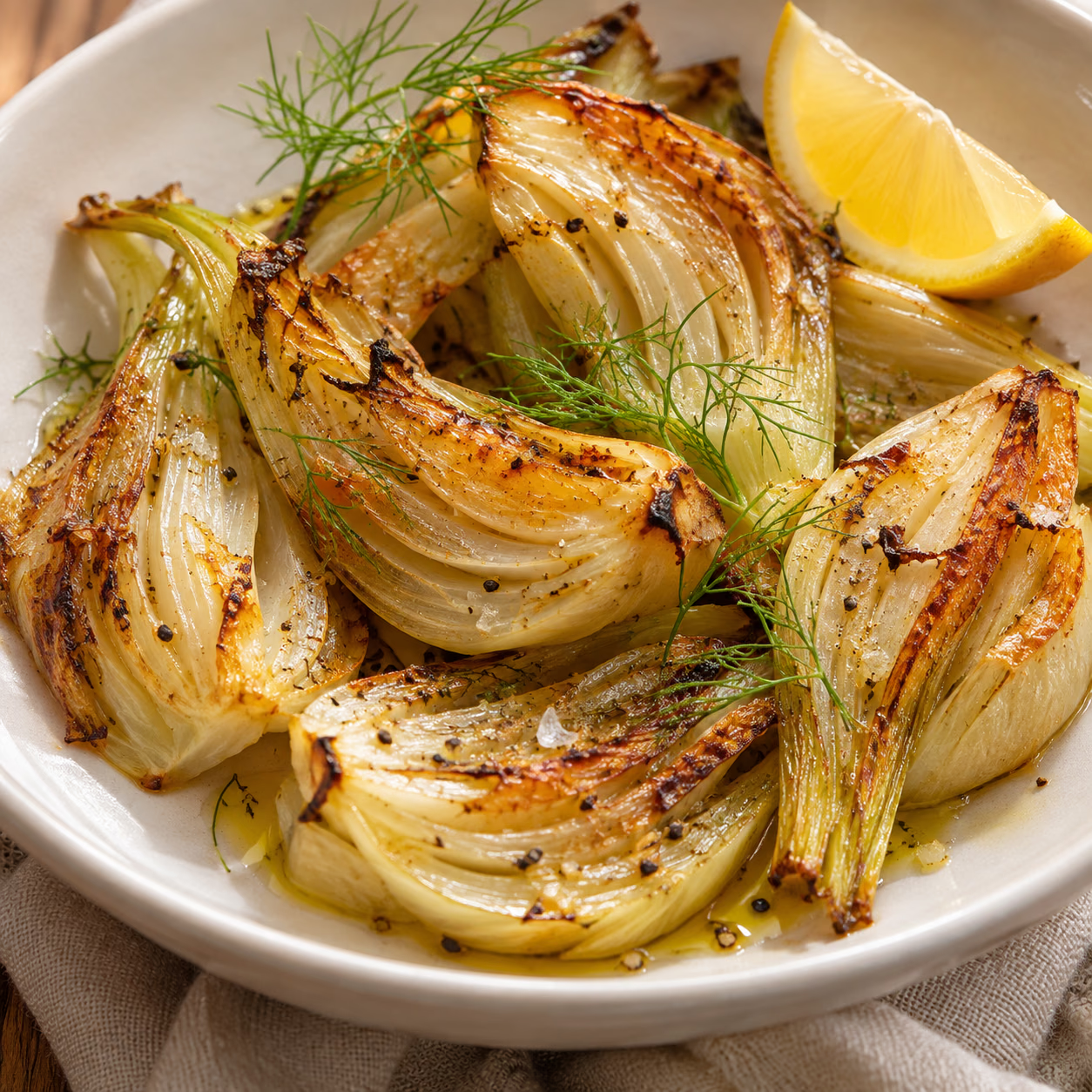
Keep a little core attached so the wedges hold together. The useful finish line is a tender center and browned edges, not merely an empty timer.
The anise note becomes gentler as the fennel cooks, while a squeeze of lemon keeps the finished side from tasting flat. I prefer that clean finish to a heavy sauce here. It leaves the vegetable recognizable and works with several different dinners, without asking you to make a second recipe just to season the first.
Serving suggestions for roasted fennel
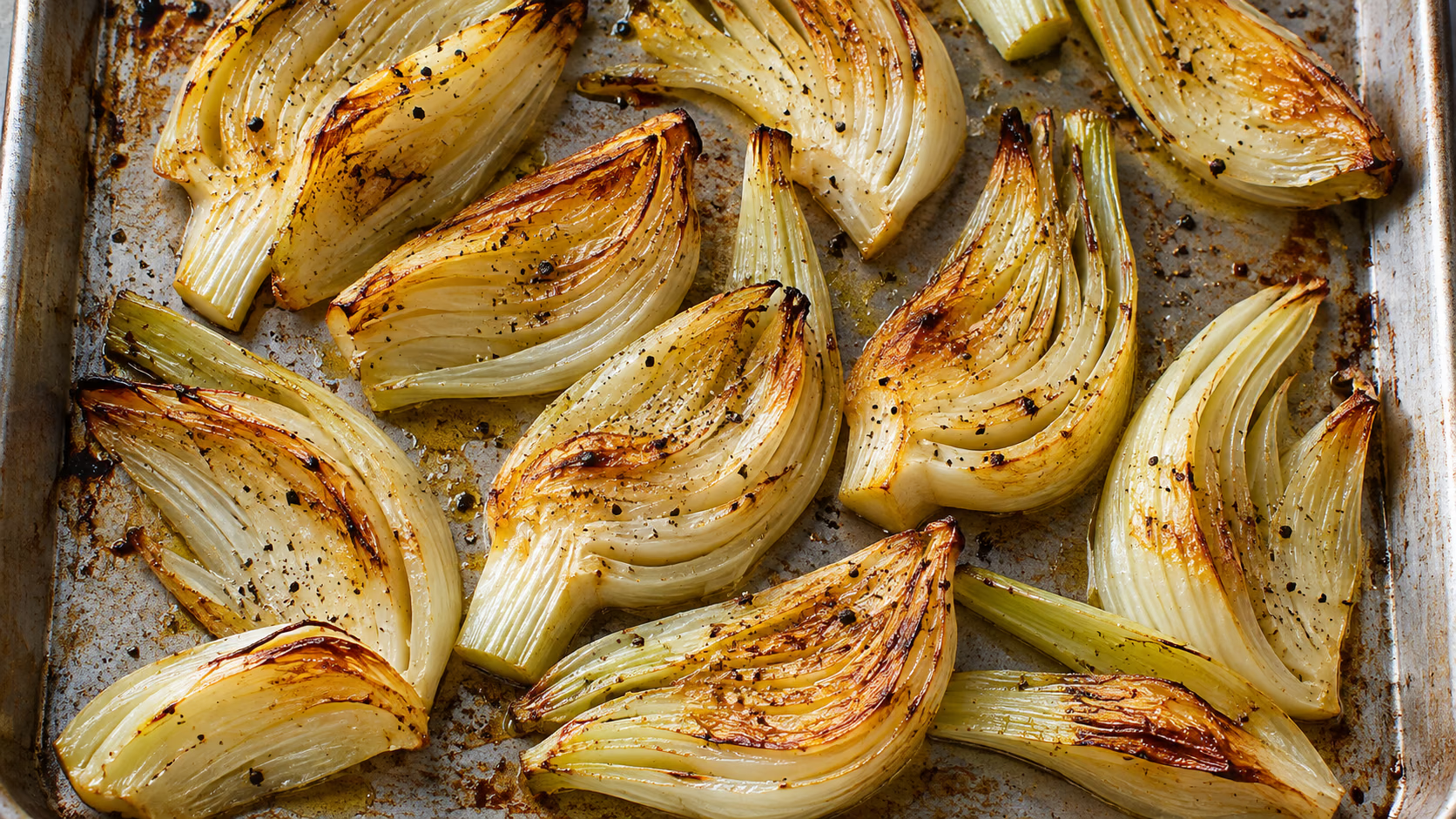
Serve the wedges warm, with the browned sides facing up rather than buried under a topping. They make a useful partner for simply cooked fish, chicken, or a bowl of beans. If the main dish already has a bright sauce, taste the fennel before adding extra lemon at the table.
For a more substantial plate, pair them with couscous with peas or spoon them beside white bean dip. The first adds a soft grain base; the second gives the fennel something creamy to sit against. Keep the serving pieces large enough to show those layered centers.
| Serving idea | What it adds | Small adjustment |
|---|---|---|
| Fish or chicken | A vegetable side with gentle sweetness | Keep the lemon finish light if the main has sauce |
| Beans and toast | A creamy and crisp contrast | Cut the wedges smaller after roasting |
| Cooked grains | A bowl-friendly base | Add the fennel last to preserve its shape |
Let the main dish decide the extras. The fennel does not need a crowded topping to earn its place on the plate.
Roasted fennel variations
Treat the basic pan as a starting point, but change one flavor direction at a time. I would try the lemon version first because it makes the sweet vegetable and its browned edges easy to notice. Adding everything in the spice drawer would rather miss the point.
- Herby: scatter chopped parsley over the cooked wedges instead of fennel fronds. Add tender herbs after roasting so they stay fresh.
- Cheesy: finish with a little finely grated Parmesan. That adds salt as well as savoriness, so taste before adjusting the seasoning.
- Gently spicy: add a small pinch of red pepper flakes to the oil. Keep the heat in the background rather than covering the fennel’s flavor.
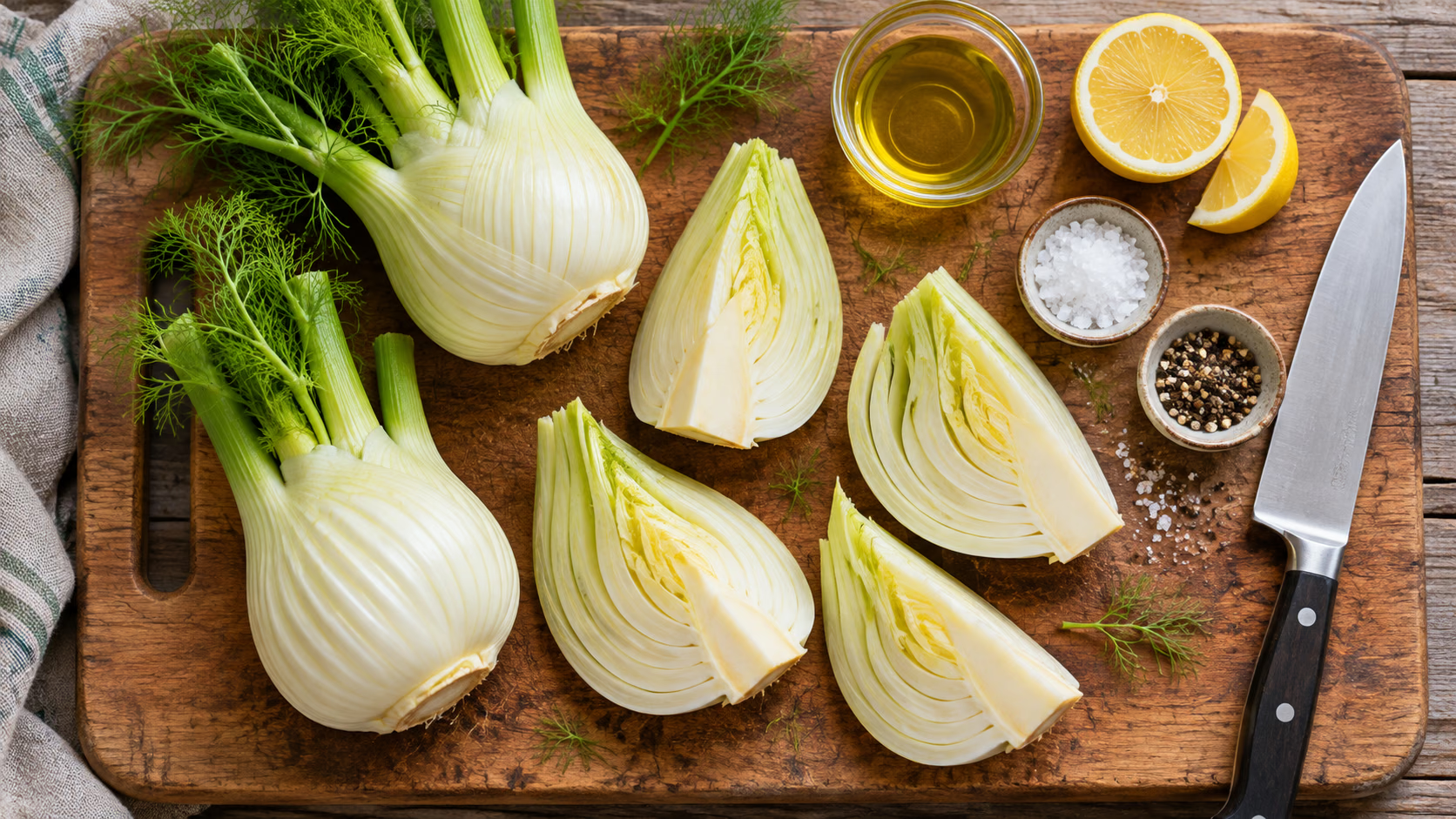
Size matters more than matching every wedge perfectly. A very thin piece can darken before a thick one softens, so separate unusually small pieces and check them early. Leave enough of the core to hold the layers, but trim away any tough, dry base. A crowded pan makes browning harder; use a second pan rather than stacking the pieces.
Change the finish, not the basic goal: evenly cut wedges, space on the pan, and a center that yields easily to a knife.
Health benefits in context
Fennel contributes fiber and potassium, while olive oil adds fat and helps coat the cut surfaces. The USDA vegetable nutrient tables describe the raw ingredients; the card gives an estimated amount for a portion of this prepared recipe. Neither is a reason to treat one side dish as a complete meal.
Pair the vegetables with a protein source and whatever starch or grain suits your appetite. The olive oil is part of the recipe, not an invisible cooking aid, so it is included in the estimate. Cheese, extra oil, and other optional toppings change that estimate. No single vegetable needs to promise a dramatic health result to be worth cooking.
The practical benefit is another enjoyable way to put vegetables on the table. Keep the portion, toppings, and rest of the meal in view.
Bottom Line
Roasted fennel is a good choice when you want a vegetable side with very little stovetop attention. Watch for tender layers, give the wedges enough room, and save the lemon for the finish. Those small choices do more useful work than a long ingredient list.
Serve it while the edges still have their just-roasted character, and keep any leftover portion covered in the refrigerator rather than leaving the platter out.
For leftovers, follow safe cooling and storage guidance: refrigerate within two hours, or one hour above 90°F, and use within three to four days. Reheat only the portion you need rather than repeatedly warming the whole batch.
Roasted Fennel Recipe

Ingredients
- 600 g trimmed fennel bulbs about 2 large bulbs; reserve a few fronds
- 2 tablespoons olive oil
- 1/2 teaspoon fine salt
- 1/4 teaspoon black pepper
- 1 tablespoon fresh lemon juice plus optional lemon wedges for serving
Equipment
- Rimmed sheet pan
- Chef’s knife
- Cutting board
- large mixing bowl
Instructions
- Heat the oven to 425°F (220°C). Trim away the stalks and any damaged outer layers. Halve the fennel lengthwise, keeping a little core intact, then cut into wedges about 3/4 inch thick.
- Toss the wedges gently with the olive oil, salt and pepper. Spread on a rimmed sheet pan in one layer with a cut side down and space between the pieces.
- Roast for 20 minutes, turn carefully, then roast for another 10–15 minutes. The edges should be golden and a thin knife should enter the thickest portion easily. Give firm pieces a few more minutes, watching that the thin edges do not burn.
- Transfer to a serving dish and sprinkle with the lemon juice and a few reserved fronds. Serve warm. Refrigerate leftovers promptly in a covered container and use within 3–4 days.
Nutrition
Video
Notes
Tried this recipe?
Let us know how it turned out!Hi, I’m Laura, the voice behind Tastiva. I’ve always believed that eating well should feel enjoyable, comforting, and realistic—not like another complicated rule to follow. I love creating recipes that fit into everyday life, sharing simple nutrition ideas, and finding small ways to make meals feel a little better without losing the pleasure of good food.