
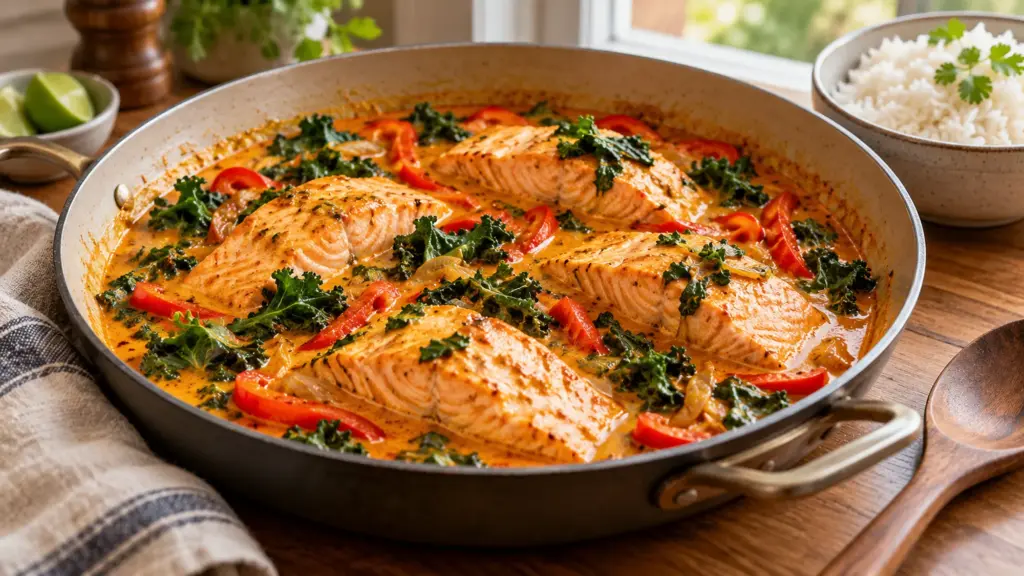
When a salmon fillet needs more than a squeeze of lemon, a pan of coconut curry offers a different direction. The fish stays in generous pieces, the peppers soften into the sauce, and dark-green kale gives each bowl something to chew besides rice.
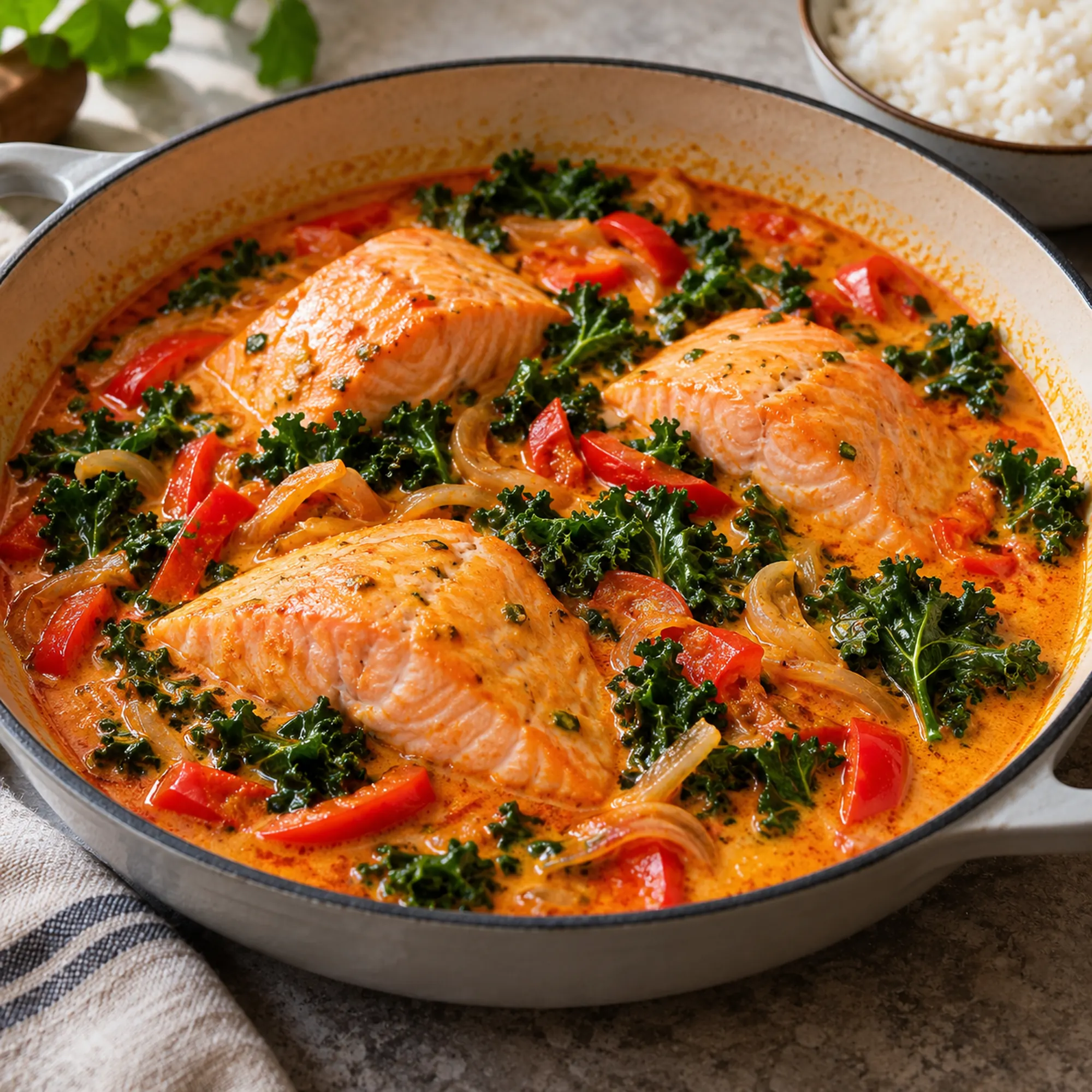
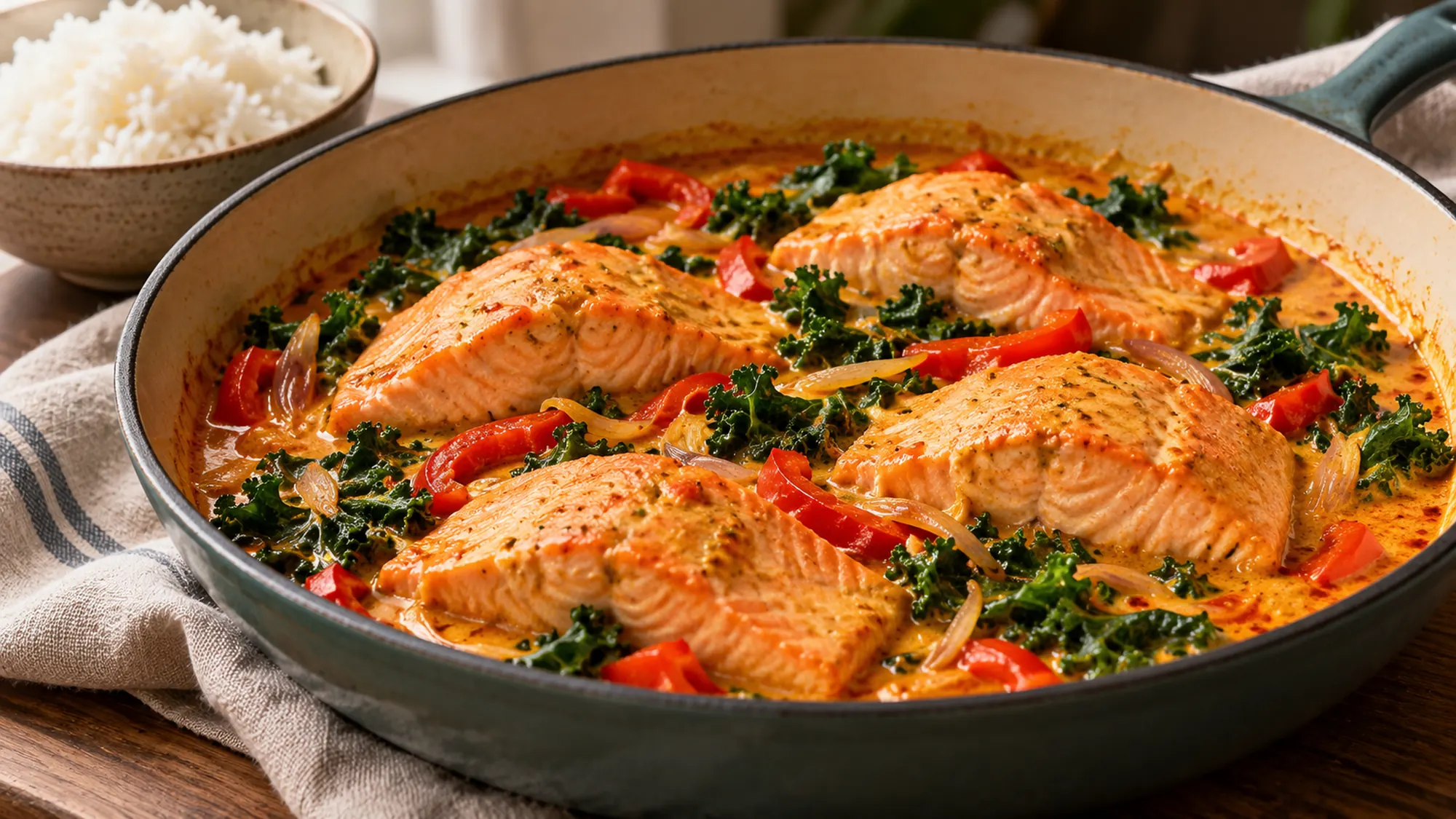
This salmon curry gently cooks the fish in a fragrant red-curry coconut sauce. Build the sauce first, then add the salmon near the end so it stays tender rather than simmering through the entire meal.
It is adapted from Minimalist Baker’s one-pan red curry, with Atlantic salmon and measured amounts for four portions. I like the contrast between the rich fish and the lighter coconut sauce; it feels complete without a separate pan for searing.
Serving Salmon Curry
Use a shallow bowl so the sauce surrounds the fillet without hiding it. Add rice separately if you want it, or spoon the fish and vegetables over a modest mound. The recipe’s nutrition estimate covers the salmon, sauce and vegetables, not an additional rice portion.
Have the bowls and sides ready before the fish goes into the pan. Salmon does not benefit from waiting in hot sauce while you finish chopping a salad. Lift each portion gently with a broad spatula, then divide the peppers, kale and sauce around it.
- For a classic bowl: serve with plain cooked rice to catch the sauce.
- For fresh contrast: add cucumber on the side rather than another creamy accompaniment.
- For a brighter finish: offer optional lime wedges and cilantro at the table.
| Ingredient choice | Result | What to watch |
|---|---|---|
| Light coconut milk | Looser, lighter sauce | Do not expect cream-like thickness |
| Full-fat coconut milk | Richer sauce | Changes the nutrition estimate |
| More curry paste | Stronger flavor and heat | Salt and chile strength vary |
Finish the sides first, then serve the salmon as soon as it is cooked.
Salmon Curry Variations
Red curry paste is not a standardized measure of heat. One brand can be much stronger or saltier than another, so start with less if you are unsure. The measured amount here is below a strict doubling of the source recipe; you can add more before the fish enters the pan.
I would change the greens before replacing the salmon with a completely different protein. Spinach wilts faster than kale and needs less time. Chicken, by contrast, would require a different cooking sequence and safety check rather than a simple minute-for-minute swap.
- Less chile: reduce serrano and chili-garlic sauce, then taste the cooked sauce.
- Different greens: use tender spinach near the end, removing tough stems from either green.
- Tamari instead of coconut aminos: the source permits it, but the flavor, salt and allergen profile change.
- Skin-on salmon: remove the skin before serving if you prefer; this gentle method will not make it crisp.
Treat paste, greens and fish thickness as variables instead of trusting one fixed timer.
Nutrition and Safe Cooking
Salmon supplies protein, and the peppers and kale contribute vegetables to the same pan. Coconut milk and oil also add fat, while curry paste and coconut aminos contribute sodium. A colorful bowl is appealing, but it is not a reason to promise a particular health outcome.
The ingredient-based estimate uses Atlantic salmon, light coconut milk and the full measured sauce. Product labels differ, and small-serving label values can be rounded. Optional rice, lime and herbs are outside the calculation, so add them separately if you track a complete meal.
- Cook the center: follow fish temperature guidance and reach 145°F (63°C) in the thickest part.
- Check paste ingredients: some curry pastes contain shrimp or fish ingredients; do not assume they share the same allergens.
- Keep raw fish separate: use clean utensils for serving and refrigerate leftovers promptly.
- Reheat gently but thoroughly: leftovers should reach 165°F (74°C), though the fish may become firmer.
Use the actual labels and portion size as your guide, with safe cooking as the nonnegotiable part.
Bottom Line
Salmon curry is at its best when the sauce is ready before the fish needs it. Give the aromatics time, let the peppers soften, and keep the final simmer gentle. The reward is a bowl with distinct pieces of salmon, not a sauce full of shredded fish.
A short, gentle finish keeps the salmon tender while the coconut curry does the flavor work.
Salmon Curry Recipe

Ingredients
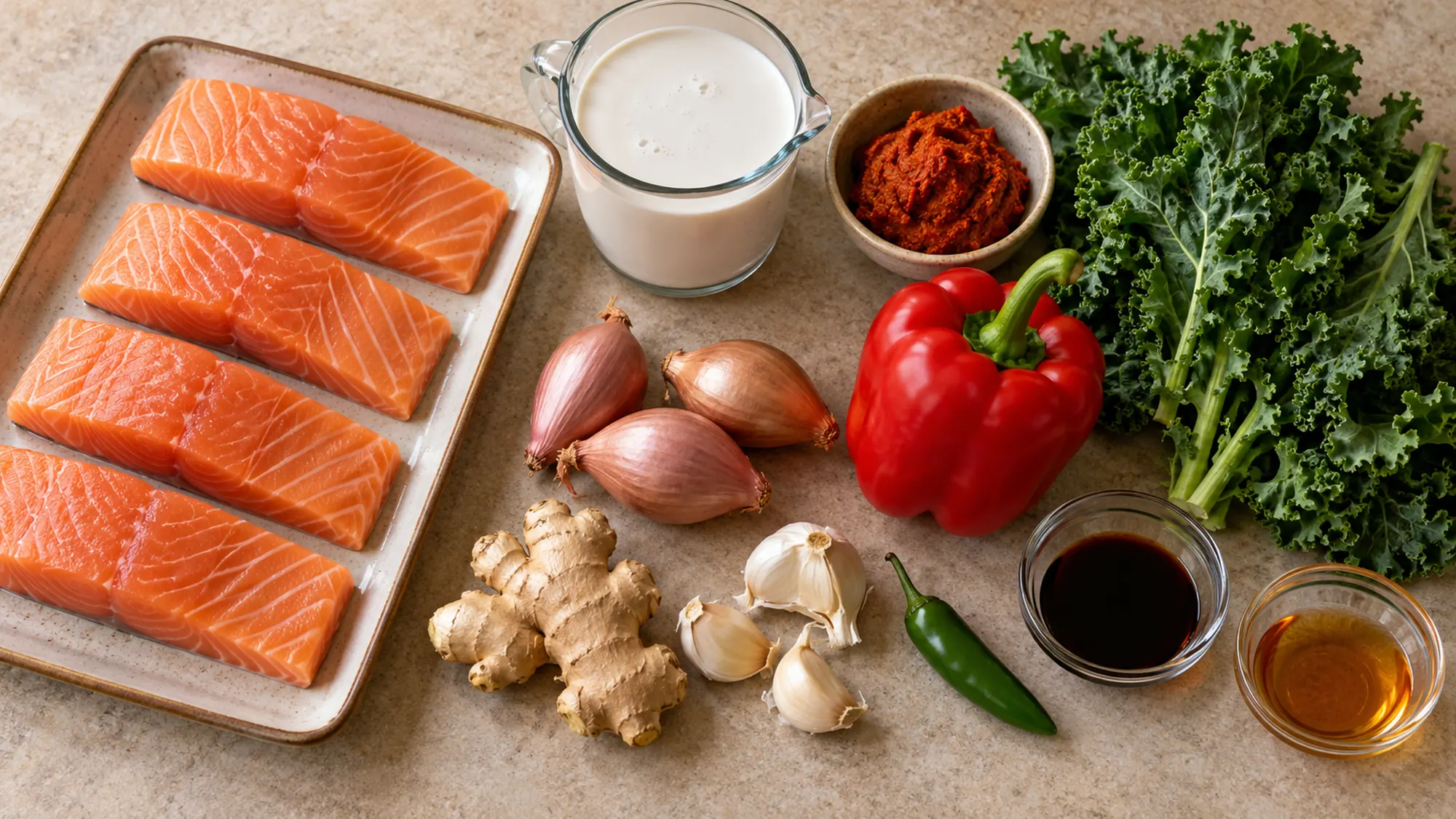
- 600 g skinless Atlantic salmon 4 fillets
- 2 g fine salt
- 30 ml coconut aminos 10 ml marinade, 20 ml sauce
- 10 g chili garlic sauce
- 30 ml avocado oil
- 160 g shallots thinly sliced
- 24 g fresh ginger minced
- 10 g serrano pepper finely chopped
- 12 g garlic minced
- 100 g Thai red curry paste use less if your paste is very hot
- 300 g red bell pepper bite-size pieces
- 800 ml light coconut milk
- 20 g pure maple syrup
- 120 g kale stems removed, leaves chopped
- rice, cilantro and lime wedges optional, excluded from estimates
Equipment
- 1 Large deep skillet with lid
- 1 Instant-read thermometer
Instructions
- Season salmon with half the salt, 10 ml coconut aminos and chili garlic sauce. Keep chilled while preparing vegetables.
- Warm avocado oil in a wide deep skillet. Soften shallots, ginger and serrano for 3–4 minutes. Add garlic for 1 minute, then curry paste for 2 minutes, stirring.
- Add red pepper and remaining salt; cook 2–3 minutes. Stir in light coconut milk, remaining coconut aminos and maple syrup. Bring to a gentle simmer for 2 minutes.
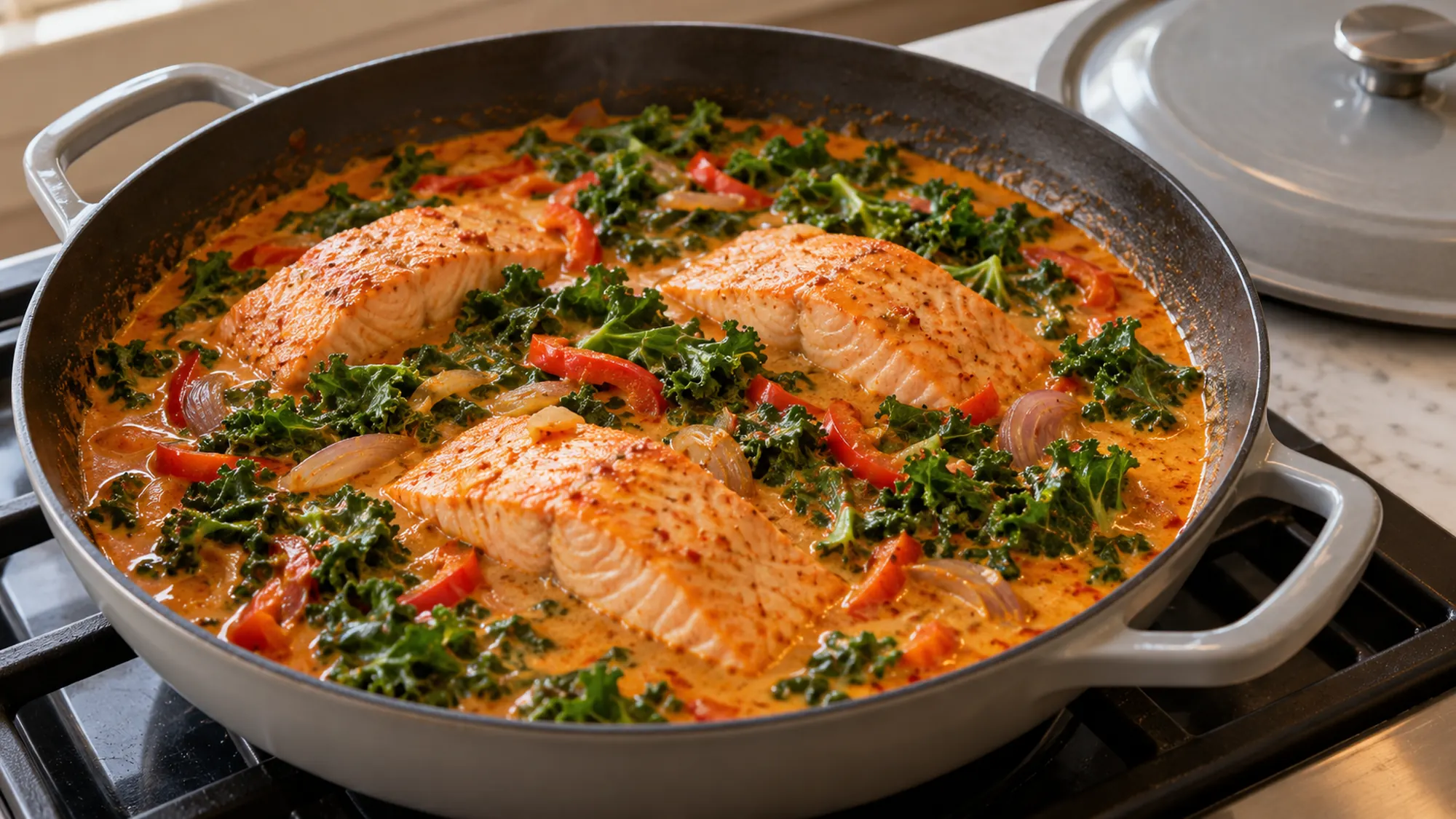
- Nestle salmon into the sauce, cover and cook gently until it reaches 145°F (63°C), roughly 5–10 minutes depending on thickness. Add kale for the final 2 minutes, covering until wilted.
- Serve one fillet with sauce and vegetables per portion. This larger version uses Atlantic salmon rather than the source’s sockeye. Rice and optional herbs or lime are excluded from estimates.
Nutrition
Video
Notes
Tried this recipe?
Let us know how it turned out!Hi, I’m Laura, the voice behind Tastiva. I’ve always believed that eating well should feel enjoyable, comforting, and realistic—not like another complicated rule to follow. I love creating recipes that fit into everyday life, sharing simple nutrition ideas, and finding small ways to make meals feel a little better without losing the pleasure of good food.