
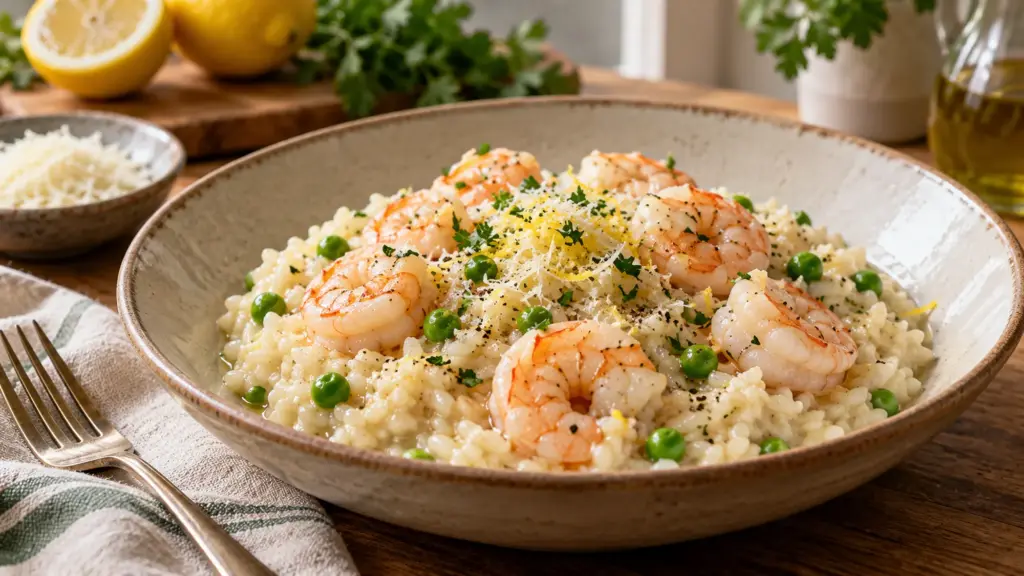
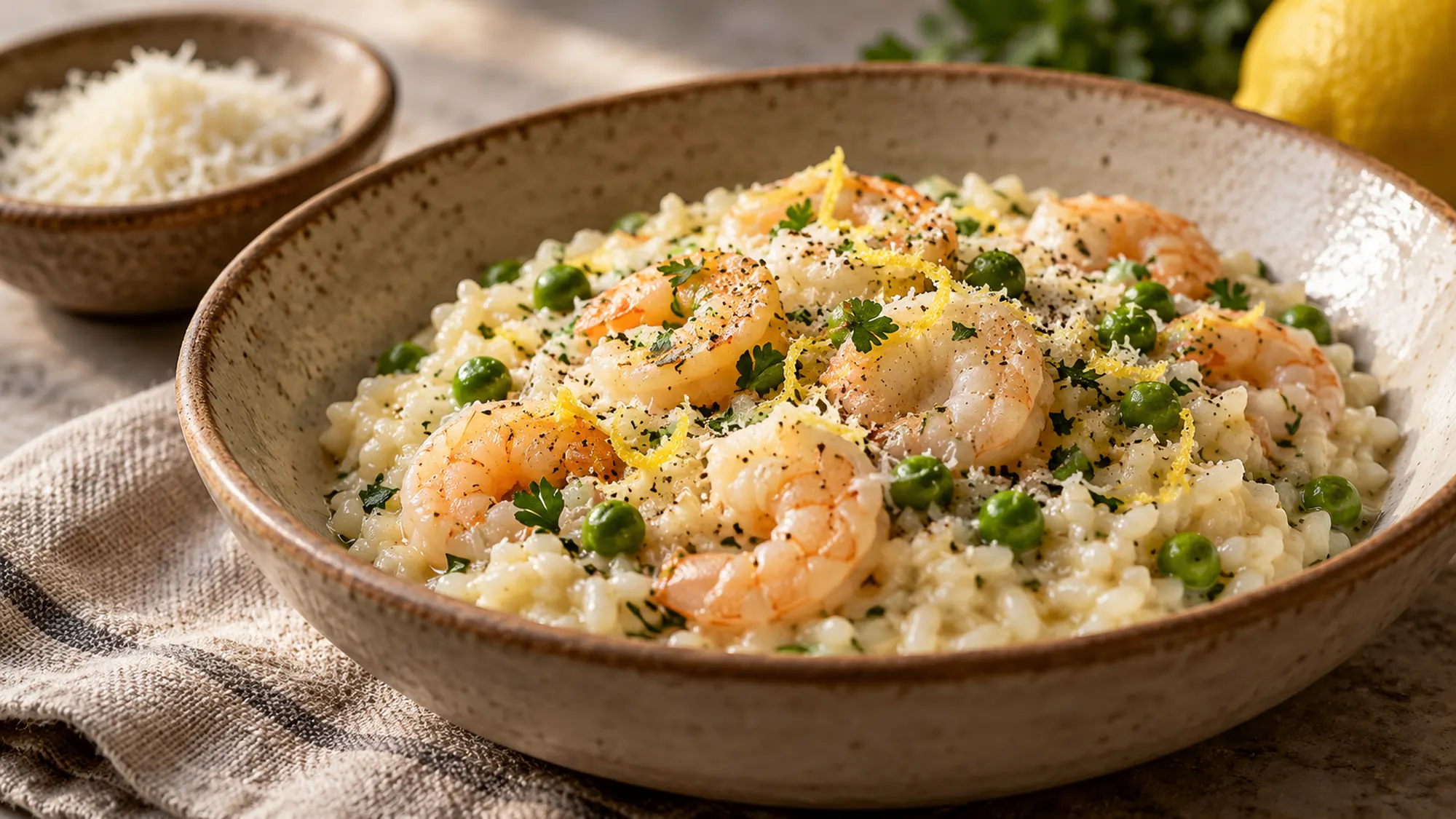
Shrimp risotto is a meal for the evening when standing near the stove feels reasonable, but a complicated dinner does not. The rice gradually becomes creamy, the shrimp turn opaque near the end, and lemon keeps the butter and cheese from feeling too heavy.
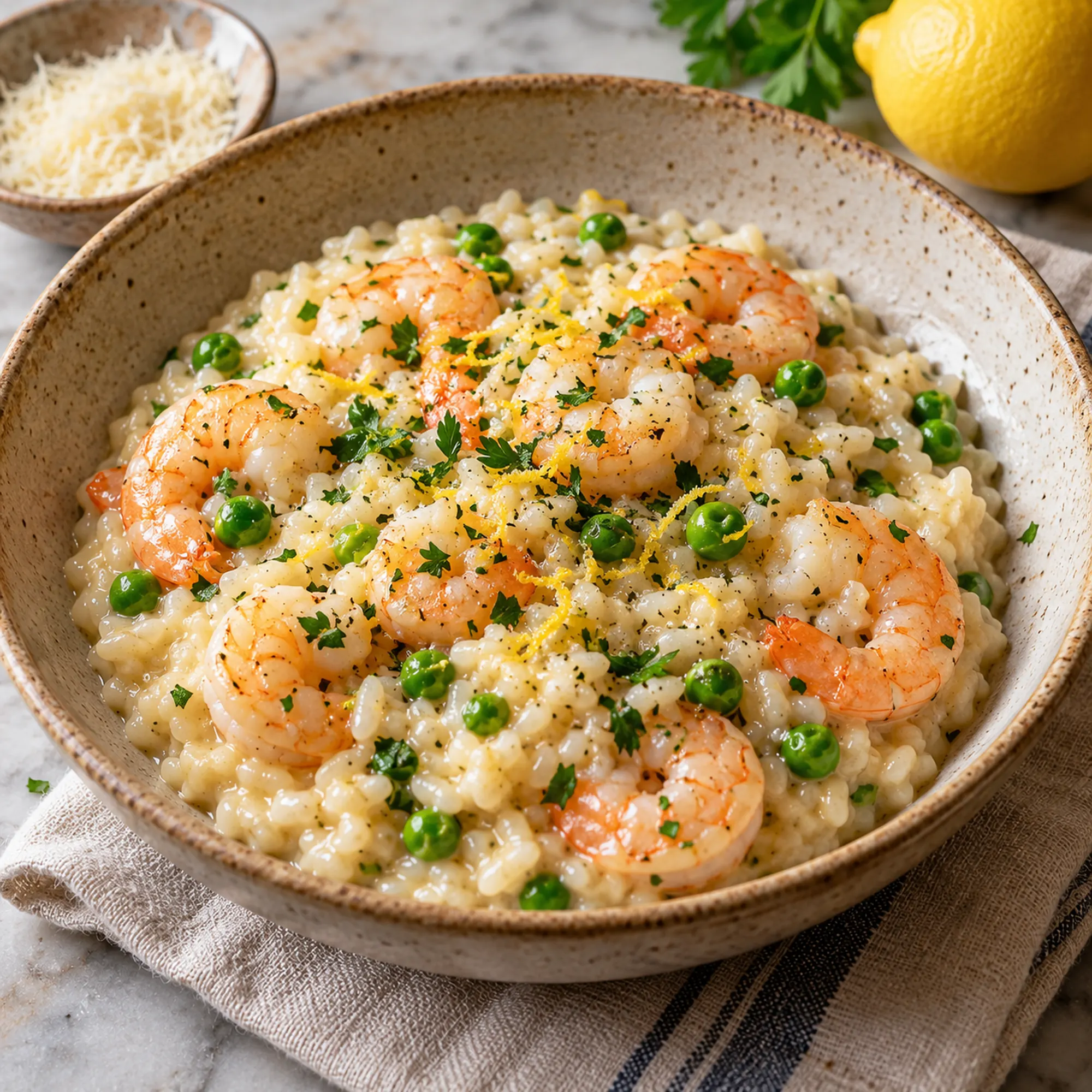
This shrimp risotto gets its creamy texture from gradually cooked Arborio rice, finished with butter and Pecorino. Add the shrimp late so the rice can soften without overcooking the seafood.
The method is adapted from Pasquale Sciarappa’s shrimp risotto, with a measured shrimp weight and less oil. I prefer peeled, tail-off shrimp here because every bite should be easy to eat with a spoon or fork, not an invitation to start peeling.
Serving Shrimp Risotto
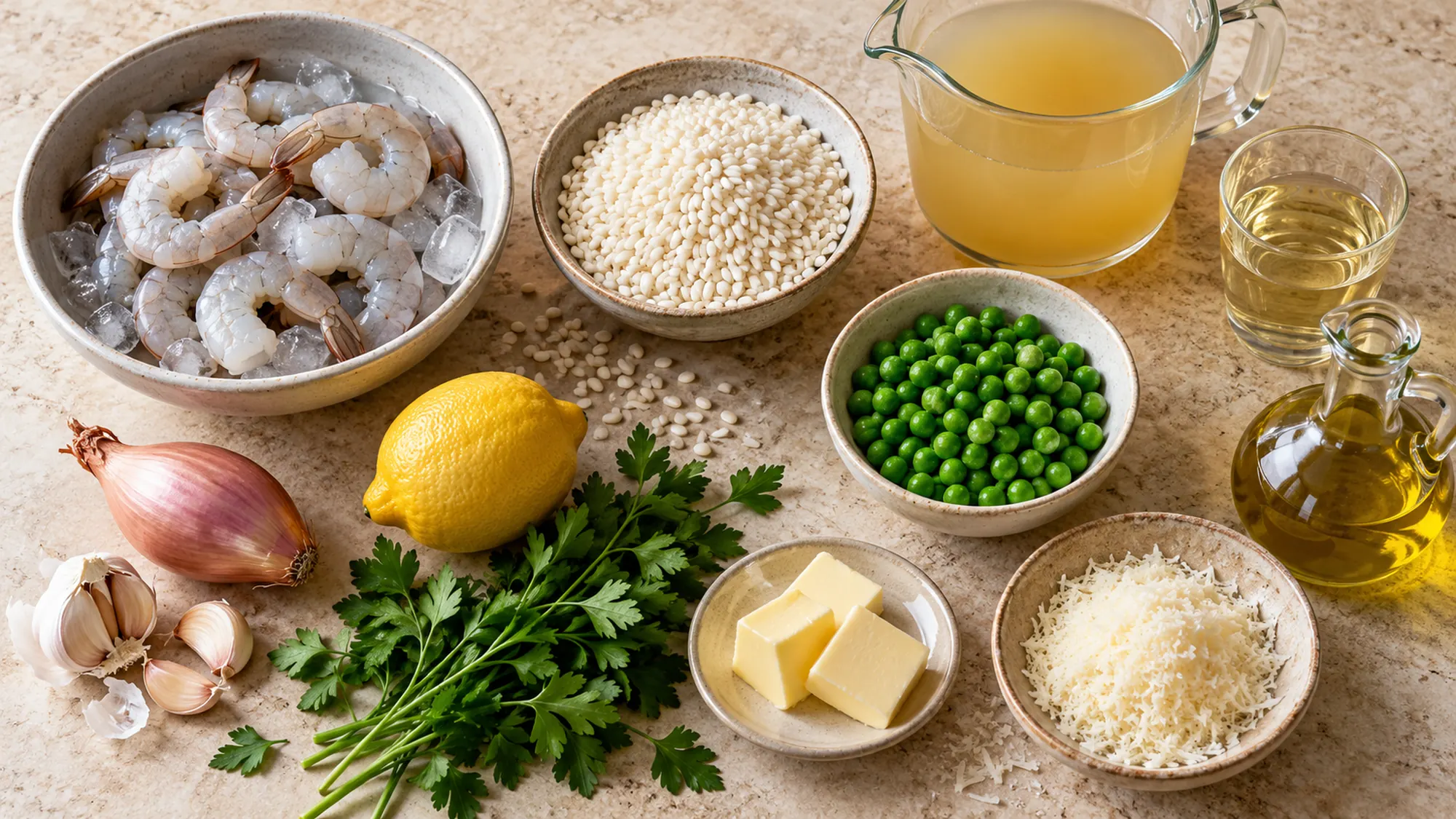
Risotto is happiest when the people eating it are ready before the pot is. Divide it into warm shallow bowls while it is still loose enough to spread slightly. A stiff mound usually needs a little more hot stock or water before serving.
The peas, shrimp and rice already make a substantial main course for four. Add a simple vegetable side if you want more variety, but keep it ready and uncomplicated. A final pinch of parsley and lemon zest is more useful than a heavy blanket of extra cheese.
- Keep a side simple: serve garlic-lemon green beans alongside, using a light hand with extra lemon.
- Use shallow bowls: they make it easier to enjoy rice and shrimp together.
- Serve promptly: rice continues absorbing liquid after the heat is off, so a waiting pot becomes thicker.
| What you notice | What it means | Helpful adjustment |
|---|---|---|
| Hard center | Rice needs more cooking | Add hot liquid and continue |
| Stiff mound | Not enough loose liquid | Stir in a small splash |
| Soupy rice | Too much free liquid | Simmer briefly before finishing |
Aim for rice that flows gently into the bowl, with shrimp that are just cooked through.
Shrimp Risotto Variations
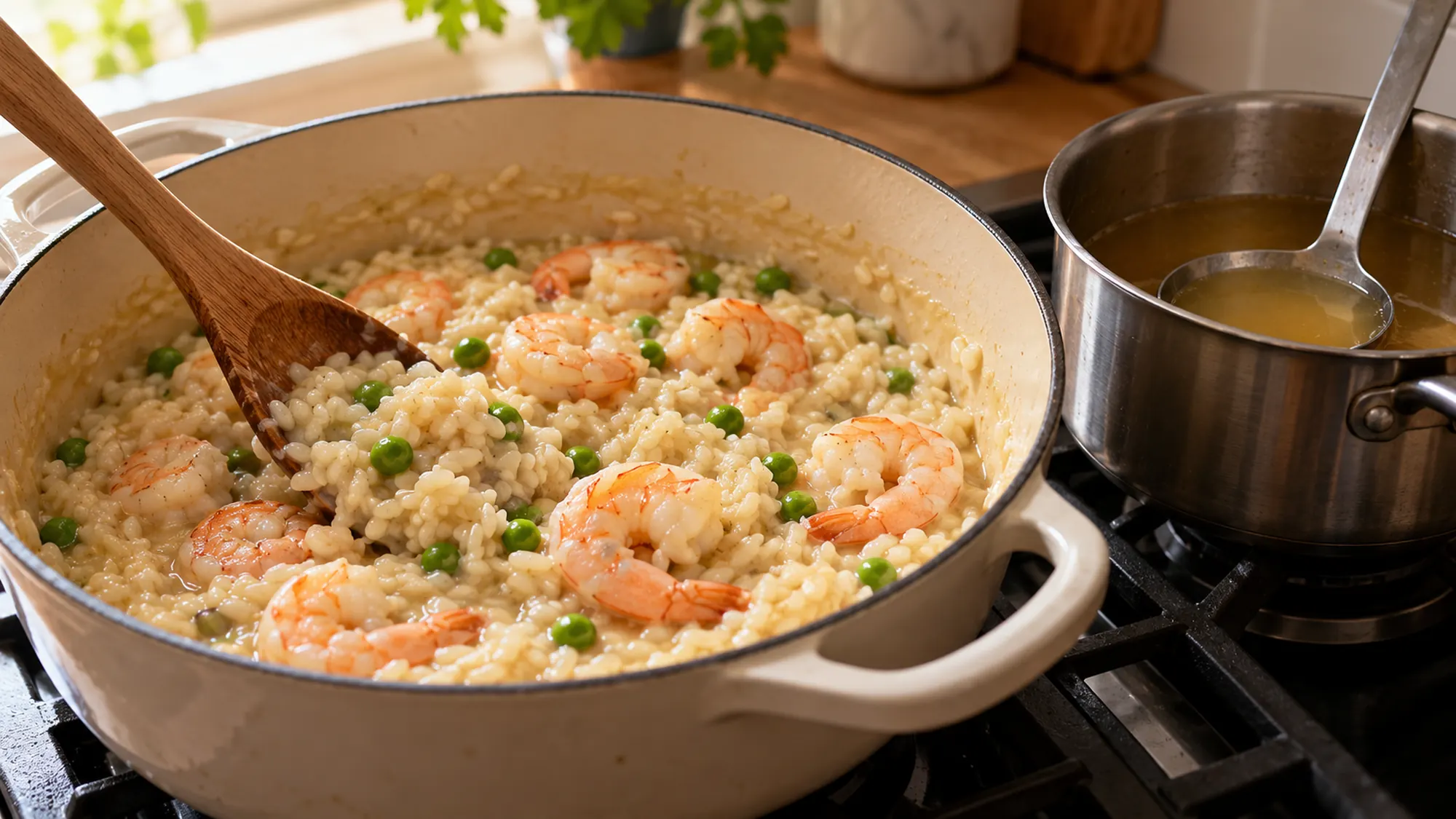
Arborio is a practical choice because it releases starch while keeping some bite. Ordinary long-grain rice will not behave the same way, even if the package shows a similar cooking time. Add hot stock gradually and taste rather than deciding that every brand must finish at the same minute.
I would keep the lemon restrained until the end. You can add brightness easily, but a strongly sour risotto is difficult to undo. The zest contributes aroma, while the juice contributes acidity; they do related but different jobs.
- No wine: replace it with extra stock, then adjust the lemon at the finish.
- Different cheese: the source permits Parmesan instead of Pecorino, with a milder, different saltiness.
- Frozen shrimp: thaw safely and drain well before cooking; their size still controls the final timing.
- Extra vegetables: cooked asparagus pieces can join the peas, but count additions separately if tracking nutrition.
Keep the rice variety and gradual-liquid method consistent, then make smaller changes around them.
Nutrition and Safe Cooking
Shrimp supplies protein, while the rice provides carbohydrate and the butter, oil and cheese add richness. The peas contribute a little vegetable variety, not a full substitute for every other vegetable you might want at dinner. There is no need to call the dish either virtuous or indulgent to enjoy it.
The estimate includes all measured stock, wine, butter and cheese, with a generic dry-rice composition proxy for Arborio. Wine calories are retained conservatively; cooking does not guarantee that all alcohol disappears. Brands and the amount of extra liquid used can change the final result.
- Check the shrimp: they should be opaque throughout; seafood safety guidance is more reliable than color on one surface alone.
- Mind allergens: this recipe contains shellfish and milk.
- Cool rice promptly: refrigerate leftovers in shallow containers rather than leaving the pot at room temperature.
- Reheat with moisture: add a splash of water and heat leftovers to 165°F (74°C), expecting a firmer texture.
Count the whole recipe, not just the shrimp, and handle leftover rice promptly.
Bottom Line
Shrimp risotto asks for attention, not frantic stirring. Keep the stock warm, taste the grains as they soften, and let the shrimp join only when the rice is nearly ready. Butter and cheese finish the texture; they should not have to hide rice that is still hard.
Use the spoon and your taste buds together, then serve while the risotto is still loose and silky.
Shrimp Risotto Recipe

Ingredients
- 300 g Arborio rice
- 450 g raw peeled deveined shrimp tails removed
- 1200 ml unsalted chicken stock kept hot; extra hot water if needed
- 60 g shallot finely diced
- 6 g garlic minced
- 50 g peas fresh or frozen
- 120 ml dry white wine
- 50 g Pecorino Romano finely grated
- 56 g unsalted butter
- 2 g lemon zest
- 30 ml lemon juice
- 30 ml olive oil
- 8 g parsley chopped
- 2 g fine salt
- 0.5 g black pepper
Equipment
- 1 Wide saucepan
- 1 Small stock pot
- 1 ladle
Instructions
- Keep stock hot in a saucepan. In a wide pot, soften shallot in olive oil over medium heat for 2–3 minutes. Add garlic briefly, then rice; stir until the grains are coated.
- Add wine and let it reduce. Add a ladle of hot stock and stir regularly. Continue adding stock as it is absorbed, keeping a gentle simmer rather than letting the rice dry out.
- After about 15 minutes, begin tasting. When rice is nearly tender, add peas, shrimp, lemon zest and juice with more stock. Cook until shrimp are opaque throughout and rice is tender with a slight bite, about 4–6 minutes.
- Off the heat, stir in butter, Pecorino and parsley. Add remaining hot stock or a little hot water for a loose, flowing texture. Season with salt and pepper.
- Serve immediately in four warm bowls. This measured adaptation reduces the source’s oil and specifies cleaned shrimp by weight. All stock, butter, cheese and wine are included in the estimate.
Nutrition
Video
Notes
Tried this recipe?
Let us know how it turned out!Hi, I’m Laura, the voice behind Tastiva. I’ve always believed that eating well should feel enjoyable, comforting, and realistic—not like another complicated rule to follow. I love creating recipes that fit into everyday life, sharing simple nutrition ideas, and finding small ways to make meals feel a little better without losing the pleasure of good food.