
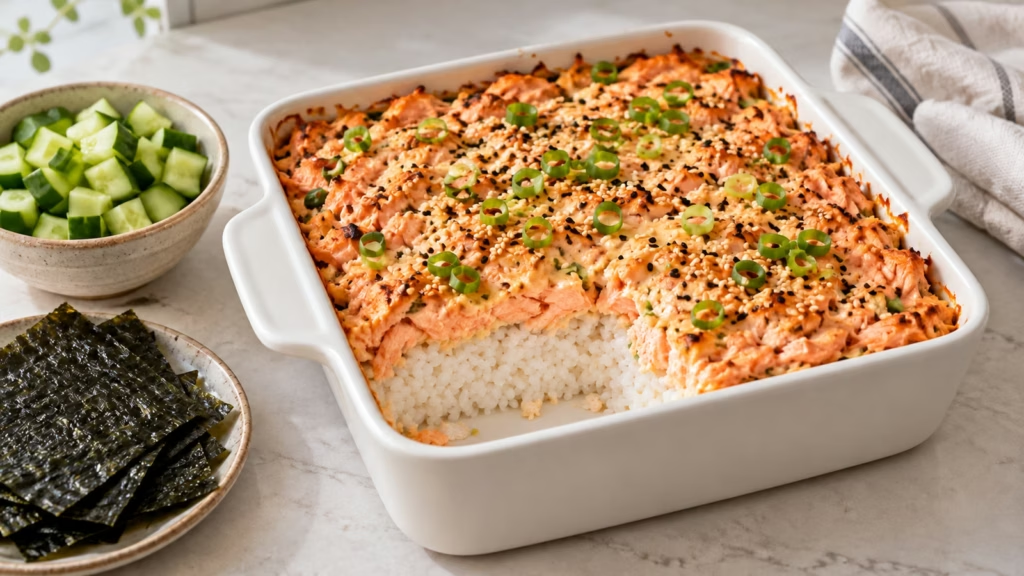
A tray of warm rice and creamy salmon sounds comforting; without a fresh finish, it can also feel a little one-note. This salmon sushi bake keeps the rice-and-seafood layers, then saves cucumber and crisp nori for serving. It is a cooked, sushi-inspired casserole with a spicy topping, made for scooping rather than rolling.
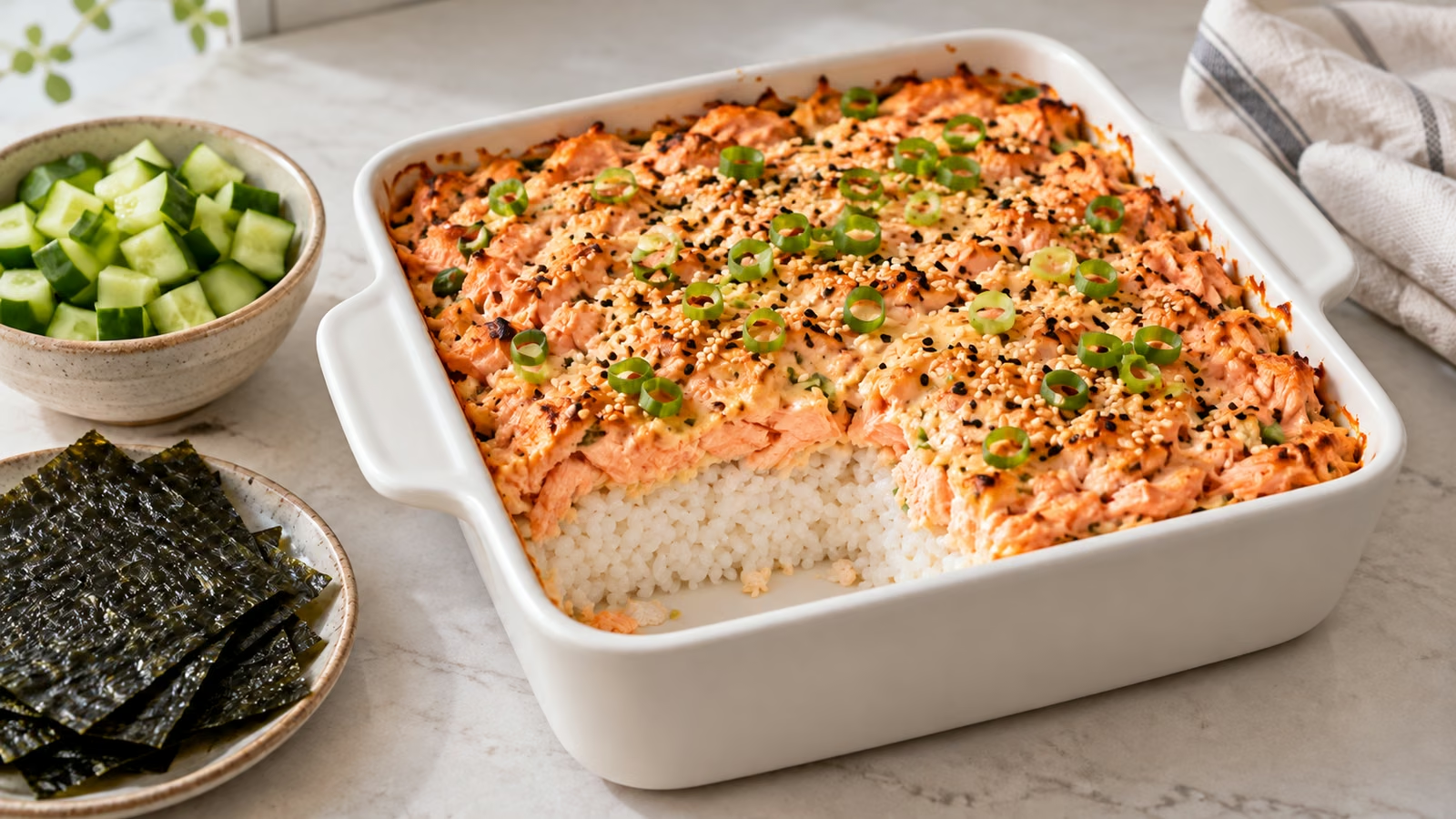
Bake the rice and creamy salmon together, then bring in cold cucumber and crisp nori at the table so every scoop has a little contrast.
What makes this salmon sushi bake different
The appeal is assembly: spread, bake and scoop, with no rolling mat required. Parade covered the renewed interest in salmon sushi bake in June 2026. Here, salmon is the only seafood, and the seasonings stay simple enough that you can recognize it beneath the creamy topping.
- Cooked fish. Start with a salmon fillet and cook it through before mixing. This recipe does not call for raw fish, curing or specialty sushi-grade labeling.
- A modest creamy layer. Cream cheese holds the mixture together and mayonnaise softens it. Neither needs to overwhelm the flakes; fold gently instead of beating the salmon into a paste.
- Separate texture jobs. Rice makes the base, cucumber brings a cool crunch, and nori supplies a dry, savory wrapper. Keep the last two out of the baking dish.
- A clear serving size. The recipe makes six portions. Nori sheets are cut into quarters for scooping, not counted as six enormous filled rolls.
Choose rice, sauce and nori thoughtfully
I would use plain short-grain white rice here. Its cling helps a spoonful stay together, while the vinegar keeps the base from tasting flat under the rich fish. Season it while warm, then spread it lightly rather than compressing it into a hard floor.
- Unseasoned vinegar. The card adds its own sugar and salt. Seasoned rice vinegar already contains additions, so using it unchanged can make the base sweeter or saltier than intended.
- Cooked rice quantity. Measure the finished cooked weight. Different dry-rice brands absorb different amounts of water; follow the package rather than treating every rice as interchangeable.
- Plain nori. Large unseasoned sheets cut into quarters give you flexible scoops. Snack-size seaweed sheets are often more fragile and may contain added oil and salt.
- Sriracha. The measured amount gives the topping some heat. Reduce it if needed and put extra on the table, remembering that sauce brands vary.
This is a sushi-inspired family of flavors, not a claim that a warm casserole replaces traditional sushi. I like letting it be its own generous, low-fuss dish.
Keep the topping creamy and the rice tender
Two oven stages make the doneness easier to manage: cook the fish, then heat the assembled dish. A thermometer matters more than a browned surface. FoodSafety.gov recommends 145°F (63°C) for fish and 165°F (74°C) for casseroles. The salmon temperature guide explains where to place the probe.
- Check the thickest part. Salmon thickness changes the first bake time. Put the thermometer tip in the center of the thickest section and remove the fish when it reaches the target.
- Soften the cream cheese. It should mix smoothly before the salmon goes in. Cold lumps encourage overmixing, which breaks the fish into much smaller pieces.
- Use the stated dish size. An 8-inch square dish keeps the layers manageable. A much deeper vessel takes longer to heat through; a broad shallow one can dry the rice sooner.
- Skip the dramatic crust. The goal is a hot, creamy topping, not a thick browned lid. More oven time cannot improve fish that is already beginning to dry.
Scoop, serve and store the layers well
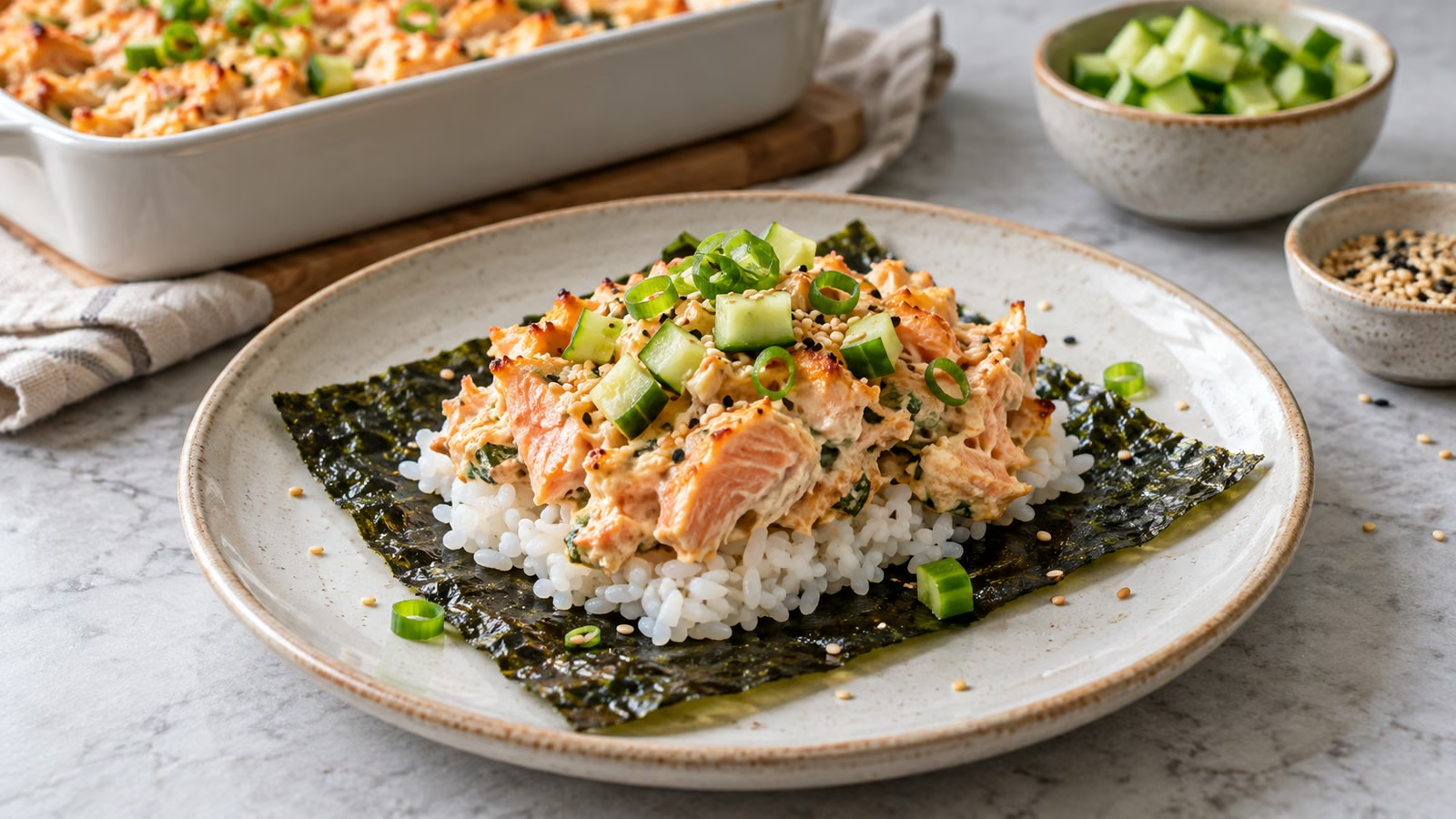
Set out the warm bake, cucumber and dry nori separately. Spoon a little rice and salmon onto a nori quarter, add cucumber and eat it promptly. Nori softens on contact with wet filling, so a tray of prefilled scoops is a less reliable party plan than an assemble-at-the-table setup.
- Balance the plate. A simple cabbage or cucumber salad is a useful side. I would choose something crisp and lightly dressed rather than another creamy dish.
- Refrigerate promptly. Divide leftovers into shallow containers within two hours, or one hour above 90°F (32°C). Keep the refrigerator at 40°F (4°C) or below.
- Watch the original rice date. An older batch of cooked rice still has its original storage timeline. Use the finished leftovers within three to four days of the earliest-cooked component.
- Reheat and finish fresh. Heat the rice-and-salmon portion to 165°F (74°C), checking the center. Add fresh cucumber and dry nori afterward; neither improves by spending lunch in the microwave.
Salmon Sushi Bake Recipe

Ingredients
- 454 g skinless salmon fillet 1 pound, pin bones removed
- 600 g cooked short-grain white rice about 3 3/4 cups
- 30 ml unseasoned rice vinegar 2 tablespoons
- 8 g granulated sugar 2 teaspoons
- 1/4 teaspoon fine salt 1.5 g
- 85 g plain cream cheese 3 ounces, softened
- 45 g regular mayonnaise 3 tablespoons
- 15 g sriracha 1 tablespoon
- 5 g toasted sesame seeds about 1 1/2 teaspoons
- 30 g scallions thinly sliced
- 200 g cucumber diced
- 6 plain nori sheets about 15 g total, cut into quarters
Equipment
- 1 8-inch square baking dish
- 1 Small baking dish for salmon
- 1 Mixing bowl
- 1 Spatula
- 1 Instant-read thermometer
Instructions
- Heat the oven to 400°F (200°C). Put the salmon in a small baking dish. Bake 12 to 18 minutes, depending on thickness, until its thickest part reaches 145°F (63°C). Remove any remaining skin or bones and flake with a fork.
- While the salmon cooks, stir the rice vinegar, sugar and salt until dissolved. Gently fold into the warm cooked rice, keeping the grains intact. Spread in an ungreased 8-inch square baking dish.
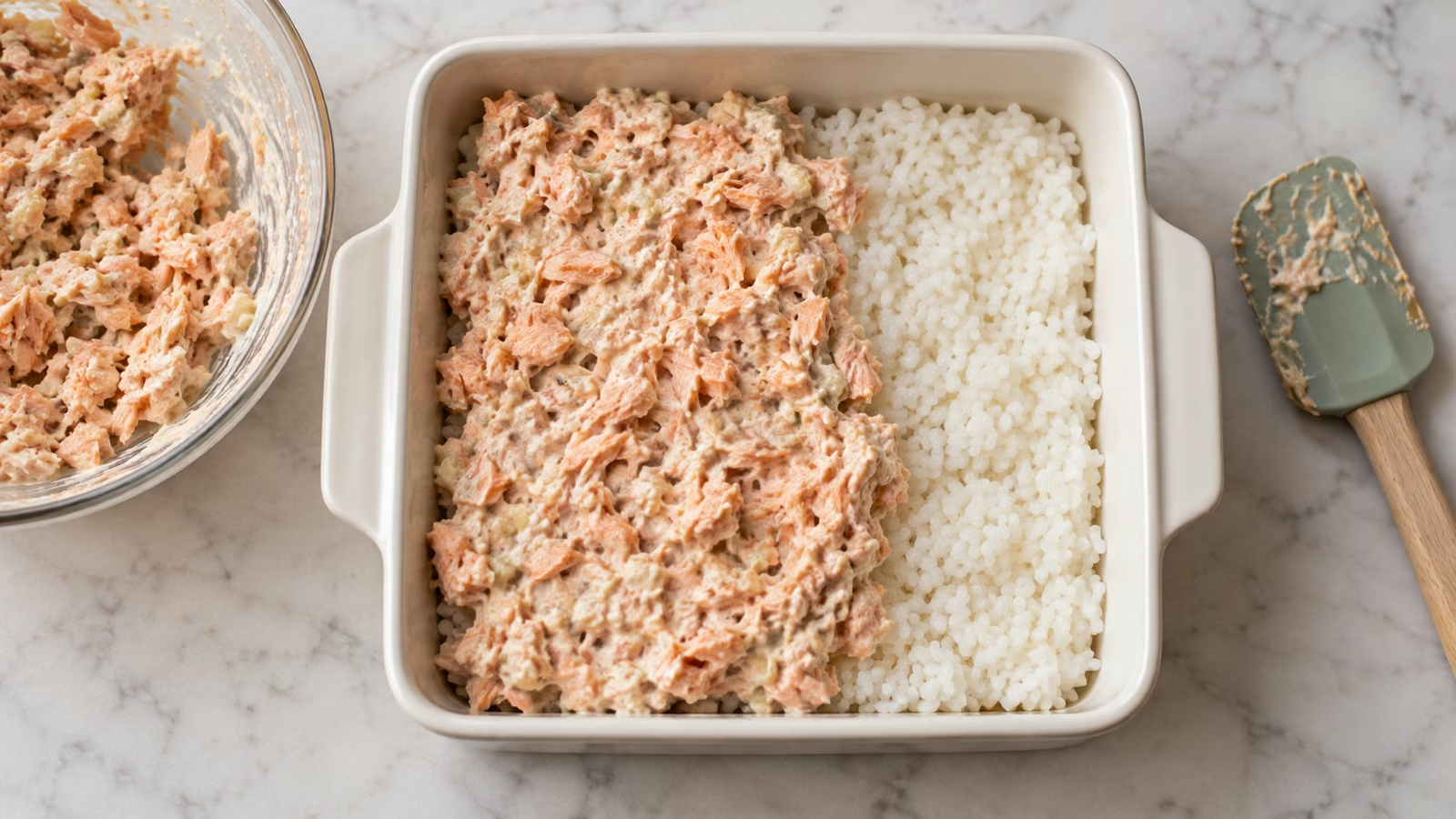
- Mix the softened cream cheese, mayonnaise and sriracha until smooth, then fold in the cooked salmon. Spread evenly over the rice without packing it down.
- Bake at 400°F (200°C) for about 15 to 20 minutes, until hot throughout and 165°F (74°C) in the center. If needed, continue in short intervals rather than relying on surface color.
- Scatter with sesame seeds and scallions. Divide into six portions and serve warm with the diced cucumber and nori quarters for scooping. Add cucumber only at serving so it stays crisp.
Nutrition
Notes
Tried this recipe?
Let us know how it turned out!Sources
- Parade: salmon sushi bake trend
- FoodSafety.gov: safe minimum cooking temperatures
- USDA: leftovers and food safety
- USDA FoodData Central: ingredient nutrients
Hi, I’m Laura, the voice behind Tastiva. I’ve always believed that eating well should feel enjoyable, comforting, and realistic—not like another complicated rule to follow. I love creating recipes that fit into everyday life, sharing simple nutrition ideas, and finding small ways to make meals feel a little better without losing the pleasure of good food.