
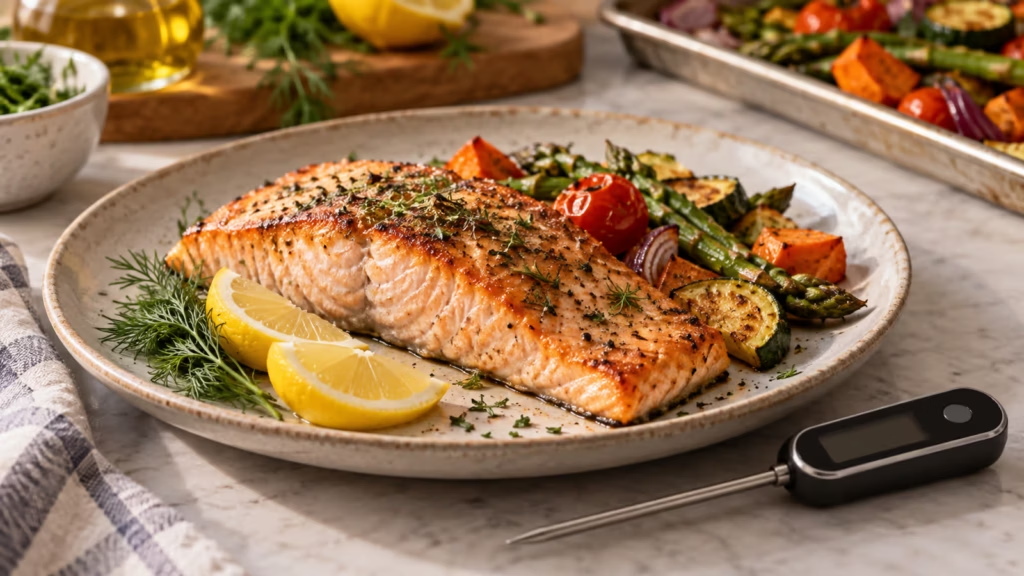
Salmon creates a particular kind of kitchen suspense. The outside looks bronzed, the center looks glossy, and every recipe seems to whisper a different number. For home food safety in the United States, the answer is clear: cook salmon to an internal temperature of 145°F (63°C), measured in the thickest part. A thermometer gives you the answer faster than repeatedly opening the oven, pressing the flesh, or sacrificing the prettiest piece to another knife cut.
For a safe home-cooking target, remember one number: 145°F (63°C) in the thickest part of the salmon.
The official safe temperature—and what visual cues can tell you
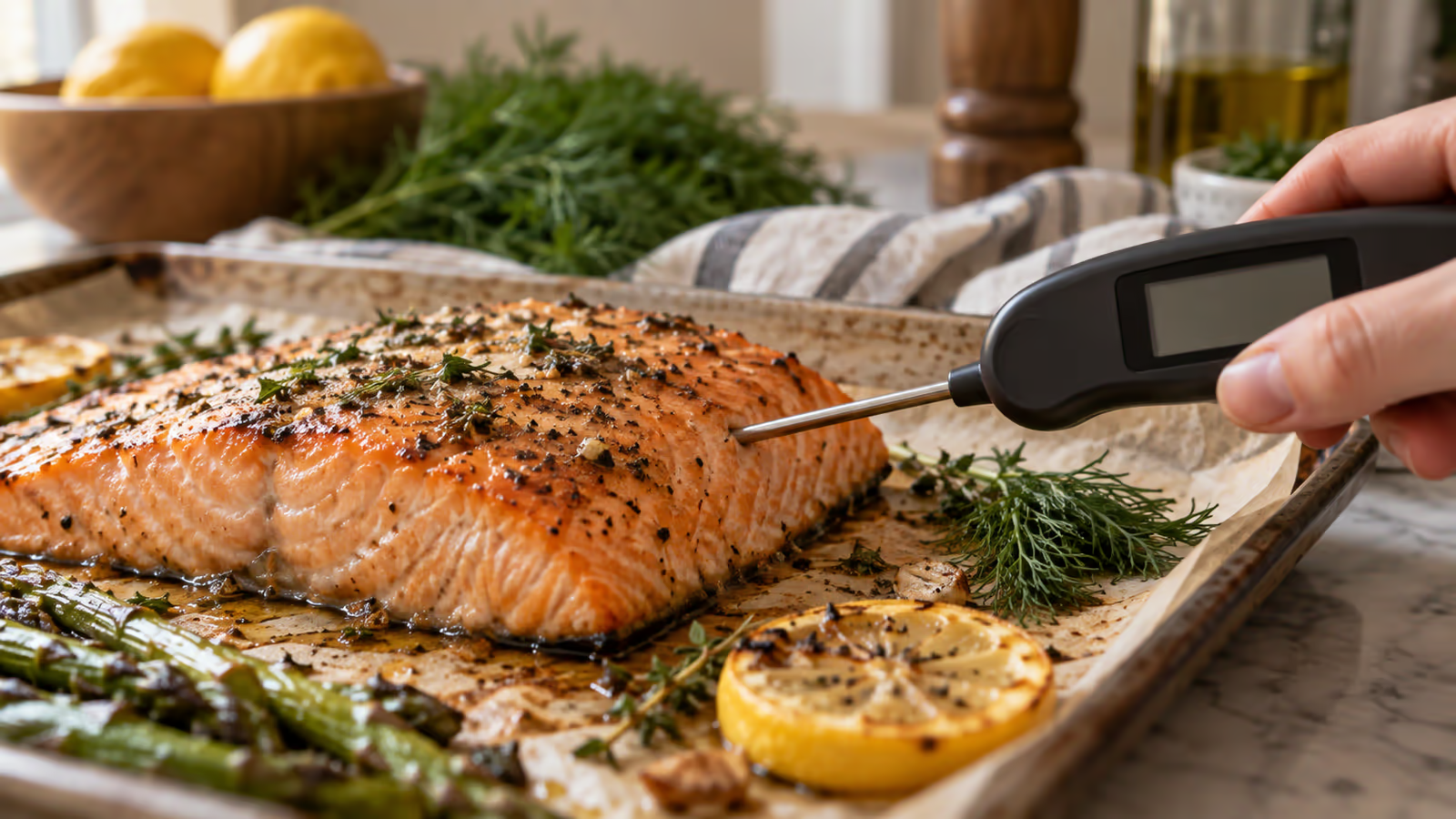
FoodSafety.gov and the FDA list 145°F (63°C) as the safe minimum internal temperature for fish. The FDA also describes cooked fish as opaque and separating easily with a fork. Color and flaking are useful supporting clues, but species, lighting, curing, freezing, and cooking method can change appearance. Temperature is the more dependable final check.
Restaurant chefs sometimes discuss lower temperatures for a softer, translucent center. Those are preference-based doneness levels, not the U.S. government’s safe minimum for home cooks. The risk matters especially for pregnant people, young children, adults 65 and older, and anyone with a weakened immune system; these groups should avoid raw or undercooked seafood.
Carryover cooking can raise temperature slightly after the fish leaves the heat, but the amount is inconsistent and depends on thickness, method, pan, and room temperature. Do not subtract a guessed number from the safety target. If you choose to rely on carryover, the center still needs to reach 145°F before serving.
Where to place the thermometer so the number means something
Insert a clean instant-read thermometer into the thickest part of the fillet. For a thin piece, approach from the side so more of the probe’s sensing area sits in the center. Avoid touching the pan, grill grate, or a large bone, because that can give a misleading reading. Check more than one spot when the fillet changes thickness.
| Checkpoint | Temperature or time | Practical meaning |
|---|---|---|
| Safe minimum for salmon | 145°F / 63°C | Measure in the thickest part with a food thermometer. |
| Cold storage | 40°F / 4°C or below | Cook refrigerated raw seafood within 2 days or freeze it. |
| Room-temperature limit | 2 hours; 1 hour above 90°F / 32°C | Refrigerate promptly instead of leaving the platter out. |
| Reheated leftovers | 165°F / 74°C | Heat leftovers thoroughly and check the center. |
If several portions vary in size, the thin tail pieces will finish first. Remove each piece when it reaches the target rather than waiting for the thickest one to govern the whole tray. A whole side of salmon may have hot and cool zones, so check the thickest center and another likely slow spot.
Clean the probe before and after it touches the fish, following the thermometer maker’s instructions. Calibrate it periodically with an ice-water or boiling-water method appropriate to the device and your altitude. A beautiful digital display is only useful when the sensor is accurate.
How to reach 145°F without turning salmon chalky
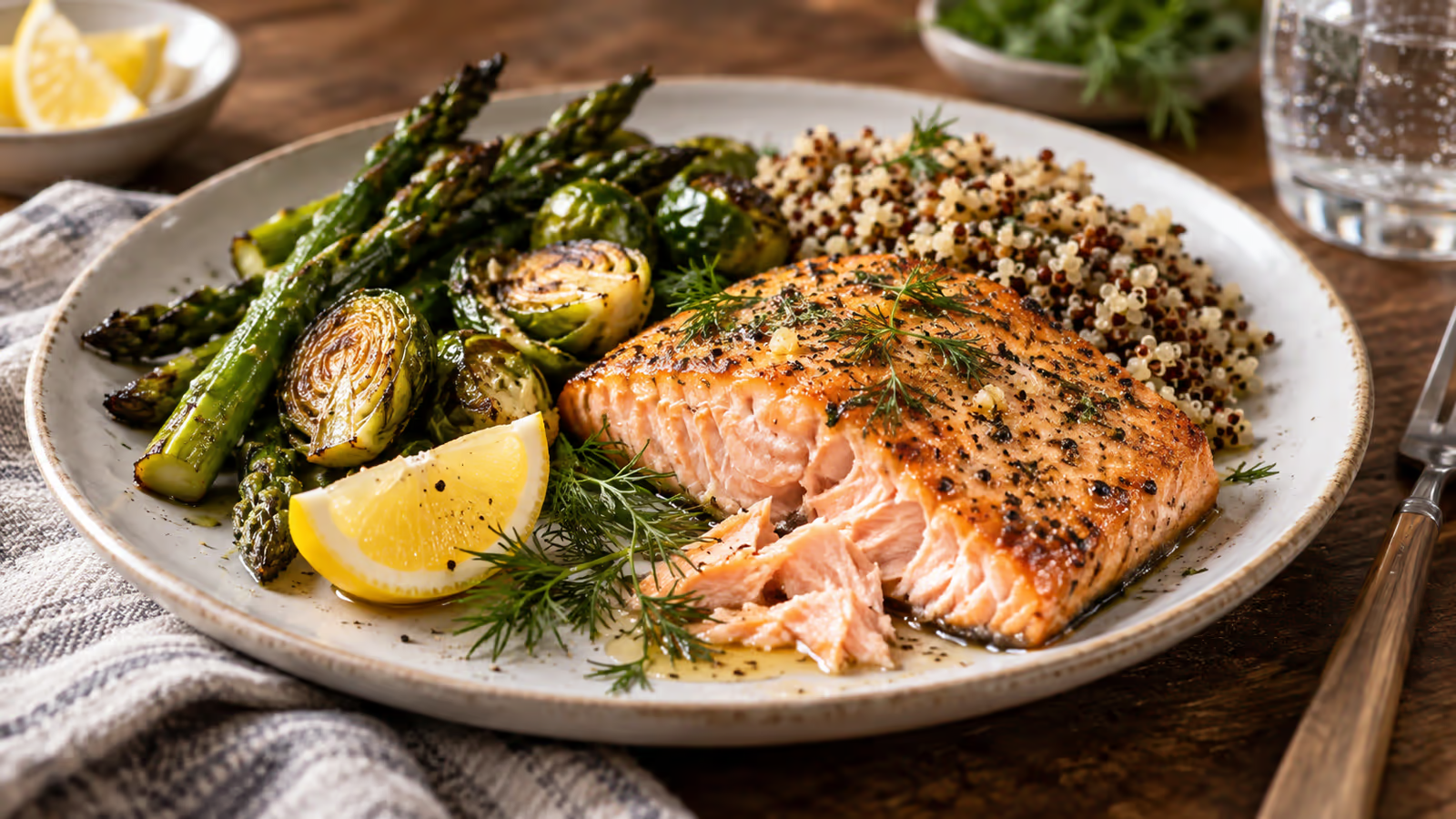
Start with pieces of similar thickness, pat the surface dry, and preheat the oven, skillet, air fryer, or grill before cooking. Moderate heat is forgiving for thick fillets; higher heat can build a lovely crust but needs closer attention. Begin checking early rather than using the recipe time as a guarantee. Starting temperature, thickness, equipment, and whether the fish is skin-on all change the clock.
For oven salmon, place the thick portions toward the hotter zone and tuck a very thin tail under itself if possible. In a skillet, crisp the skin without crushing the fish, then lower the heat or finish gently. On a grill, use clean, oiled grates and avoid constant flipping. The method can change; the thickest-point temperature does not.
- Before cooking: thaw safely, pat dry, and make portions reasonably even.
- During cooking: check the thickest part early with an instant-read thermometer.
- At 145°F: remove the salmon and serve without a long hot hold.
- If it is below target: return it to heat briefly, then check again in the same thick zone.
Buying, thawing, and leftovers are part of the safety story
Buy salmon that is refrigerated or displayed on a thick bed of fresh ice. It should smell mild and fresh, not sour, strongly fishy, rancid, or ammonia-like. Keep seafood at 40°F (4°C) or below and cook refrigerated raw fish within two days, according to FDA guidance, or freeze it. Thaw overnight in the refrigerator; for a faster method, keep it sealed in cold water. Microwave-thawed fish should be cooked immediately.
Prevent cross-contact by separating raw seafood from ready-to-eat foods and washing hands, boards, knives, counters, and plates. Never return cooked salmon to the unwashed dish that held it raw. Freezing can kill some parasites, but it does not eliminate every harmful germ; thorough cooking remains the safest route.
Refrigerate cooked salmon within two hours, or within one hour when the temperature is above 90°F (32°C). Reheat leftovers to 165°F (74°C), adding a little moisture and using gentler heat to protect texture. If you are building confidence with fish, our guide to swai fish uses the same thermometer-first logic. Safe salmon is not about cooking by fear—it is about measuring once, accurately, and enjoying dinner while it is still lovely.
Sources
- FoodSafety.gov: Safe Minimum Internal Temperatures
- U.S. Food and Drug Administration: Selecting and Serving Fresh and Frozen Seafood Safely
- USDA FSIS: Safe Temperature Chart
- FoodSafety.gov: People at Risk of Food Poisoning

Hi, I’m Laura, the voice behind Tastiva. I’ve always believed that eating well should feel enjoyable, comforting, and realistic—not like another complicated rule to follow. I love creating recipes that fit into everyday life, sharing simple nutrition ideas, and finding small ways to make meals feel a little better without losing the pleasure of good food.