
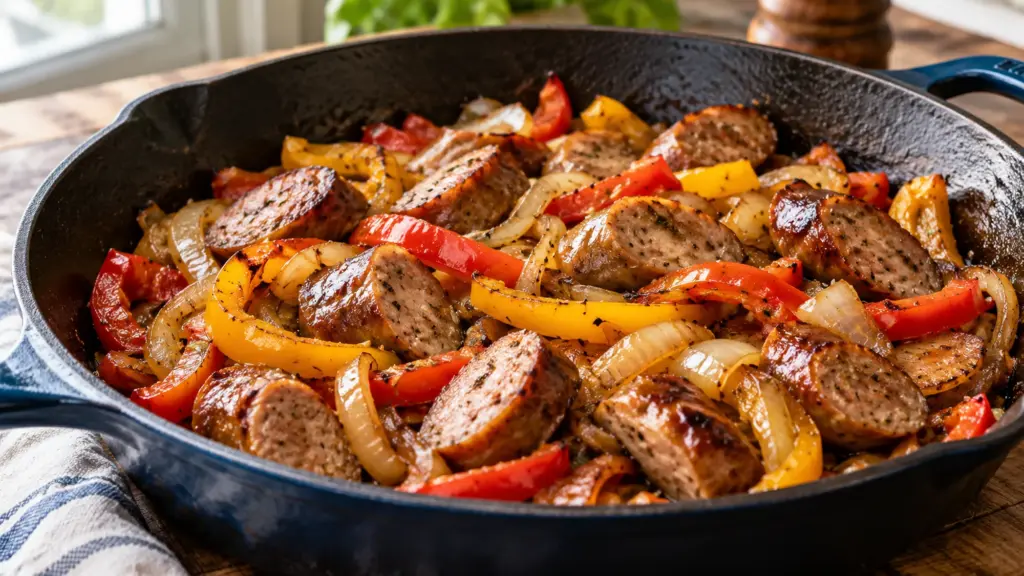
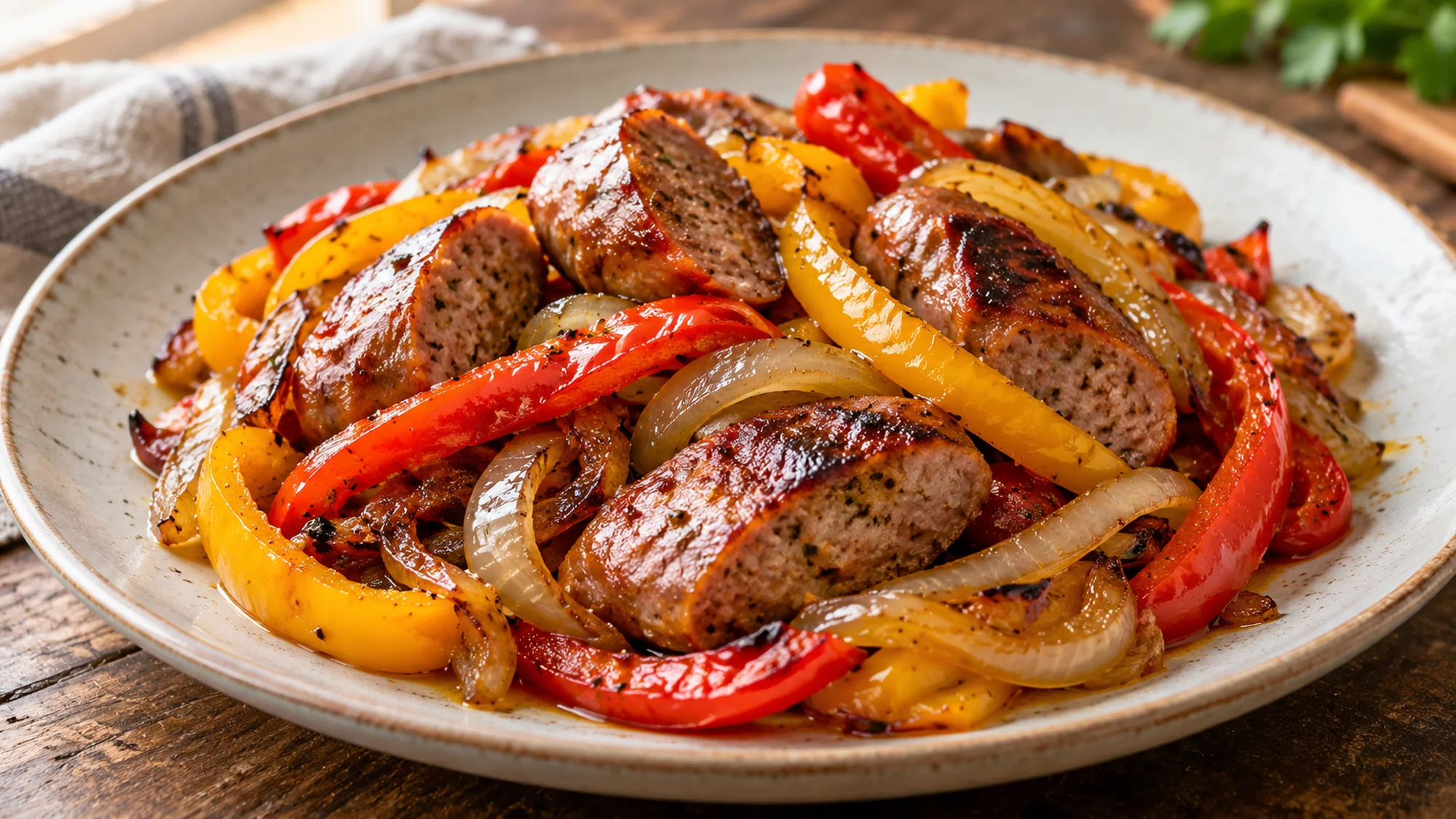
Sausage and peppers is a skillet dinner built on contrast: deeply browned sausage, soft sweet pepper strips and onion that catches a little color at the edges. A small splash of broth loosens the browned bits into a light coating rather than a thick sauce. There is no need to hide the vegetables under tomatoes or a blanket of cheese.
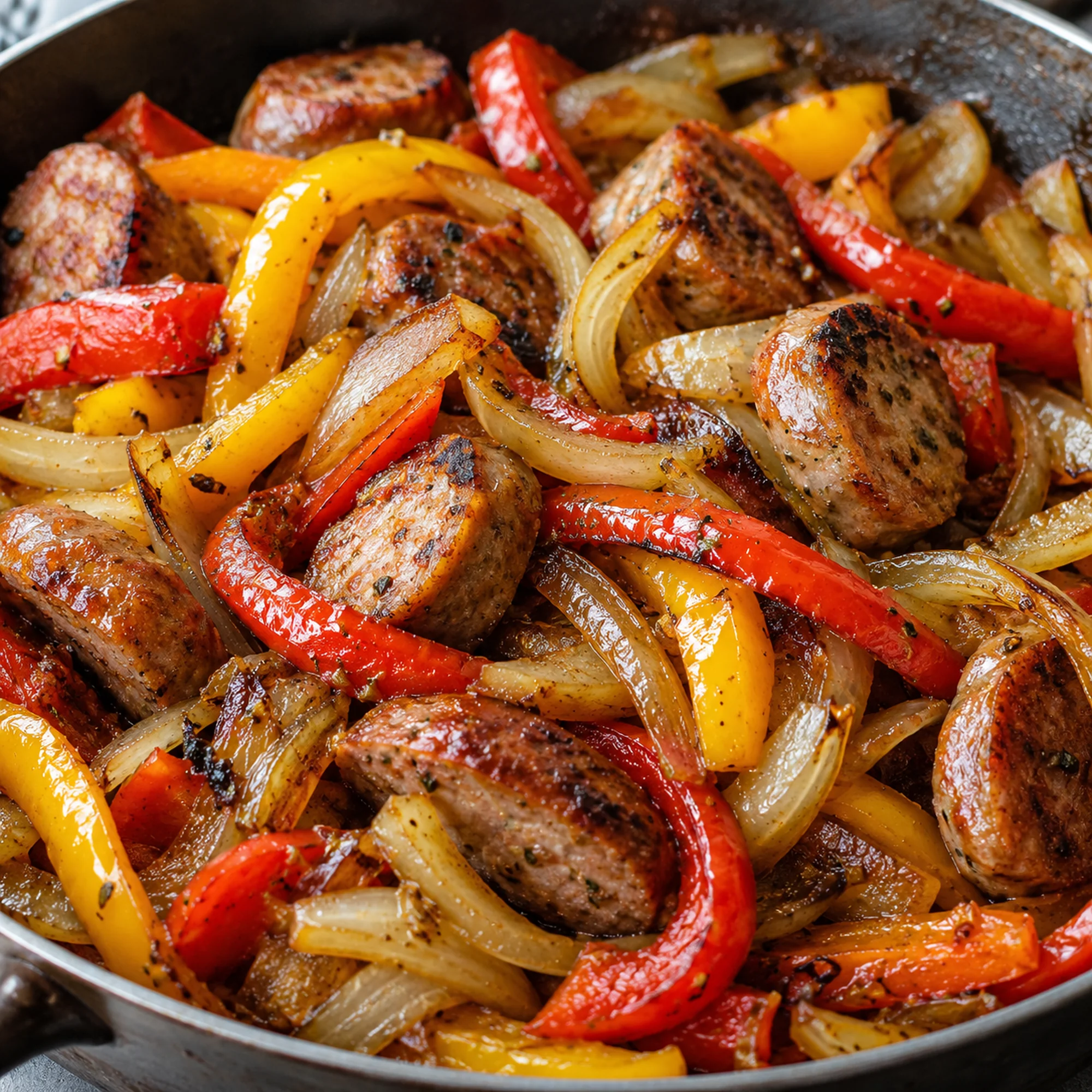
Brown the sausage for flavor, then give the peppers their own time in the pan.
I like this kind of dinner when the ingredient list can stay short but the plate still feels generous. The peppers take up real space here. They are not a few decorative strips scattered over a pan of meat.
Serving Sausage and Peppers
Soft rolls turn the mixture into a casual sandwich, while a small portion of rice catches the juices without adding much extra work. For a bowl-style dinner, try cooked brown rice and spoon the peppers across it before adding sausage slices. The recipe’s nutrition estimate does not include either option.
A crisp green salad makes sense beside a rich sausage dish. If you use rolls, toast the cut surfaces lightly so the juices do not soak straight through. Slice the fully cooked links on a clean board, then return the pieces to the pan just long enough to coat them.
- I prefer a modest amount of sausage with plenty of peppers when serving this over rice.
- For sandwiches, offer smaller rolls and let people decide whether they want another.
- A little mustard can add a sharper accent, but it is optional and should not cover up the sweet vegetables.
Decide whether tonight is a sandwich dinner or a plated meal before you add the extras.
Pepper and Sausage Variations
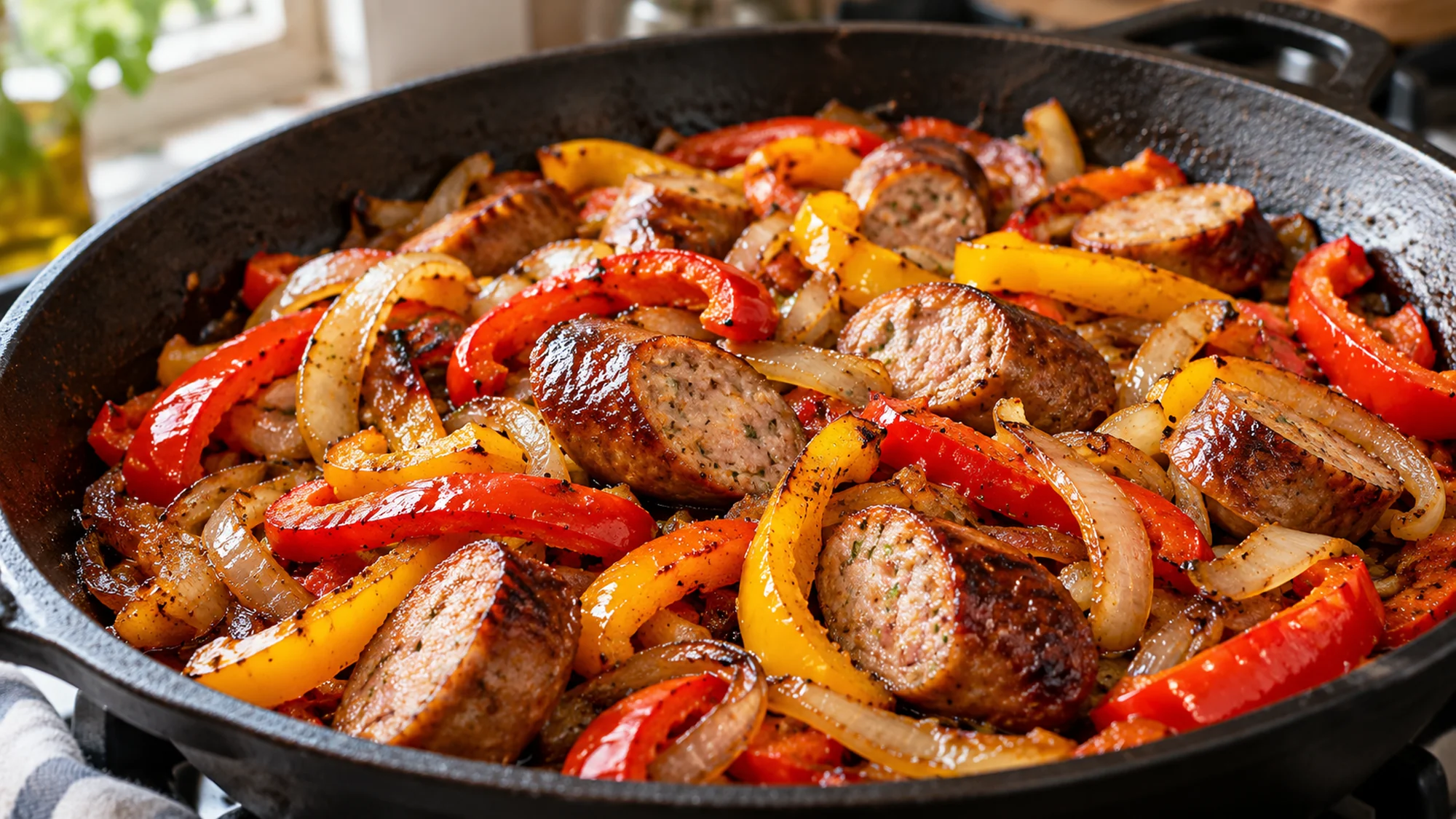
Red and yellow peppers make a mellow combination with mild Italian sausage. Green peppers have a sharper flavor and work well if you enjoy that contrast. The important distinction is between sweet bell peppers and hot chiles: swapping one for the other changes the dish much more than changing the color.
Hot Italian sausage is the simplest route to a spicier pan. If serving people with different preferences, keep the main skillet mild and offer chile flakes at the table. I would taste a cooked bite before adding salt because sausage and broth can already bring plenty.
- Turkey or chicken sausage can be used only with its own label and safe cooking temperature in mind.
- It may release less fat than pork sausage, which affects the pan as well as the estimate.
- Precooked links are another timing change; do not assume they need the same treatment as raw ones.
| Pepper choice | Flavor |
|---|---|
| Red or yellow | Mellow and sweet |
| Green bell pepper | Sharper, less sweet |
| Hot chile | Adds heat; not a direct swap |
Choose the sausage heat level first, then decide whether the vegetables need any extra spice.
A clear look at nutrition and storage
Sausage supplies protein, but it can also contribute substantial sodium and fat. The estimate in the card uses a specific mild Italian sausage label as a guide, so a different brand or link size can change the numbers noticeably. More peppers do not cancel out those differences; they simply make vegetables a meaningful part of the meal.
Pork sausage must reach 160°F (71°C); poultry sausage needs 165°F (74°C). Refrigerate leftovers within two hours, or one hour above 90°F (32°C), and use within three to four days following USDA guidance. Reheat to 165°F (74°C), adding a spoonful of water if the pan looks dry.
- Keep extra salty condiments separate because the links already provide substantial seasoning.
- A vegetable-rich plate is useful, but it does not make every sausage brand nutritionally identical.
- The label’s serving weight is a better guide than counting links, which can vary considerably in size and fat content.
Read the sausage label if sodium or portion size is important to you.
Bottom Line
This is a good place to let a few ingredients stay recognizable. Brown the links, soften the peppers without losing every bit of texture, and use just enough liquid to gather the pan flavor. Finish by checking the sausage temperature, not by guessing from the color of its casing.
The best forkful has sausage, sweet pepper and onion together—not meat with vegetables as an afterthought.
Sausage and Peppers Recipe

Ingredients
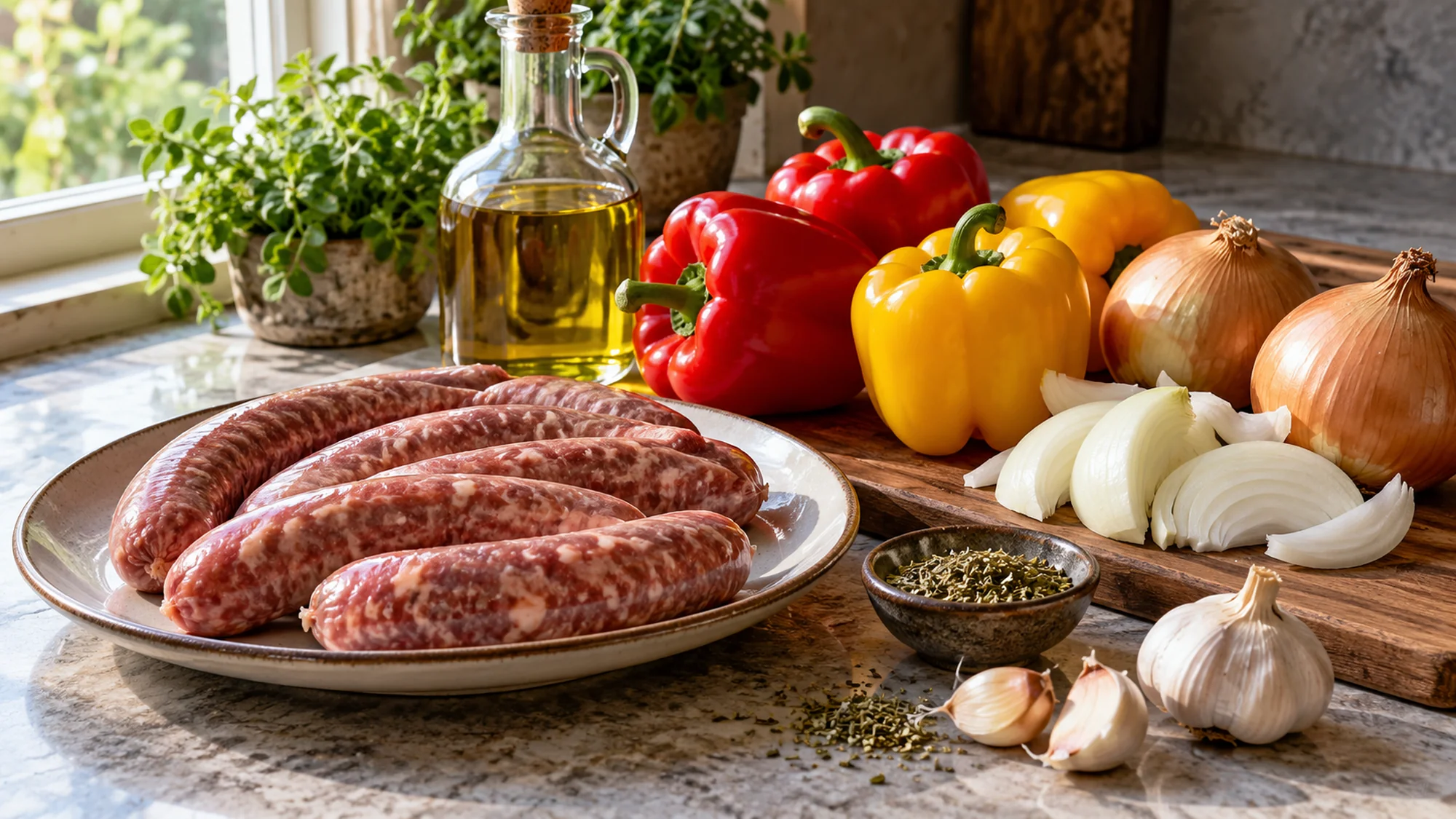
- 5 mild Italian pork sausage links about 500 g raw total; check package size
- 1 tablespoon olive oil 13.5 g
- 500 g red and yellow bell peppers about 3 large, seeded and sliced
- 250 g onions about 2 medium, sliced
- 4 cloves garlic minced, about 12 g
- 1/2 cup unsalted chicken broth 120 ml
- 1 teaspoon dried oregano about 1 g
- 1/2 teaspoon black pepper about 1 g
Equipment
- 1 Large lidded skillet
- 1 Tongs
- 1 Instant-read thermometer
Instructions
- Heat the oil in a large skillet over medium heat. Add whole sausage links and brown on several sides for 8–10 minutes, turning with tongs. Transfer to a plate; they are not necessarily cooked through yet.
- Add peppers and onions to the same skillet. Cook 7–8 minutes, stirring, until softened and lightly colored. Lower the heat if the browned bits begin to darken too much.
- Add garlic, oregano and black pepper; stir 30 seconds. Pour in the broth and scrape up the brown, not burnt, bits from the pan.
- Return the sausage and its juices. Cover and simmer gently for 8–12 minutes, turning once, until the center of every pork sausage link reaches 160°F (71°C). Add a splash of water if the pan becomes dry.
- Move the cooked sausage to a clean board and slice into thick pieces. Return to the peppers and toss gently. Simmer uncovered briefly if excess liquid remains. Taste before adding any salt. Divide into five portions.
Nutrition
Video
Notes
Tried this recipe?
Let us know how it turned out!Hi, I’m Laura, the voice behind Tastiva. I’ve always believed that eating well should feel enjoyable, comforting, and realistic—not like another complicated rule to follow. I love creating recipes that fit into everyday life, sharing simple nutrition ideas, and finding small ways to make meals feel a little better without losing the pleasure of good food.