
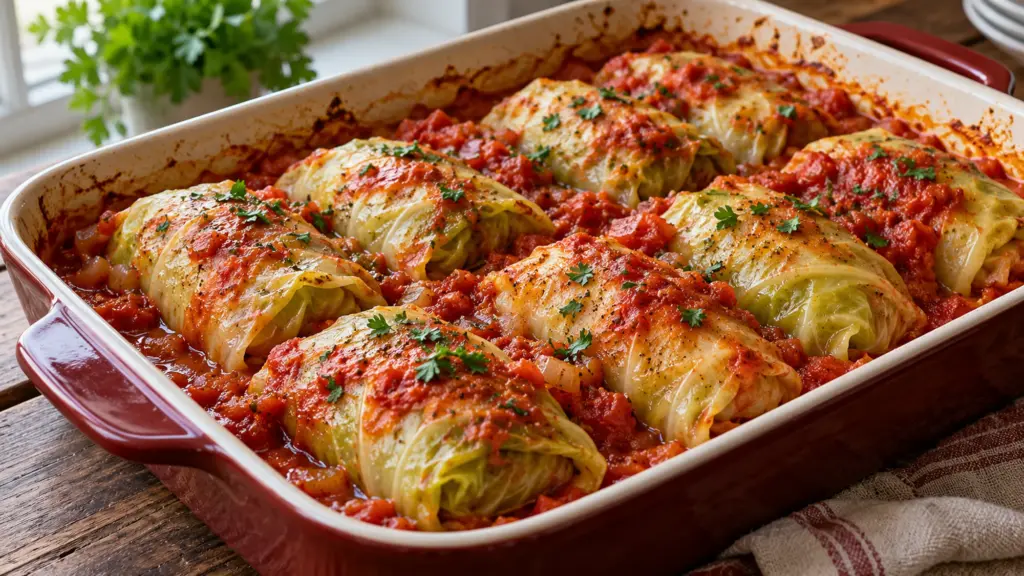
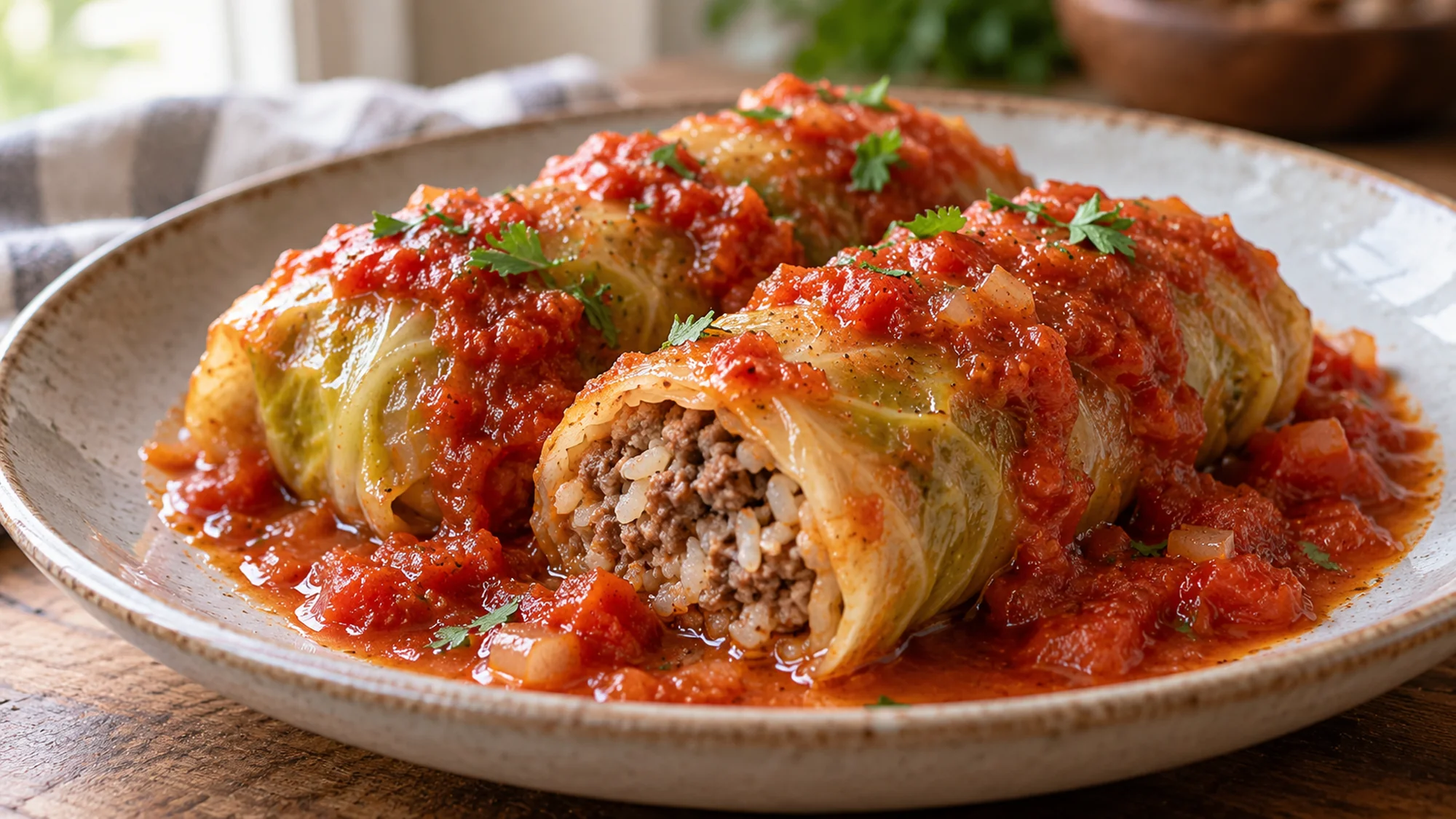
Stuffed cabbage rolls ask for a little patient folding, but the filling is wonderfully ordinary: beef, rice, onion and a tomato sauce that softens around the parcels as they bake. The cabbage is not just a wrapper. Its tender leaves bring a gentle sweetness that balances the savory filling and bright sauce.
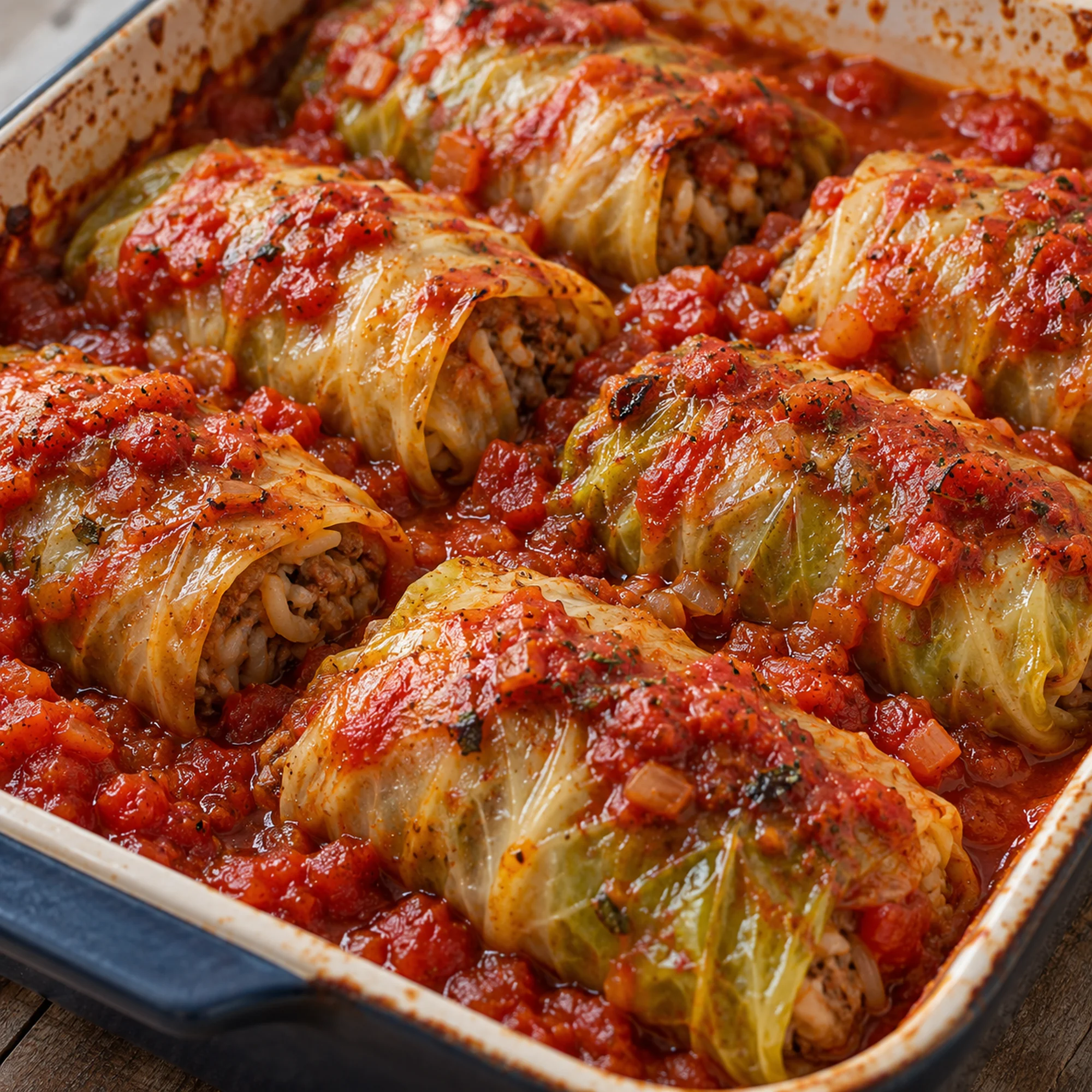
Make the leaves flexible before you worry about making the rolls beautiful.
I would approach this as a relaxed weekend dinner rather than a quick skillet meal. Set out the softened leaves, filling and baking dish together, then work through one roll at a time. A slightly uneven batch can still be a very satisfying dinner.
Serving Stuffed Cabbage Rolls
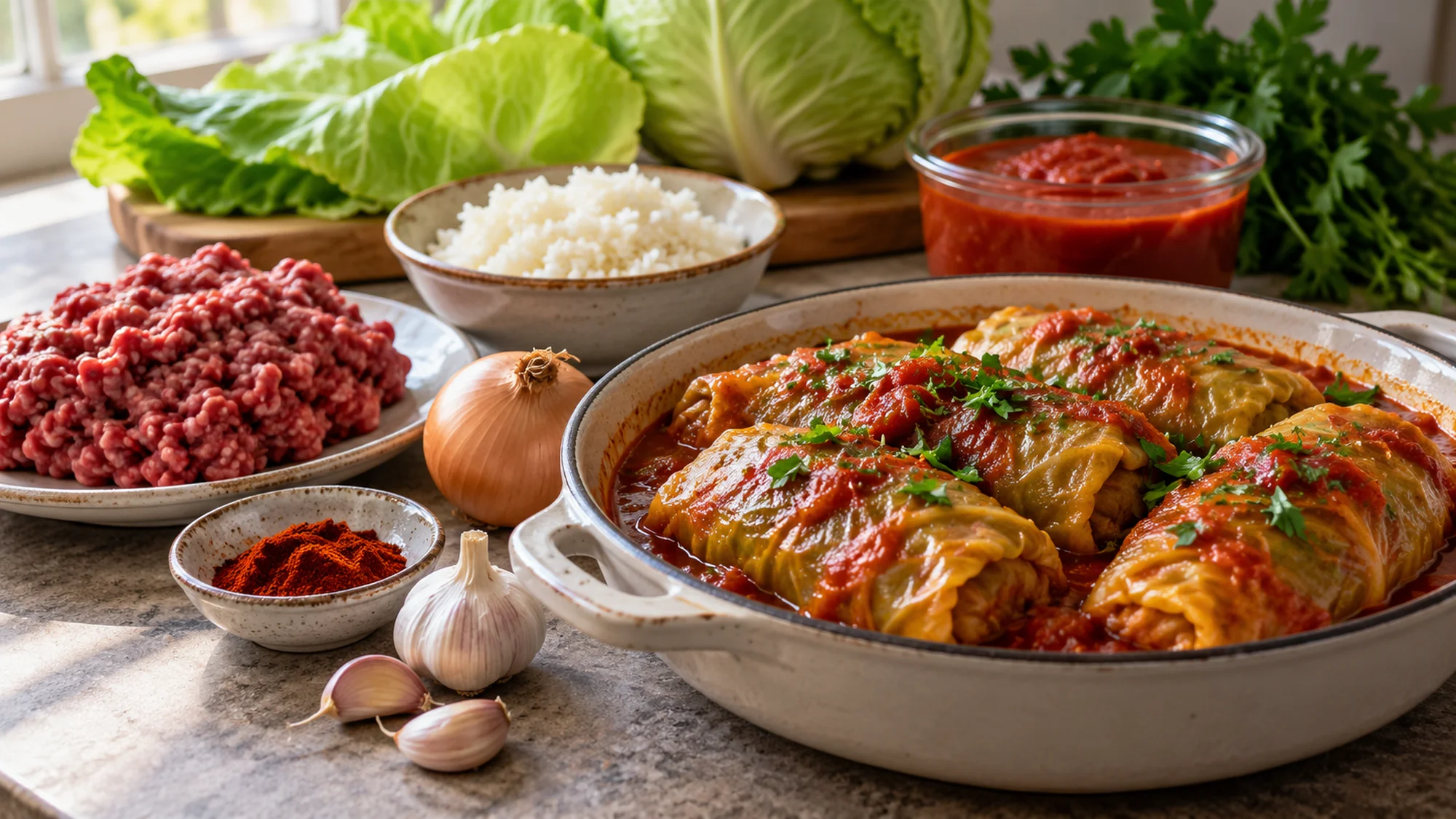
Two rolls make a useful starting portion, with extra sauce spooned over them at the table. I would add something crisp and simply dressed alongside rather than another heavy casserole. A cucumber salad or shredded carrots with lemon gives the plate a different texture without competing with the tomato.
A little bread can be useful for the remaining sauce, but the filling already contains rice. If you want a larger grain side, serve a smaller portion of rolls. Tastiva’s brown rice guide is handy for a separate accompaniment; it is not a one-for-one shortcut for uncooked rice inside the filling.
- For a shared meal, arrange the rolls seam-side down and pass extra sauce separately.
- I prefer a broad serving spoon to tongs, which can squeeze a tender parcel until it opens.
- A torn leaf is not a failed dinner; spoon the filling and sauce together and keep the portion relaxed rather than trying to repair it at the table.
A crisp side gives the creamy, tender main dish a useful contrast.
Variations and Ingredient Choices
Ground turkey changes flavor and the required safe temperature, so it should not be treated as an invisible substitution. Ground beef needs 160°F (71°C), while poultry needs 165°F (74°C). Use a thermometer rather than judging the center by its color or the bubbling tomato sauce.
The written filling uses cooked rice. A version with uncooked rice requires different moisture and cooking decisions; adding dry grains to this formula is not a harmless shortcut. Follow one complete filling method rather than combining the rice choice from one recipe with the sauce quantity from another.
- Broad green cabbage leaves are easier to fold than small inner leaves.
- Overlapping a torn leaf with a spare softened piece is a practical repair, not a reason to discard the whole batch.
- Savoy cabbage has a different texture and may soften sooner.
- A sweeter or more acidic canned tomato also changes the sauce, so taste before adding extras.
| Leaf problem | Practical fix |
|---|---|
| Thick center rib | Shave it thinner |
| Small tear | Patch with a spare leaf |
| Small inner leaf | Overlap two leaves |
Keep cooked-rice and raw-rice formulas separate, and match safety temperatures to the meat.
Nutrition Benefits and Sensible Portions
Beef contributes protein, rice provides carbohydrate, and the cabbage and tomatoes add vegetables. The card estimate is for two rolls with sauce, not bread or additional sides. Refrigerate leftovers in shallow containers within two hours, or one hour above 90°F (32°C), and use within three to four days under USDA guidance. Reheat to 165°F (74°C).
The cabbage is a meaningful part of the dish, but the filling still supplies meat, rice and measured fat. A crisp vegetable side adds contrast without repeating the soft tomato-and-grain texture. A larger bread portion or extra rice should be considered separately from the two-roll estimate.
- Actual cabbage heads and rolls vary in size, so dividing the filling evenly is more useful than assuming every parcel has identical nutrition.
- The estimate is based on the written yield and sauce.
- Smaller rolls can be a sensible portion, provided the total filling is still divided in a clear way.
Cabbage adds vegetables; the filling and sides still determine the overall portion.
Bottom Line
Soft leaves, a modest amount of filling and enough sauce make the assembly much less fussy. Give the covered dish time to become tender, check the center with a thermometer, and serve the rolls with their tomato sauce. Neat edges are welcome, but a comfortable fold matters more than a picture-perfect parcel.
Treat the cabbage gently and let the sauce do its quiet work in the oven.
Stuffed Cabbage Rolls Recipe

Ingredients
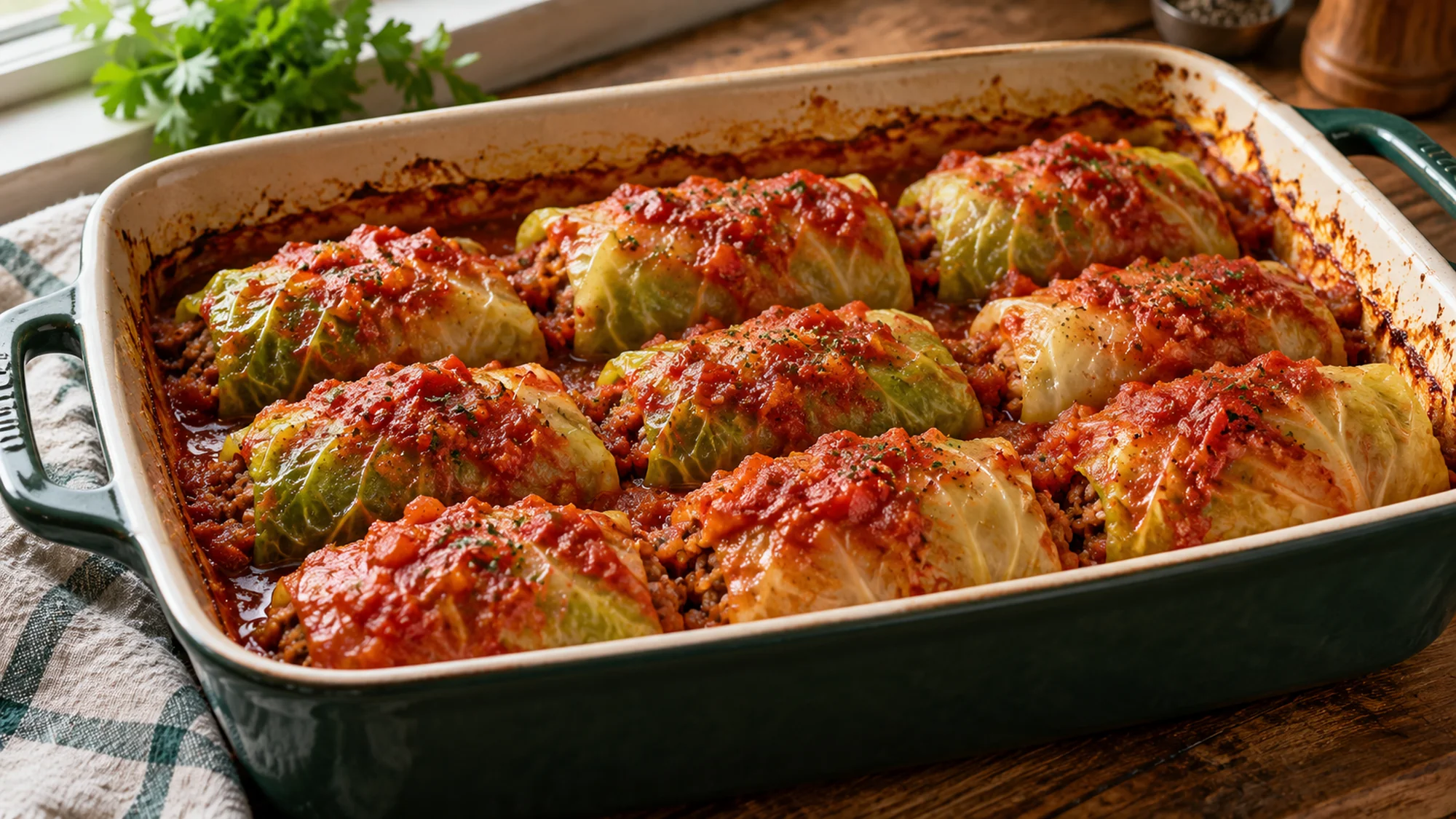
- 1 large green cabbage about 12 large usable leaves, 600 g after trimming; reserve extra leaves for patches
- 600 g 90% lean ground beef
- 250 g cooked white rice about 1 2/3 cups, cooled
- 200 g onion 1 large, finely diced; divided
- 3 cloves garlic minced, about 9 g
- 1 tablespoon olive oil 13.5 g
- 2 teaspoons paprika about 4 g; divided
- 4 g fine salt about 2/3 teaspoon; divided
- 800 g canned crushed tomatoes with their juice
- 2 teaspoons sugar about 10 g
- 1/2 cup water 120 ml
- 1 tablespoon chopped parsley optional garnish, excluded from nutrition
Equipment
- 1 Large deep pot
- 1 Tongs
- 1 large mixing bowl
- 1 9-by-13-inch baking dish
- 1 Instant-read thermometer
Instructions
- Heat the oven to 350°F (175°C). Remove the cabbage core carefully. Lower the head into a deep pot of simmering water and loosen outer leaves with tongs as they soften, about 2–3 minutes at a time. Continue until you have 12 large pliable leaves. Drain and cool; shave thick ribs thinner without cutting through.
- Heat oil in a saucepan over medium heat. Cook half the onion for 5 minutes. Stir in garlic and half the paprika for 30 seconds. Add tomatoes, sugar, water and half the salt; simmer 5 minutes. Spread a thin layer in the baking dish.
- Mix raw ground beef with cooled cooked rice, remaining finely diced onion, remaining paprika and remaining salt. Mix lightly and divide into 12 portions.
- Place one portion near the base of each cabbage leaf. Fold the sides inward and roll into a comfortable parcel without packing tightly. Patch small tears with spare softened leaf pieces. Arrange seam-side down in the dish.
- Pour remaining tomato sauce over the rolls and cover the dish tightly with foil. Bake 80–100 minutes, until the leaves are tender and the center of the beef filling reaches at least 160°F (71°C). If leaves remain firm, continue covered, adding a little hot water if the sauce is drying.
- Rest 10 minutes. Serve two rolls per person with sauce and optional parsley.
Nutrition
Video
Notes
Tried this recipe?
Let us know how it turned out!Hi, I’m Laura, the voice behind Tastiva. I’ve always believed that eating well should feel enjoyable, comforting, and realistic—not like another complicated rule to follow. I love creating recipes that fit into everyday life, sharing simple nutrition ideas, and finding small ways to make meals feel a little better without losing the pleasure of good food.