
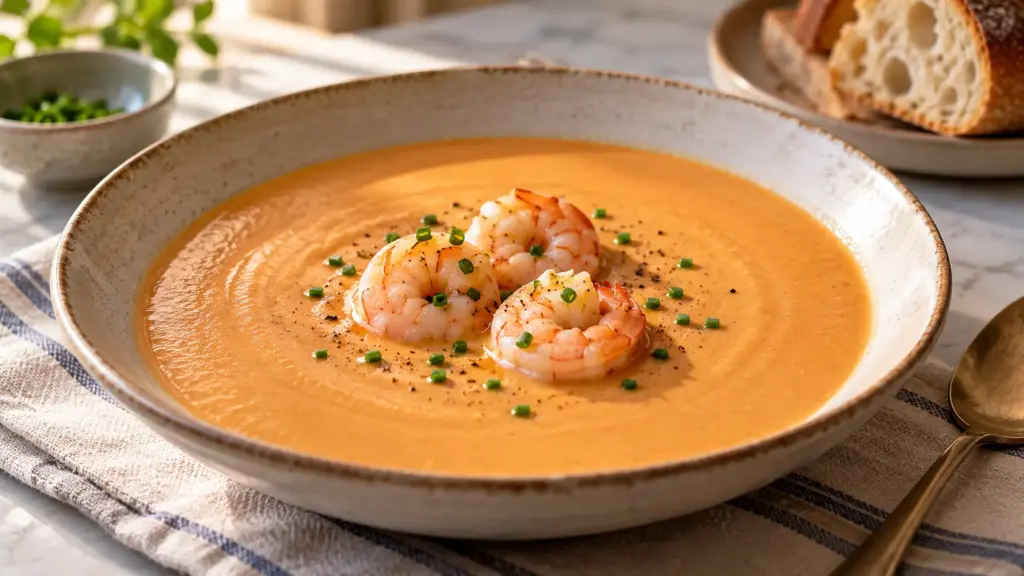
A smooth bowl of shrimp bisque can taste much more concentrated than its pale peach color suggests. The useful starting point is not extra cream but the shells, simmered with vegetables and herbs before the liquid is carefully strained. That small bit of patience gives the soup its seafood character.
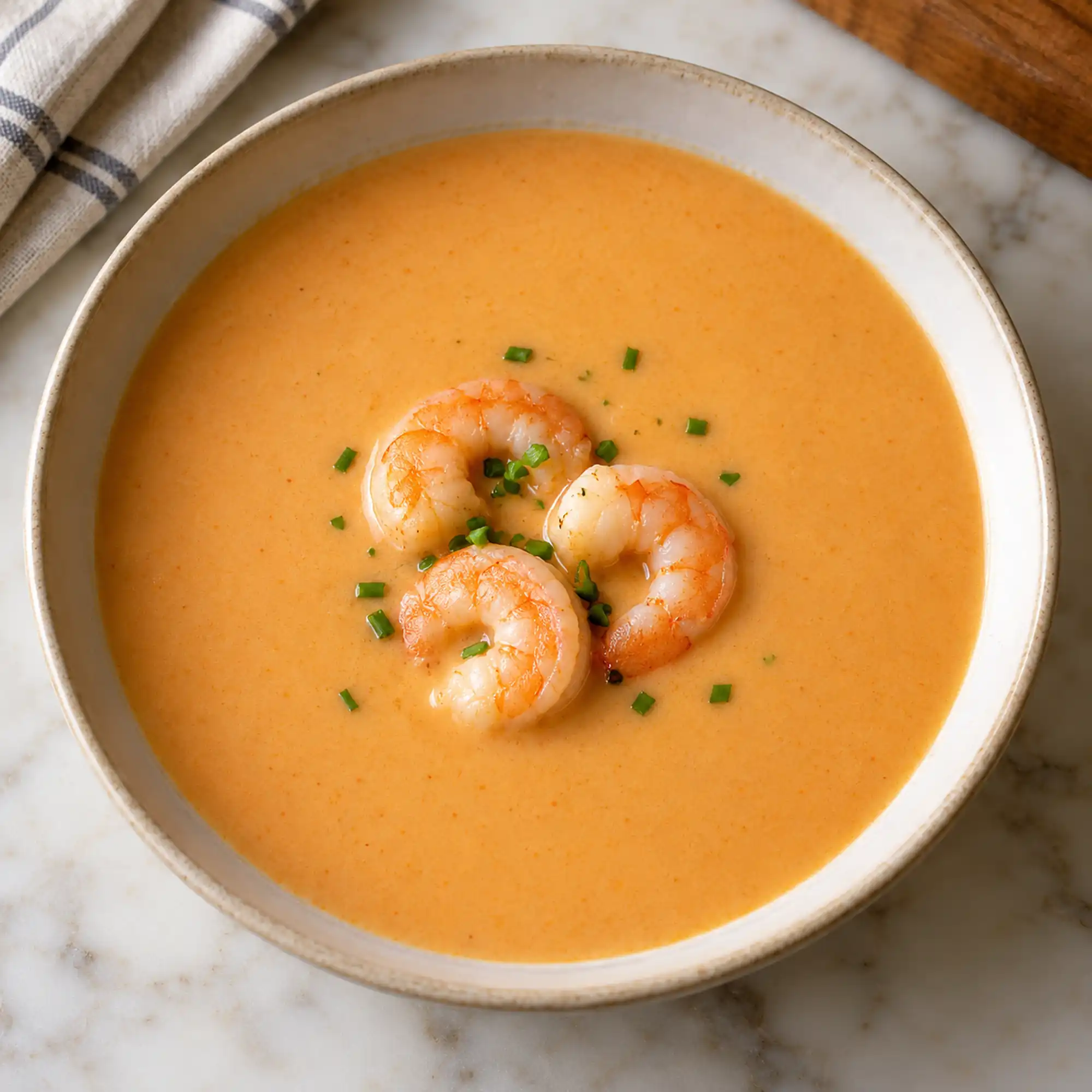
This shrimp bisque uses homemade shell stock, a butter-flour roux and a measured cream finish. Cook the peeled shrimp separately and include them in the bowls so the finished soup has both a silky base and tender pieces.
The approach is adapted from Chef Billy Parisi’s bisque, with a smaller batch and the shrimp garnish included. I prefer a smooth broth with distinct shrimp pieces here; blending shell fragments is not part of this version.
Serving Shrimp Bisque
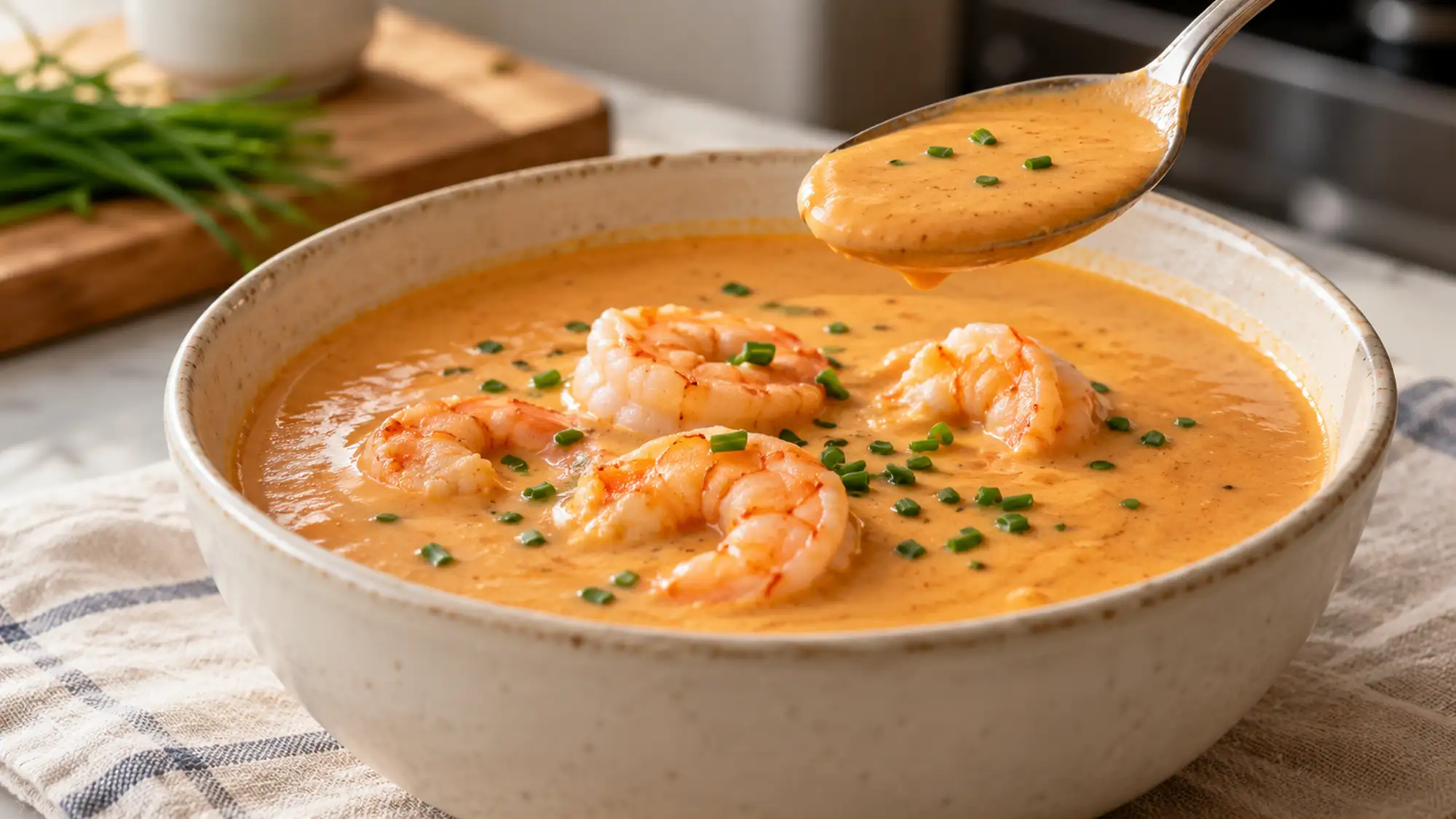
Use warm bowls and add the cooked shrimp just before carrying them to the table. Chives give the surface a little contrast without turning the bowl into an herb salad. A restrained garnish also makes it easier to notice the broth’s aroma and the shrimp’s tender texture.
This can be a generous first course or a light main course with bread and vegetables. The six-serving estimate includes the shrimp but not extra bread, so choose the rest of the meal according to appetite rather than treating the bowl as a complete menu by itself.
- For dipping: offer a small piece of plain bread rather than a heavily seasoned toast.
- For contrast: green beans add a vegetable side without another creamy sauce.
- For finishing: keep the chives fine and the shrimp easy to eat with a spoon.
| Serving style | Best accompaniment | What to consider |
|---|---|---|
| First course | Small portion of bread | Leave room for the main dish |
| Light main | Bread and vegetables | Extra sides are not in the estimate |
| Make-ahead base | Freshly cooked shrimp | Keep the garnish separate until serving |
Let the smooth broth lead, with cooked shrimp and a simple garnish providing contrast.
Shrimp Bisque Variations
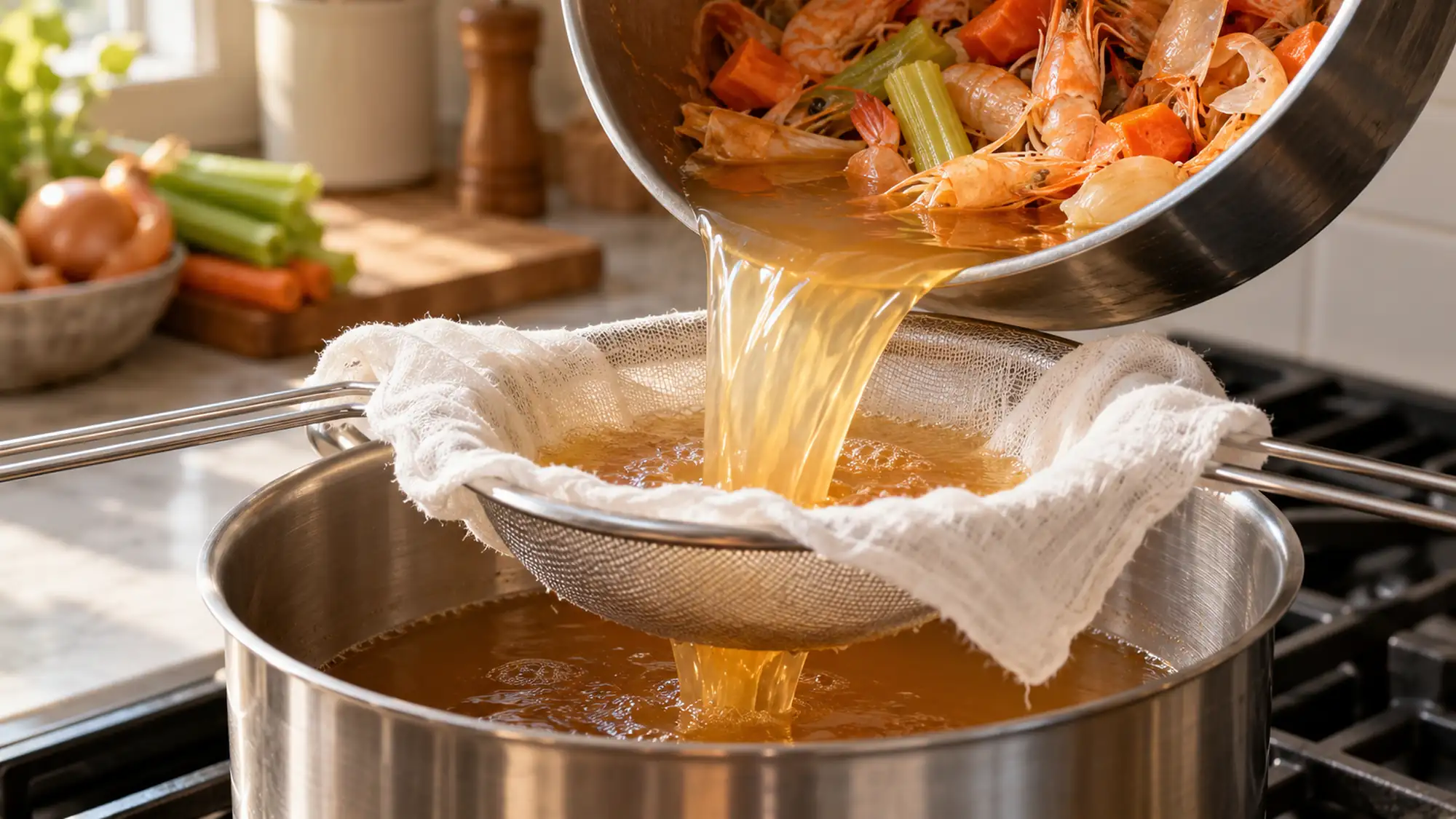
The shell stock needs careful straining more than forceful stirring. A fine sieve lined with cheesecloth catches small fragments and leaves a cleaner texture. Measure the finished liquid afterward; an especially long simmer can reduce it more than expected and make the final soup too thick.
I would adjust the consistency before adding extra cream. A splash of measured stock or water can loosen a thick bisque without making it richer, while a gentle simmer can concentrate a thin one. The roux should support the soup, not make it feel like gravy.
- No alcohol: replace wine and cognac with additional stock and adjust the final seasoning.
- A lighter finish: use less cream, accepting a less rounded texture.
- Different herbs: keep stronger flavors restrained so they do not cover the shrimp.
- A smoother result: strain thoroughly instead of relying on a blender to hide shell pieces.
Control the stock volume and strain carefully; those choices matter more than adding extra richness.
Nutrition and Safe Cooking
Shrimp provides protein, while butter and cream contribute richness and energy. This is a seafood soup, not automatically a low-fat one. Portion size and the bread or other sides served with it still influence the overall meal.
The nutrition estimate uses an assumed peeled yield and counts the stock vegetables conservatively even though they are strained away. Shell extraction cannot be measured precisely in a home recipe calculation, so the numbers are approximate rather than a laboratory analysis of the finished broth.
- Check doneness: shrimp should become pearly and opaque, following safe seafood guidance.
- Keep shells separate: discard the strained solids rather than serving them.
- Mind allergens: the recipe contains shellfish, dairy and wheat.
- Cool promptly: divide leftovers into shallow containers instead of leaving a large warm pot out.
A careful estimate is useful, but clean handling and fully cooked shrimp are the more important checks.
Bottom Line
Shrimp bisque rewards a few deliberate choices: a flavorful stock, thorough straining and a gentle cream finish. Keep the cooked shrimp tender and the accompaniments simple. The result should taste clearly of seafood, with enough body to feel comforting but not so much thickness that the spoon has to work.
Build flavor in the stock, then finish gently for a smooth bowl with tender shrimp.
Shrimp Bisque Recipe

Ingredients
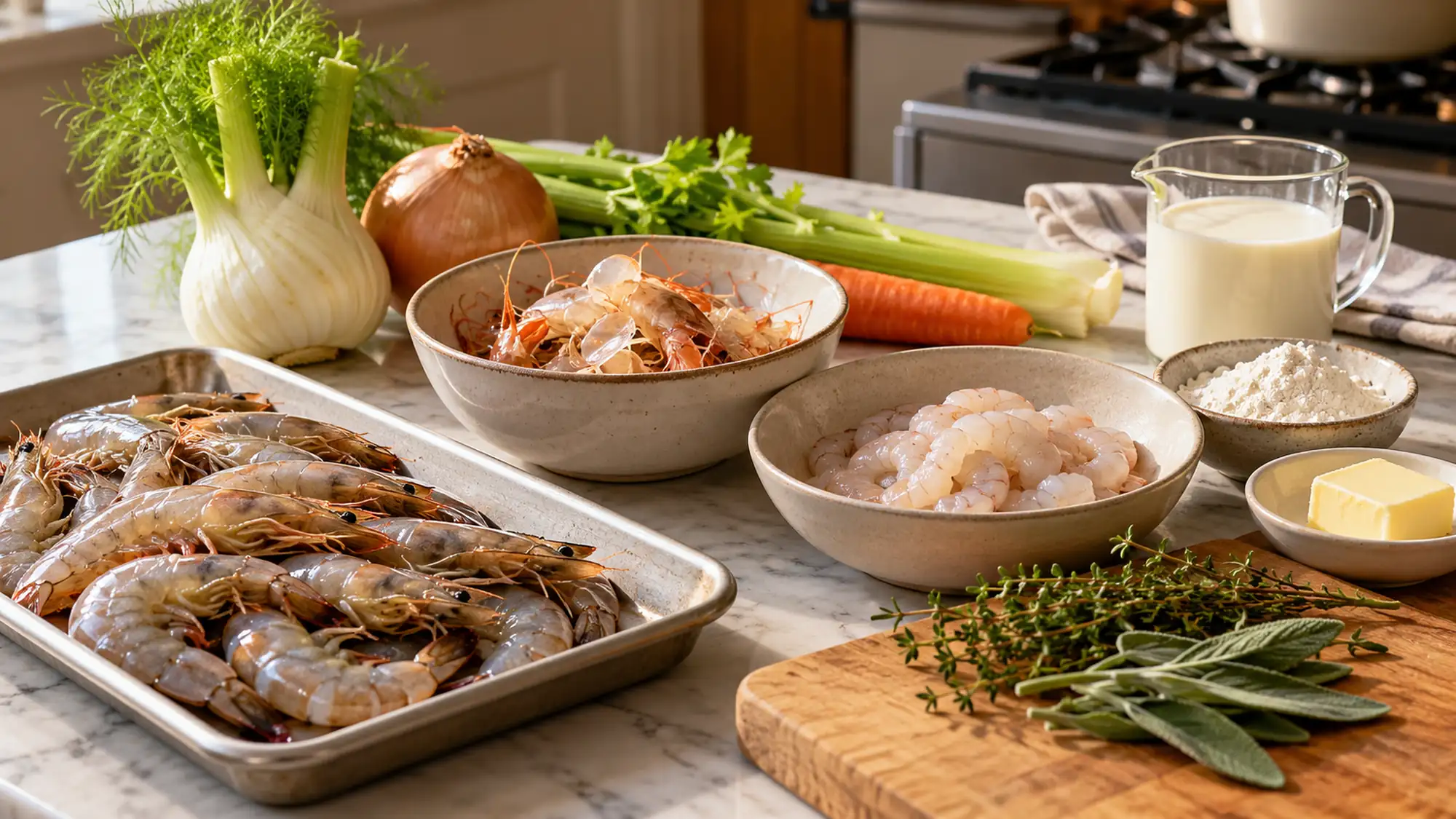
- 900 g raw headless shell-on shrimp peel and devein; reserve shells and all edible flesh
- 88 g unsalted butter 14 g stock,60 g roux,14 g shrimp
- 150 g onion diced
- 60 g celery diced
- 100 g fennel bulb diced
- 100 g carrot diced
- 1 bay leaf remove
- 15 g fresh parsley
- 2 g fresh thyme
- 2 g fresh tarragon
- 30 g tomato paste
- 60 ml dry white wine
- 30 ml cognac
- 1500 ml water reduce or top up strained stock to 1200 ml
- 60 g all-purpose flour
- 120 ml heavy whipping cream
- 4 g fine salt adjust to taste
- 1 g ground white pepper
- 5 g fresh chives chopped
Equipment
- 1 Large pot
- 1 fine-mesh strainer
- 1 Cheesecloth
- 1 Whisk
- 1 Skillet
Instructions
- Peel and devein the shrimp, reserving shells and all edible flesh separately. Refrigerate the flesh while making stock. The estimate assumes 675 g peeled flesh from 900 g headless shell-on shrimp; actual yield varies.
- Melt 14 g butter in a large pot. Cook shells until pink, then add onion, celery, fennel, carrot, bay, parsley, thyme and tarragon; cook 4–5 minutes. Stir in tomato paste, then wine and cognac. Add alcohol away from open flame and simmer briefly before adding water.
- Add 1500 ml water and simmer gently 45–60 minutes. Do not blend shells in this adaptation. Strain through a fine sieve lined with cheesecloth, pressing vegetables gently; discard all shell pieces and solids. Reduce or top up the strained liquid to 1200 ml.
- In a clean pot, melt 60 g butter and whisk in flour for 2 minutes without browning. Gradually whisk in hot stock, then simmer 10 minutes, stirring, until smooth and thickened. Add cream, salt and white pepper; keep below a hard boil. Strain again if needed.
- Cook peeled shrimp in the remaining 14 g butter just until pearly and opaque. Divide shrimp among six bowls, ladle smooth bisque over and scatter chives. No shells or hard fragments should remain in the soup.
Nutrition
Video
Notes
Tried this recipe?
Let us know how it turned out!Hi, I’m Laura, the voice behind Tastiva. I’ve always believed that eating well should feel enjoyable, comforting, and realistic—not like another complicated rule to follow. I love creating recipes that fit into everyday life, sharing simple nutrition ideas, and finding small ways to make meals feel a little better without losing the pleasure of good food.