
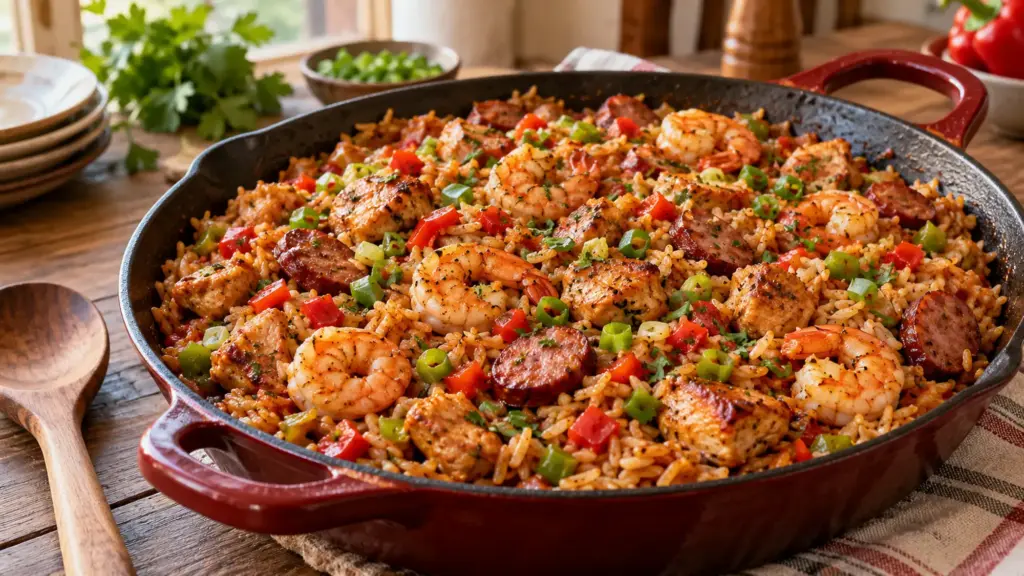
A pot of shrimp jambalaya is a meal built around timing as much as seasoning. The sausage can take a little browning, the chicken needs time to cook and the shrimp are happier arriving near the end. Getting those parts into the same pot does not mean treating them all exactly alike.
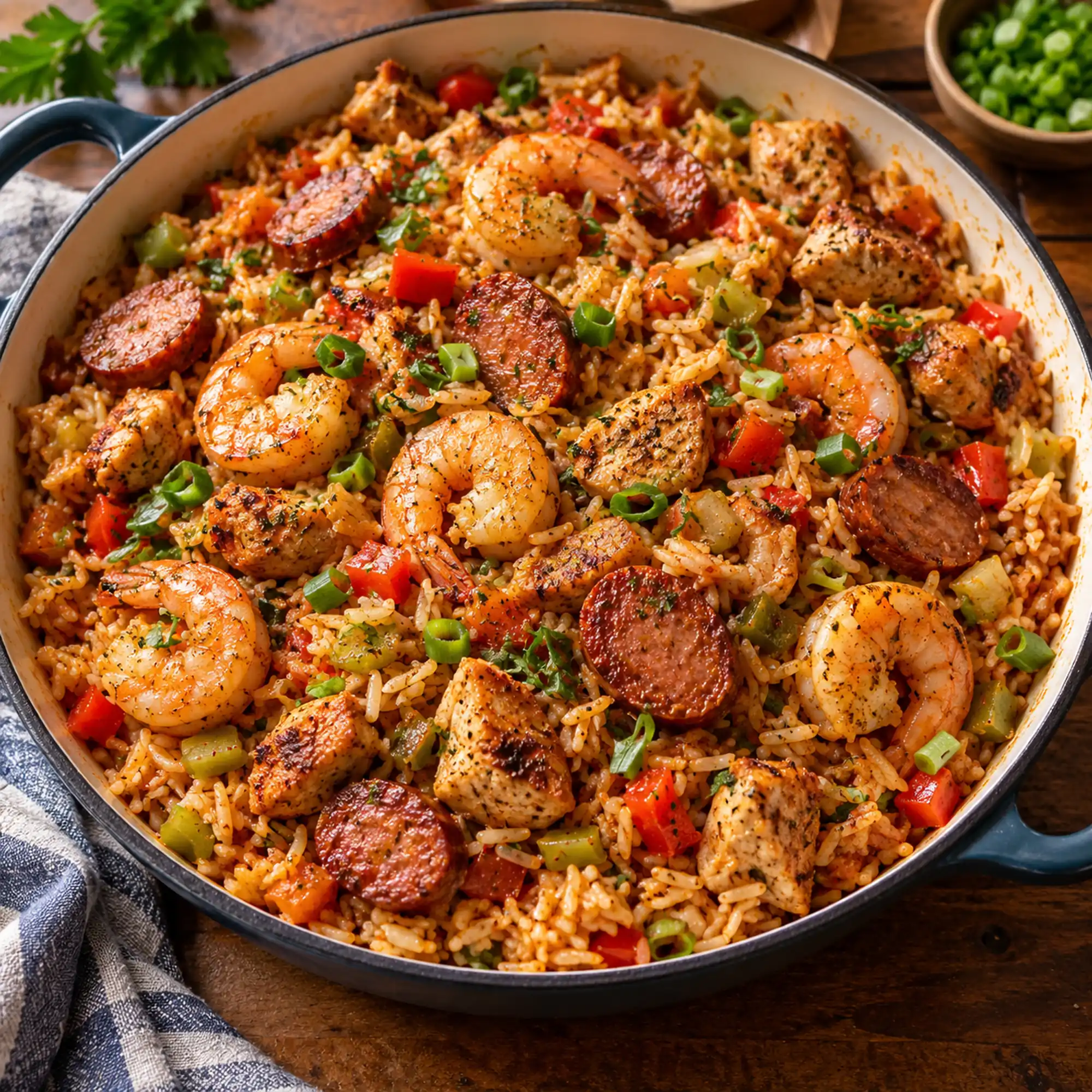
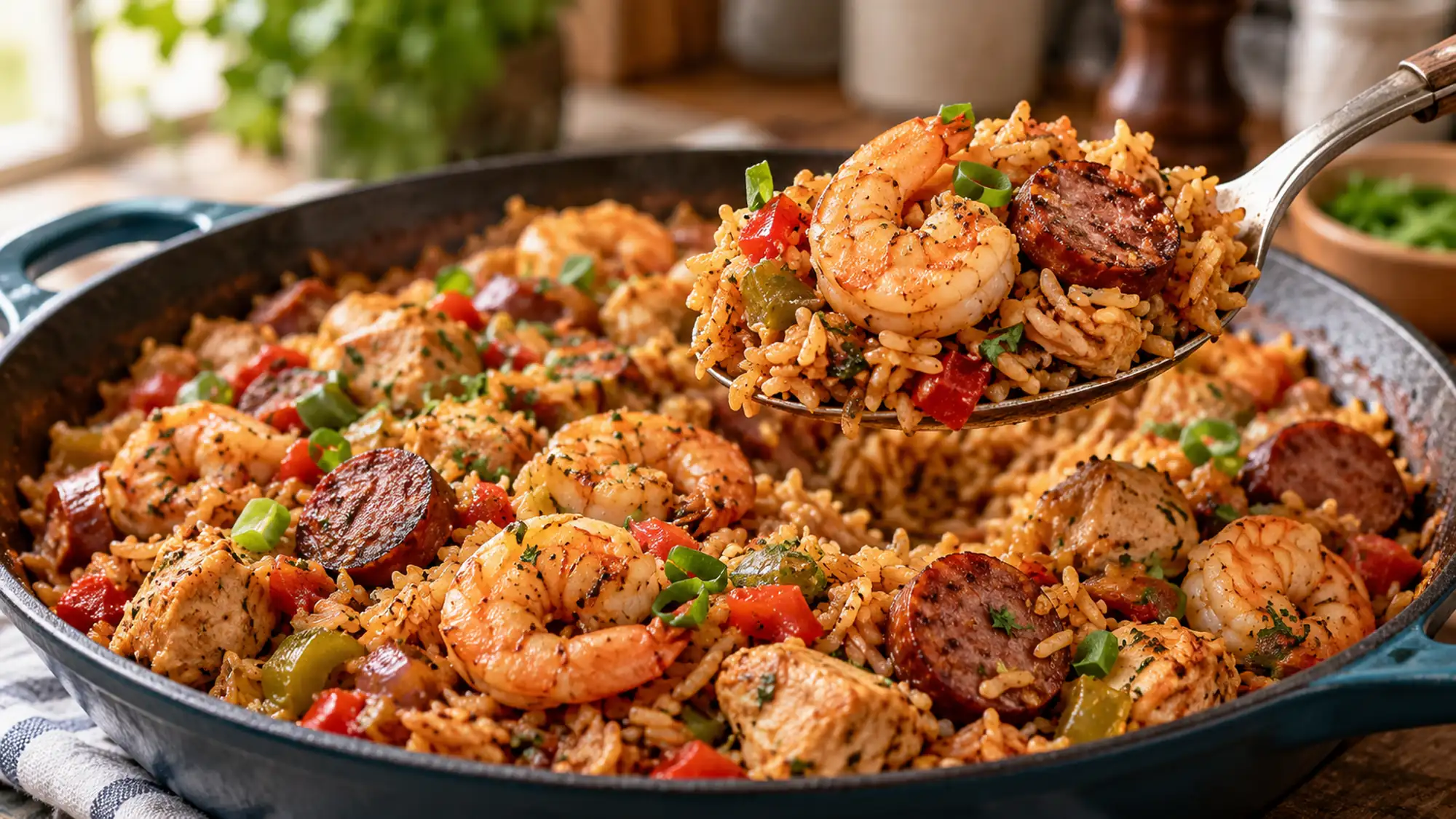
This shrimp jambalaya combines chicken thigh, fully cooked smoked beef sausage and long-grain rice, with shrimp added during the final stage. Keep enough moisture for the rice to soften, then rest the pot before folding everything together.
The recipe is adapted from Tatyana’s shrimp and sausage version, using the current ingredient list without bacon. I like the rice to remain distinct rather than stirred into a thick paste; a gentle hand matters once the grains are nearly cooked.
Serving Shrimp Jambalaya
Let the covered pot rest before lifting the lid and serving. That pause gives moisture a chance to settle through the rice, and it makes gentle folding easier. Distribute the shrimp, chicken and sausage deliberately so each portion gets more than whichever ingredient happened to land near the serving spoon.
The rice is already part of the meal, so extra bread or potatoes are not necessary. A simple vegetable or salad can provide contrast without competing with the seasoning. Keep hot sauce on the table rather than assuming every bowl should have the same level of heat.
- For a vegetable side: green beans add a straightforward contrast.
- For finishing: scatter the measured scallions after the resting period.
- For family service: use a broad spoon and fold rather than repeatedly stirring the rice.
| Serving decision | Useful effect | Keep in mind |
|---|---|---|
| Rest before serving | Helps moisture settle | Keep the lid on |
| Gentle folding | Protects the cooked grains | Avoid vigorous stirring |
| Simple vegetables | Adds a different texture | No extra starch required |
| Hot sauce at the table | Lets people choose heat | Taste before adding |
This is already a substantial rice meal; finish simply and distribute the proteins evenly.
Shrimp Jambalaya Variations
Different rice varieties absorb liquid at different rates, even when both packages say long grain. Check the grains near the end and add a little hot water if they are still firm and the pot is drying out. More heat will not fix dry, undercooked rice; it is more likely to scorch the bottom.
I would keep the shrimp for the final stage rather than browning them at the beginning and leaving them through the whole simmer. Their texture changes quickly. The chicken, sausage and vegetables can build the base first, while the shrimp finish in the steam above the rice.
- Different sausage: a fully cooked smoked sausage changes both flavor and salt; check its label.
- Milder seasoning: reduce cayenne and choose a mild sausage.
- Different pepper: green or red bell pepper works, with a different sweetness.
- More liquid: add small amounts as needed instead of flooding nearly cooked rice.
Give the rice enough moisture and the shrimp a shorter cooking window; do not solve every problem with higher heat.
Nutrition and Safe Cooking
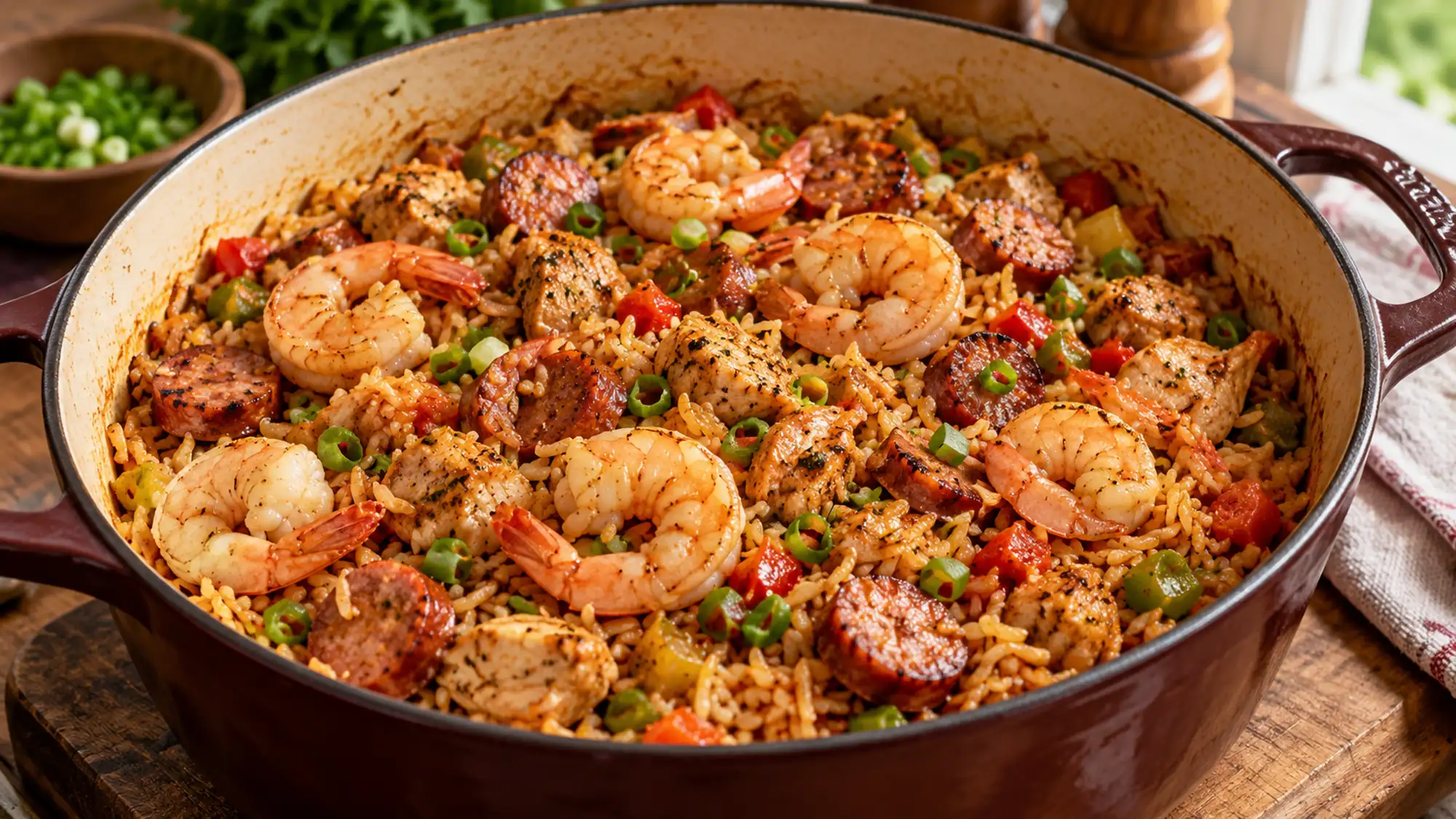
This version includes three proteins, rice and vegetables, so it is not a seafood-only dish. Smoked sausage contributes fat and sodium as well as flavor. The eight-serving estimate includes the rice, making it more useful than a figure that quietly leaves out the main starch.
The calculation uses a specific fully cooked beef-sausage label and measured stock. Another sausage may have a different composition, and additional broth can change sodium further. Water is the simplest adjustment when the rice needs a little more moisture without extra seasoning.
- Check the chicken: it should reach the 165°F poultry temperature.
- Check the shrimp: look for pearly, opaque flesh rather than relying on shell color.
- Cool rice promptly: divide leftovers into shallow containers instead of leaving the covered pot warm.
- Reheat thoroughly: heat leftovers evenly before serving.
Count the sausage and rice as part of the meal, and handle cooked-rice leftovers promptly.
Bottom Line
Shrimp jambalaya works when the ingredients share a pot without losing their own textures. Build the base first, give the rice the moisture it needs and let the shrimp join late. A covered rest and a gentle fold finish the job more effectively than another round of vigorous stirring.
Tender rice, briefly cooked shrimp and evenly shared sausage make a satisfying one-pot plate.
Shrimp Jambalaya Recipe

Ingredients
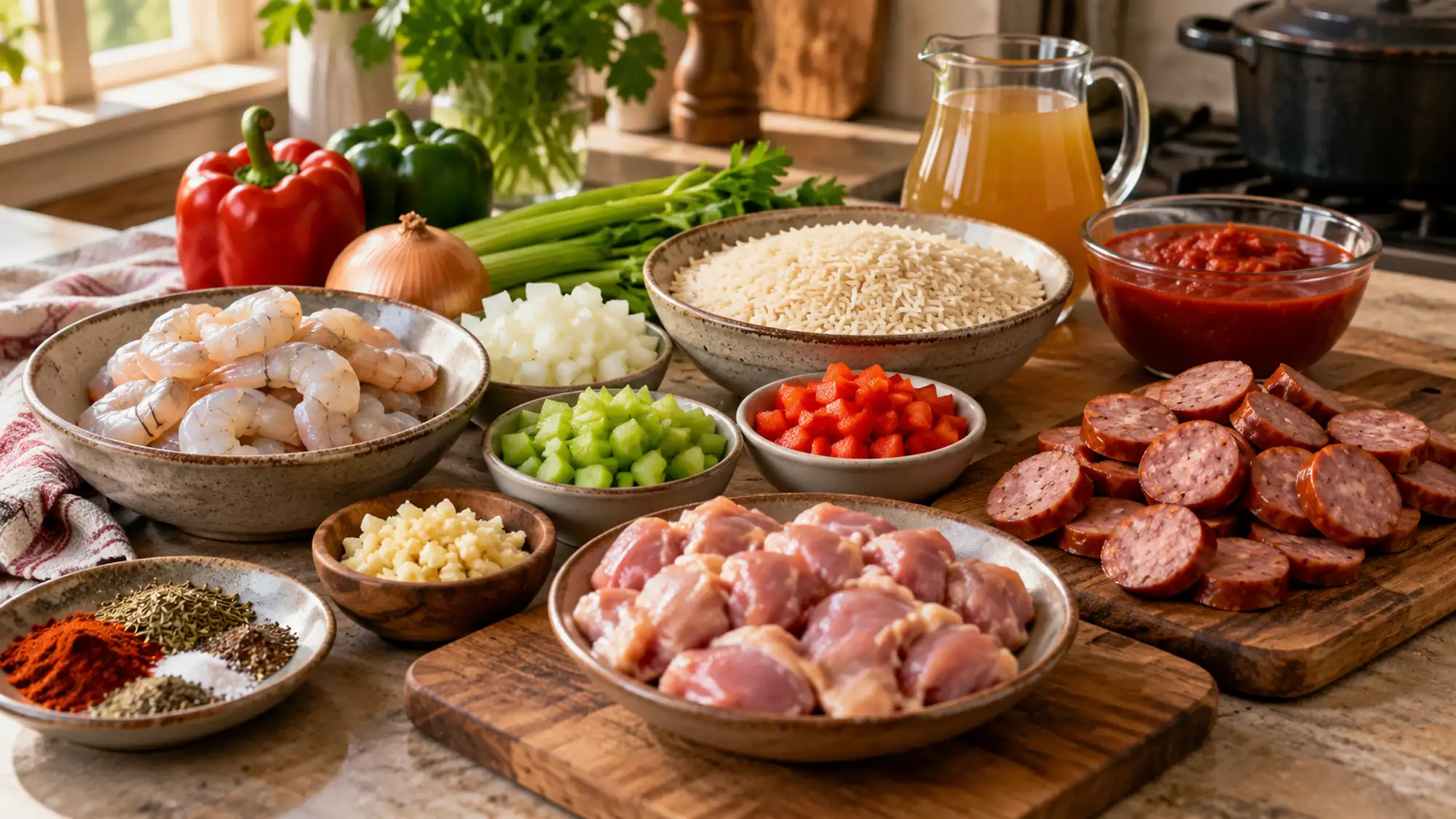
- 454 g fully cooked beef smoked sausage sliced
- 454 g boneless skinless chicken thighs bite-size pieces
- 454 g raw peeled deveined shrimp
- 15 ml olive oil
- 150 g red bell pepper diced
- 200 g onion diced
- 12 g garlic minced
- 120 g celery diced
- 120 g plain strained tomatoes
- 960 ml unsalted chicken stock plus water as needed
- 300 g dry long-grain white rice
- 2 g chili powder
- 2 g smoked paprika
- 2 g ground cumin
- 1 g dried tarragon
- 4 g brown sugar
- 1 g black pepper
- 2 g fine salt
- 0.5 g cayenne pepper
- 15 g scallions sliced
Equipment
- 1 Large heavy pot with lid
- 1 wooden spoon
- 1 Instant-read thermometer
Instructions
- Brown sliced fully cooked sausage in the measured oil, then lift out. Brown chicken pieces in the same pot, followed by onion, pepper, celery and garlic.
- Stir in spices, sugar and salt. Add strained tomatoes and stock, return sausage and simmer covered about 15 minutes.
- Stir in dry rice and simmer covered about 10 minutes. Arrange shrimp over the rice, cover again and cook until rice is tender, shrimp pearly and opaque and chicken reaches 165°F (74°C). Add small splashes of hot water if rice needs more liquid.
- Rest covered 10 minutes off heat. Fold gently to distribute chicken, sausage and shrimp, scatter scallions and divide into eight portions.
Nutrition
Video
Notes
Tried this recipe?
Let us know how it turned out!Hi, I’m Laura, the voice behind Tastiva. I’ve always believed that eating well should feel enjoyable, comforting, and realistic—not like another complicated rule to follow. I love creating recipes that fit into everyday life, sharing simple nutrition ideas, and finding small ways to make meals feel a little better without losing the pleasure of good food.