
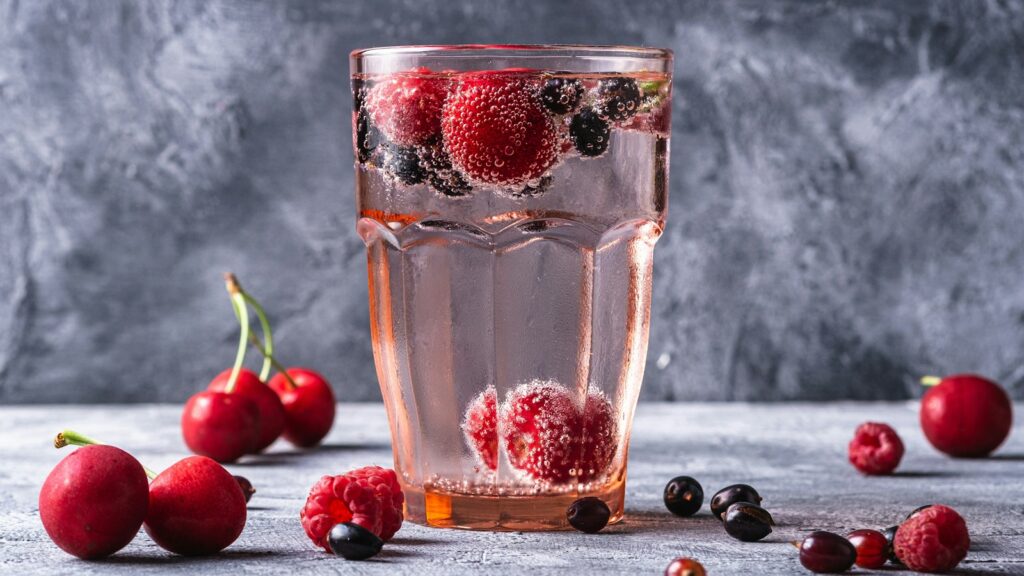
You reach for soda water, then find three other fizzy bottles beside it. Soda water generally means water with dissolved carbon dioxide, the gas that creates bubbles. Depending on the brand and region, the name may refer to plain carbonated water or a product with added mineral salts, so the ingredient label is more useful than the name alone.
For a glass that tastes the way you expect, check two things before pouring: added sweetness and added mineral salts.
Soda water and the other fizzy options
Seltzer is commonly water with added carbonation, while club soda usually contains added mineral salts that influence its taste. Sparkling mineral water has a mineral profile associated with its source. These terms help you navigate the shelf, but flavored versions and regional naming differences make the actual product label the final check.
| Drink | Typical defining feature | What matters in the glass |
|---|---|---|
| Soda water | Broad name for carbonated water | Check for added minerals, flavorings, or sweeteners |
| Plain seltzer | Carbonated water without added mineral salts | A relatively neutral base for another flavor |
| Club soda | Carbonated water with added salts | A mineral note; sodium varies by brand |
| Sparkling mineral water | Water with a source-specific mineral composition | Distinctive flavor and a variable mineral profile |
| Tonic water | A quinine-containing bitter mixer | Often sweetened; diet versions use other sweeteners |
Tonic is the easy one to confuse with plain bubbly water because both can look clear. Its bitterness and usual sweetness change a drink considerably. Substituting tonic in a fruit spritzer will not give the same result as substituting seltzer, even when the bottles look nearly identical on the shelf.
I’d choose the bottle around its job. A neutral base makes sense when you want to taste cucumber or mint clearly; a mineral flavor can be appealing on its own. There is no need to buy the most elaborate bottle for every glass you pour.
Read the label for sugar, sodium, and caffeine
Plain, unsweetened carbonated water can contain no sugar or calories, but the wider shelf includes sweetened and caffeinated products. Check ingredients as well as the nutrition panel. “Sparkling” describes the bubbles; it does not guarantee an absence of sugar, juice, caffeine, or other additions.
One concrete example shows why sodium deserves its own check: Canada Dry lists 115 milligrams in an 8-fluid-ounce serving of its club soda and zero in a 12-fluid-ounce serving of its original seltzer. Those are different serving sizes and specific products, not universal figures. Use the current maker’s label or your bottle when calculating your own intake.
- For an unsweetened drink: Look for no added sugars and read whether other sweeteners are present.
- If limiting sodium: Compare equal volumes, especially among club sodas and mineral waters.
- If limiting caffeine: Check flavored or “energy” varieties instead of assuming every carbonated water is caffeine-free.
- For a mixed drink: Count the juice, syrup, or other mixer separately; plain bubbles do not cancel those ingredients.
- For a large bottle: Check whether the nutrition panel represents one glass or the whole container.
The useful distinction is what you actually drink over the day. A splash in a small glass and several large bottles are different exposures. If you follow a prescribed fluid or sodium limit, include sparkling water in that plan rather than treating it as a separate category.
Hydration, teeth, and how your stomach feels
Unsweetened sparkling water can contribute to your fluid intake. The British Dietetic Association includes water and other drinks in its hydration guidance; there is no need to give ordinary bubbles a special detox job. Tastiva’s lemon water guide takes the same practical approach to another simple way of making water appealing.
The American Dental Association says plain sparkling water is generally fine for teeth, while noting that citrus flavoring can increase acidity and added sugar changes the picture. Its advice is to enjoy more acidic flavored waters with meals or in one sitting rather than sipping repeatedly all day. Regular fluoridated water still has a useful place in the routine.
Carbonation may feel uncomfortable if you are prone to belching or bloating. Try a smaller serving or still water if you notice that pattern; you do not need to push through discomfort because a drink is fashionable. Ongoing digestive symptoms deserve individual advice, and soda water should not be presented as a treatment for reflux or another digestive condition.
Keep the fizz and make the flavor your own
Start with a chilled bottle and pour close to serving time. Add sparkling water after still ingredients, then stir gently enough to combine. An open pitcher sitting on the table will gradually lose its lively texture, so smaller batches make sense when the bubbles are part of what you enjoy.
- For a light fruit note: Add a few pieces of washed fruit instead of expecting plain water to taste like a sweet soda.
- For herbal flavor: Lightly bruise clean mint or basil leaves before adding them; strain if floating leaves bother you.
- For a juice spritzer: Begin with a small amount of juice, add sparkling water, and adjust to taste.
- For a less tart glass: Try cucumber or a plain version instead of repeatedly adding citrus.
- For leftovers: Recap the bottle promptly and refrigerate according to its storage directions.
I like this as a low-pressure way to vary a drink: change one addition at a time and keep the glass small enough to finish while it is still fizzy. If you use a home carbonator, follow its manual about approved liquids and bottle handling. Add flavor afterward unless the specific machine explicitly allows otherwise.
Sources
- Canada Dry: Club soda, seltzer, and tonic ingredients and nutrition
- American Dental Association: Sparkling water and teeth
- British Dietetic Association: Fluid, water, and drinks
- FDA: Understanding the Nutrition Facts label

Hi, I’m Laura, the voice behind Tastiva. I’ve always believed that eating well should feel enjoyable, comforting, and realistic—not like another complicated rule to follow. I love creating recipes that fit into everyday life, sharing simple nutrition ideas, and finding small ways to make meals feel a little better without losing the pleasure of good food.