
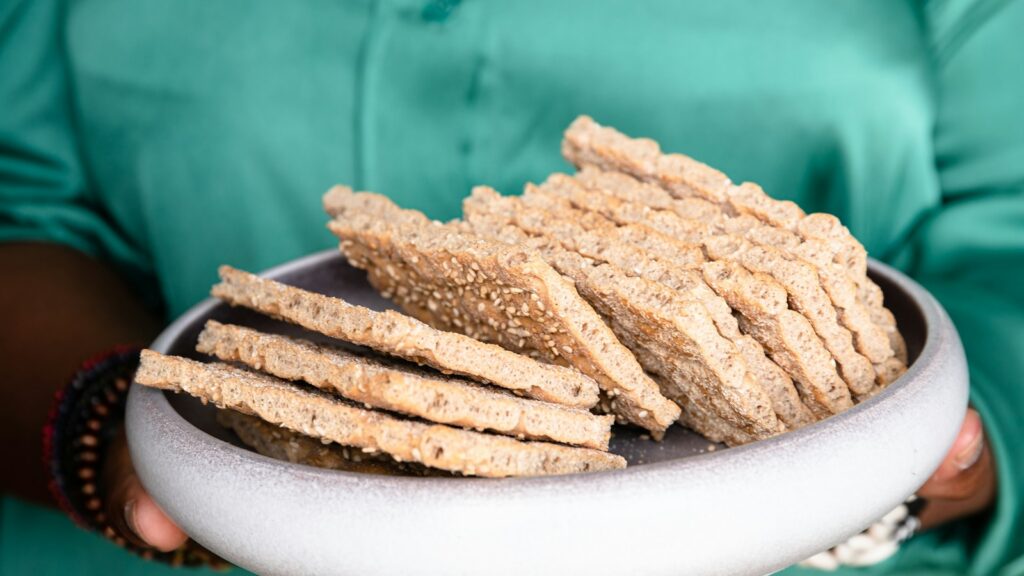
A cracker covered in seeds can look convincingly whole grain before you’ve read a single ingredient. Whole grain crackers contain grains with their bran, germ, and endosperm intact, but the amount varies by product. To find a box that suits you, start with the grain ingredients, then compare the serving size, fiber, sodium, and flavor.
Let the ingredient list explain the grain, and let the rest of your snack supply the variety a cracker cannot provide on its own.
How to recognize whole grain crackers
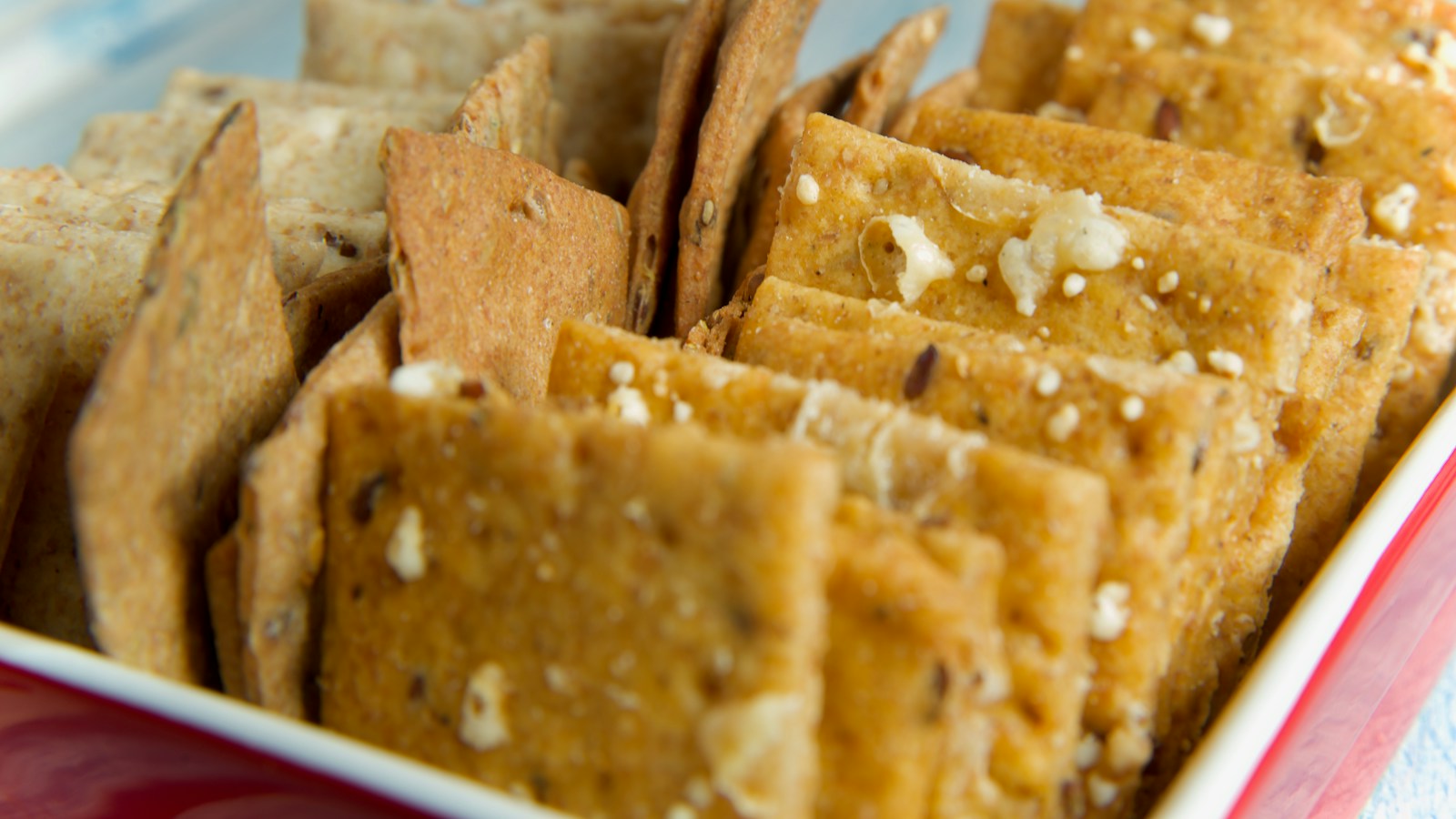
Look for clearly named ingredients such as whole wheat, whole rye, oats, or brown rice. Words such as “multigrain,” “stoneground,” and “wheat” do not establish that all the grain is whole. The Whole Grains Council’s label guide also explains why brown color and a high fiber number cannot settle that question.
| Wording on the package | What it tells you | Your next step |
|---|---|---|
| 100% whole grain or 100% whole wheat | All the grain is described as whole | Check the rest of the ingredients and nutrition panel |
| Made with whole grain | Some whole grain is present | Look for a stated amount or more specific information |
| Multigrain | More than one grain is used | Read which grains are whole and which are refined |
| Enriched wheat flour | A refined grain ingredient is present | Check whether whole grains appear elsewhere |
| Seeded or topped with seeds | Seeds contribute flavor and texture | Check the flour ingredients separately |
Ingredient order helps, but a mixture of several grains can make percentages hard to judge. You cannot calculate the exact whole-grain proportion from their order alone. An explicit percentage or the appropriate Whole Grain Stamp adds information; the absence of a stamp does not automatically mean the crackers contain refined grains.
I’d make this a quick check, not a homework assignment in the aisle. Find a few boxes with clear grain information and flavors you enjoy, then compare those. A cracker you like enough to eat with lunch is more useful than a supposedly perfect one that stays unopened.
Compare the portion before the nutrition numbers
Crackers vary enormously in size and weight. “Six crackers” could mean thin wafers or substantial woven squares, so compare the gram weight printed beside the serving. If one nutrition panel describes 15 grams and another 30 grams, the numbers represent different amounts of food. Doubling the smaller serving is a simple way to make that particular comparison fair.
Fiber is useful information, even though it does not prove whole-grain content. Sodium can vary with seasoning and toppings, while cheese-flavored varieties may include ingredients relevant to milk allergies. The FDA’s Nutrition Facts guide explains that the stated serving describes an amount commonly eaten, rather than an instruction for how much you personally must eat.
- Match the weights first. Compare similar gram amounts before deciding one box contains more fiber or less sodium.
- Read flavor ingredients. A plain and a seasoned version of the same cracker can have different salt levels and allergens.
- Consider your topping. A salty cheese or dip adds its own sodium; the cracker is only part of the snack.
- Use your own needs. A clinician’s sodium target or an allergy takes priority over a generic “healthiest cracker” ranking.
- Include price and enjoyment. Compare usable package size and choose a texture you actually want to eat.
Whole grain crackers still offer different combinations of starch, fat, fiber, and seasoning. They do not need to be exceptionally high in protein to have a place on your plate. I’d give them the job of providing crunch and grain, then choose a topping that does something different.
Build a snack with more than crunch
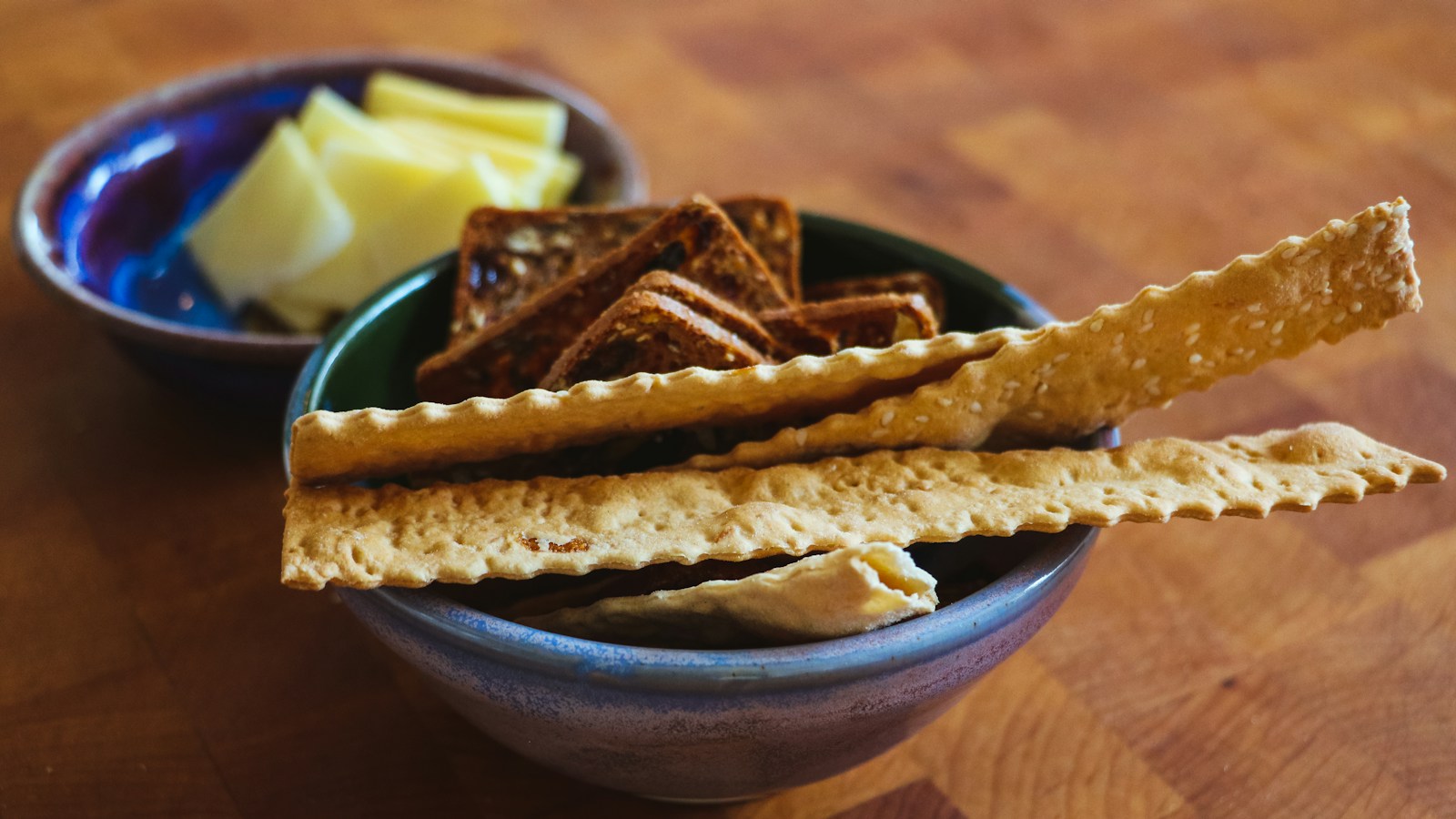
Pairing crackers with a protein-containing food and some produce gives you more variety than eating from the box alone. This is a flexible assembly idea, not a prescribed portion or a promise that one combination will keep every person full for the same number of hours. Let appetite, meal timing, and what you have available guide the amount.
| Start with crackers | Add a filling or topping | Add something fresh |
|---|---|---|
| Mild whole wheat | Hummus or another bean dip | Cucumber slices |
| Crisp whole rye | Cottage cheese or a suitable alternative | Tomato and herbs |
| Plain brown rice | Nut or seed butter, if tolerated | Apple or pear slices |
| Sturdy seeded crackers | Tuna mixed with yogurt or mayonnaise | Shredded carrot or lettuce |
| Lightly salted whole grain | Cheese | Grapes cut appropriately for the eater |
Choose the cracker’s structure for the topping. Thin, delicate crackers suit a light spread; a thick scoop of hummus needs something sturdier. If you’re comparing cheeses for that plate, Tastiva’s low-fat cheese guide explains the texture and nutrition trade-offs without treating one style as compulsory.
Pack wet ingredients separately until serving to preserve the crunch. Perishable toppings also need appropriate chilling, even when the crackers themselves can travel in a lunch bag. Keep a separate spoon for spreads so crumbs and moisture do not accumulate in the original container.
Check dietary needs and keep the box fresh
Whole grain does not mean gluten-free. Whole wheat and rye contain gluten; a rice-based cracker can still have other ingredients or cross-contact to consider. For celiac disease, choose an appropriately gluten-free-labeled product and check the complete package. Tastiva’s gluten-free chips guide covers similar label issues for another crunchy snack.
- For wheat allergy: Read the allergen information; a gluten-free claim is not a substitute for a wheat-allergy check.
- For sesame or nut allergy: Pay attention to seed mixtures, toppings, and the manufacturer’s handling information.
- After opening: Reseal the inner bag or move crackers to an airtight container, keeping the label for reference.
- Before buying a large box: Consider whether you’ll finish it while the texture is still enjoyable.
Store crackers as the package directs, away from moisture and heat. Staleness affects texture, but visible mold, pest damage, or an off smell calls for discarding the food. Having one dependable box and a few easy toppings is often enough to make this corner of the pantry work well.
Sources
- Whole Grains Council: Identifying whole-grain products
- FDA: Understanding the Nutrition Facts label
- FDA: Gluten and food labeling
- Food Allergy Research & Education: Sesame allergy

Hi, I’m Laura, the voice behind Tastiva. I’ve always believed that eating well should feel enjoyable, comforting, and realistic—not like another complicated rule to follow. I love creating recipes that fit into everyday life, sharing simple nutrition ideas, and finding small ways to make meals feel a little better without losing the pleasure of good food.