
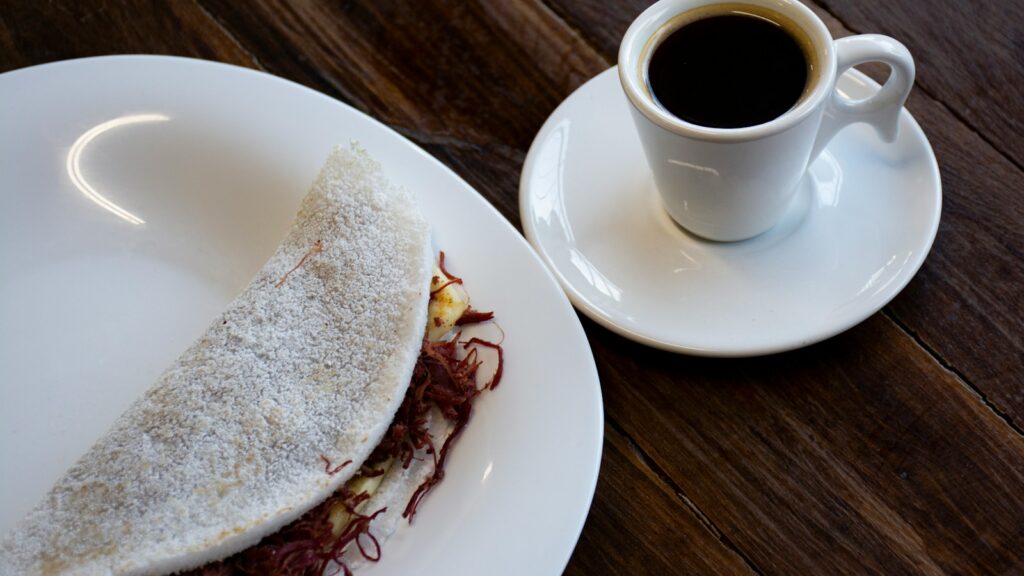
A recipe calls for tapioca starch, but the bag on the shelf says tapioca flour. In ordinary home-baking products, those names usually describe the same fine starch extracted from cassava root. It can thicken liquids and contribute chew to gluten-free baking, but it behaves differently from whole cassava flour, wheat flour, and the pearls used in pudding or bubble tea.
Match the form to the recipe: a fine starch, a whole-root flour, and a bag of pearls share an origin but do different kitchen jobs.
What tapioca starch does in food
Tapioca starch is mainly carbohydrate, used for its ability to change texture. Depending on the recipe, that may mean a glossy sauce, a fruit filling, or the pleasantly elastic bite of Brazilian cheese bread. It does not supply the gluten structure of wheat flour, so a gluten-free loaf usually needs a planned combination of ingredients rather than a direct swap.
Bob’s Red Mill, for example, labels its product “Tapioca Flour (Tapioca Starch)” and recommends it for baking blends, soups, sauces, and pie fillings. Its current label lists 35 calories and 9 grams of carbohydrate per 10-gram serving, with zero grams of fiber and protein. Those figures describe that product and serving, rather than an entire finished dish.
I’d buy it for a texture you need, not because a package makes it sound like a nutritional upgrade to every other flour. A small amount can be very useful in the right recipe. The other foods in the meal can provide the protein, fiber, and variety that a purified starch does not bring in meaningful amounts.
Tapioca flour, cassava flour, and pearls compared
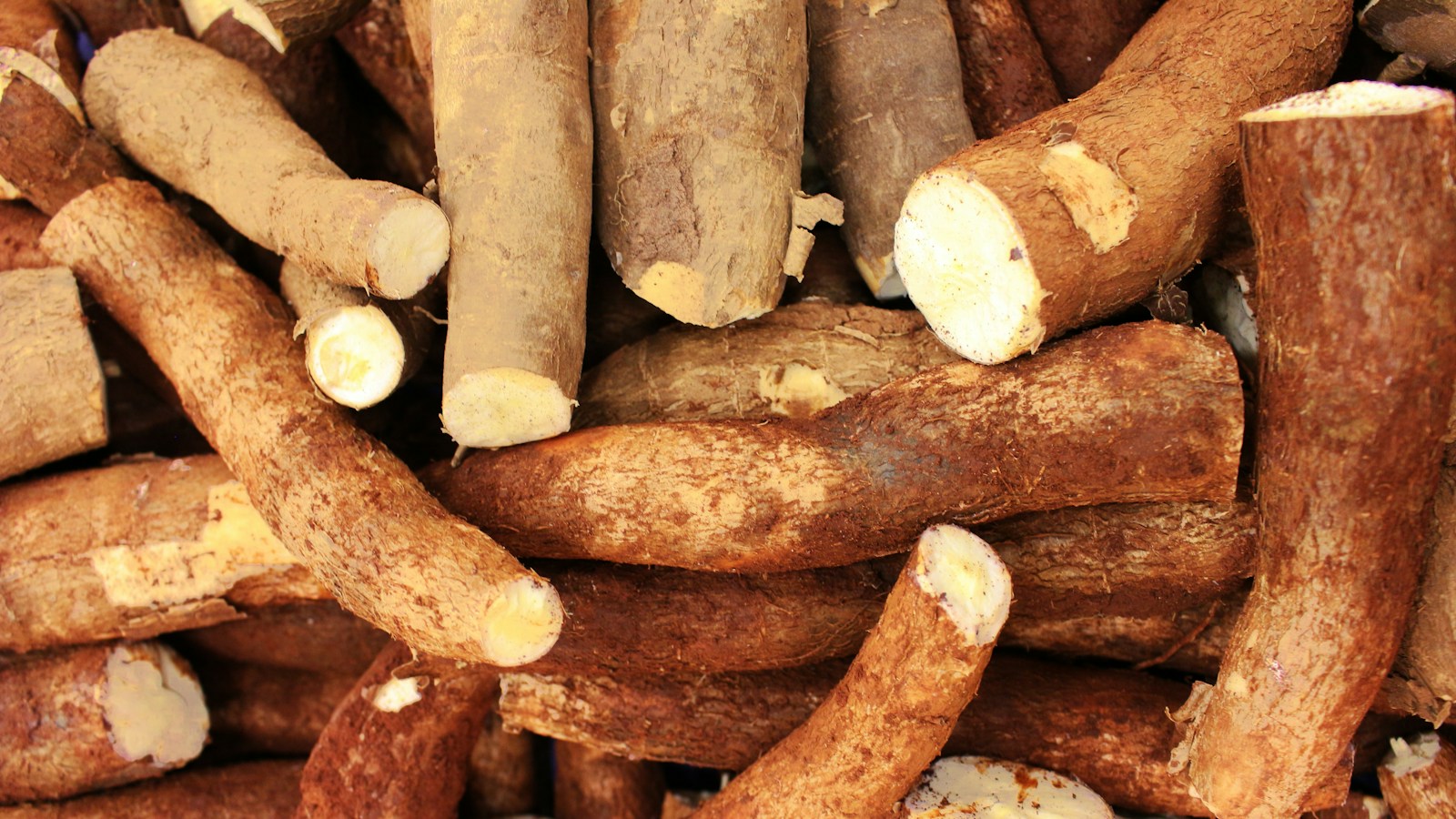
Cassava is the root also known as yuca; Tastiva’s yuca fries guide shows it in a very different form. Tapioca starch is separated from that root, whereas cassava flour retains more of the root material. Even when both are pale powders, their absorption and behavior differ enough that an untested exchange can change a bake.
| Product | Form | Best starting point |
|---|---|---|
| Tapioca starch or ordinary tapioca flour | Fine extracted starch | Recipes written for thickening or gluten-free blends |
| Cassava flour | Flour made from processed cassava root | Recipes specifically developed for cassava flour |
| Quick-cooking tapioca | Small processed granules | A pudding or pie method specifying this form |
| Tapioca pearls | Formed pieces in different sizes | Package directions for pudding or drinks |
| Modified tapioca starch | Starch altered for particular performance | The product’s directions, not a generic substitution |
For a finely powdered product, the words “starch” and “flour” are commonly interchangeable. The important exception is a specialty product with different processing or added ingredients. Read the description instead of buying solely by the large word on the front, particularly if a recipe specifies sweet, sour, fermented, or modified starch.
If gluten avoidance is medically necessary, select a product with appropriate gluten-free labeling. Cassava does not naturally contain gluten, but that does not describe every factory, blend, or shared preparation surface. Keep scoops and storage containers separate from wheat flour where cross-contact is a concern.
Use a method suited to the food you’re thickening
For a sauce, follow a recipe that specifies tapioca starch and mix the powder smoothly with a little cool liquid before introducing it to the hot mixture. This separates the particles so they can disperse more evenly. Adding a dry heap directly to hot liquid can leave thick lumps surrounded by a sauce that still looks thin.
- Measure first. Use the recipe’s amount and its stated volume of liquid rather than pouring from the bag.
- Stir the slurry again. Starch can settle while it waits, so redistribute it before adding.
- Heat as directed. Watch the change in consistency while stirring; the method matters as well as the quantity.
- Assess before adding more. Allow the first addition to do its work, and remember that the finished texture may change as the food cools.
- Keep notes when adapting. Record the liquid amount, starch weight, and result so the next adjustment has a basis.
Pie filling needs its own approach. The King Arthur pie-thickener guide shows that fruit type, juiciness, and whether the fruit was frozen change the amount required. Its quick-cooking tapioca directions concern granules, not an automatic spoon-for-spoon formula for powdered starch. Mixing a suitable thickener with recipe sugar before adding fruit can help distribute it.
Substitutions, common mistakes, and storage
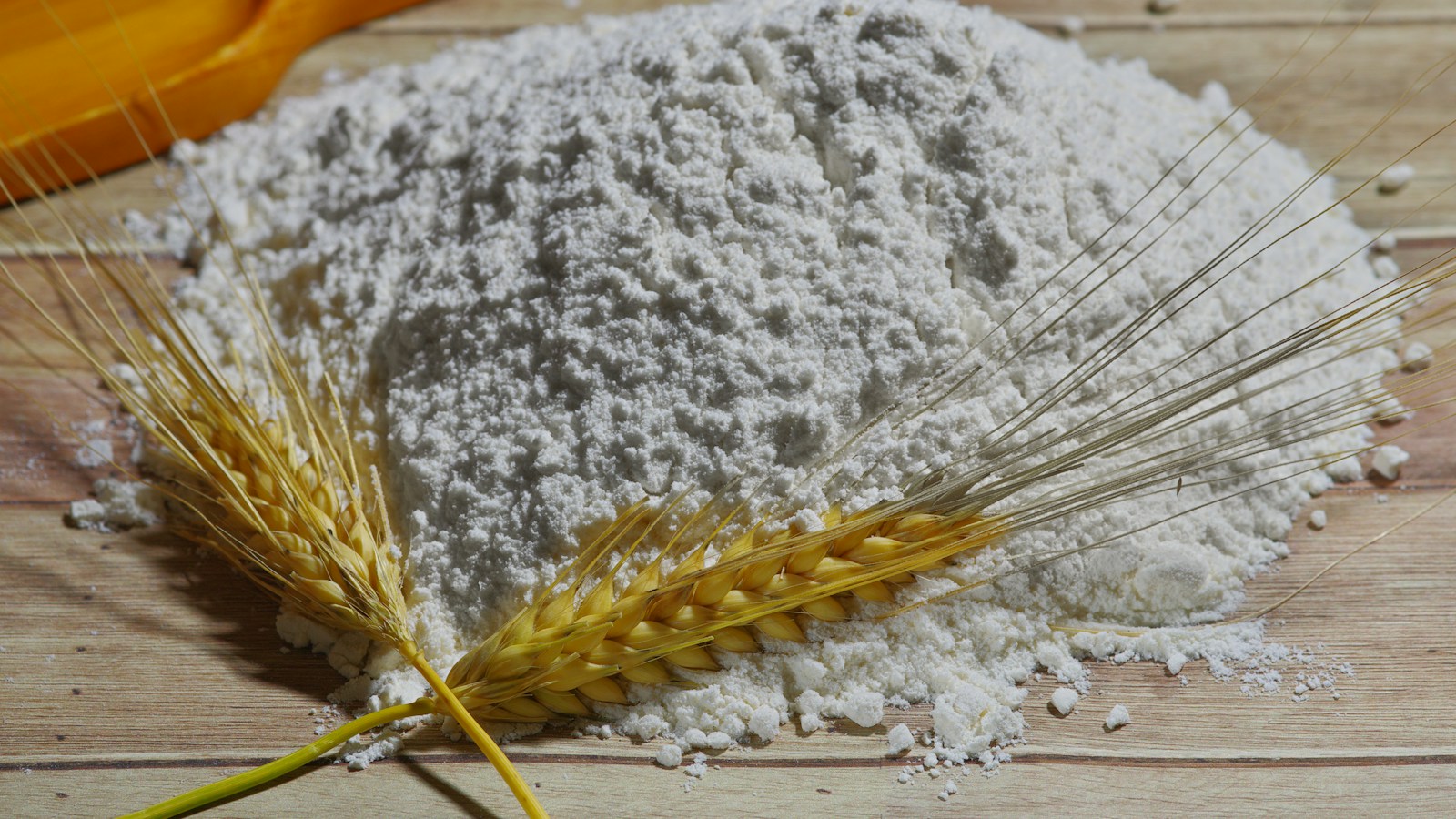
Cornstarch, potato starch, and arrowroot may work in some of the same dishes, but there is no single conversion that preserves every sauce and bake. Acid, cooking method, other ingredients, and the desired final texture all matter. I’d choose a tested substitution for that specific recipe before risking a full tray of ingredients on a broad conversion chart.
| If this happens | Check before the next attempt |
|---|---|
| Lumps appear in the sauce | Whether the powder was dispersed in cool liquid first |
| The filling is too loose | The form of tapioca, liquid quantity, cooking, and cooling directions |
| The result is overly sticky or gummy | The amount of starch and whether a substitution was measured correctly |
| A cake lacks structure | Whether tapioca replaced flour outside a tested blend |
| A pie has noticeable granules | Whether quick-cooking tapioca received the specified hydration time |
Keep the starch dry in a sealed container and retain its label and storage instructions. Use a clean, dry spoon; discard a product with moisture damage, mold, pests, or an unusual odor. Commercial food-grade starch is the appropriate starting point here, and raw dough or batter should still be cooked before eating. A flour’s gluten status does not make an uncooked mixture ready to taste.
Sources
- Bob’s Red Mill: Tapioca flour ingredients, uses, and nutrition
- King Arthur Baking: Pie thickener guide
- FDA: Gluten and food labeling

Hi, I’m Laura, the voice behind Tastiva. I’ve always believed that eating well should feel enjoyable, comforting, and realistic—not like another complicated rule to follow. I love creating recipes that fit into everyday life, sharing simple nutrition ideas, and finding small ways to make meals feel a little better without losing the pleasure of good food.