
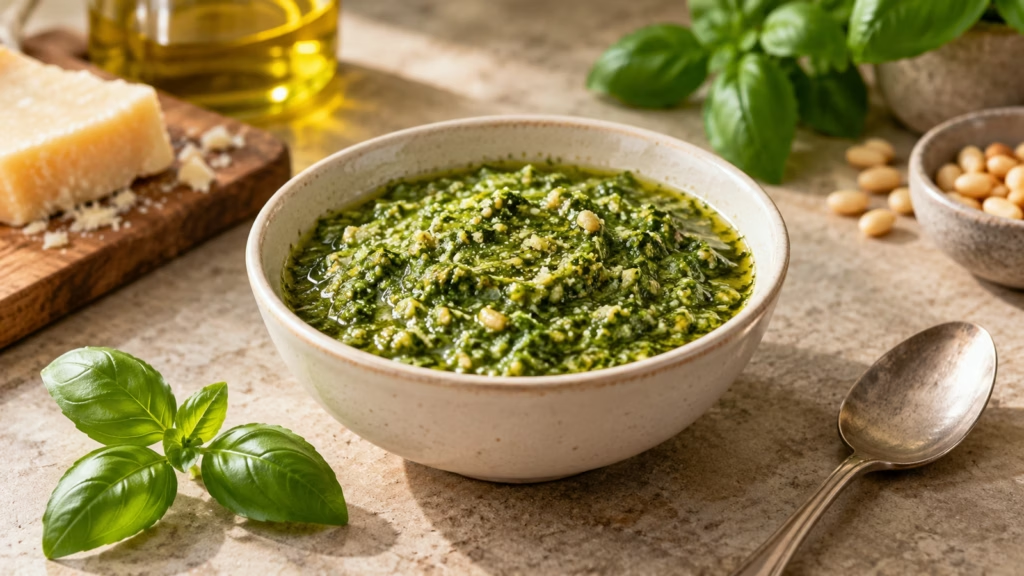
A bunch of basil can look like plenty until you start planning what to do with it. If you’re wondering how to make pesto, the answer is reassuringly simple: pulse fresh basil with nuts, garlic, Parmesan, and olive oil until you have a spoonable sauce. The useful part is knowing when to stop blending and how to adjust it for the meal in front of you.
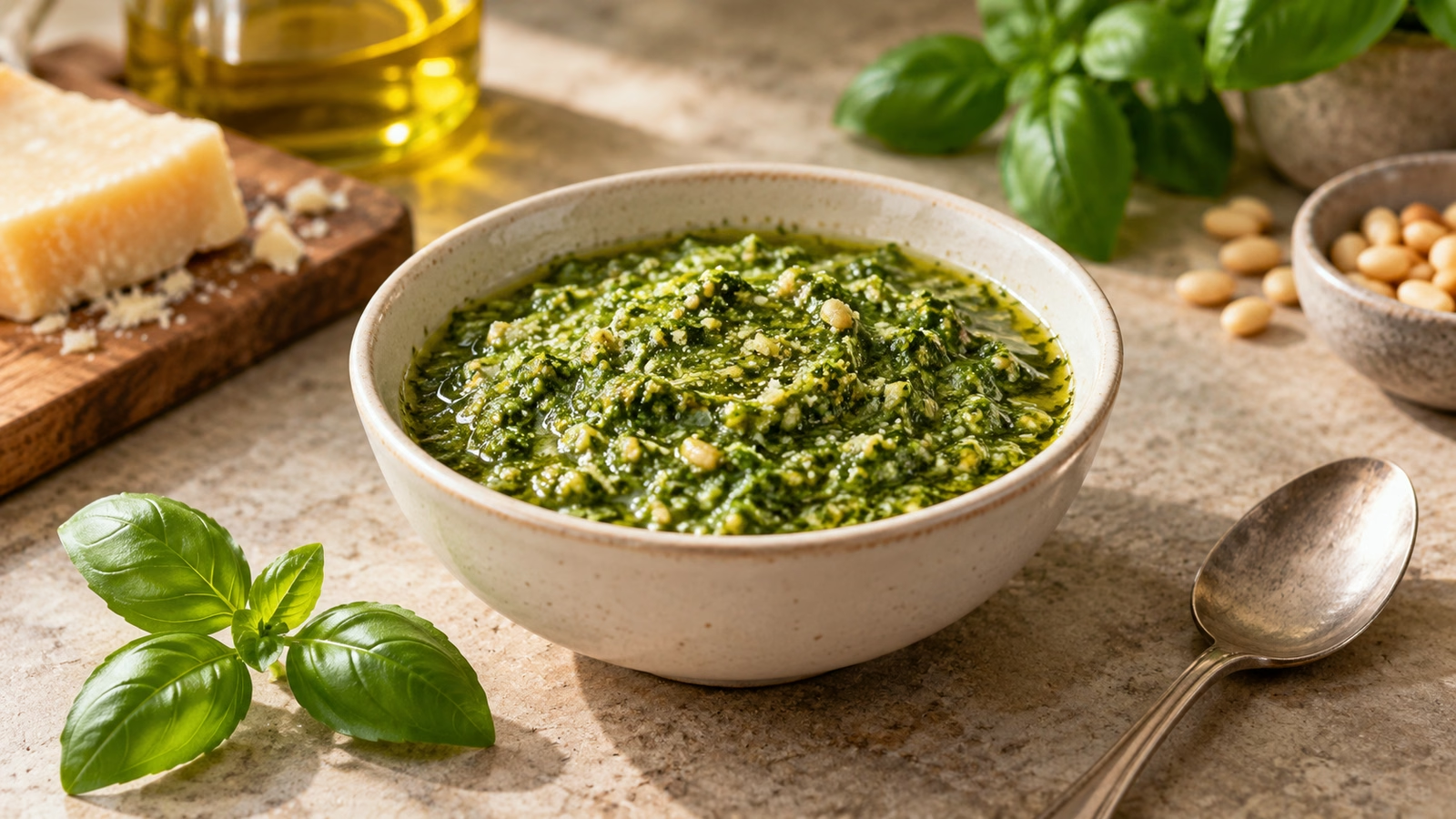
Let basil lead the flavor, then adjust the texture to suit what you’re serving.
Choose ingredients that work together
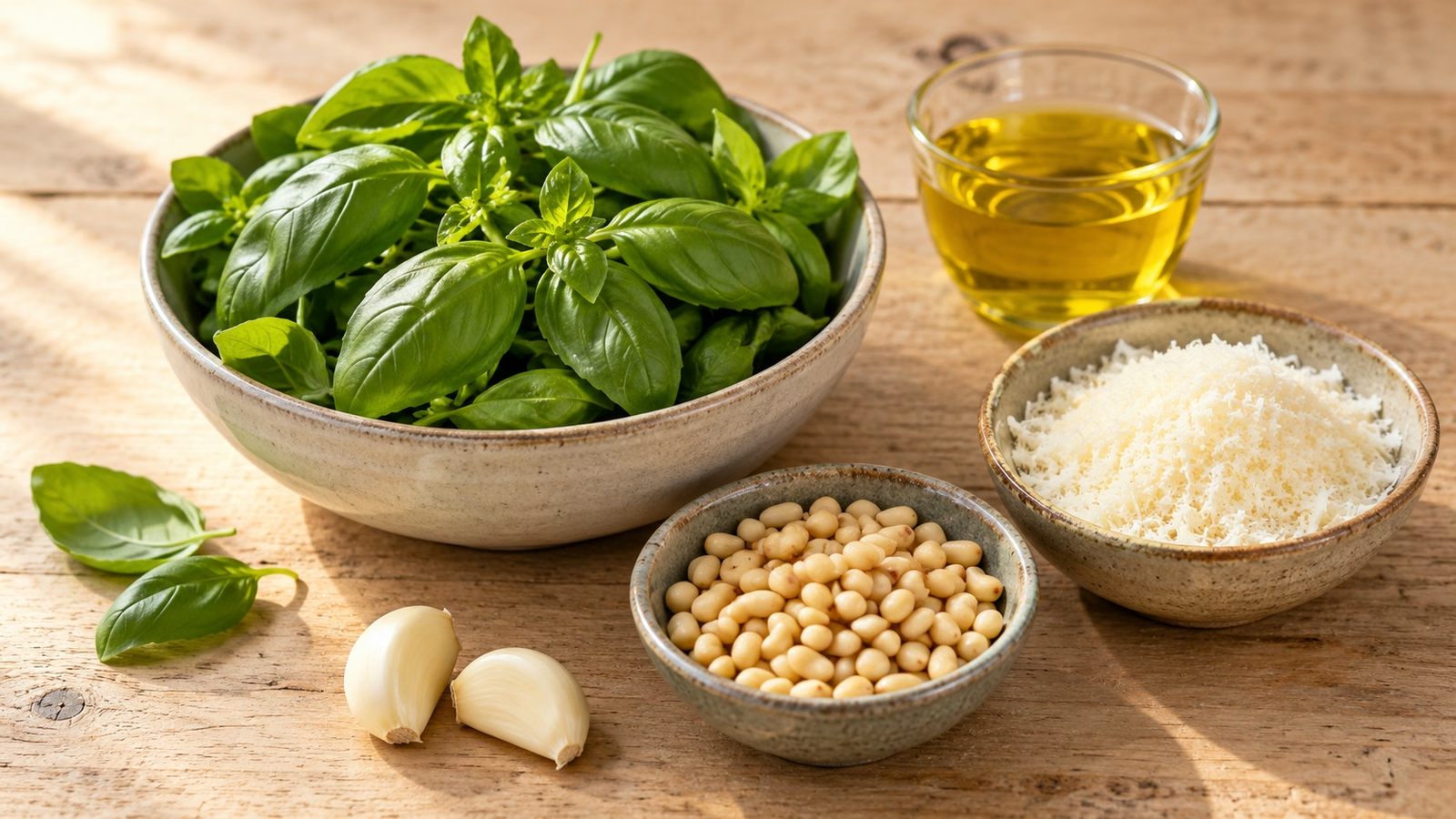
I’d give the basil most of the attention here. Choose fresh leaves without obvious decay, rinse them under running water, and dry them well. Wet leaves bring extra water into a sauce whose texture you want to control. Parmesan supplies salty, savory depth; nuts add body; olive oil brings everything into a spreadable mixture.
- Basil: Sweet basil makes a familiar starting point. Remove tough stems before measuring the leaves; tender small stems are easier to process.
- Nuts: Pine nuts have a mild flavor. Walnuts or almonds work too, but they change the sauce’s character. Use the same measured amount as a starting point, rather than expecting an identical result.
- Cheese: Finely grated Parmesan blends readily. For a vegetarian version, check the cheese label for animal-derived rennet rather than assuming every Parmesan qualifies.
- Garlic and salt: Raw garlic can take over quickly. This version starts with two cloves; taste before adding extra salt because the cheese already contributes some.
How to make pesto without losing the texture
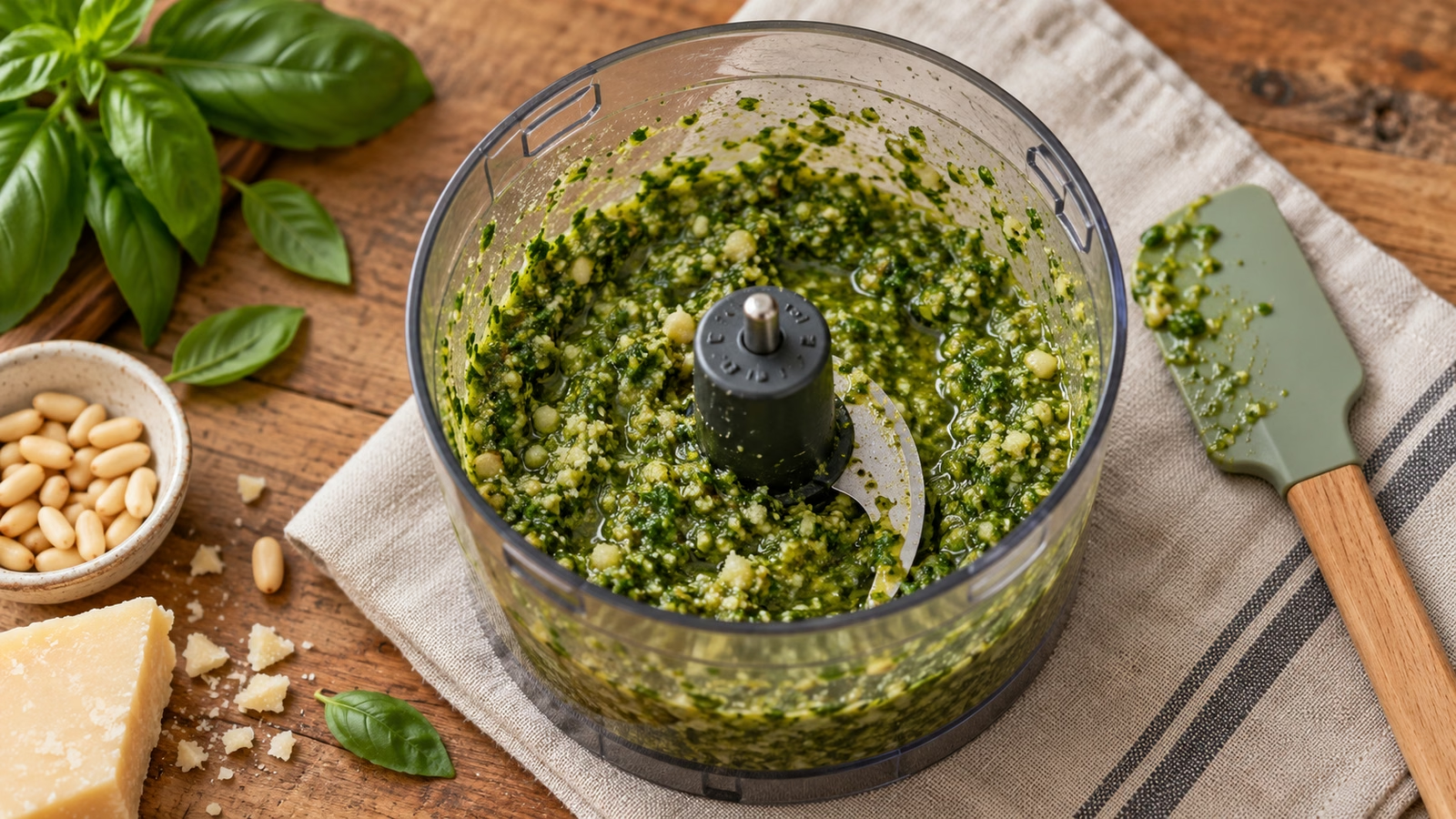
A food processor is convenient, but a mortar and pestle is a useful alternative. Oregon State University Extension describes both methods. I prefer short pulses for a sauce with visible little flecks rather than a completely smooth green purée; the machine does not need a marathon.
- Prepare before blending. Have dry basil leaves, peeled garlic, nuts, grated cheese, and measured oil ready. If you toast the nuts for a stronger flavor, let them cool first.
- Check between pulses. Stop the processor before scraping down its sides. Look for evenly chopped ingredients instead of relying on a fixed number of pulses.
- Adjust for the job. Keep pesto thicker for spreading. For pasta, loosen only the portion you need with a little warm cooking water, adding it gradually.
- Season at the end. Taste with the food you will serve it on when possible. A salty cheese or seasoned pasta changes how much extra salt makes sense.
Small changes and useful fixes
A substitution is a choice about flavor and texture, not just an empty space in the ingredient list. Spinach gives a milder sauce, while parsley changes the herbal flavor. Those versions can be useful, but they will not taste like an all-basil pesto.
| What you notice | What to try |
|---|---|
| Too thick to mix | Add water a teaspoon at a time to the portion being served. |
| Too coarse | Scrape down safely, then pulse briefly again. |
| Garlic dominates | Add more basil, nuts, cheese, and oil proportionately; the yield changes. |
| Needs a different flavor | Try walnuts or some spinach next time; expect a different pesto. |
For a dairy-free version, leaving out the cheese changes the saltiness and body. For a nut allergy, do not assume another nut is a safe substitute; choose ingredients and equipment appropriate to the person’s allergy, including cross-contact precautions.
Serve a little now and store the rest safely
Toss pesto with cooked pasta, spread it inside a sandwich, or spoon a small amount onto roasted vegetables. For more dinner ideas, browse these pasta recipes. I’d start with a modest spoonful and add more after mixing: pesto is concentrated, and a little can cover more than it first appears.
- Refrigerate promptly: OSU advises refrigerating leftovers within two hours. Keep the refrigerator at 40°F (4°C) or below; refrigerate within one hour if the room is above 90°F (32°C).
- Use within three days: The National Center for Home Food Preservation sets a maximum of three days refrigerated for fresh pesto. An oil layer is not a substitute for refrigeration.
- Freeze extra: Use freezer-safe containers, leaving ½ inch of headspace. Small portions let you thaw only what you need; label them with the date.
- Keep it a refrigerator or freezer food: This recipe does not provide a canning process or make pesto safe for shelf storage.
Pesto Recipe

Ingredients
- 2 cups fresh sweet basil leaves 48g; about 2 cups loosely filled whole leaves, rinsed and dried; use weight for consistency
- 1/4 cup pine nuts 33.75g
- 1/2 cup finely grated Parmesan 50g
- 2 cloves garlic 6g total, peeled
- 1/4 cup extra-virgin olive oil 54g
- 1/4 teaspoon salt 1.5g
Equipment
- Food processor
- Measuring cups and spoons
- Rubber scraper
- small bowl
Instructions
- Wash your hands. Rinse the basil leaves under running water, then dry well. Remove tough stems.
- Add basil, pine nuts, Parmesan, garlic, olive oil, and salt to a food processor. Pulse briefly until chopped and combined.
- Stop the processor before scraping down the sides. Pulse again as needed until the mixture is spoonable, with small visible flecks.
- Taste and adjust the texture of the portion being served with a little water, added a teaspoon at a time if needed. Extra water or ingredient adjustments change the nutrition estimate.
- Divide the finished batch into eight equal portions. Serve immediately or refrigerate promptly in a covered container.
Nutrition
Video
Video: Allrecipes demonstrates food-processor basil pesto with pine nuts, Parmesan, garlic, and olive oil. Its proportions and optional lemon juice differ; follow the recipe above for this version.
Notes
Tried this recipe?
Let us know how it turned out!Sources
- Oregon State University Extension: pesto preparation, substitutions, and storage
- National Center for Home Food Preservation: freezing pesto
- FDA: refrigerator temperature and food storage
Hi, I’m Laura, the voice behind Tastiva. I’ve always believed that eating well should feel enjoyable, comforting, and realistic—not like another complicated rule to follow. I love creating recipes that fit into everyday life, sharing simple nutrition ideas, and finding small ways to make meals feel a little better without losing the pleasure of good food.