
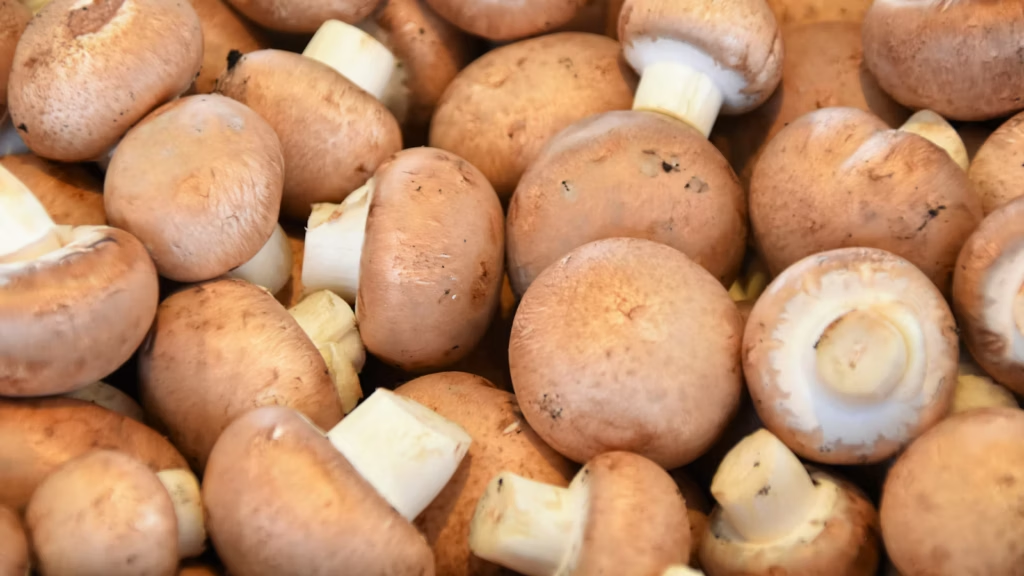
Browned mushrooms can bring a lot to eggs or pasta, but grit is less welcome. If you’re wondering how to clean mushrooms before they go into the pan, a gentle damp wipe or a brief rinse can both work for common fresh button and cremini mushrooms. Clean them close to cooking time, pay attention to the undersides, and dry the surfaces before sautéing.
Give mushrooms a gentle clean, a thorough dry, and enough room to become the part of dinner you’re looking forward to.
How to clean mushrooms: choose a wipe or a brief rinse
You don’t need to peel every cap or buy a special cleaning liquid. Health Canada allows a damp cloth, a soft mushroom brush, or cool running water followed by drying. Choose the gentlest option that removes the visible particles, guided by the amount of dirt, the mushroom’s shape, and the size of your batch.
- A damp cloth or paper towel: Useful for a small batch with scattered specks. Wipe the cap and stem gently, using a clean area of the cloth as you go.
- A soft brush: Helpful for lifting loose particles from creases. Use light strokes rather than scrubbing tender flesh the way you would a root vegetable.
- A brief cool rinse: Practical when there’s more loose debris to remove. Drain promptly and pat dry rather than leaving the mushrooms wet.
- A long soak: Skip it for these everyday fresh mushrooms. Cleaning should remove grit without leaving the batch sitting in water.
Iowa State University Extension also describes wiping, or lightly rinsing and immediately drying, most fresh mushrooms. This guide concerns fresh grocery-store mushrooms; dried mushrooms need the soaking or rehydration method in the recipe you’re using.
Work gently around the cap, underside, and stem
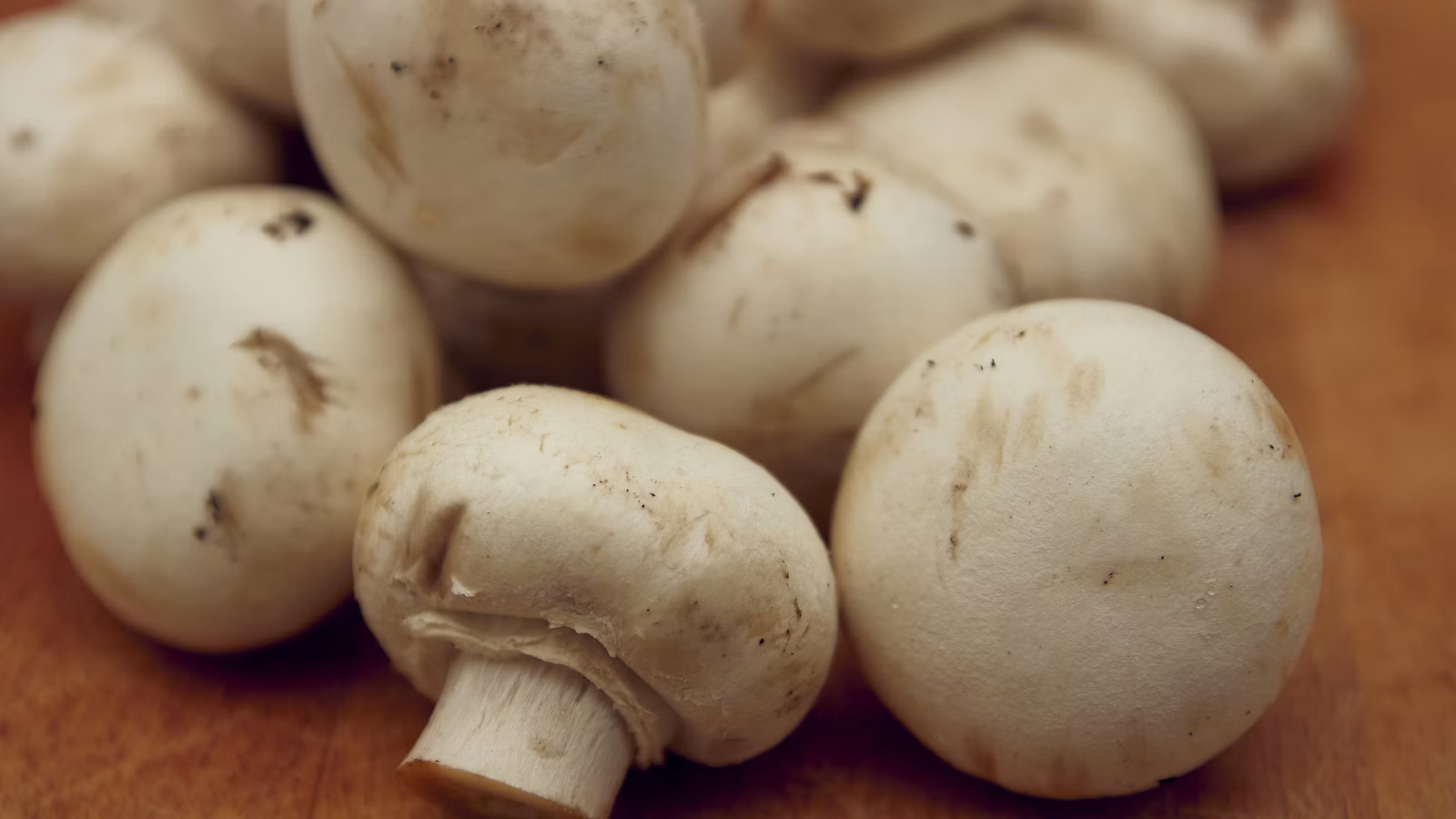
I’d set out the towel and cutting board before starting, so a cleaned mushroom has somewhere to go immediately. A steady, uncluttered workspace is more useful than trying to clean a slippery handful at once. Wash your hands and use clean utensils, keeping produce equipment separate from anything used for raw meat or poultry.
- Check the batch first. Keep fresh, firm mushrooms for preparation and discard any showing spoilage rather than trying to wash the problem away.
- Clean each cap gently with your chosen method. Turn the mushroom as you work, so you aren’t only cleaning the visible top.
- Check the underside and the point where the stem meets the cap. Work carefully around folds without tearing the flesh.
- If rinsing, use fresh, cool running water and drain right away. Plain water is enough; soap and detergent aren’t ingredients in this process.
- Pat dry with paper towels, then move to the clean board. Check that loose specks haven’t simply collected around the stem or underside.
For a larger batch, work in manageable portions. You should be able to see what you’re cleaning and give each mushroom some attention. Rushing through a pile can leave the same little particles behind that you hoped to remove.
Dry and cut before thinking about browning
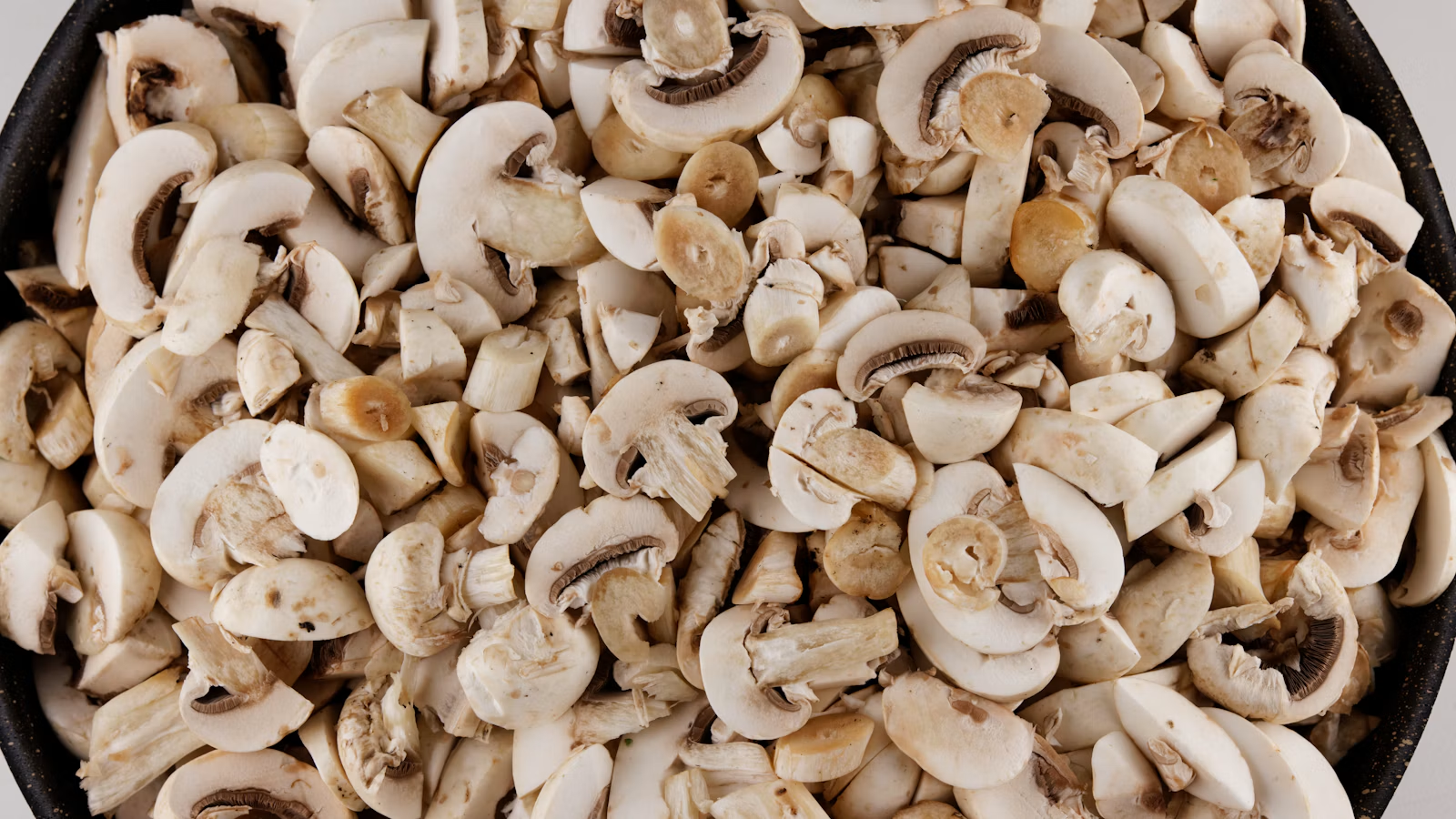
I’d give drying a little more attention than the debate over wiping versus rinsing. A clean mushroom can still carry droplets around its cap or underside, so blot those surfaces before trimming and cutting. The Mushroom Council recommends trimming a stem when it is tough; removing every entire stem isn’t automatically necessary.
- Trim only what needs it: Take off a dry or tough end. Keep tender stem portions when they suit the preparation.
- Cut consistently: Similar slices cook more evenly than a mix of paper-thin pieces and large chunks. Match the thickness to the recipe.
- Give the skillet space: Cook in batches if needed. A crowded layer holds moisture around the mushrooms and makes browning harder.
- Watch the cooking liquid: Mushrooms release their own moisture. Let that liquid evaporate as the recipe directs instead of assuming every puddle came from rinsing.
- Add delicate ingredients later: Follow the recipe’s timing for garlic and herbs, so they don’t spend the whole mushroom cooking time in the pan.
Mushrooms Canada recommends a medium-high skillet for sautéing and warns against crowding. Surface drying helps, but the pan setup still matters. Clean mushrooms packed tightly into a small skillet won’t behave like the same batch given room to cook.
Leave the rest unwashed until you need them
If tonight’s recipe needs only half the package, clean that half. Leave the remaining fresh mushrooms unwashed and refrigerate them. This gives you a useful stopping point for preparation: the portion you’ll cook now is ready, while the rest stays in a storage routine suited to fresh mushrooms.
- Loose mushrooms: A paper bag in the refrigerator is a suitable storage option. Don’t seal damp mushrooms in an airtight container on the counter.
- An unopened package: Follow its storage directions and keep it refrigerated. Its original packaging may already be designed to let some air circulate.
- Before the next meal: Check freshness again, then clean the amount you’ll use. A washing method doesn’t rescue mushrooms that have deteriorated.
- More than you can use soon: Plan a cooked portion for another meal or follow Tastiva’s guide to cooking mushrooms before freezing.
Use fresh mushrooms promptly instead of treating a storage estimate as a promise that every package will last the same number of days. Once you’ve chosen the portion for dinner, the cleaning job can stay simple—and the effort can go into the dish you actually want to eat.
Chef Bill Briwa of the Culinary Institute of America and Bart Minor of the Mushroom Council demonstrate gentle cleaning and trimming. Their advice distinguishes closed-cap mushrooms that can take a brief rinse from open-cap varieties that benefit from careful wiping.
Sources
- Health Canada: mushroom cleaning, handling, and refrigerated storage
- Mushroom Council: selecting, cleaning, and trimming fresh mushrooms
- Iowa State University Extension: cleaning fresh mushrooms
- Mushrooms Canada: preparing and sautéing mushrooms

Hi, I’m Laura, the voice behind Tastiva. I’ve always believed that eating well should feel enjoyable, comforting, and realistic—not like another complicated rule to follow. I love creating recipes that fit into everyday life, sharing simple nutrition ideas, and finding small ways to make meals feel a little better without losing the pleasure of good food.