
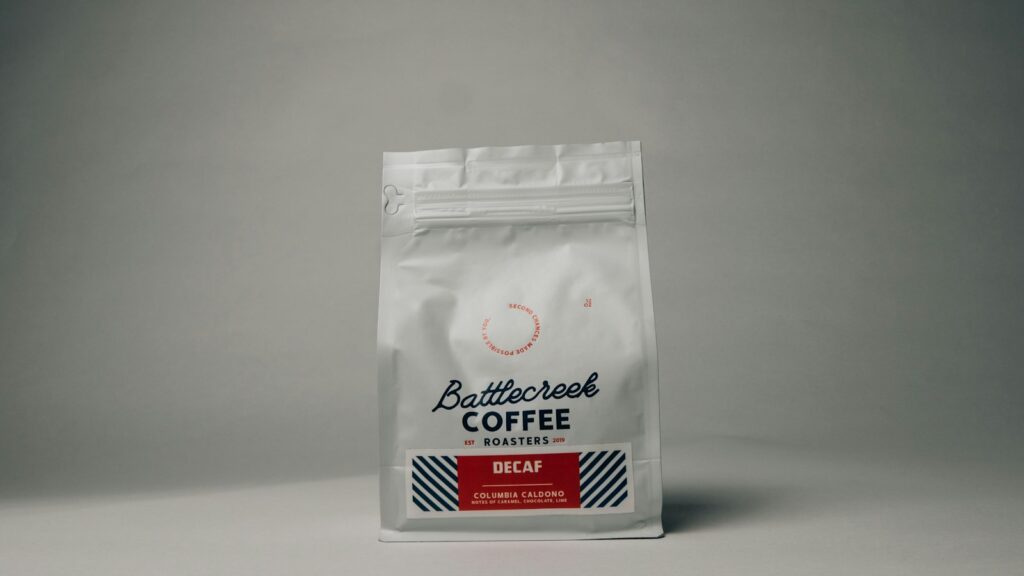
Keeping the familiar smell of coffee while cutting back on caffeine can feel like a small comfort during pregnancy. Decaf coffee can help you reduce caffeine intake, but it is not caffeine-free. The useful questions are how much your particular drink contains, what else contributes caffeine that day, and whether your maternity clinician has recommended a stricter limit for you.
Keep the coffee ritual if it suits you, but count the caffeine in the actual drink rather than relying on the word “decaf.”
How decaf coffee fits pregnancy caffeine guidance
The NHS advises having no more than 200 milligrams of caffeine a day during pregnancy. That is a daily total from all sources, not an allowance for each beverage. It is also a limit rather than a target to reach, and it does not establish that every pregnancy or every amount below it carries zero risk.
The FDA advises pregnant people to discuss caffeine with their health care provider because sensitivity, medicines, and individual circumstances differ. If your clinician has given you a lower limit or told you to avoid caffeine, follow that advice. I’d use general guidance to organize the conversation, not to overrule a plan made for your care.
- Count the whole day: Coffee, tea, cola, chocolate, and some supplements or medicines can contribute caffeine.
- Check the drink you order: Cup size, brew method, and the number of espresso shots change the amount.
- Treat “half-caf” separately: It combines caffeinated and decaffeinated coffee; it is not another name for decaf.
- Ask about uncertainty: If a café cannot provide a figure, avoid treating an assumed value as a precise measurement.
You do not have to solve this by memorizing every possible drink. A few regular choices with known portions make the calculation easier. Bring their names, sizes, and any manufacturer information to an appointment if you want help deciding how they fit your individual caffeine limit.
How much caffeine is left in decaf?
The FDA’s caffeine guidance gives a typical range of 2–15 milligrams for an 8-fluid-ounce cup of decaf coffee, approximately 237 milliliters. That range is not a guarantee for every brand or café drink. A larger cup or a drink built with several decaf espresso shots needs its own information.
| What you’re drinking | What to check | Why it matters |
|---|---|---|
| Home-brewed decaf | Brand guidance and the amount poured | A large mug may hold more than one reference cup |
| Decaf espresso drink | Caffeine per shot and number of shots | Milk changes the drink’s volume, not the caffeine in its shots |
| Half-caf coffee | The caffeinated component and serving size | It may contain substantially more caffeine than decaf |
| Bottled or canned coffee | Caffeine for the full container | One package may contain multiple labeled servings |
| Tea alongside coffee | Type, serving, and available caffeine data | Switching beverages does not necessarily remove caffeine |
Here is a clearly hypothetical calculation: two drinks containing 10 milligrams each, plus one tea containing 75 milligrams, total 95 milligrams. Those numbers are placeholders for arithmetic, not measurements of your drinks or a suggested daily menu. Chocolate or another caffeinated product would need adding to the same total.
Write down the actual milligrams when you know them, and mark estimates as estimates. I prefer that small bit of honesty to a neat-looking total built from mismatched cup sizes. You can also choose a genuinely caffeine-free drink for part of the day instead of trying to use every remaining milligram.
Choose for comfort as well as caffeine
Decaffeination does not guarantee that coffee will agree with your stomach. NIDDK notes that coffee and caffeine can be associated with reflux symptoms in some people, and individual triggers differ. If a decaf drink still brings on heartburn or nausea, a smaller serving, another drink, or advice from your maternity team may be more useful than changing brands repeatedly.
| If your main concern is… | A practical question to ask |
|---|---|
| Keeping caffeine low | Does the maker provide caffeine information for this exact size? |
| Heartburn or nausea | Does this particular drink seem to bring on symptoms? |
| A sweet café drink | How much syrup is included, and is a less sweet version appealing? |
| Milk or another addition | Is it pasteurized, and does it suit your dietary needs? |
| An herbal “coffee alternative” | Are all its ingredients suitable for pregnancy? |
An unfamiliar herbal blend is not automatically a safer substitute. The NHS notes limited pregnancy research for herbal teas and advises avoiding liquorice-root tea. Ask about the specific ingredients if you’re considering a botanical blend. Tastiva’s matcha caffeine guide is also useful if green tea is your proposed replacement: matcha contributes caffeine too.
Make café orders and home portions easier
For a café order, specify decaf and the cup size, then ask how many shots the drink contains. “Small” and “large” are not standardized measurements across shops. If the order arrives with unclear labeling, asking the barista to confirm it is a reasonable, ordinary request; you do not need to guess from the taste.
- At home: Measure how much your favorite mug holds once, so the portion is no longer a mystery.
- When buying beans or grounds: Keep the bag until it is finished, including any caffeine or brewing information.
- When ordering: Check added espresso shots, coffee concentrates, or caffeinated flavor additions.
- When cutting back: The FDA suggests reducing caffeine gradually to lessen unpleasant withdrawal symptoms.
- When tracking: Include occasional drinks and snacks, not just the morning cup.
If you realize you had more caffeine than intended, do not use an online cup calculator to diagnose harm. Note what you drank and discuss concerns with your maternity clinician, especially if you feel unwell. For everyday decisions, a manageable routine with clear portions is more helpful than repeatedly checking an uncertain number.
Sources
- NHS: Foods and drinks to limit or avoid during pregnancy
- FDA: Caffeine amounts, decaf coffee, and individual considerations
- NIDDK: Eating, diet, and nutrition for reflux

Hi, I’m Laura, the voice behind Tastiva. I’ve always believed that eating well should feel enjoyable, comforting, and realistic—not like another complicated rule to follow. I love creating recipes that fit into everyday life, sharing simple nutrition ideas, and finding small ways to make meals feel a little better without losing the pleasure of good food.