
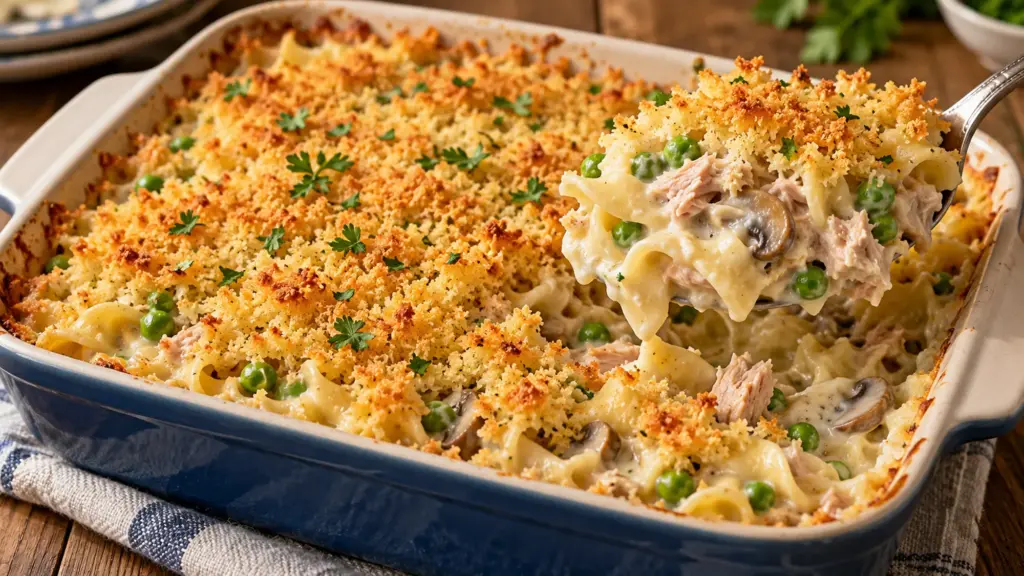
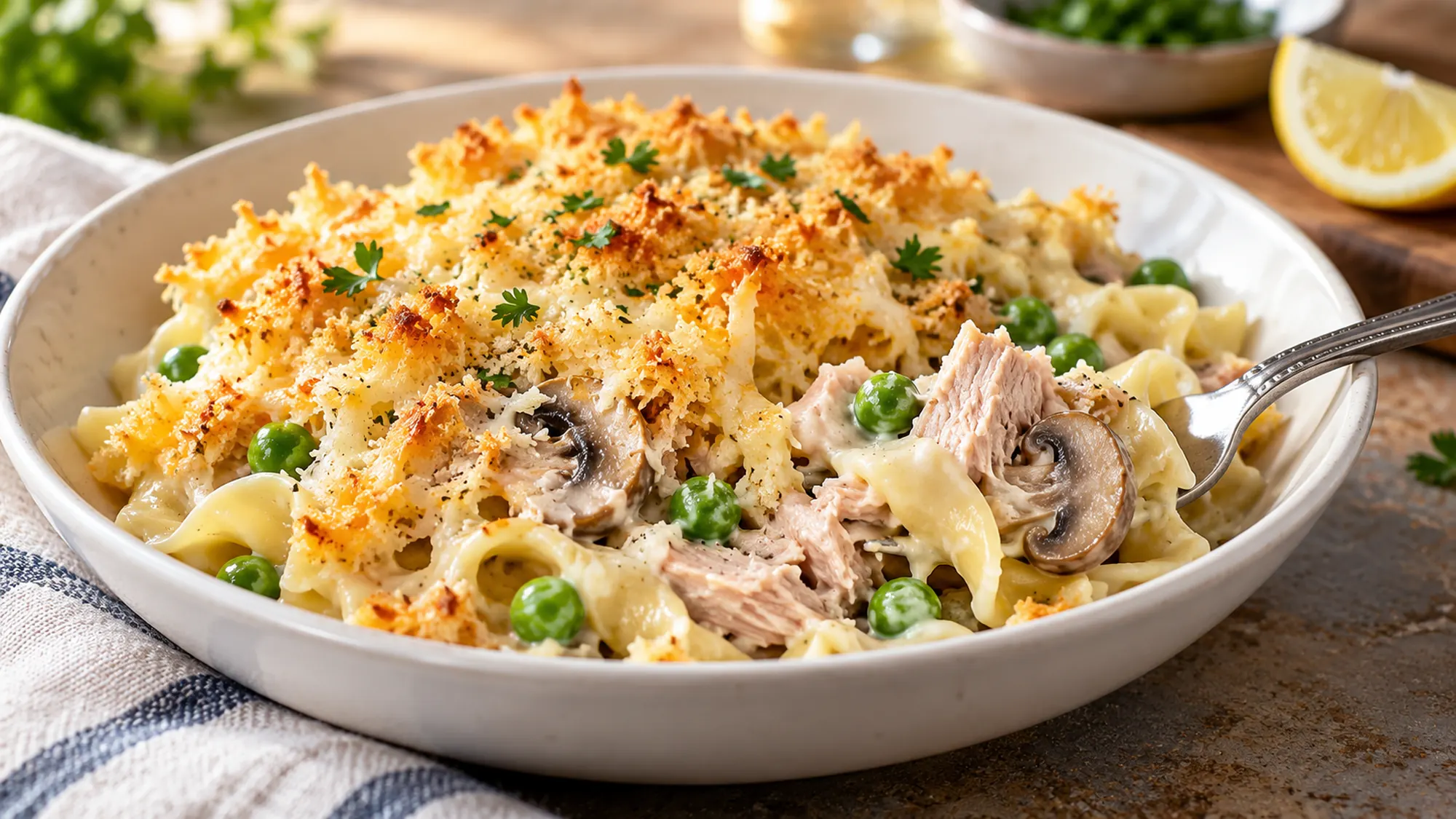
A tuna noodle casserole should be creamy beneath its crust, not a dry block of pasta with fish hidden somewhere inside. This version uses a homemade mushroom sauce, broad egg noodles and visible flakes of tuna. Green peas add small sweet bites, while a thin panko topping provides the crunch that soft noodles need.
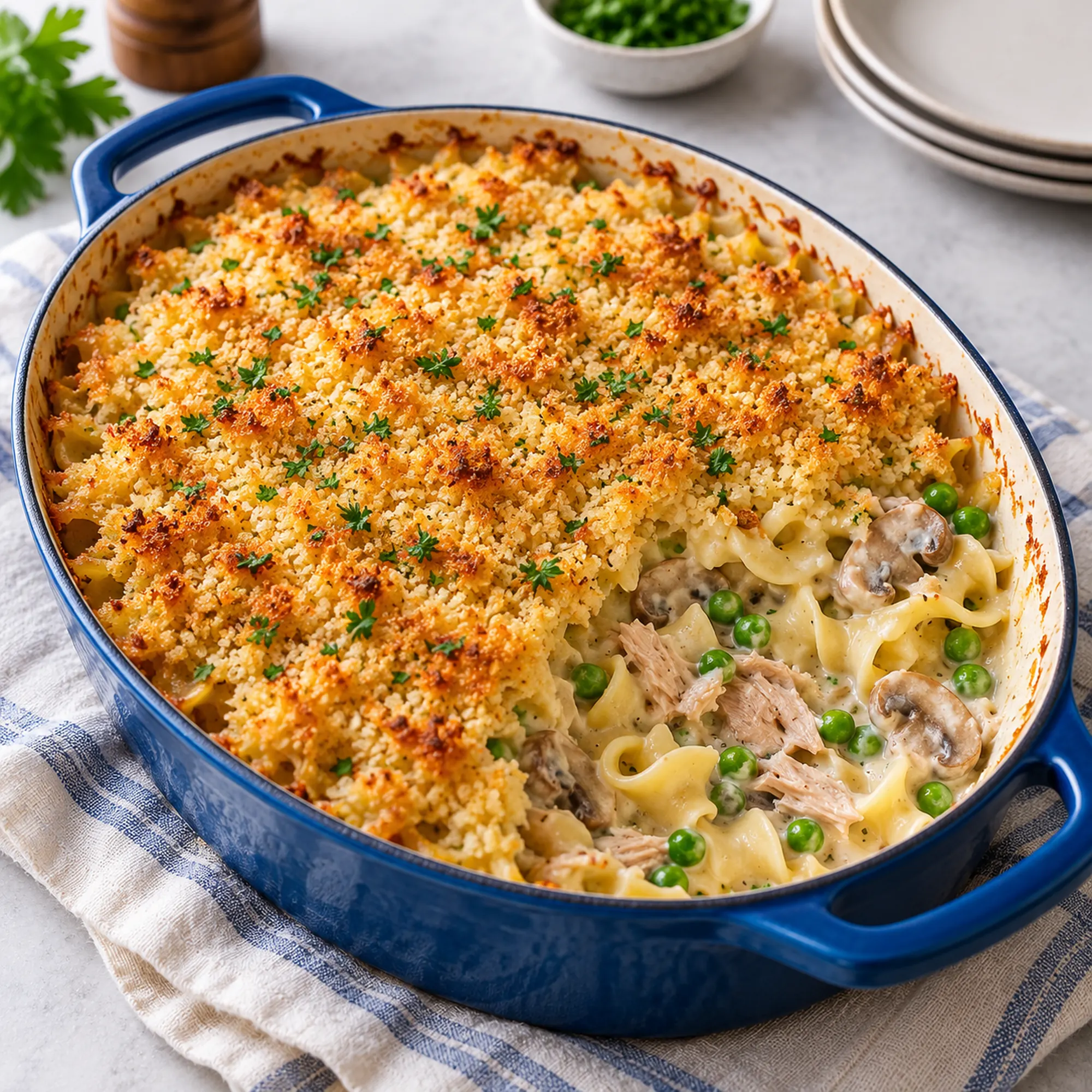
This tuna noodle casserole uses fresh mushrooms and a simple milk-and-stock sauce instead of condensed soup, with white cheddar and a golden panko finish.
I prefer leaving some larger flakes of tuna intact when folding the filling together. They make the fish part of each bite rather than letting it disappear into the sauce. Cook the noodles a little short of tender because they still have an oven visit ahead. The sauce should look generous before baking; pasta continues to absorb moisture as it sits.
Serving Tuna Noodle Casserole
Give the pan a brief rest before scooping, then divide it into eight portions. This is already a combination of pasta, fish, dairy and vegetables, so a simple side is enough. A crisp salad or lightly cooked green vegetable provides a change in temperature and texture.
Tastiva’s garlic-and-lemon green beans work well when you want something warm alongside. Keep extra lemon at the table rather than squeezing it over the crumb topping in advance. Moisture softens the crisp topping.
- Use a wide spoon to lift both the creamy interior and some of the topping into each portion.
- Serve dressings and sauces separately so they do not soak the crumbs.
- For smaller appetites, start with a modest scoop and offer more rather than pressing a large square onto every plate.
| Detail | Why it matters |
|---|---|
| Noodles slightly undercooked | Leaves room for further softening in the oven |
| Tuna weighed after draining | Keeps the fish quantity consistent |
| Thin, even crumb layer | Browns without burying the creamy filling |
A little attention before baking protects both parts of the dish: tender noodles below and crisp crumbs above.
Sauce and Topping Variations
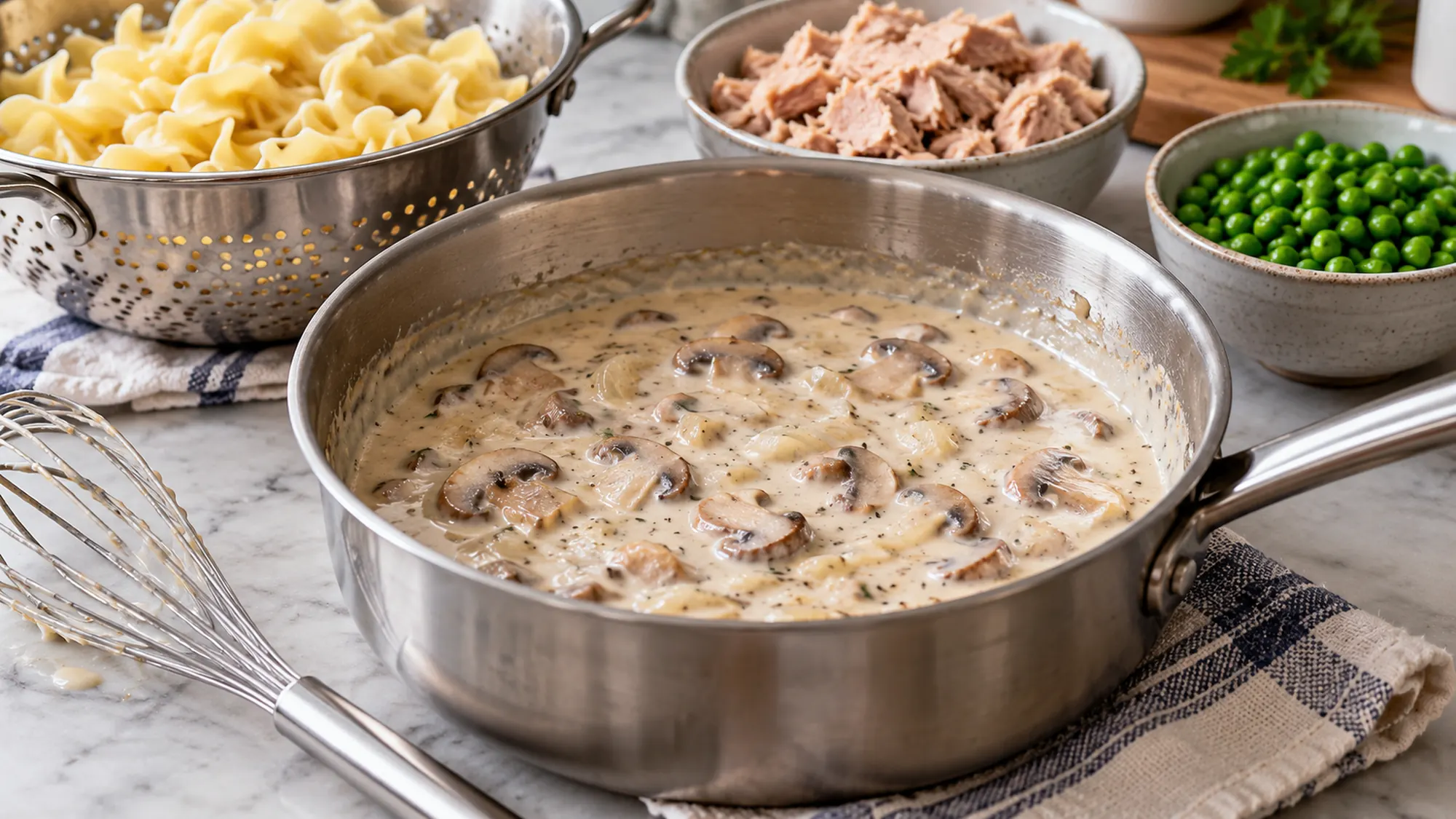
The fresh-mushroom approach comes from Nicole McLaughlin’s Allrecipes casserole. This adaptation specifies drained tuna weight, unsalted butter and stock, and a measured sauce seasoning. It does not use a can of condensed mushroom soup, so that substitution would require a different liquid and salt balance.
I would keep the small amount of Dijon and lemon rather than add more cheese to brighten the flavor. They give the sauce a sharper edge without making it taste like a mustard dish. Fold them in gently and avoid a fierce boil once the dairy sauce has thickened.
- White cheddar gives a pale sauce; orange cheddar changes the appearance more than the basic structure.
- Drain tuna thoroughly, then weigh it. The number printed on a can often includes liquid and is not the same as drained fish weight.
- Fresh mushrooms should release their water in the skillet before the flour goes in, or the sauce can turn thinner than intended.
- Fine dry crumbs can replace panko by weight, but the top will have a finer, less jagged texture.
Change the cheese or crumb texture if you like, but keep the drained fish quantity and sauce balance clear.
Nutrition and Safe Reheating
Tuna, milk and cheese contribute protein, while peas and mushrooms add vegetables and some fiber. The estimate is about 488 calories and 27 grams of protein per one-eighth of the casserole. It includes the cheese, butter and topping; optional side dishes are separate.
Canned tuna and cheese contain salt even when the stock and butter are unsalted. Taste the sauce before adding extra seasoning, particularly if your ingredients differ from those listed. Tuna species also differ, so people following specific fish-consumption advice should check the product label and the guidance relevant to them rather than treating every can as interchangeable.
- Keep opened tuna and dairy ingredients refrigerated until needed, and avoid leaving the assembled casserole at room temperature for a long wait.
- Bake until the center reaches 165°F (74°C), not merely until the edges bubble.
- Refrigerate leftovers promptly in shallow portions. Reheat a serving thoroughly, adding a small splash of milk if the noodles have absorbed the sauce.
The casserole supplies a substantial mixed meal; portion size, ingredient labels and safe reheating remain part of the picture.
Bottom Line
Tuna noodle casserole is at its best when the sauce is made with the noodles’ second cooking in mind. Leave them slightly firm, keep the fish flaky, and spread the crumbs in a light layer. Fresh mushrooms and a little sharpness from lemon and mustard give the familiar dish more definition without making it complicated.
Generous sauce, distinct tuna flakes and a crisp top make this casserole worth serving by the spoonful.
Tuna Noodle Casserole Recipe

Ingredients
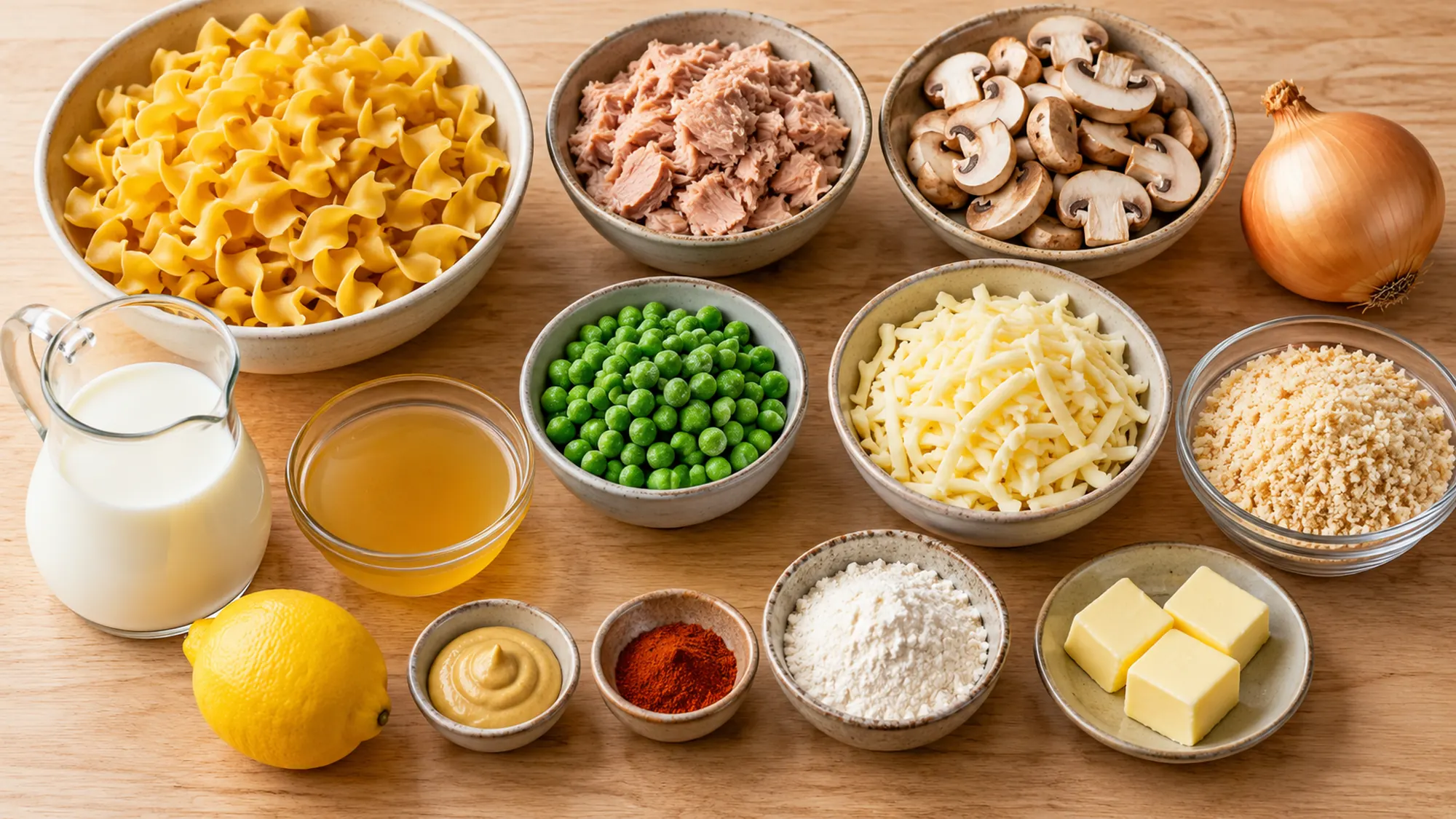
- 340 g dry broad egg noodles
- 56 g unsalted butter divided
- 25 ml olive oil 15 ml for mushrooms, 10 ml for topping
- 225 g fresh mushrooms sliced
- 150 g onion chopped
- 30 g all-purpose flour
- 480 ml whole milk
- 360 ml unsalted chicken stock
- 30 ml lemon juice
- 5 g Dijon mustard
- 170 g white cheddar grated, divided
- 150 g frozen peas
- 280 g canned tuna in water drained weight; weigh after draining
- 60 g plain panko breadcrumbs
- 0.5 g paprika
- 6 g fine salt
- 1 g black pepper
Equipment
- 1 9-by-13-inch baking dish
- 1 Large skillet
- 1 Pasta pot
- 1 Instant-read thermometer
Instructions
- Heat the oven to 375°F (190°C). Cook egg noodles in unsalted boiling water until slightly firmer than al dente, about 2 minutes less than the package timing; drain.
- Heat 28 g butter and 15 ml olive oil in a large skillet. Cook mushrooms and onion over medium-high heat until softened and the released liquid mostly evaporates, 5–7 minutes.
- Add remaining butter, then flour, and stir for 1 minute. Gradually whisk in milk and stock. Simmer gently about 5 minutes until thickened. Stir in lemon juice, mustard, salt and pepper.
- Remove from heat. Fold in noodles, peas, drained tuna and 115 g cheddar, keeping some tuna flakes intact. Transfer to a 9-by-13-inch baking dish and scatter remaining cheddar over the top.
- Toss panko with remaining 10 ml olive oil and paprika; sprinkle over the casserole. Bake 25–30 minutes until bubbling, golden and 165°F (74°C) in the center. Rest 5 minutes, then divide into eight portions.
Nutrition
Video
Notes
Tried this recipe?
Let us know how it turned out!Hi, I’m Laura, the voice behind Tastiva. I’ve always believed that eating well should feel enjoyable, comforting, and realistic—not like another complicated rule to follow. I love creating recipes that fit into everyday life, sharing simple nutrition ideas, and finding small ways to make meals feel a little better without losing the pleasure of good food.