
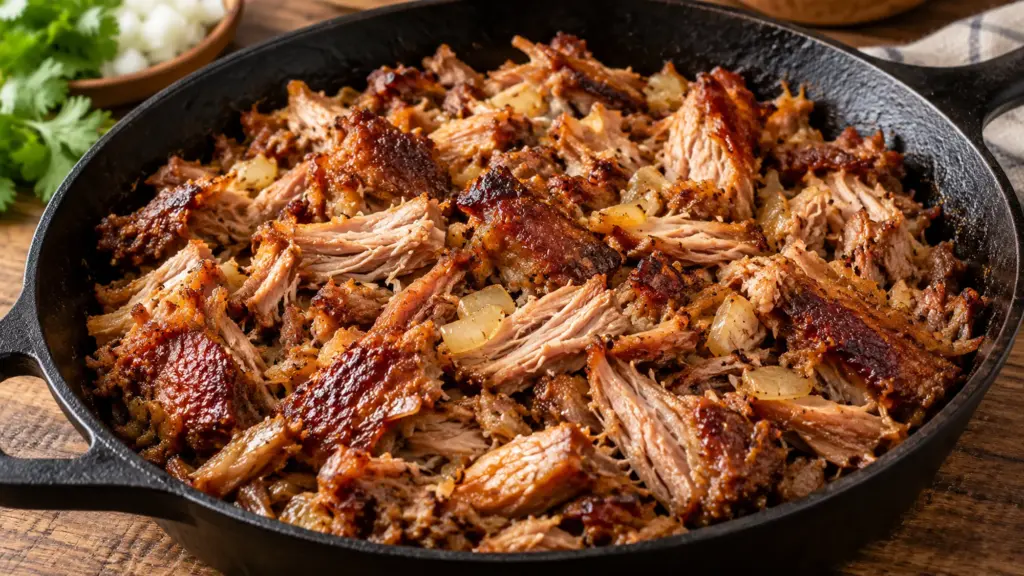
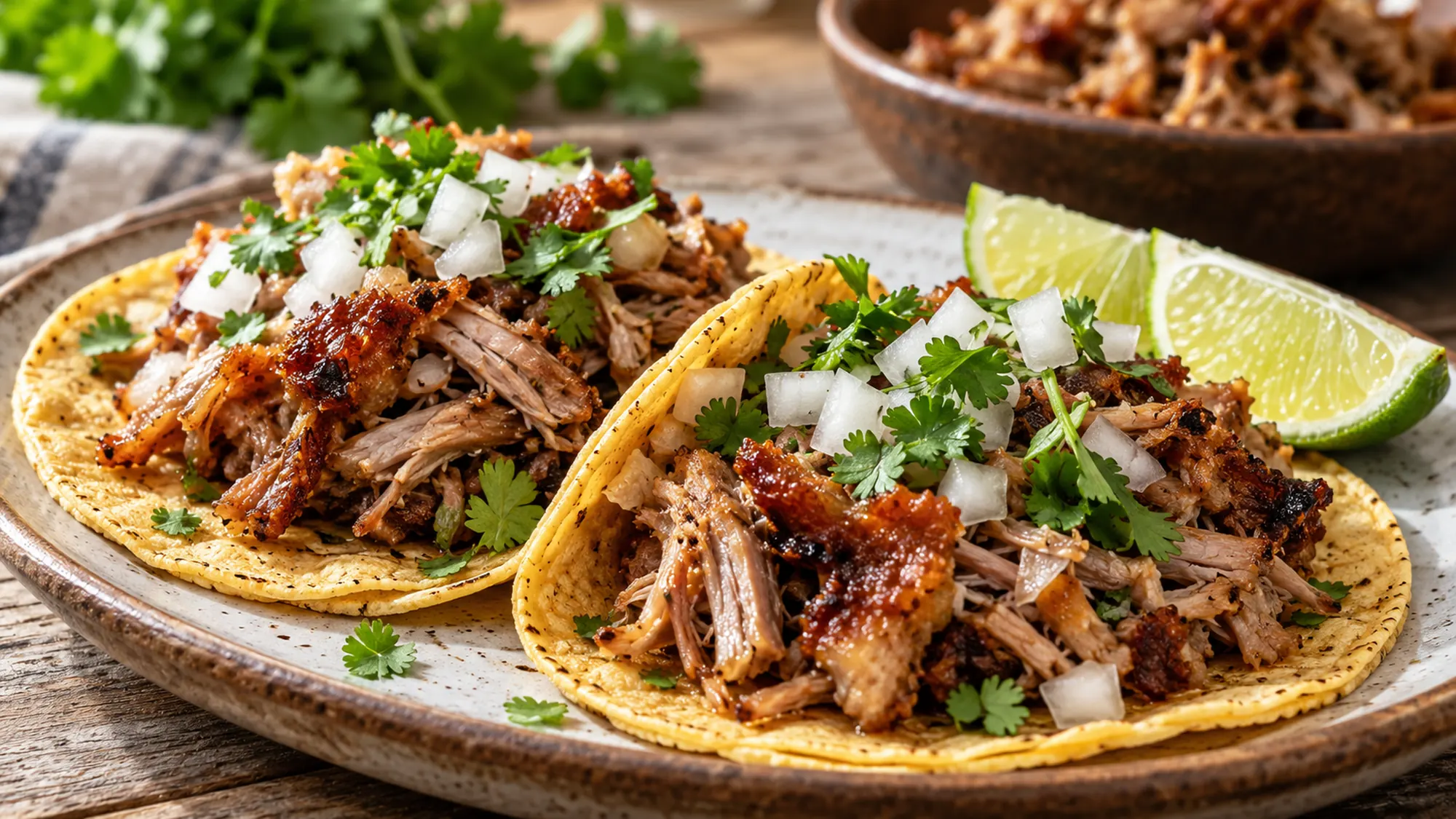
Soft shredded pork is only half the appeal of pork carnitas. The other half is the browned edge that catches in the skillet while the center stays juicy. This slow-cooker version separates those jobs: a long, covered cook makes the shoulder tender, then a short, hotter finish adds the texture that belongs in the taco.
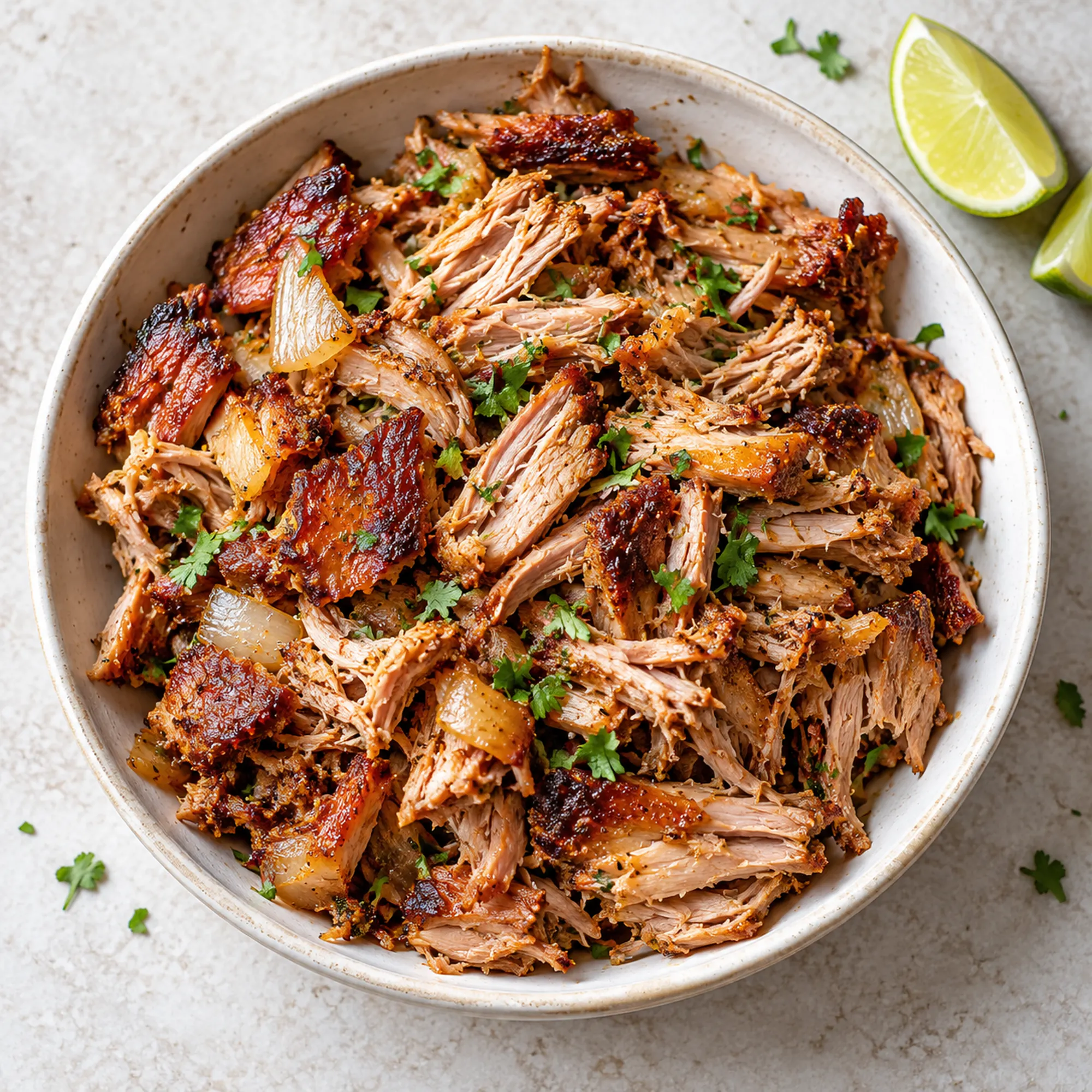
These pork carnitas cook slowly with orange juice, onion and spices, then crisp in small skillet batches with a little of their cooking liquid.
I like keeping some tender shreds untouched by the hottest part of the pan. Browning every strand can turn a juicy filling dry and stringy. The aim is contrast, not a uniform dark crust. Start the slow cooker early enough that dinner is not waiting for a tough shoulder to become shreddable; the meat, not the clock alone, decides when it is ready.
Serving Pork Carnitas in Tacos or Bowls
Warm tortillas are a natural place to start, with a little diced onion, cilantro and lime offered separately. Keeping the toppings simple lets the pork’s savory flavor and crisp edges remain noticeable. Fill tortillas moderately so the first bite does not send half the dinner onto the plate.
For a bowl instead, pair a portion with Tastiva’s fluffy white rice and vegetables. Rice is a serving option, not included in the pork’s nutrition estimate. A crunchy cabbage slaw can add a fresh texture without covering the meat in a heavy sauce.
- Crisp only what you will serve now.
- Keep extra cooking juices nearby so the pork can be moistened without drowning its browned edges.
- Set lime wedges on the table; people can add the acidity they prefer.
| Serving plan | Best finishing approach |
|---|---|
| Tacos now | Crisp a loose layer just before filling |
| Rice bowls | Add juicy pork and a crunchy vegetable |
| Later meals | Store pork with juices and crisp after reheating |
Match the crisping batch to the meal, rather than frying the entire shoulder long before everyone is ready.
Heat, Citrus and Pork-Cut Choices
The method follows RecipeTin Eats’ slow-cooker carnitas: orange juice and aromatics flavor the pork, followed by a pan finish. It is a practical home adaptation, not the same process as cooking pork submerged in lard. The video demonstrates the relevant slow-cook-and-crisp approach.
I would keep pork shoulder rather than substitute a lean tenderloin. Shoulder suits a long cook and pulls into shreds; a lean cut is not an equivalent shortcut. Jalapeño adds another flavor layer, but its heat varies. Removing the seeds and inner ribs reduces some of that heat without guaranteeing a completely mild result.
- Fresh orange juice contributes sweetness and acidity. A sweetened orange drink is not a like-for-like replacement.
- Use a thawed roast that fits the cooker comfortably, following the appliance’s filling guidance.
- If there is too much cooking liquid, reduce it separately instead of boiling the shredded pork until dry.
- For a milder batch, leave out the jalapeño and offer a spicy salsa separately.
Keep the shoulder and the two-stage cooking method; adjust the heat and serving format around them.
Nutrition and Practical Batch Storage
Pork supplies protein, but shoulder and crisping oil also contribute fat. The estimate is about 364 calories and 32 grams of protein per one-twelfth of the batch, before tortillas, rice or toppings. This serving fraction is a planning aid, not a fixed cooked weight, because moisture loss varies.
The calculation counts all the measured oil and cooking ingredients. Skimming fat or leaving some juices behind changes the amount actually eaten. Conversely, cheese, sour cream and larger tortilla portions add to the meal. Vegetables can bring color, texture and fiber alongside the pork without needing to be described as a way to compensate for it.
- Do not rinse raw pork; handle it on a dedicated surface and wash hands and utensils afterward.
- Move leftovers promptly into shallow containers rather than leaving a large mound of meat warm in the cooker.
- Reheat stored portions to 165°F (74°C), then crisp them immediately before serving.
- If serving a group over time, use suitable hot-holding equipment instead of assuming a cooling skillet keeps food safely hot.
Plan both the toppings and the leftover storage; a large shoulder should become several well-handled meals, not one oversized portion.
Bottom Line
Pork carnitas make good use of patient cooking and a quick final burst of heat. Let the shoulder soften fully, save its juices, and give a small batch room to brown. With warm tortillas or a rice bowl ready nearby, the contrast of crisp edges and juicy shreds stays at the center of the meal.
Slow cooking makes the pork tender; a measured skillet finish gives it the edges worth reaching for.
Pork Carnitas Recipe

Ingredients
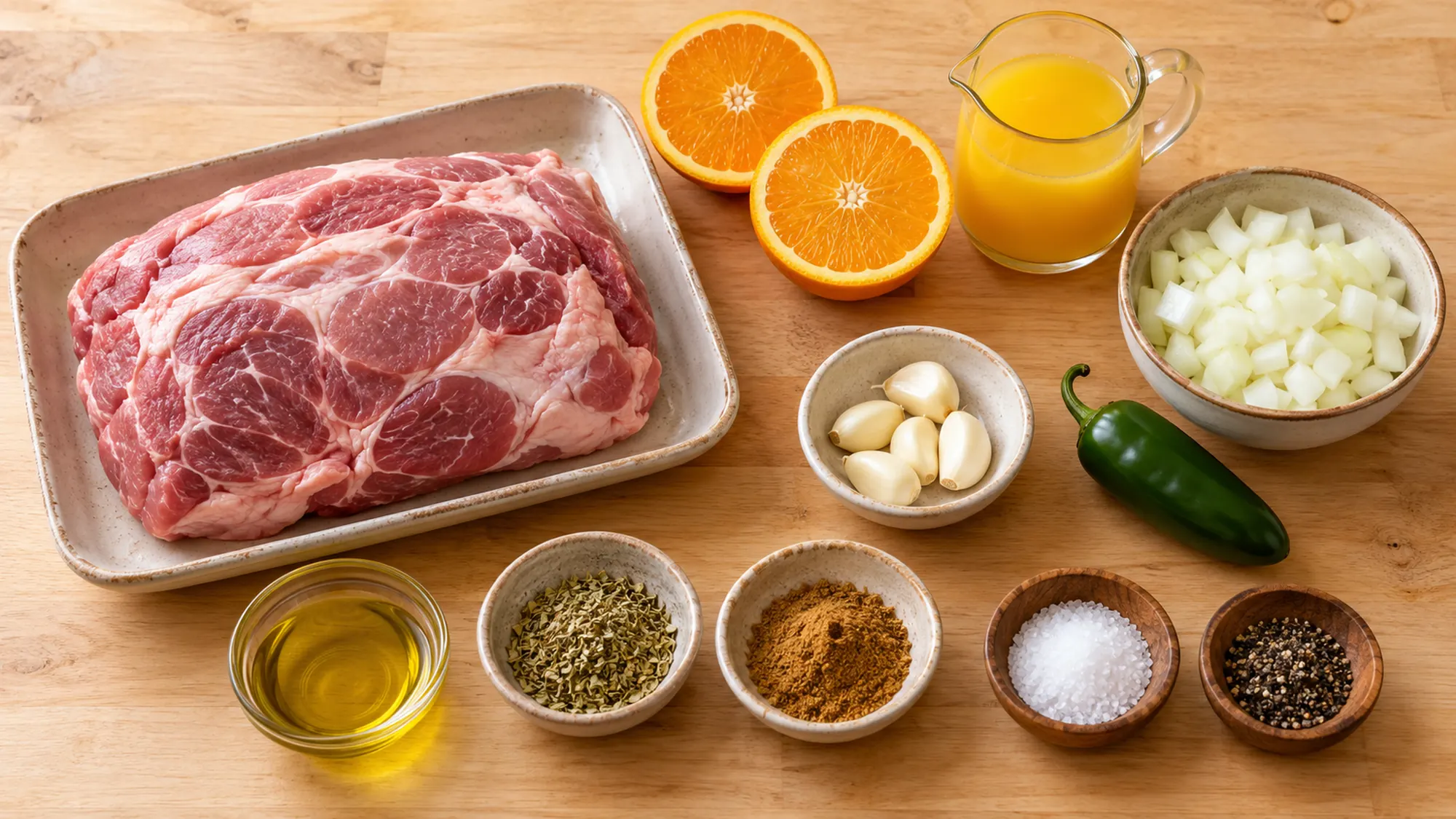
- 2000 g boneless skinless pork shoulder about 4.4 lb, thawed
- 150 g onion chopped
- 30 g jalapeño seeded and chopped
- 12 g garlic minced
- 180 ml fresh orange juice
- 3 g dried oregano
- 4 g ground cumin
- 75 ml olive oil 15 ml for rub, 60 ml divided among 4 crisping batches
- 15 g fine salt
- 2 g black pepper
- tortillas, onion, cilantro and lime optional serving additions
Equipment
- 1 6-quart slow cooker
- 1 Large skillet
- 1 Two forks
- 1 Instant-read thermometer
Instructions
- Pat the thawed pork shoulder dry; do not rinse it. Mix oregano, cumin and 15 ml olive oil. Rub over the pork with salt and pepper.
- Place pork in a 6-quart slow cooker with onion, jalapeño, garlic and orange juice. Cover and cook on LOW about 10 hours or HIGH about 7 hours, until the meat pulls apart easily. Appliance and roast shape affect timing.
- Lift the pork onto a tray and shred with two forks, discarding any large unwanted gristle or fat. Reserve cooking juices. If there are more than about 2 cups, simmer them separately to reduce; skim excess surface fat if desired.
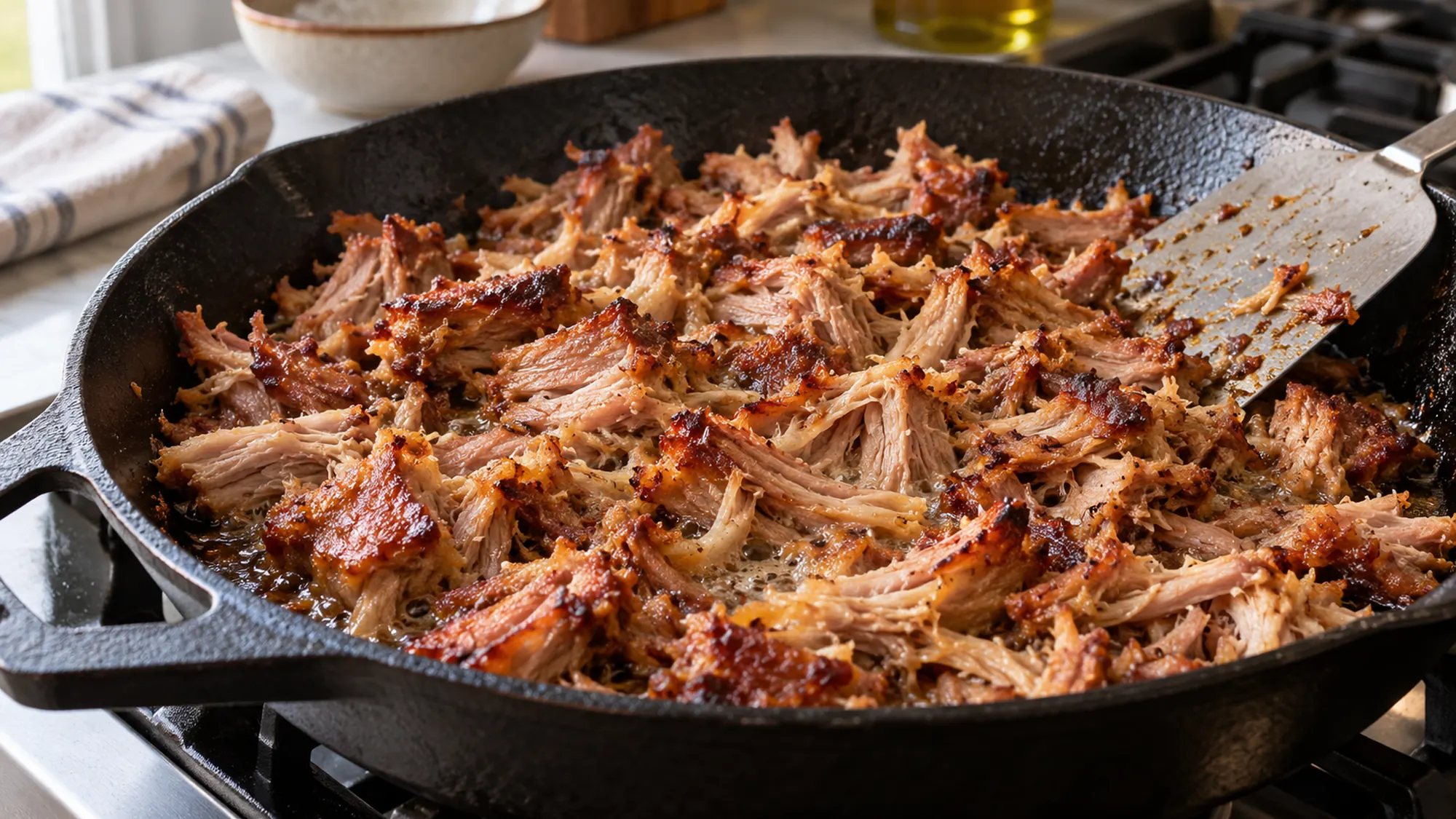
- Heat 15 ml olive oil in a large skillet over medium-high heat. Add one-quarter of the shredded pork in a loose layer and spoon over some cooking juice. Let the underside turn golden before turning a little of the meat; keep the interior juicy rather than frying every shred dry.
- Repeat with the remaining pork and oil in three more batches, adding reserved juices as needed. Serve with optional tortillas, onion, cilantro and lime. The listed nutrition and cost cover pork and seasonings only, not those additions.
- For leftovers, refrigerate promptly in shallow containers with reserved juices. Reheat portions to 165°F (74°C), then crisp in a skillet just before serving.
Nutrition
Video
Notes
Tried this recipe?
Let us know how it turned out!Hi, I’m Laura, the voice behind Tastiva. I’ve always believed that eating well should feel enjoyable, comforting, and realistic—not like another complicated rule to follow. I love creating recipes that fit into everyday life, sharing simple nutrition ideas, and finding small ways to make meals feel a little better without losing the pleasure of good food.