
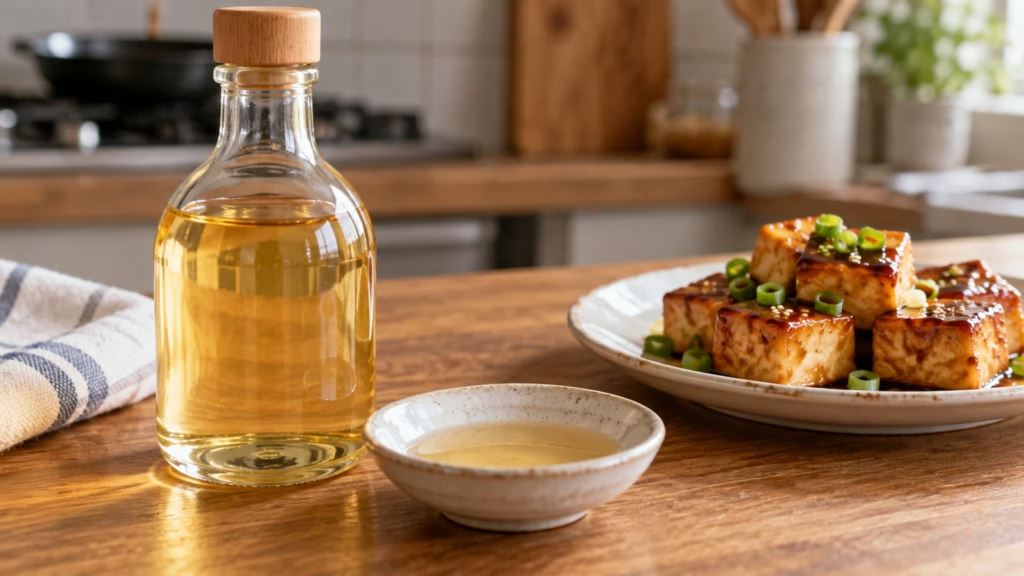
A recipe asks for two tablespoons of mirin, and the bottles nearby say rice vinegar, cooking sake, and sweet cooking seasoning. What is mirin? It is a sweet Japanese rice-based seasoning used to add sweetness, savory depth, and gloss to cooked dishes. Traditional hon mirin contains alcohol; the similarly named seasonings beside it can have different ingredients, salt levels, and alcohol content.
I would turn the bottle around before putting it in the basket. With mirin, the ingredient list often tells you more than the biggest word on the front.
The main types are worth telling apart
Hon mirin is made with rice, rice koji, and alcohol. During production, enzymes break rice starch into sugars, helping create its characteristic sweetness. It is not simply rice vinegar with sugar added. Kikkoman describes hon mirin as an alcohol-based seasoning, typically around 14% alcohol, with sweetness and umami that develop through its production and aging process.
- Hon mirin: the traditional rice-based product. Look for the actual alcohol statement and ingredients; “hon” is useful information, but the complete label still matters.
- Sweet cooking rice seasoning or aji-mirin: products in this group may include salt and other ingredients. Kikkoman’s Aji-Mirin, for example, contains alcohol and salt. The name does not guarantee an alcohol-free product.
- Mirin-style sweet cooking seasoning: a lower-alcohol alternative with a different formulation. Kikkoman describes its Kotteri Mirin as containing less than 1% alcohol. Less than 1% is not the same statement as zero.
These distinctions are practical rather than a reason to feel you bought the “wrong” pantry. A convenient cooking seasoning may work for your dinner, but it can change the balance a recipe expects. If alcohol avoidance is essential, choose a product explicitly suitable for your needs or an alcohol-free substitution. Do not infer that suitability from “cooking,” “seasoning,” or “mirin-style” alone.
Use mirin where sweetness and gloss belong
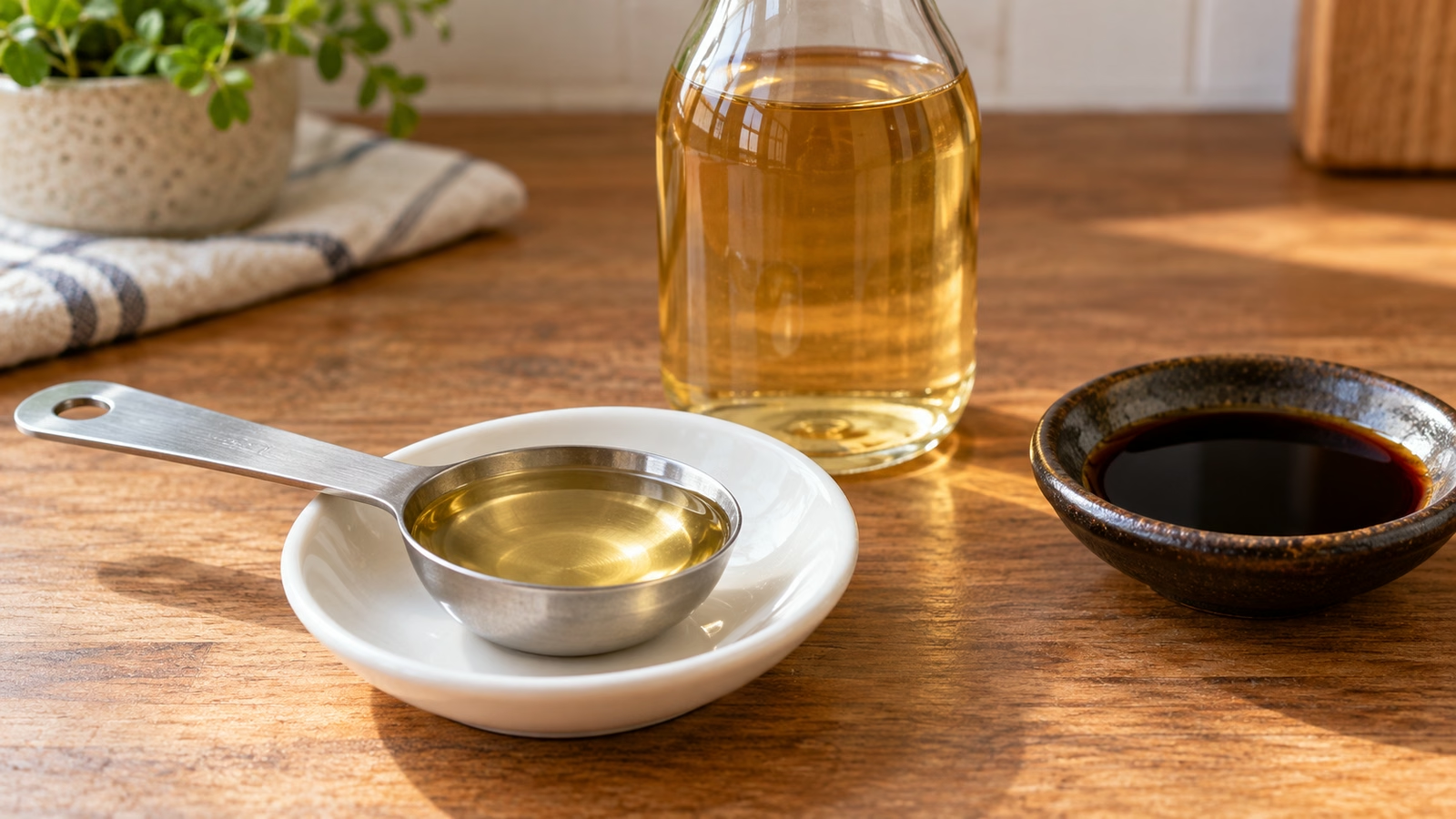
Mirin often works alongside soy sauce in glazes, simmering liquids, and dipping sauces. Soy sauce contributes its salty, savory character; mirin brings sweetness and helps give the finished food a sheen. A recipe may use sake as well because sake and mirin serve overlapping but different roles. Adding extra mirin in place of sake can make a dish sweeter than intended.
- Glazed tofu, chicken, or fish: follow a recipe that balances mirin with soy sauce and any additional sugar. The glaze should complement the food rather than become the whole meal.
- Simmered vegetables: mirin can be part of a seasoned cooking liquid. Measure it, especially when the liquid will reduce.
- Noodle or dipping sauces: use the recipe’s specified type and amount, then assess the finished balance. Do not assume that a sweet cooking seasoning and hon mirin taste identical.
Start with a small bottle and one dish you already want to make. That is more useful than building a pantry around a list of unfamiliar names. If soy sauce is part of the dish and gluten matters for you, read our guide to checking soy sauce for gluten and inspect both bottles. An ingredient’s rice-based name does not certify an entire sauce or meal.
What can replace mirin in a pinch?
For a simple fallback, Namiko Hirasawa Chen of Just One Cookbook suggests replacing 1 tablespoon of mirin with 1 tablespoon of sake or water plus 1 teaspoon of sugar. Sake keeps an alcoholic rice-wine element; water does not. Neither reproduces all of mirin’s flavor. Treat this as a practical recipe substitution, not a way to manufacture hon mirin at home.
- If alcohol is acceptable: sake plus sugar can supply liquid and sweetness, though the result will taste different. Use the recipe author’s own substitute when one is provided.
- If alcohol must be avoided: water plus sugar is the simpler option. Check the rest of the recipe too; replacing mirin does not remove sake or another alcoholic ingredient already listed.
- If you only have rice vinegar: pause before pouring. Vinegar adds acidity, while mirin’s main contribution is sweetness and savory depth. They are not interchangeable tablespoon for tablespoon.
A substitution is most forgiving when mirin is one small part of a sauce. It is more noticeable in a delicate broth or a dish designed around mirin itself. I would avoid changing mirin, soy sauce, and the sweetener all at once on a first attempt: otherwise, it becomes difficult to tell which change made the sauce too sweet, salty, or sharp.
Watch the saucepan, and follow the bottle’s storage directions
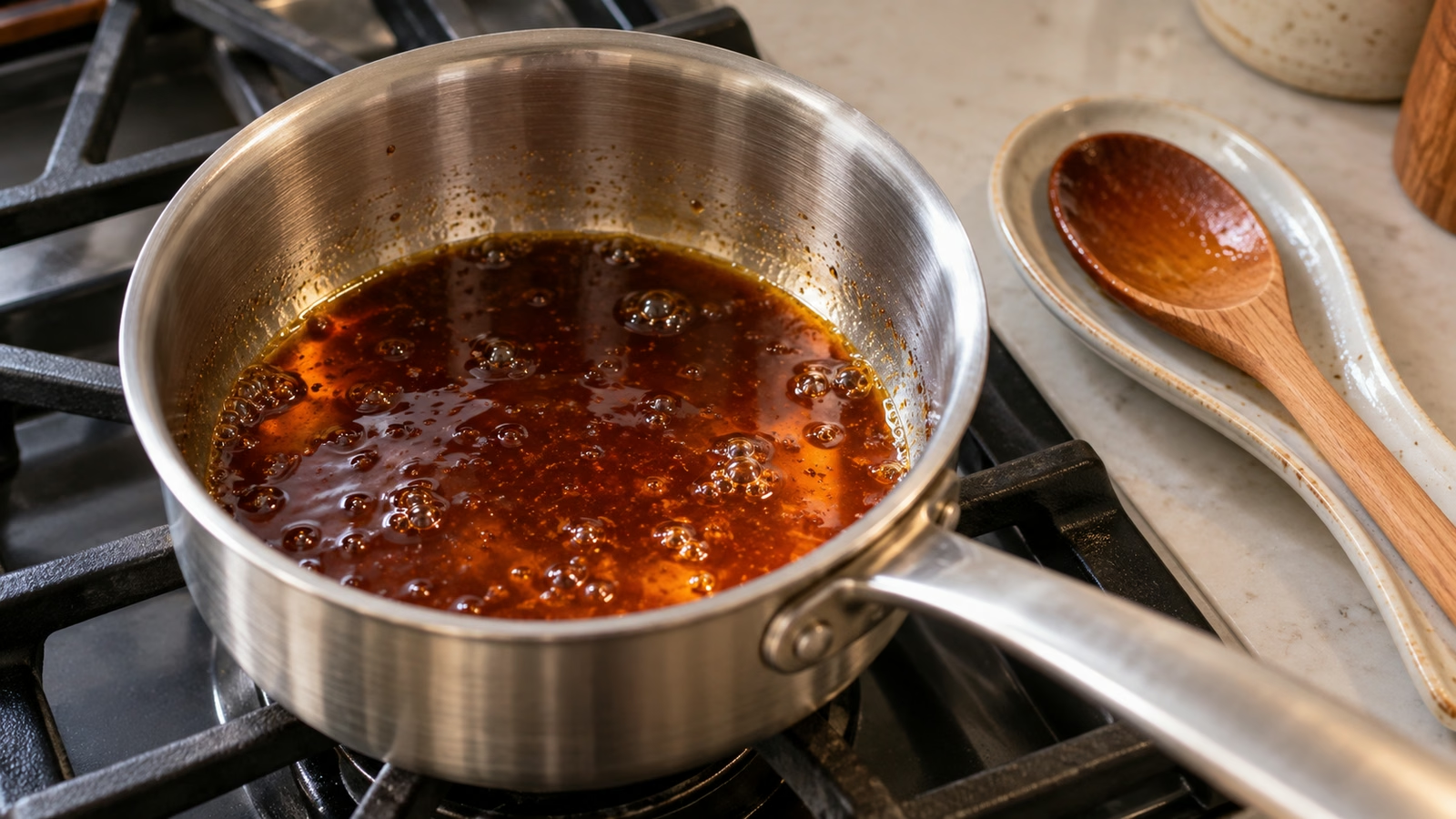
A simmering sauce loses water and becomes more concentrated. Keep an eye on it as it approaches the consistency the recipe describes, and remember that some sauces thicken further as they cool. A glossy surface is a useful cooking cue, but it does not tell you how much alcohol remains. USDA retention data show that cooking can leave alcohol in food; a brief boil does not guarantee an alcohol-free result.
- Measure before heating. Have the recipe’s seasonings ready so you are not comparing labels while a small pan reduces.
- Taste an uncontaminated sauce. If it has touched raw meat or fish, do not taste it before it has been cooked safely.
- Read the storage instruction on your exact product. Some hon mirin is kept in a cool, dark place; lower-alcohol mirin-style seasonings may require refrigeration after opening.
- Close the bottle and note the opening date. Follow its manufacturer’s use-after-opening guidance rather than borrowing a storage period from another brand or type.
The simplest way to get comfortable with mirin is to use it deliberately, not generously. Know which bottle you have, measure the recipe’s amount, and understand whether you are adding sweetness, salt, alcohol, or a combination. Once those details are clear, it becomes a useful everyday seasoning rather than the mystery bottle behind the soy sauce.
For an example of mirin in use, Just One Cookbook’s teriyaki-sauce video demonstrates a sauce made with mirin, sake, soy sauce, and sugar. It is a cooking demonstration, not an alcohol-free preparation.
Sources
- Kikkoman: Mirin and sweet cooking seasonings — product-type distinctions and cooking uses.
- Kikkoman: Making mirin — ingredients and production.
- Kikkoman: Mirin FAQ — storage differences.
- Just One Cookbook: Japanese ingredient substitutions.
- Just One Cookbook: Mirin guide — vinegar distinction and practical uses.
- USDA: Nutrient Retention Factors, Release 6 — alcohol retained during food preparation.
- Just One Cookbook: Teriyaki sauce and video.

Hi, I’m Laura, the voice behind Tastiva. I’ve always believed that eating well should feel enjoyable, comforting, and realistic—not like another complicated rule to follow. I love creating recipes that fit into everyday life, sharing simple nutrition ideas, and finding small ways to make meals feel a little better without losing the pleasure of good food.