
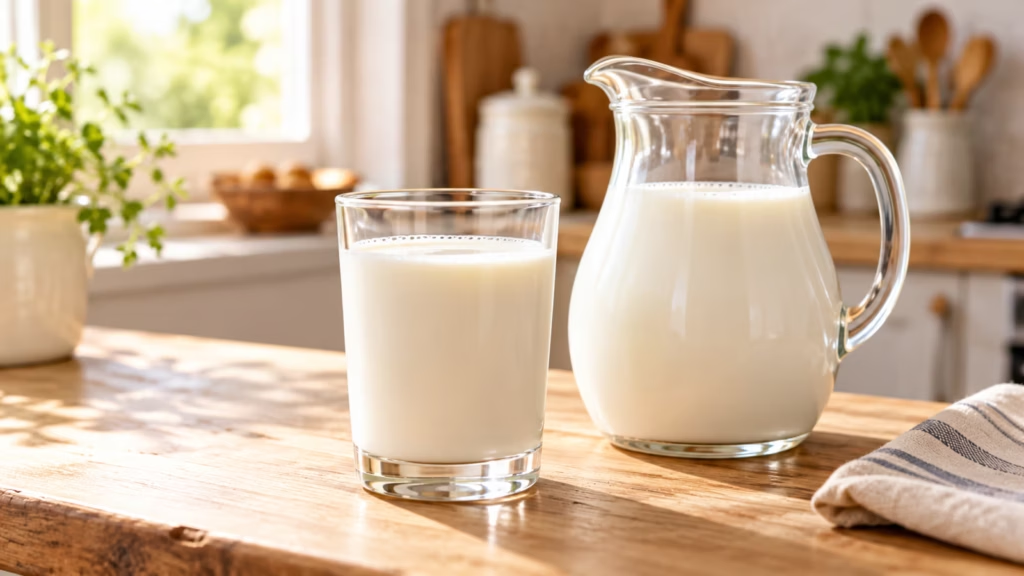
You reach for milk to make oatmeal, then pause between whole milk and the lower-fat carton beside it. Whole milk keeps more milkfat, which gives it a richer feel in a glass or a sauce. It still contains lactose, the natural milk sugar, unless the carton specifically says lactose-free; those two labels answer different questions.
Choose the milk for the job in your kitchen, then compare the amount you actually pour.
I would start with three details: fat level, serving size and whether the recipe depends on richness. That is more useful than treating one carton as automatically best for every breakfast, coffee or baking project. Here is how to read the differences without turning the dairy aisle into homework.
What whole milk means on a U.S. label
The U.S. standard for milk sets a minimum of 3.25 percent milkfat. That is why whole milk commonly carries a 3.25% milkfat statement. “Whole” does not mean 100 percent fat, nor does it mean that the milk is unprocessed or unpasteurized.
- Whole milk: the fuller-fat fluid-milk option. Read the carton for the actual product details.
- Reduced-fat milk: commonly labeled 2%. It contains less milkfat than whole milk.
- Low-fat milk: commonly labeled 1%.
- Skim or nonfat milk: has almost all the milkfat removed. It is still dairy milk, with milk proteins and lactose unless otherwise labeled.
Pasteurization and homogenization describe different processing steps. Pasteurization uses heat to reduce harmful microbes; homogenization helps keep the fat dispersed rather than forming a cream layer. Choose pasteurized milk. The FDA warns that raw milk can carry harmful bacteria, and a farm-fresh description is not a safety guarantee.
Compare portions before comparing nutrients
For a like-for-like reference, the following USDA SR Legacy estimates use exactly 244 grams of each plain milk, approximately one cup. These are generic food-composition values, not current labels for every brand. Fortified, filtered and flavored products may differ.
- Whole milk: about 149 calories, 7.9 grams fat, 4.6 grams saturated fat and 7.7 grams protein.
- 2% milk: about 122 calories, 4.8 grams fat, 3.1 grams saturated fat and 8.1 grams protein.
- Nonfat milk: about 83 calories, 0.2 gram fat, 0.1 gram saturated fat and 8.2 grams protein.
The same records contain roughly 12 grams of total sugars and 276–298 milligrams of calcium per portion. Removing fat does not remove all the sugar or protein. For your own carton, compare the serving size, saturated fat, protein, calcium, vitamin D and added-sugars line rather than borrowing numbers from another product.
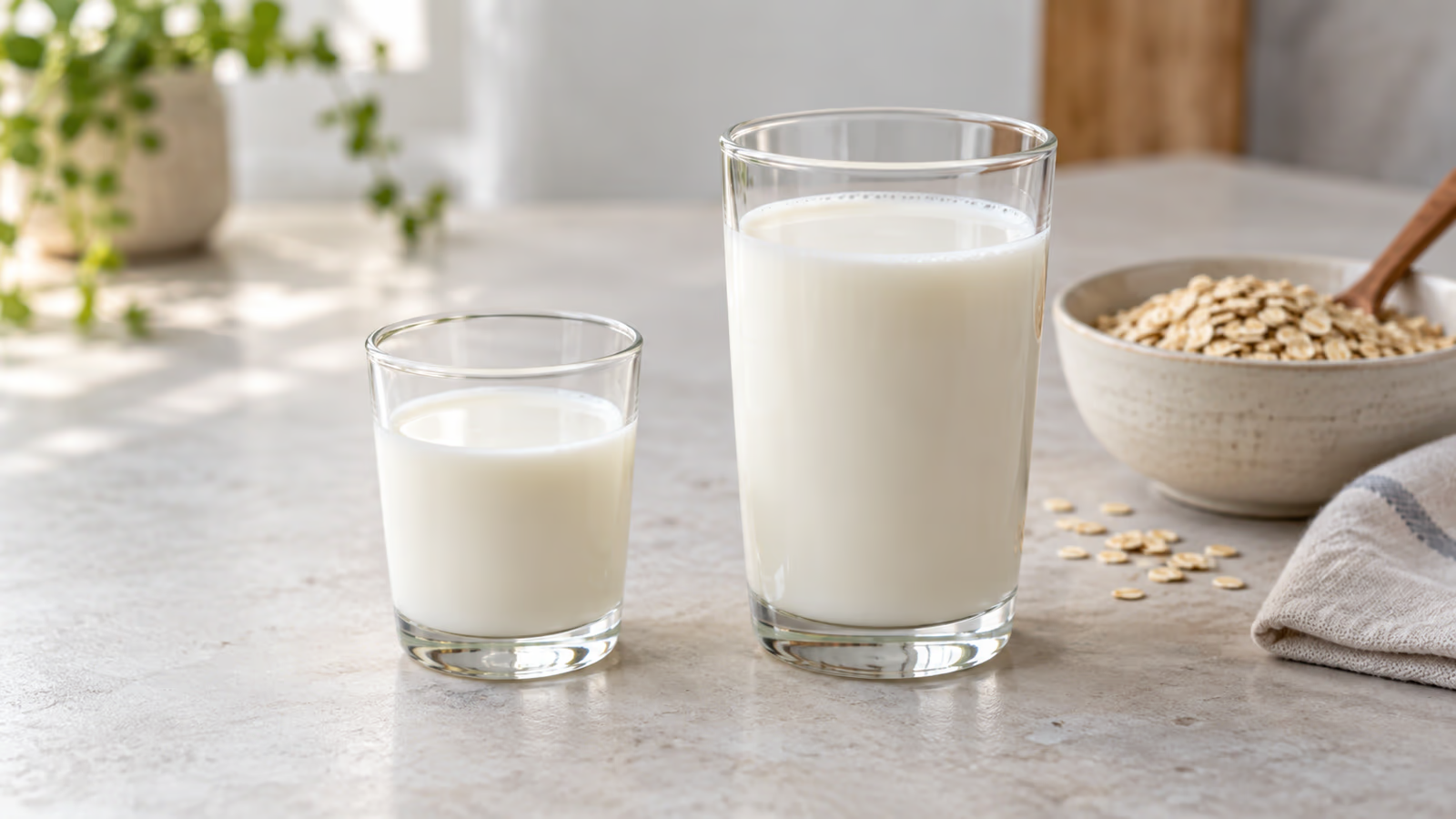
Milkfat and lactose are separate choices
Lactose is a carbohydrate, not a type of fat. Ordinary whole milk and ordinary skim milk both contain it. If lactose is the issue, look for an explicit lactose-free product; choosing a lower fat percentage alone does not answer that need.
- Lactose-free whole milk can provide a richer dairy texture while addressing lactose. Read its own nutrition panel.
- Lactose-free dairy is still made from milk and is not a safe workaround for a milk allergy.
- Plain milk can show total sugars without added sugars. FDA labeling distinguishes naturally occurring milk sugar from sweeteners added during processing.
- Plant-based drinks are a separate comparison. Their protein, fortification, ingredients and cooking behavior vary.
Our lactose-free cow’s milk guide explains that carton more fully. The NIDDK notes that tolerance varies among people with lactose intolerance; a general milk guide cannot diagnose why a particular food causes symptoms.
Use whole milk where richness matters
Whole milk can bring a fuller texture to oatmeal, a white sauce or a milk-based dessert. I would follow the specified milk in a recipe where the texture matters, especially for a custard or baked dish. A splash in coffee is a much smaller change than replacing all the dairy in a recipe.
- For cereal or drinking, choose the milk you enjoy and that fits your needs. A larger glass also changes the total amount consumed.
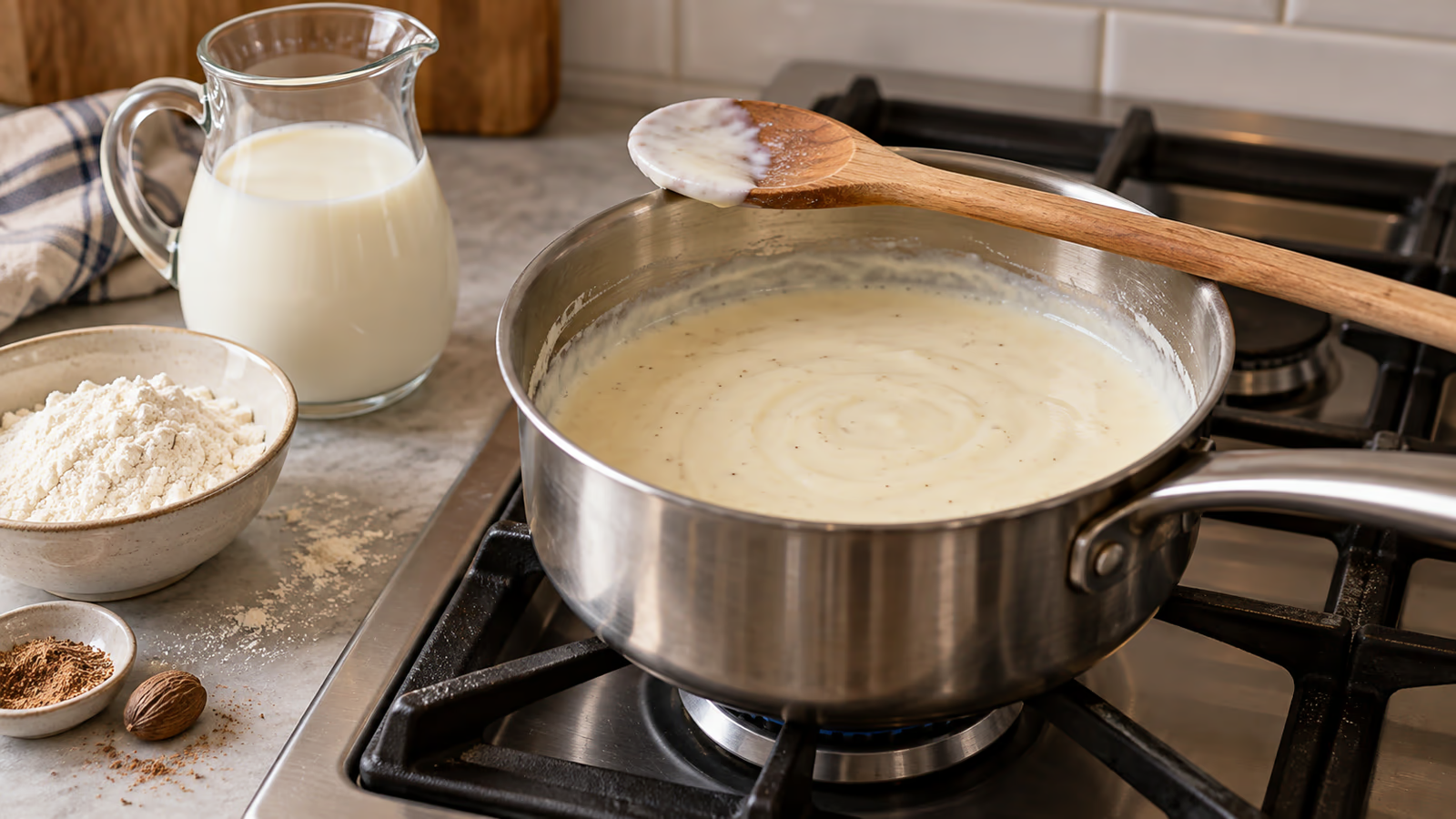
- For a sauce, use the recipe’s milk and thickener quantities. Whole milk contributes richness, but it does not thicken a sauce by itself in the same way flour or starch does.
- For baking, use a tested substitution rather than assuming whole milk, cream, evaporated milk and plant drinks are equivalent.
- For shopping, buy an amount you can use while it is fresh. An impressive carton size is less useful than a realistic plan for it.
Keep refrigerated milk at 40°F (4°C) or below, return it promptly after pouring, and follow its package instructions. For shelf-stable milk, the unopened-storage directions and the after-opening directions can differ. Milkfat percentage does not grant extra time on the counter.
For more on how milk composition and processing affect kitchen choices, Ethan Chlebowski compares milk types in the video below. His tasting impressions are his own; they are not a Tastiva taste test.
Sources
- 21 CFR 131.110: U.S. milk standard.
- USDA FoodData Central SR Legacy: milk records 171265, 171267 and 171269, calculated at 244 g each.
- Harvard Nutrition Source: milk types and processing.
- NIDDK: lactose intolerance and food choices.
- FDA: total and added sugars.
- FDA: raw milk safety.
- FDA: refrigerated food storage.

Hi, I’m Laura, the voice behind Tastiva. I’ve always believed that eating well should feel enjoyable, comforting, and realistic—not like another complicated rule to follow. I love creating recipes that fit into everyday life, sharing simple nutrition ideas, and finding small ways to make meals feel a little better without losing the pleasure of good food.